



What to do before you leave
Move the plants out of direct sun, a few feet further into the room. Less light and less warmth cut the water use noticeably while you are away, and most species take a few weeks of weaker light without harm.
Stand the pots together in a group. The air between closely spaced plants dries out less, and all your tubes and cones sit in one place. Keep tilted windows and balcony doors shut, because a draft dries the pots out faster.
Water thoroughly on the day you leave, until water runs out of the bottom, then empty the saucers. A saucer left full as a reserve is a bad idea, because the roots get no air for days.
Take off spent flowers, buds and damaged leaves. They use water and will be past saving when you return. Skip fertilizer in the two weeks before the trip, and put repotting off until afterward.
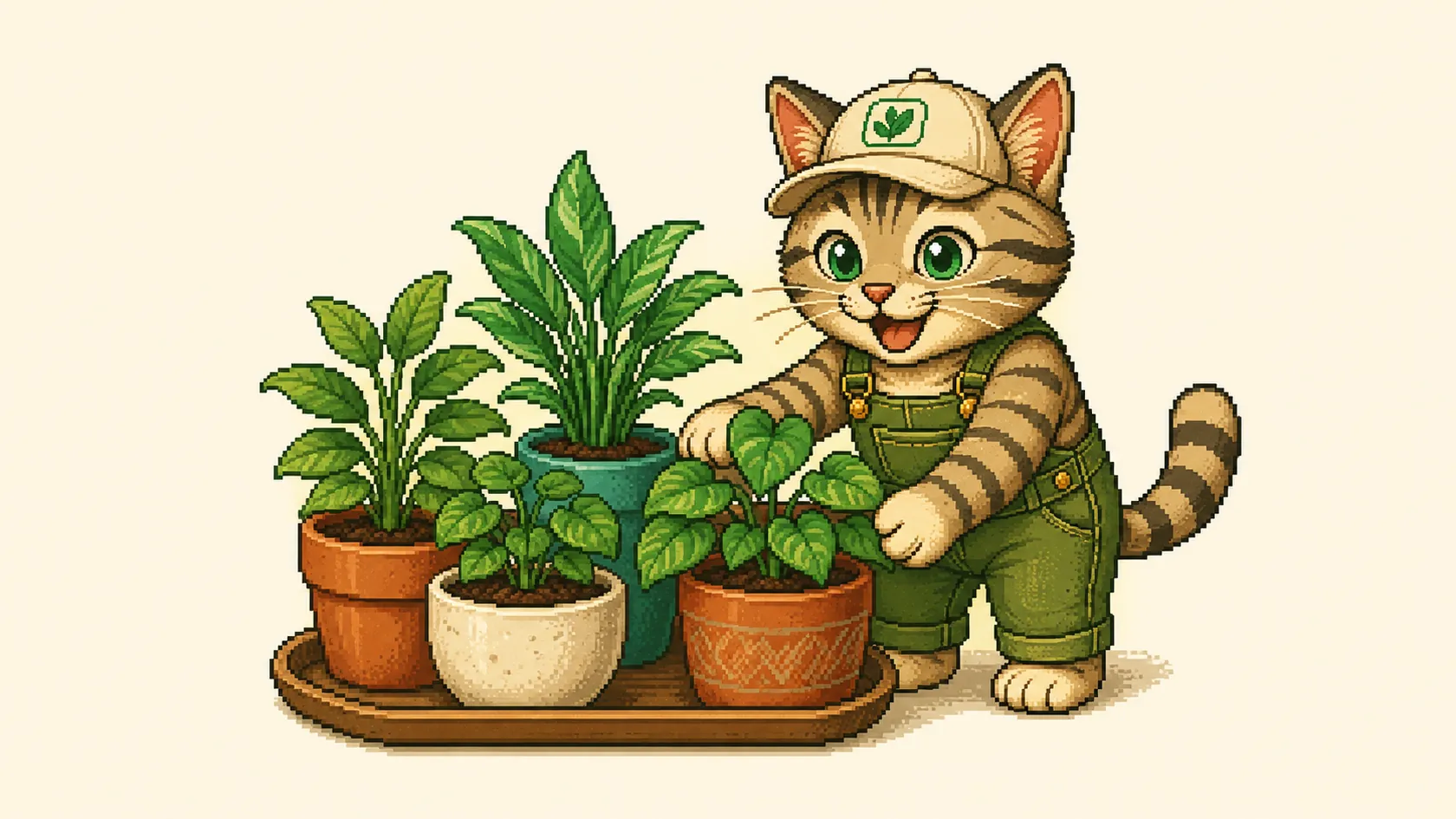
Up to a week
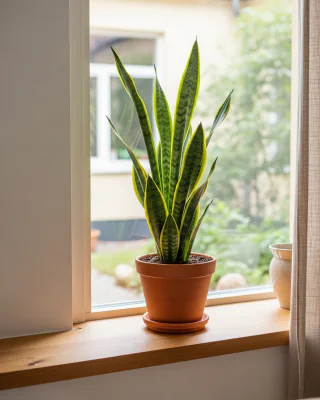
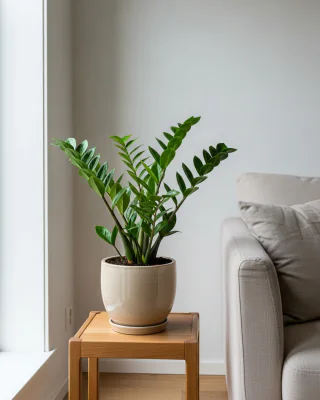
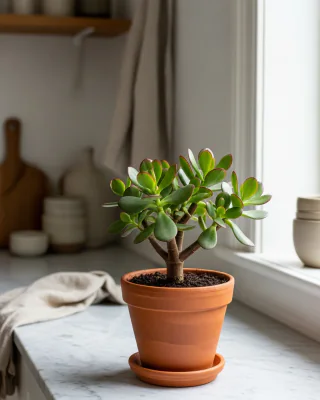
For seven days a thorough watering before you go is enough for most houseplants. Succulents, snake plants, ZZ plants and cacti last longer than that anyway and need nothing at all for a week.
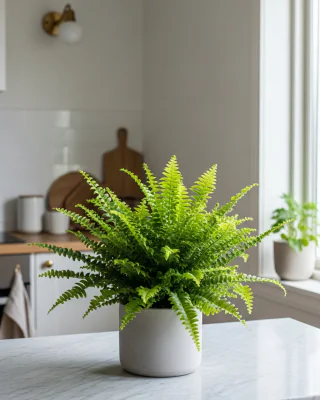
Two groups still want attention. Ferns, calatheas and freshly repotted plants dry through quickly, and small pots under about five inches hold little water. Set up a watering system for those, even on a short trip.
Clay cones and watering globes
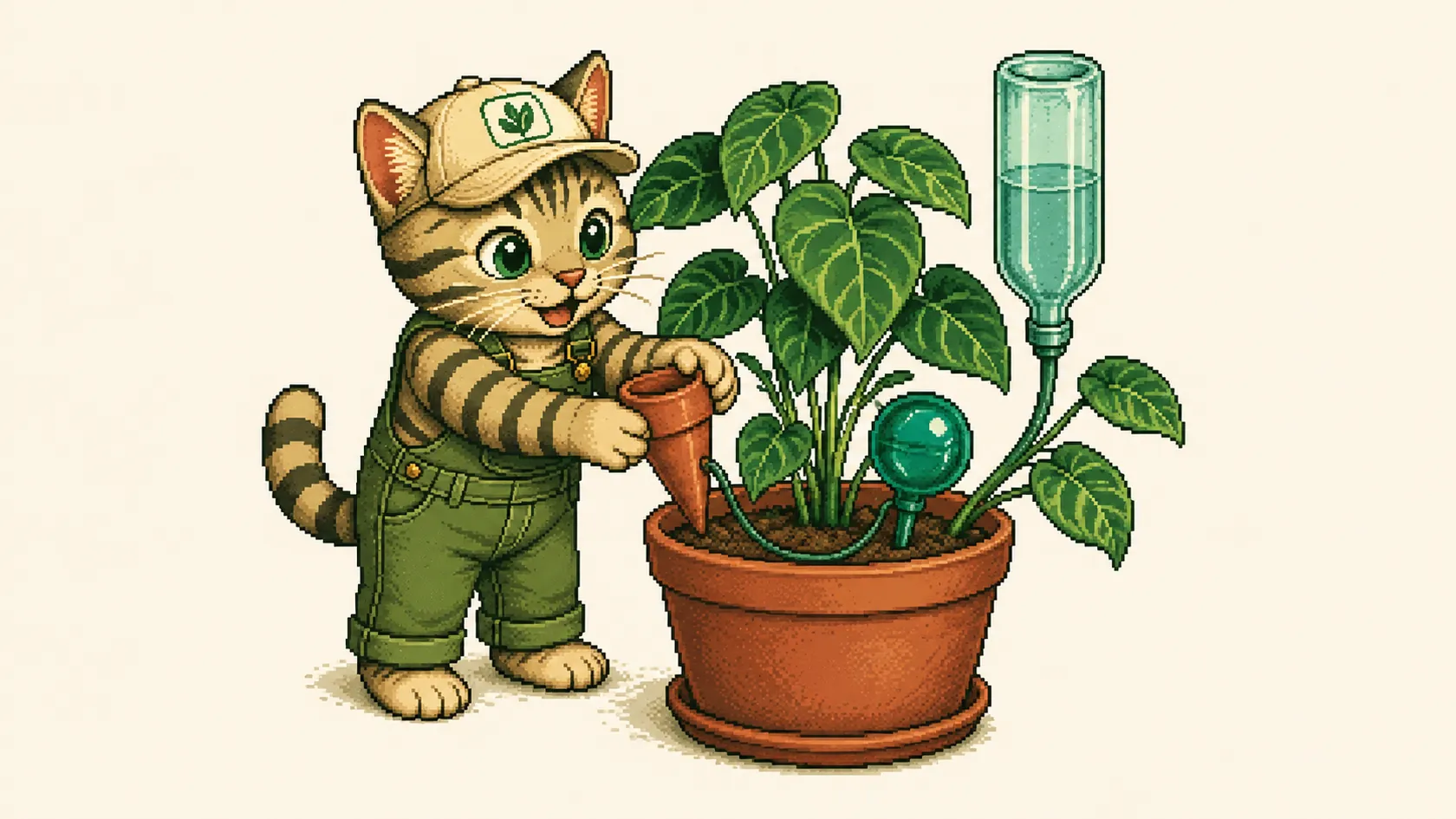
A clay cone sits in the soil and connects by a tube to a bottle of water. As long as the soil around the cone is dry it draws water through the clay wall, and the flow slows once that soil is wet. That makes cones usable for two to three weeks if the reservoir is big enough.
Glass globes work on the same idea but give up their water without the resistance of the clay. In loose soil a globe sometimes empties in a day, and in dense soil the neck clogs with mix. Fill it with clear water and push it into a hole you have watered first, so the opening stays clear.
Measure both before you go. Put the cone or globe in a week ahead and mark the water level on the bottle with a pen each day. The daily use tells you whether the reservoir covers your trip or whether you need a bigger bottle.
Wick watering with a cord
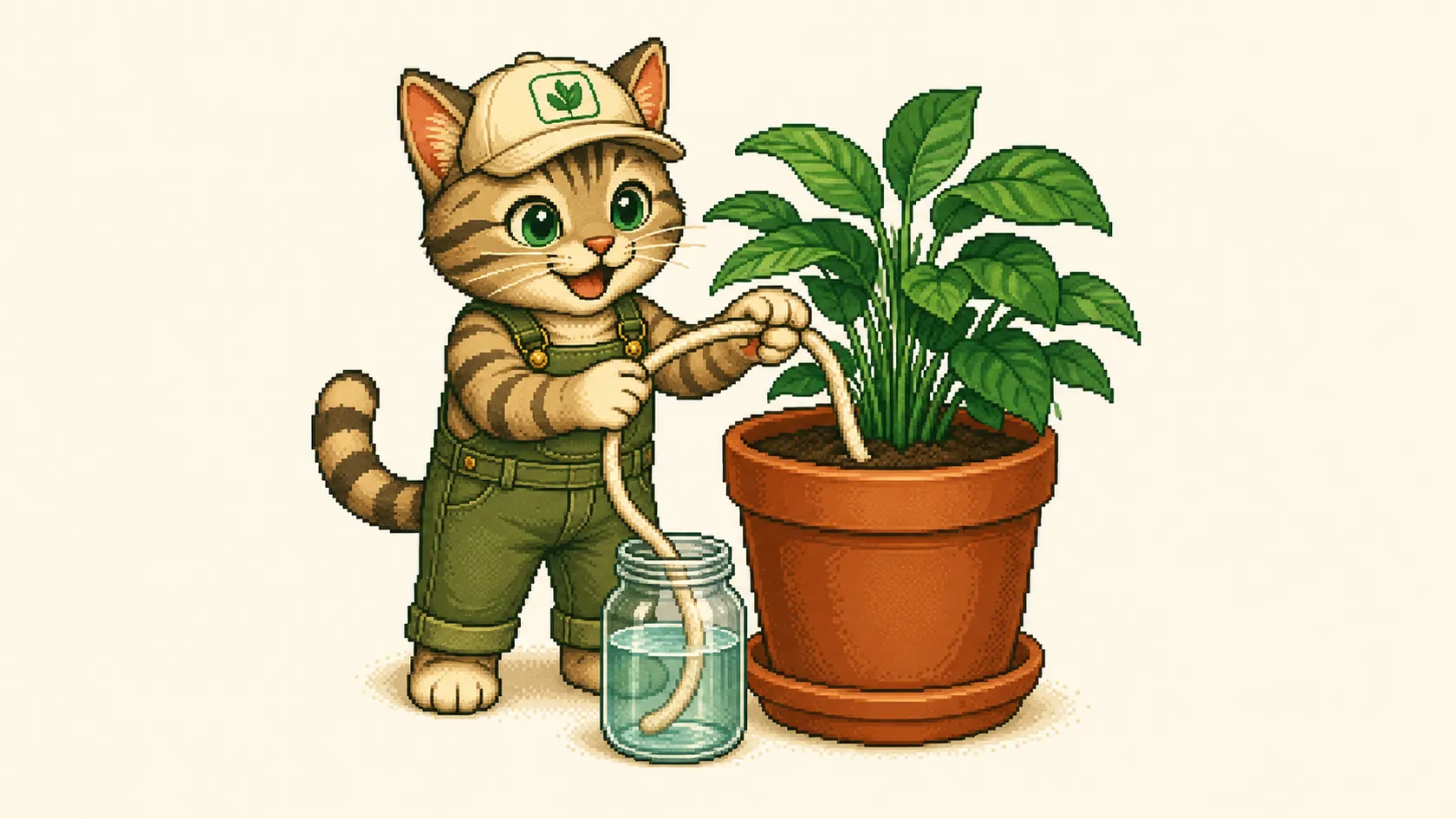
In wick watering an absorbent cord of cotton or felt runs from a container of water into the soil. The cord carries water along by capillary action, and the supply stops once the mix is saturated.
The container stands level with the pot or slightly higher, and the end of the cord lies on the bottom of the container. Push the other end a couple of inches into the soil beside the root ball rather than laying it flat on top. On a large pot, run two cords on opposite sides.
Wet the cord through once before you set it up. A dry cotton cord sometimes never starts to draw, and then the container still stands full beside a pot that dried out two weeks ago.
A capillary mat does the same for several plants at once. The pots stand on the mat, one end hangs into a tray of water, and the pots need open drainage holes with no cachepot.
Automatic systems with a pump
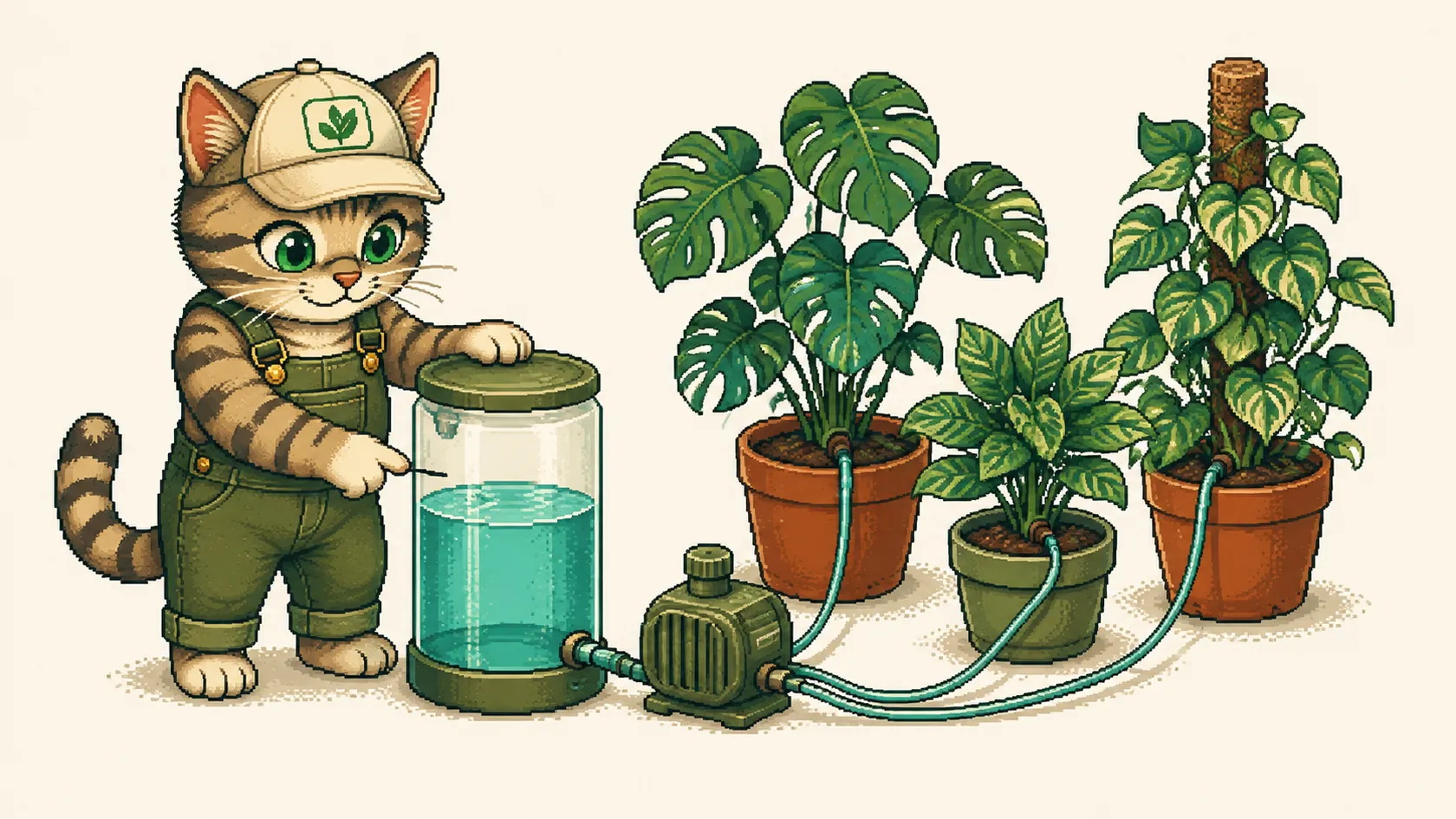
A set with a pump, a timer and thin distribution tubes supplies ten or twenty pots. It suits longer trips and collections that cones can no longer cover.
In exchange it has more that can fail. A tube end slips out of a pot, a dripper blocks, the bucket runs dry, or the power goes out. Run the system for at least a week before you leave and look at each pot individually, rather than only checking that the pump starts.
Set the run time on the short side. Over two weeks too much water does more damage than too little, because permanently wet soil rots the roots. A shallow tray under the pots also catches what a loose tube would otherwise spread across the floor.
What does not work
Standing plants in a bathtub or shower filled with water ends after a few days in soaked root balls with no air. A short soak followed by draining is a different thing from three weeks in water.
Pulling a plastic bag over the whole plant does hold the humidity up, but in a warm summer room it traps heat and condensation and rots the leaves.
Wet newspaper and towels on the soil dry out themselves within a few days. They slow the drying a little and replace no water source. A layer of bark mulch or expanded clay on the surface likewise only slows evaporation part of the way.
When someone stops by
A person is the safest answer on a longer trip, though helpful neighbors tend to water too much. So leave a short note that says, per plant, how deep to feel and what to do when the soil is dry there.
Write the instruction as a check and not as an appointment. A line like "push a finger an inch or two into the soil, water only if it is dry down there, then empty the saucer" can be carried out, while "water twice a week" means something different in every pot.
Put a label on each pot and move the plants that rarely want water into another room. Snake plants and cacti are best kept out of the way so they do not get watered along with the rest.
Related plants
Keep reading
Common questions
How long can houseplants go without water?
It depends on the species, the pot size and the light. Succulents and snake plants come through several weeks, while ferns and small pots often do not last a week in summer. Standing a plant cooler and darker makes any of them last longer.
Do watering globes actually work?
They do give out water, but with little control. In loose soil a globe empties fast, and in dense soil the neck clogs. Put one in a week before the trip and watch the daily use before you rely on it.
How do I water my plants for three weeks away?
For three weeks you need a water source with a large enough reservoir, so clay cones on big bottles, wick watering from a canister, or a pump system. Move the plants further from the window as well. With a large collection, a person who calls in once a week is the more reliable answer.
Should I water plants extra before vacation?
Water once thoroughly until it runs out of the bottom, then empty the saucers. The pot takes up no more than that, and the rest just stands in the saucer and harms the roots.
Can I put my plants in the bathtub while I am away?
Roots rot in standing water over days. If you want to use the tub, use it as a place to stand a capillary mat with one end in a shallow reservoir, while the pots themselves stay out of the water.
Should I fertilize before going away?
Leave the fertilizer off for the two weeks before. Feeding pushes new growth, and fresh shoots need more water than your setup can deliver.
Last reviewed: 2026-09-07