

Amaryllis care guide
Hippeastrum hybrids

An amaryllis bulb flowers in winter and grows leaves through spring and summer. Plant it with the top half showing, keep it warm and bright, and after flowering keep the leaves growing so they refill the bulb. A cool, dry autumn rest is optional and lets you control when it blooms.
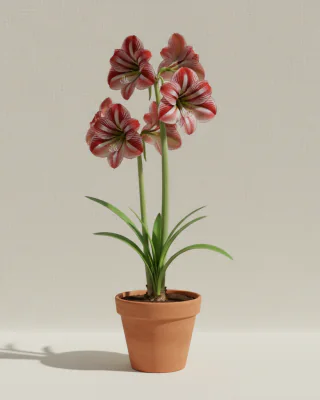
 Not sure it’s this plant?Check yours with a photo, free
At a glance
- Light
- Bright, sunny window while growing
- Water
- When the soil surface begins to dry, none during an optional rest
- Climate
- 18–24 °C (64–75 °F), cooler while in flower
- Humidity
- Normal room air
- Pet safety
- Toxic to cats and dogs, the bulb most
Just received an amaryllis?
An amaryllis arrives as a dry bulb in a box, a bulb already in a pot, a bulb in a glass of water or a waxed bulb. A dry bulb needs planting first, as described in “Planting the bulb”. A waxed bulb needs no water at all, only light.
Protect it from cold on the way home, because below about 10 °C (50 °F) the leaves are damaged, and unwrap it as soon as you are inside.
While the stalk grows, give it a sunny window and turn the pot a little every day so the stalk grows straight. Once the flowers open, move it out of direct sun to a cooler spot, about 15 to 18 °C (59–64 °F), so they last longer. A tall stalk with big flowers may need a thin stake.
A potted bulb needs drainage holes. If it sits in a decorative pot or foil without holes, lift it out to water and empty any water that collects. Then check the soil: with no shoot yet, keep it only barely moist. Once leaves or a stalk are growing, water whenever the surface begins to dry.
A bulb often sends up one or two stalks, each with several flowers that open in turn and fade one by one. That is how amaryllis flowers, not a problem.
When and how much water
After planting, water once and then keep the soil only barely moist until the green shoot appears. Too much water before there are leaves to use it rots the bulb.
Once it grows, water whenever the soil surface begins to dry, and never leave water in the saucer. In Botanicaly’s plant data that is about every 6 days while the leaves grow, but the soil decides. Keep watering green leaves after flowering. Stop only if you choose a cool, dry rest for a mature bulb.
Light and placement
Put it in a sunny window while the leaves and stalk grow, and turn the pot a little every day so the stalk grows straight. Once the flowers open, move it out of direct sun to make them last longer. Tall stalks with big flowers may need a thin stake.
Feeding
Start feeding at half strength when new growth is visible, including while it flowers if leaves are growing. Continue every two weeks through spring and summer while the leaves remain green. Stop only when you start an optional cool rest.
Temperature & humidity
Climate18–24 °C (64–75 °F), cooler while in flower
HumidityNormal room air
Keep it at 20 to 24 °C (68–75 °F) while it roots and grows, away from radiators. Once it flowers, a cooler spot at 15 to 18 °C (59–64 °F) keeps the flowers fresh for longer. Below about 10 °C (50 °F) the leaves are damaged.
Ordinary room air suits an amaryllis. It does not need misting.
Planting the bulb
Plant the bulb between October and January in a pot only 2.5 to 5 cm (1–2 in) wider than the bulb, with drainage holes and ordinary free-draining potting mix. Leave the top half of the bulb above the soil. A dry neck helps prevent rot. Repot every two to three years after flowering. In other years just replace the top few centimeters of soil when you restart it.
After flowering: keep the leaves
The flower uses up much of the bulb’s food, and the leaves refill it. Cut off the faded stalk, keep the plant in your sunniest window, water when the top of the soil dries and feed every two weeks. Once frosts are over, around late May, it can go outside: a few days in shade first, then a spot with some sun. Bring it back in by mid-September.
Cut off each flower as it fades so the plant does not put its strength into seed. When the last one is done, cut the stalk about 2.5 to 5 cm (1–2 in) above the bulb, but leave every leaf. A bulb that keeps four or more healthy leaves through summer is usually big enough to flower again.
The next flowers come only after months of leaf growth, so expect them about a year later, not in a few weeks.
Timing the next amaryllis bloom
A rest is not required for another bloom. You can keep the plant growing in bright light. Use a cool, dry rest only if you want to control the flowering time.
For a timed bloom, stop watering and feeding. Put it somewhere cool and dry. It does not need light.
The leaves turn yellow. Cut them off once they are brown and dry.
Keep the bulb at about 10 to 13 °C (50–55 °F) for at least 8 to 10 weeks. A cool cellar, garage or unheated room works if it stays frost-free.
Then replace the top few centimeters of soil, water once and bring it somewhere warm and bright. Water more once the shoot appears.
Flowers follow about four to eight weeks later. To aim for Christmas, count back both the full 8 to 10 week rest and another four to eight weeks for flowering.
Amaryllis in water or wax
To grow one in water, set the bulb in a forcing vase or on a layer of pebbles in a glass, with the roots hanging down. Keep the water about 2.5 cm (1 in) below the bulb so only the roots touch it, top it up as needed and turn the glass now and then.
A waxed bulb needs no water at all and flowers within four to six weeks. Neither can feed the bulb, so it shrinks while it flowers. Treat both as a one-season plant. If you want to try to keep one, peel off the wax carefully after flowering, pot it in soil, keep the leaves growing and feed it well. It may flower again after the next rest, but often skips a year.
Common problems
Most amaryllis problems trace back to last summer: a bulb only flowers well if its leaves had time to refill it. Check what happened to the leaves before you blame this year’s care.
Find what’s wrong
Toxic to pets?
Yes. Keep it out of reach.
Pet-safety information in the JungleBook uses ASPCA reference data where available. It is reference information, not veterinary advice. ASPCA’s record covers Amaryllis spp., a related plant, not this exact species.
Full amaryllis toxicity guide →
Pet-safe alternatives with similar light
Common questions
How do I plant an amaryllis bulb?
Plant it between October and January in a pot only 2.5 to 5 cm (1–2 in) wider than the bulb, with the top half above the soil. Water once, keep the soil barely moist until a shoot appears, and keep it warm, about 20 to 24 °C (68–75 °F), in a bright window.
How long does an amaryllis take to bloom?
Most bulbs flower six to eight weeks after planting. Bulbs grown in South Africa can flower in three to five weeks. For flowers at Christmas, plant Dutch bulbs in early to mid November.
What do I do with my amaryllis after it flowers?
Cut the faded stalk 2.5 to 5 cm (1–2 in) above the bulb but keep every leaf. Give it a sunny window, water when the top of the soil dries and feed every two weeks through spring and summer. The leaves are what build next year’s flower.
How do I get my amaryllis to bloom again?
It can bloom again while kept growing. To control the timing, give a mature bulb a cool, dry rest at about 10 to 13 °C (50–55 °F) for at least 8 to 10 weeks. Then water it and move it somewhere warm and bright. It flowers about four to eight weeks later.
Why does my amaryllis only grow leaves?
The bulb may not have stored enough food yet. Keep the leaves growing in bright light with regular water and feed. A mature bulb can bloom without a rest, or you can use a full cool rest of 8 to 10 weeks to control the timing.
How often should I water an amaryllis?
Barely at all until the shoot appears. While leaves are growing, including after flowering, water when the soil surface begins to dry and never leave water in the saucer. Stop only for an optional cool, dry rest.
Can I grow an amaryllis in water?
Yes, in a forcing vase or on pebbles in a glass, with the water about 2.5 cm (1 in) below the bulb so only the roots touch it. Like a waxed bulb, it uses up its food while flowering, so it rarely flowers again the next year.
Is amaryllis poisonous to cats and dogs?
Yes. ASPCA lists it as toxic to cats and dogs. The bulb is the most toxic part and can cause tremors. Leaves cause drooling, vomiting and diarrhea. Keep it out of reach and call your vet straight away if your pet chewed it.
Sources5 references
- Royal Botanic Gardens, Kew: Plants of the World OnlineAccepted genus record and accepted species list
- Royal Horticultural SocietyQuick facts · cultivation notes · aftercare · propagation · problems · How to Grow · growing conditions · houseplant placement
- University of Minnesota ExtensionAmaryllis houseplant care and fertilizing guidance
- ASPCA Animal Poison ControlScientific name · toxicity · toxic principles · clinical signs
- Sources: the RHS Hippeastrum growing guide supports planting, temperatures, feeding, the rest period, repotting, offsets and the causes of missing flowers. University of Minnesota Extension supports feeding from visible growth, keeping leaves actively growing after flowering and using an optional rest to control bloom time. Iowa State University Extension (also its waxed bulb answer), University of Wisconsin Extension and Clemson Cooperative Extension support the bloom timing, after-flowering care, reblooming, bulbs in water and wax, and the problems. The ASPCA amaryllis record and Pet Poison Helpline support the pet-toxicity wording.
Last reviewed: