


How to propagate amaryllis
Hippeastrum hybrids

Quick answer
For indoor amaryllis, use an offset for a matching clone when available. Seed creates variation, while chipping or twin scaling use healthy bulbs that lack useful offsets.
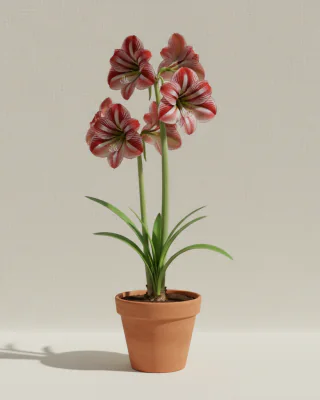
 Not sure it’s this plant?Check yours with a photo, free
Toxic to pets
What plant material to use
The simplest material is a healthy, firm offset produced beside the parent bulb. A large healthy bulb can also be used for chipping or twin scaling, and seed is possible when flowers have been pollinated. Retain the hybrid label.
How to propagate this plant
Wear gloves before dividing the bulbs. Bulb pieces are especially poisonous if swallowed. Keep all cut pieces away from children and pets, and wash your hands after handling.
Choose offsets when available to multiply a hybrid clonally. Use seed when variation is acceptable, and use bulb chipping or twin scaling for a healthy bulb that does not make useful offsets. The routes are not equally suitable for every cultivar.
Handle offsets or bulbs around the dormant or resting phase, use a free-draining container medium and avoid leaving bulb material wet. For chipping, each section must retain basal-plate tissue and propagation needs a protected warm setup while roots and shoots form.
Separate a healthy offset during dormancy and pot it only slightly wider than the bulb. If using chipping, divide a healthy bulb into sections that include the basal plate and place the pieces in a protected propagation medium. Sow seed only after pollination and keep it warm.
Signs of roots or failure
A propagated offset or scale piece has taken when it stays firm, forms roots and resumes leaf growth. A seedling has taken when it keeps making new growth. Flowering is a later milestone and may take years for offsets or seedlings.
Do not propagate from a soft, diseased or damaged bulb or offset. A piece without basal-plate tissue will not work for chipping, and a seed-grown plant will not reproduce the named hybrid exactly. A slow piece is not automatically a failed piece.
Aftercare and hygiene
Keep new offsets and seedlings actively growing in moderate warmth. Do not induce dormancy or lower the temperature to trigger flowering as you would for mature bulbs. Use pots that drain freely and water carefully while they have few roots.
All amaryllis guides
Related plants
Sources: RHS, NC State Extension.
Last reviewed: