



Amaryllis repotting
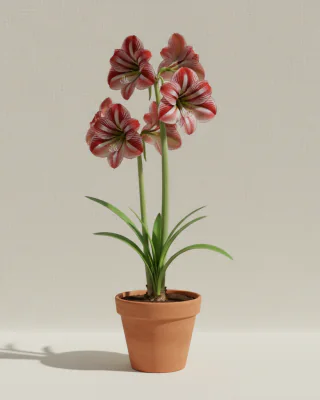
Hippeastrum hybrids
Quick answer
The RHS repots only every two to three years, after flowering, because amaryllis like a snug pot. Use a pot with drainage holes and a well-drained mix.
- Pet safetyToxic to cats and dogs


 Not sure it’s this plant?Get the free Botanicaly app and find out with a photo
Amaryllis repotting
- 01
When to repot an amaryllis
The RHS repots every two to three years, after flowering.
More about this
For amaryllis repotting, choose a pot only 1 to 2 inches (2.5 to 5 cm) wider than the widest part of the bulb, as Clemson Extension advises, and plant it with at least the top third of the bulb above the soil.
UF/IFAS says bulbs can stay in their original container for two or more years before repotting is needed, and Clemson notes that potted bulbs thrive when they are slightly rootbound.
So there is no need to repot every year. In the years in between, the RHS replaces the top 1 to 2 inches (2.5 to 5 cm) of mix once growth restarts.
- 02
Choosing the right pot
Both say the pot must have drainage holes.
More about this
Clemson recommends a container 1 to 2 inches (2.5 to 5 cm) larger in diameter than the widest part of the bulb. University of Illinois Extension uses a pot about 1 inch (2.5 cm) wider than the bulb and roughly twice as tall as the bulb.
The plant gets top-heavy in bloom. UF/IFAS says to choose a container heavy enough to counterbalance its weight.
- 03
Best soil for repotting amaryllis
Clemson calls a mix of equal parts peat and perlite excellent. Illinois uses a soilless, well-draining potting mix, and the RHS a peat-free John Innes No.
More about this
2 (a soil-based mix) or a peat-free multipurpose mix.
Amaryllis potting mix recipe (Clemson): 1 part peat to 1 part perlite, by volume. Mix it well before you fill the pot.
- 04
How deep to plant the bulb
Keep most of the bulb out of the soil. NC State buries only half the bulb, with the neck well above the soil line.
More about this
Clemson leaves one third to one half of the bulb above the surface, Illinois at least the top third, UF/IFAS one half to two thirds, and the RHS two thirds.
Illinois also leaves about 1 inch (2.5 cm) between the soil and the pot rim, so there is room to water.
- 05
How to repot an amaryllis, step by step
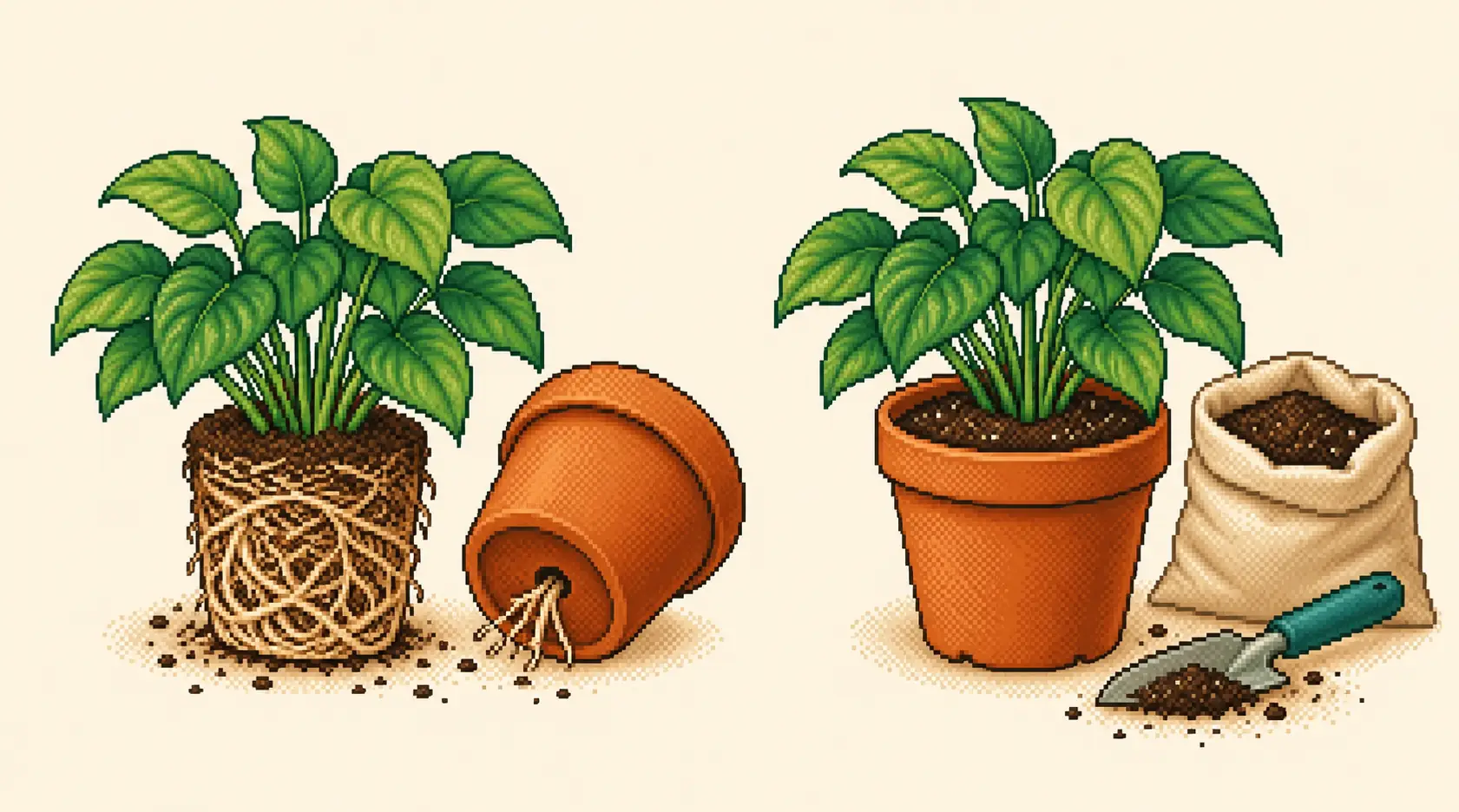
1. Lift the bulb out of the old pot and shake off the old mix. 2. Separate any offsets that have their own roots, as the RHS describes.
More about this
3. Put some fresh mix in the new pot and set the bulb in the center, as UF/IFAS advises. 4. Fill around it, leaving the top third or more of the bulb exposed. 5. Water thoroughly and let the pot drain.
Keep the leaves on the bulb. Clemson says the leaves are actively growing for several months after flowering and feed next year’s flower.
- 06
Watering after repotting
Clemson waters thoroughly after planting, lets the pot drain and then waits one week before watering again. The RHS waters sparingly until new leaves appear and regularly after that.
More about this
Do not let the pot sit in water in a saucer, Clemson says. The RHS keeps the mix from drying out but empties water that collects in the saucer.
- 07
Potting up offsets
Small bulbs often form beside the main bulb.
More about this
The RHS separates offsets that have their own roots at repotting time and pots each one in free-draining, peat-free mix.
Be patient: the RHS says offsets take three to four years to flower, and they will be identical to the parent plant.
- 08
Amaryllis and pets
The ASPCA lists amaryllis as toxic to dogs, cats and horses. The toxic principle is lycorine and others, and signs include vomiting (not in horses), depression, diarrhea, abdominal pain, hypersalivation, anorexia and tremors.
More about this
Clemson and NC State say the bulb is the most toxic part. Repot where pets cannot reach the bulb, and clear away offsets and old roots right away.


Common questions
How often should I repot an amaryllis?
Every two to three years, as the RHS advises. UF/IFAS says bulbs can stay in the same pot for two or more years, and Clemson says they thrive slightly rootbound.
When is the best time to repot an amaryllis?
After flowering, as the RHS does. In the years in between, refresh the top 1 to 2 inches (2.5 to 5 cm) of mix once growth restarts.
What size pot does an amaryllis need?
Only 1 to 2 inches (2.5 to 5 cm) wider than the widest part of the bulb, as Clemson advises, with drainage holes. Illinois also makes the pot about twice as tall as the bulb.
How deep should I plant an amaryllis bulb?
Shallow. Leave at least the top third of the bulb above the soil, as Illinois advises. The RHS keeps two thirds above the surface.
What soil is best for amaryllis?
A well-drained mix. Clemson uses equal parts peat and perlite, and the RHS a peat-free soil-based or multipurpose mix.
All amaryllis guides
Keep reading
Sources6 references
- RHS: How to grow hippeastrum
- Clemson Cooperative Extension HGIC: Amaryllis
- University of Illinois Extension: How to take care of amaryllis and get them to rebloom (Ken Johnson, 3 Dec 2021)
- UF/IFAS Gardening Solutions: Amaryllis
- NC State Extension Plant Toolbox: Hippeastrum
- ASPCA Animal Poison Control: Amaryllis
- How we check our plant advice
Last reviewed: