


Christmas plants

Poinsettia, Christmas cactus, amaryllis, cyclamen, Christmas rose, Norfolk Island pine, rosemary and flaming Katy. All want bright light and no drafts.
The eight classic Christmas plants are poinsettia, Christmas cactus, amaryllis, cyclamen, Christmas rose, Norfolk Island pine, a rosemary tree and flaming Katy. Each one can outlast the holidays if it gets the right spot.
Three of them are listed as non-toxic to cats and dogs: Christmas cactus, Norfolk Island pine and rosemary. Poinsettia is mildly toxic, and amaryllis, cyclamen, Christmas rose and flaming Katy are toxic.
The eight Christmas plants at a glance
Each line gives the light, the temperature and the pet verdict from that plant’s own care guide.
Poinsettia
Give it the brightest spot you have, near an east, west or south-east window, at a steady 15 to 21 °C (59 to 70 °F). Keep the leaves off cold glass and away from drafty doors and radiators. Below about 10 °C (50 °F) it can suffer chilling damage and drop leaves, and frost or a long cold spell can kill it, so wrap it for the trip home.
Water when the top 2.5 cm (1 in) of soil feels dry, and take it out of the foil sleeve to do it. Water left standing in the sleeve rots the roots.
Pet safety: toxic to cats and dogs, but mildly. The milky sap irritates the mouth and stomach, and serious poisoning is rare.
Christmas cactus
It is a forest cactus, so it wants bright light without hot midday sun and soil that never dries out completely. Keep it at 18 to 20 °C (64 to 68 °F) while it flowers, and never below 10 °C (50 °F).
Leave it in one place while it is in bud. A move, a draft or dry soil makes the buds drop. Most plants sold as Christmas cactus are really Thanksgiving cactus, which flowers about a month earlier and takes the same care.
Pet safety: the ASPCA lists it as non-toxic to cats and dogs. Eating a lot of it can still upset a pet’s stomach.
Amaryllis
Plant the bulb with its top half above the soil, in a pot only a little wider than the bulb. Keep it in a sunny window at 20 to 24 °C (68 to 75 °F) while the stalk grows, and turn the pot a little every day so the stalk grows straight.
Once the flowers open, a cooler spot at 15 to 18 °C (59 to 64 °F) out of direct sun makes them last longer.
Pet safety: toxic to cats and dogs. It contains lycorine and other alkaloids, and the bulb is the most toxic part, so keep stored bulbs out of reach too.
Cyclamen
Cyclamen flowers longest when it is kept cool, about 15 to 18 °C (59 to 64 °F) by day and about 10 °C (50 °F) at night, in bright light without midday sun. Hot, dry air from a radiator dries the soil fast and turns the leaves yellow.
Water from below: stand the pot in water for about 15 minutes, then let it drain. Keep water off the tuber in the middle, which rots if it stays wet.
Pet safety: toxic to cats and dogs. It contains saponins, which are concentrated in the tuber.
Christmas rose
A Christmas rose is a hardy garden perennial that flowers indoors for a few weeks. Keep it in your coolest bright room at 13 to 16 °C (55 to 61 °F), in bright, indirect light at an east or west window, and away from radiators. The cooler the room, the longer the flowers last.
Water when the top 2.5 cm (1 in) of soil is dry, and keep water off the leaves.
Pet safety: toxic to cats and dogs. It contains cardiac glycosides, saponins and protoanemonin.
Norfolk Island pine
Sold in December as a living Christmas tree, it is a houseplant for the rest of the year. It needs bright light with a little gentle direct sun, such as an east or west window, and is comfortable at 13 to 24 °C (55 to 75 °F).
Decorate it lightly. Heavy ornaments can bend the branches down for good, and lights that get warm can damage the needles, so use cool LED strings.
Pet safety: the ASPCA lists it as non-toxic to cats and dogs.
Rosemary tree
The small cone-shaped rosemary trees sold at Christmas are ordinary rosemary pruned into shape. They need several hours of direct sun, so a south or south-west window, and do best in a cool room at 10 to 24 °C (50 to 75 °F), away from radiators.
Take off the decorative foil, or empty it after every watering, because it traps water around the roots. Water when the top 4 cm (1.6 in) of soil feels dry.
Pet safety: the ASPCA lists rosemary as non-toxic to cats and dogs.
Flaming Katy
Flaming Katy is a kalanchoe sold in full flower for the holidays. It wants bright light with some gentle morning sun, near an east or west window, and 18 to 24 °C (64 to 75 °F). Below 10 °C (50 °F) the leaves are damaged.
Let the soil dry out completely before you water. It sets new buds only after a spell of short days, so in a room where lamps stay on every evening it stays green and budless.
Pet safety: toxic to cats and dogs. It contains bufadienolides, a kind of cardiac glycoside.
Keeping them alive after the holidays
Most Christmas plants are not one-season plants. Poinsettia, Christmas cactus and amaryllis can color or flower again next winter, and Norfolk Island pine and rosemary simply keep growing.
Keep a poinsettia bright and carefully watered through winter. Cut it back to 10 to 15 cm (4–6 in) in March or April, and from about 1 October give it 14 hours of complete darkness every night until the bracts color.
Cut the faded amaryllis stalk off but keep every leaf, and feed it through spring and summer. From late September it needs a cool, dry rest of at least 8 to 10 weeks before it flowers again.
After flowering, let a Christmas cactus rest a little cooler with less water until spring. In autumn, long dark nights or cool nights of 10 to 15 °C (50 to 59 °F) bring the next buds.
A Christmas rose can go into the garden after flowering, but not straight away. Keep it cool, bright and sheltered until spring, then get it used to outdoor air step by step and plant it once hard frosts are over. Choose a sheltered spot in part shade to full shade with soil that drains very well, because it dislikes cold, wet soil in winter. On heavy soil, use a raised bed or keep it in a pot.
A rosemary tree can go outside in spring once frost is over, into full sun and soil that drains well.
Christmas plants that are safe for pets
Christmas cactus, Norfolk Island pine and rosemary are listed as non-toxic to cats and dogs by the ASPCA. They are the choices for a home with pets.
Poinsettia is toxic, but mildly. Amaryllis, cyclamen, Christmas rose and flaming Katy are toxic and belong out of reach. Call your vet immediately if you suspect your pet chewed or swallowed any of these plants, even if it seems well.
Related plants
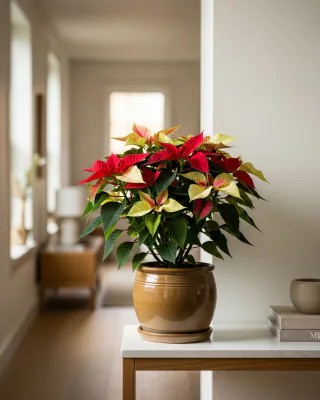 PoinsettiaEuphorbia pulcherrimaToxic to pets
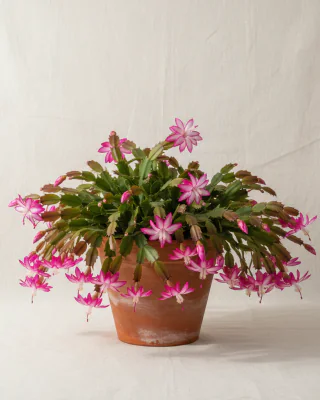 Christmas cactusSchlumbergera spp.Pet-safe
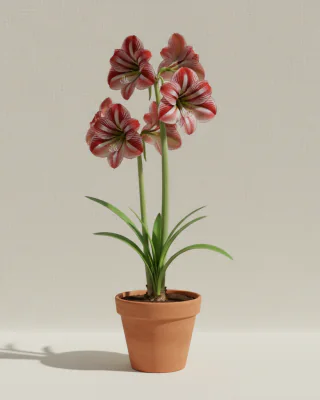 AmaryllisHippeastrum hybridsToxic to pets
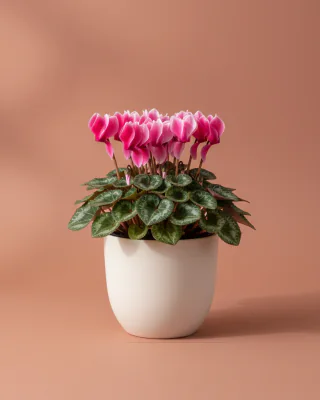 CyclamenCyclamen persicumToxic to pets
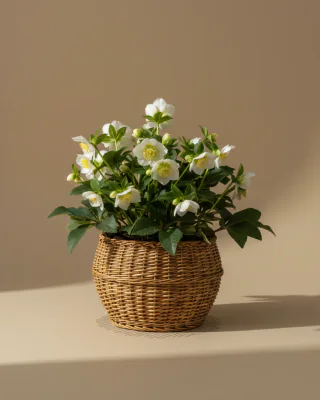 Christmas roseHelleborus nigerToxic to pets
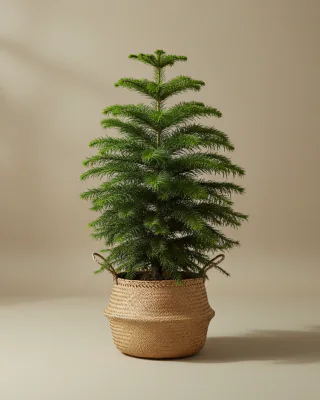 Norfolk Island pineAraucaria heterophyllaPet-safe
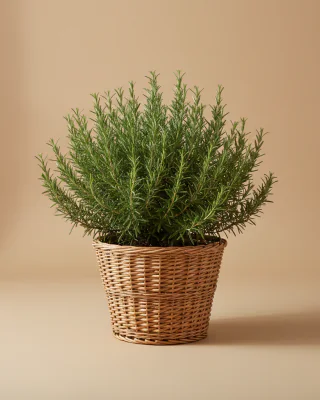 RosemaryRosmarinus officinalisPet-safe
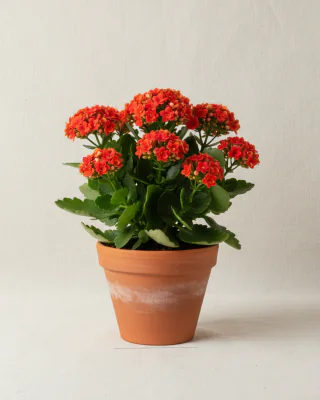 Flaming KatyKalanchoe blossfeldianaToxic to pets
Keep reading
Common questions
What are the most popular Christmas plants?
Poinsettia, Christmas cactus, amaryllis, cyclamen and Christmas rose are the classic flowering ones. Norfolk Island pine and small rosemary trees are sold as living Christmas trees, and flaming Katy is a common flowering gift.
Which Christmas plants are safe for cats?
Christmas cactus, Norfolk Island pine and rosemary are listed as non-toxic to cats and dogs by the ASPCA. Poinsettia is mildly toxic. Amaryllis, cyclamen, Christmas rose and flaming Katy are toxic and should stay out of reach.
Are poinsettias poisonous to cats and dogs?
Yes, but mildly. The milky sap irritates the mouth and stomach and can cause drooling or vomiting. Serious poisoning is rare. Call your vet immediately if you suspect your pet chewed or swallowed any of these plants, even if it seems well.
Which Christmas plant is easiest to keep?
Christmas cactus. It needs bright light without harsh sun and water when the top of the soil dries, and it flowers again each winter after a few weeks of long or cool autumn nights.
How do I keep a poinsettia alive after Christmas?
Keep it bright, at 15 to 21 °C (59 to 70 °F), and water when the top of the soil is dry. If it drops most of its leaves, let it rest cool with only enough water to keep the stems firm, then cut it back in March or April.
Why do Christmas plants die after the holidays?
Usually because of cold drafts, warm air from a radiator or water standing in the decorative foil. Give them the brightest spot you have, away from heaters and cold glass, and empty the foil after watering.
Last reviewed: