



Plants that bloom for months at a time
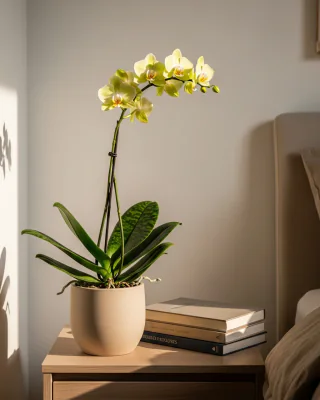
The moth orchid holds its flowers longer than anything else indoors. It stands bright without direct sun, gets watered once the roots in the clear pot turn silvery gray, and drains completely afterward.
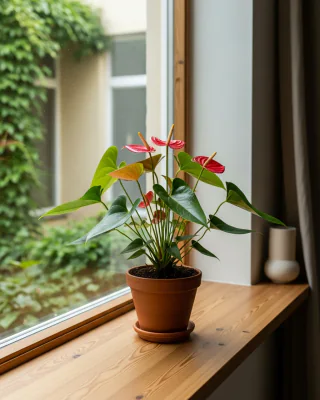
Anthurium pushes out new colored bracts almost year round in steady bright light. The color you notice is a modified leaf, and the actual flower is the spike in the middle.
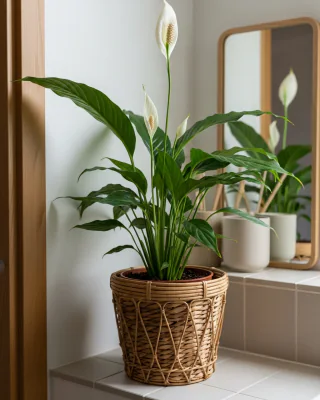
A peace lily still flowers further from the window, if less often. It shows thirst clearly by drooping, which makes watering easier than with most flowering plants.
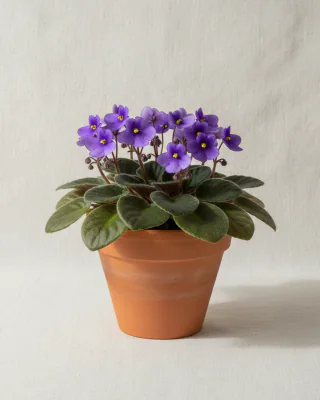
African violet blooms for months on a windowsill without midday sun. Water it from below through the saucer, because drops on the hairy leaves leave marks.
Plants that need a rest first
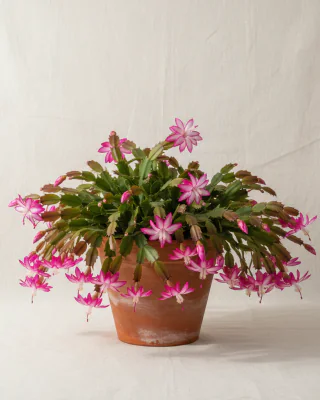
Christmas cactus sets buds when the nights get longer and cooler. Give it a few weeks in fall in a cool spot with long dark nights, and stop turning the pot once you can see buds.
Clivia needs several winter weeks cool and nearly dry, or no flower stalk comes up in spring. After the rest you move it somewhere warmer and water normally again.
Amaryllis pulls its leaves back in after flowering. Leave them until they yellow on their own, then let the bulb rest dry and dark for a few weeks before you start it again.
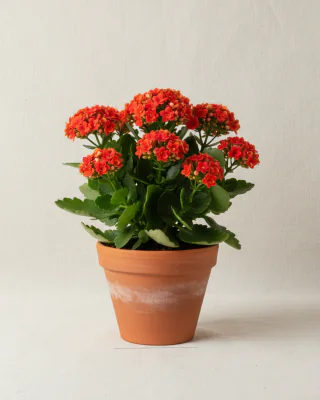
Flaming Katy flowers after short days. If it catches room light in the evening it stays green and budless, so fall is easier for it in a room nobody uses much.
Flowering pots from the supermarket
Florist chrysanthemum, hyacinth and cyclamen reach the store in full bloom and were grown for exactly that moment. Some of them are treated as one-season plants, which is not your doing.
Cyclamen lasts longest if it stands cool and gets watered from below. In a warm living room above a radiator it yellows within a few weeks.
Look a flowering plant over closely before you set it down at home. Aphids favor buds and soft growth, and that is how they get in.
A very light pot with bone-dry soil on the shelf is a bad start. Take a plant with plenty of closed buds over one that is already fully open.

Watering and feeding while it blooms
A plant in flower uses more water than the same plant without flowers. So check the soil more often, and still decide by feeling an inch or two down.
Pour under the leaves at the rim of the pot. Water that sits in open flowers and in dense rosettes makes them rot.
Feed diluted and regularly through growth and bloom rather than rarely and strong. Too much nitrogen gives you soft leaves and few flowers.
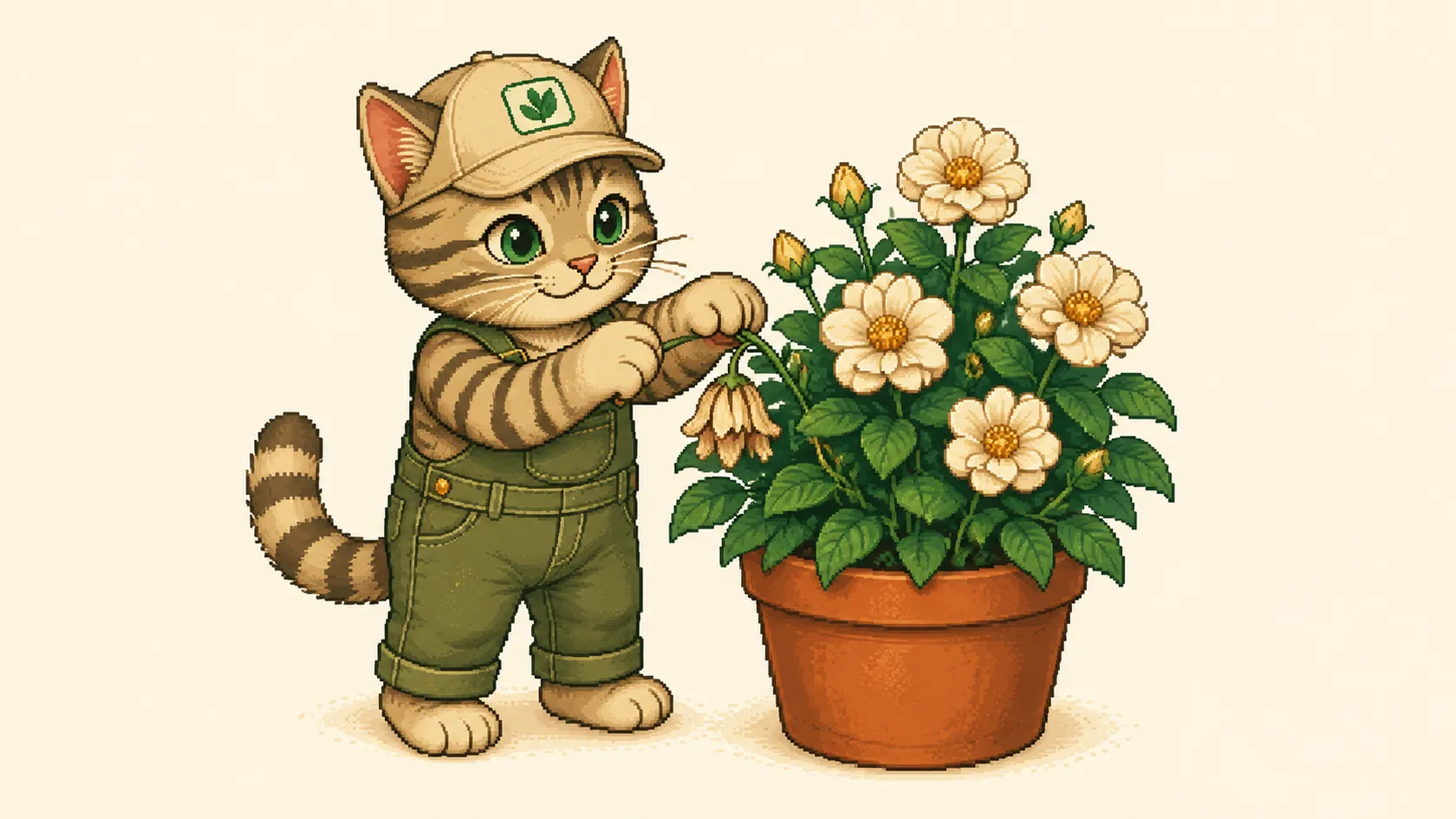
Take spent flowers off as soon as they go limp. While the plant is setting seed it puts its energy there instead of into the next bud.
When a plant will not flower again
The usual cause is too little light. A plant that stays green where it stands can still be too dark there for buds. Move it to the brightest window you have that gets no hard midday sun.
The second cause is a skipped rest. Christmas cactus, clivia and amaryllis flower only if they stood cooler, darker or drier beforehand.
The third is pruning at the wrong time. Wax plant and moth orchid flower again from stems they already have, so those stay in place after the blooms drop as long as they are firm and green.
Change one thing and watch it over a season. If you move the plant, repot it and switch fertilizer at once, you will not know afterward what worked.
The right place in the room
An east or west window suits most flowering plants. They get direct sun in the morning or the evening and bright light at midday, which holds flowers far longer than hard south sun.
Two yards further into the room noticeably less light arrives, even though your eye barely registers the difference. For buds, that stretch is often what decides.
Open flowers last longer when the plant stands cooler. Directly above a radiator they wilt in a few days, and the buds below them never open.
A draft from a patio door that gets opened often makes buds drop before they open. Anthurium and moth orchid are the ones that mind most.
Turn the pot regularly while no buds are showing. Once they appear, leave the plant where it is, because many species drop buds after a move.

Carrying on after the flowers
A plant that has finished flowering is not finished. On a moth orchid, cut the stem off only once it is brown and dry all the way, and otherwise leave it standing.
Repot a bought flowering plant only after the bloom is over. During the bloom, work at the roots costs buds.
When you repot, you often find several plants in one nursery pot. Separate them carefully and pot them singly, so each has room for roots and flowers better next year.
Related plants
Keep reading
Common questions
What houseplants flower all year?
The closest are moth orchid, anthurium and peace lily. In steady bright light they flower for many months and set new buds without a rest period. No houseplant flowers without a break, they all pause.
What is the easiest flowering houseplant?
Peace lily, because it droops before it suffers and gets by on less light. After that come flaming Katy and Christmas cactus, which both store water in their leaves. Both need short fall days for the next round of flowers.
Why is my orchid not blooming?
Usually it stands too dark, or it is missing the day and night temperature difference that starts bud formation. Give it bright light without direct sun and leave the old flower stem while it is green and firm. A new shoot can come from it.
Which flowering houseplants need low light?
Peace lily and anthurium still flower in moderate light, less often and with fewer flowers. No flowering plant works in a spot with no view of a window. Staying green does not mean these plants have enough light to bloom.
Should I cut off dead flowers on houseplants?
Yes, as soon as they go limp. Otherwise the plant sets seed and puts its energy there instead of into new buds. On wax plant and moth orchid the stem itself stays, because flowers can come from it later.
What fertilizer do flowering houseplants need?
A liquid fertilizer at the dilution on the package, used regularly through growth and bloom rather than rarely and strong. Too much nitrogen gives soft foliage and few flowers. Skip it for a few weeks after repotting, since fresh mix brings nutrients of its own.
Last reviewed: 2026-09-12