



How to tell that fertilizer is due
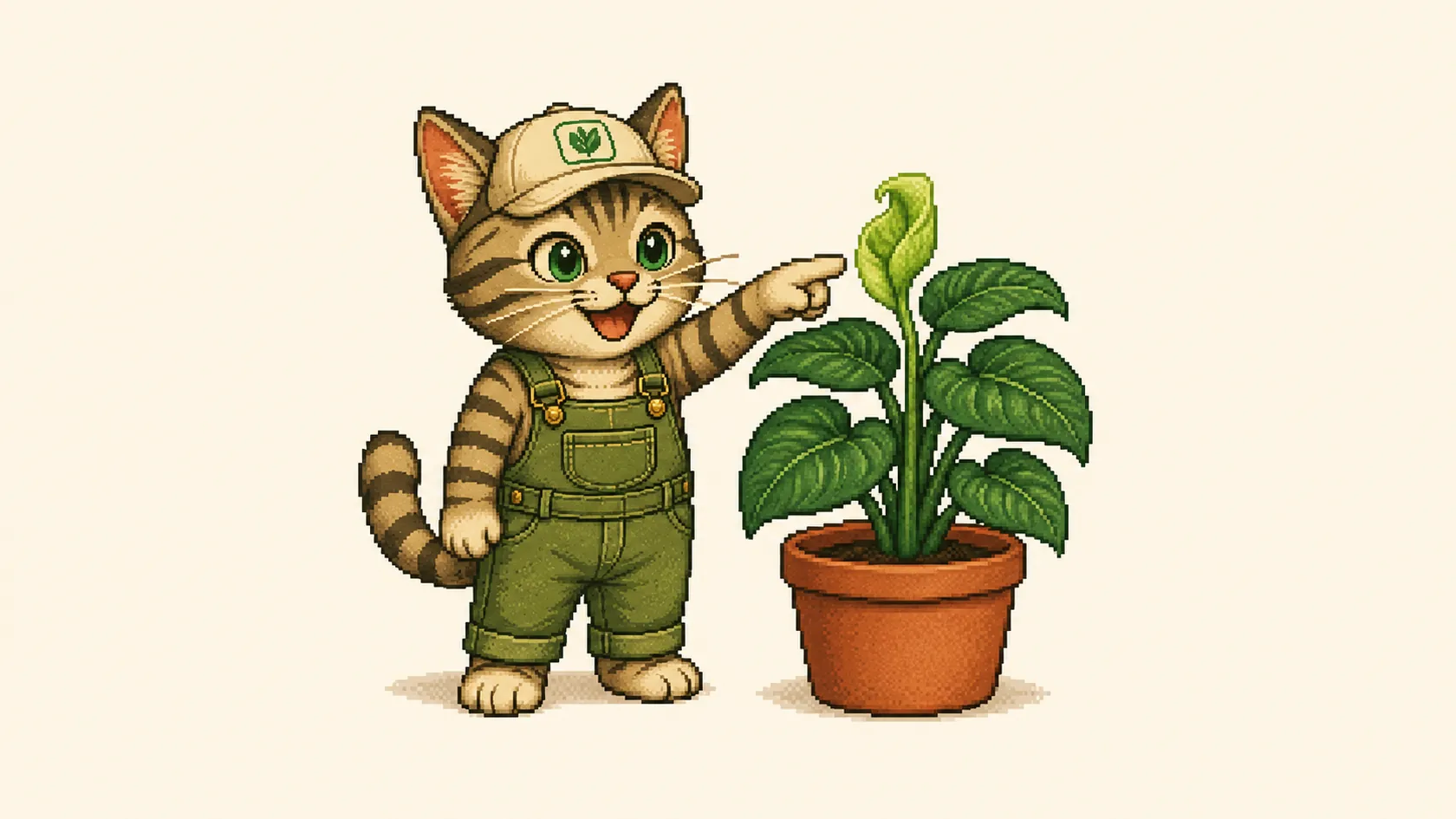
The first sign is new growth. As soon as fresh leaves unroll in spring or a shoot gets visibly longer, feeding starts to do something.
The second sign is time in the same mix. Fresh potting soil usually carries a nutrient supply for a few weeks. A plant that has stood in the same pot much longer and still grows has used that up.
A shortage usually looks like this on the plant: evenly paler leaves, small new leaves and growth that gets nowhere in summer. The same signs come from too little light and from a pot filled solidly with roots, so check the spot and the roots before you reach for the bottle.
Freshly repotted plants get no fertilizer for several weeks. The new soil delivers enough, and freshly disturbed roots react badly to salt.
Feeding follows growth, not the calendar
For most houseplants the growing phase falls roughly in the bright half of the year. That is a rule of thumb and not a date. What counts is whether your plant is putting out new leaves right now.
A plant in a very bright spot or under a grow light can keep growing through winter. Then you keep feeding, weaker and less often than in summer, because it uses less.
If no new leaf appears for several weeks, stop. Fertilizer does not replace light and does not speed up a resting plant. All it does in that stretch is leave salt in the pot.
The gap between two feeds depends on the product. A liquid fertilizer goes in regularly with the water, slow release granules last for months. The label of the product you have sets the frequency, not a general rhythm for all plants.
Which fertilizer fits
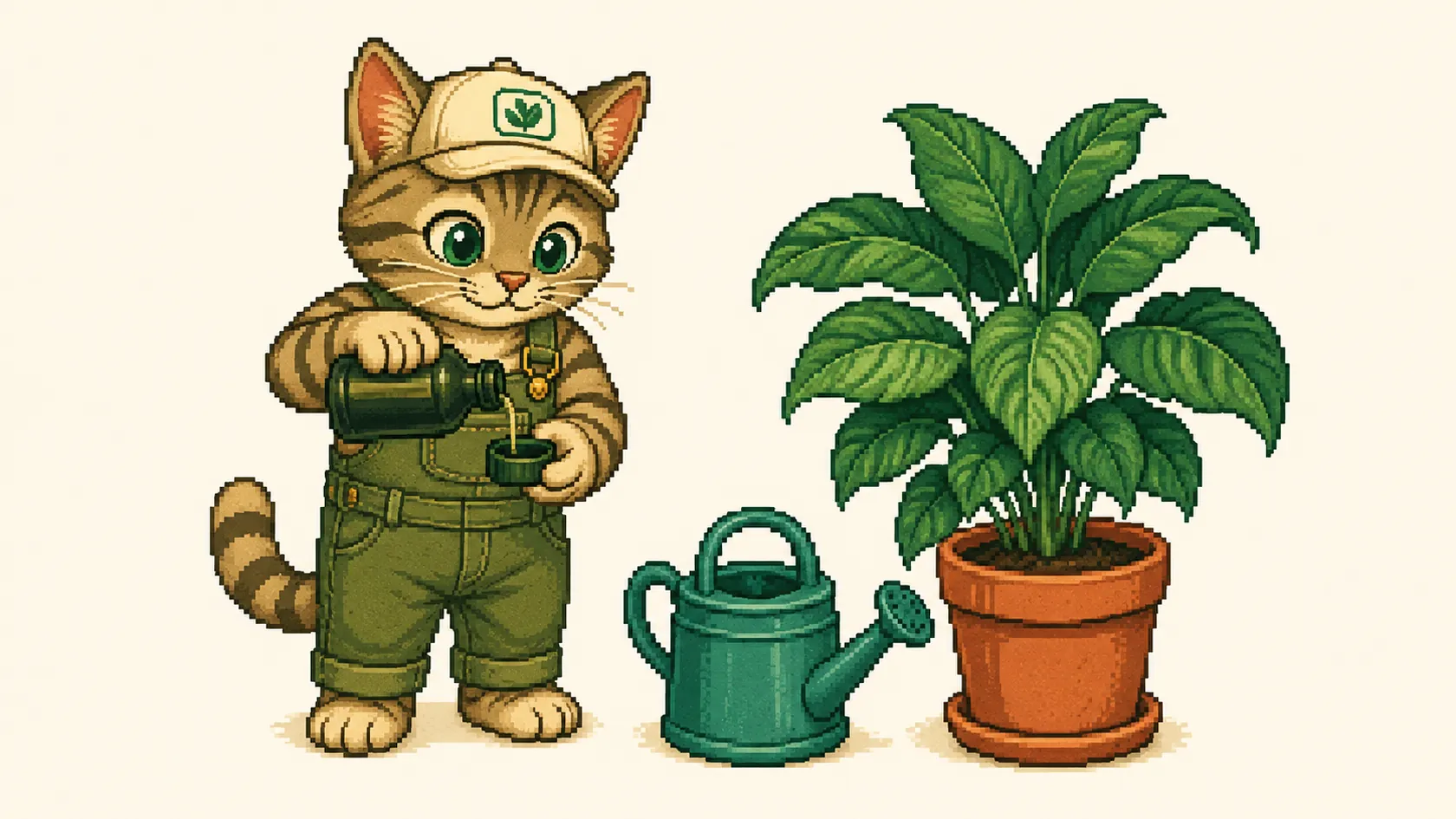
A balanced liquid fertilizer for houseplants covers most of a mixed collection. The three numbers on the bottle stand for nitrogen, phosphorus and potassium. Nitrogen drives leaves and shoots, phosphorus and potassium go more into roots, flowers and firmness.
For foliage plants pick a fertilizer with a higher nitrogen share. For flowering plants such as flaming Katy or hibiscus, a bloom fertilizer with more potassium suits better.
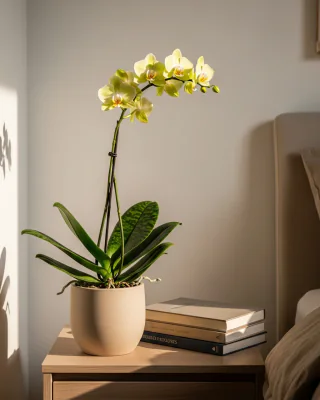
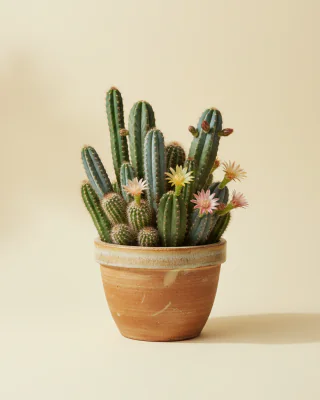
A few groups need their own product. Orchids sit in bark rather than soil and take a much weaker orchid fertilizer. Cacti and succulents want little nitrogen. Citrus and azaleas have their own demands for lime and iron that a specialist fertilizer covers.
Fertilizer spikes and granules save work and release nutrients at one spot in the pot. Around a spike the concentration is high, and roots lying against it take damage. Push them in near the rim rather than beside the stem.
Organic fertilizers based on plant residues or horn meal work more slowly, because soil life has to convert the nutrients first. In a pot with little soil life that runs sluggishly. Mineral liquid fertilizers are easier to steer there.
Getting the dose right
Never feed a dried out root ball. Dry roots take the solution up unchecked and burn. Water with plain water first and feed at the next round, or water thoroughly beforehand.
Half the dose on the label is a good starting point for houseplants, given a little more often in exchange. An underfed plant catches up in two weeks, burned roots need months.
Spread the solution over the whole pot rather than in one place, and pour enough that a little runs out at the bottom. Tip the saucer out afterward, or the concentrated solution gets pulled back into the root ball.
The same amounts do not apply to foliar sprays. They are mixed weaker and only stand in for root feeding briefly.
Feeding orchids
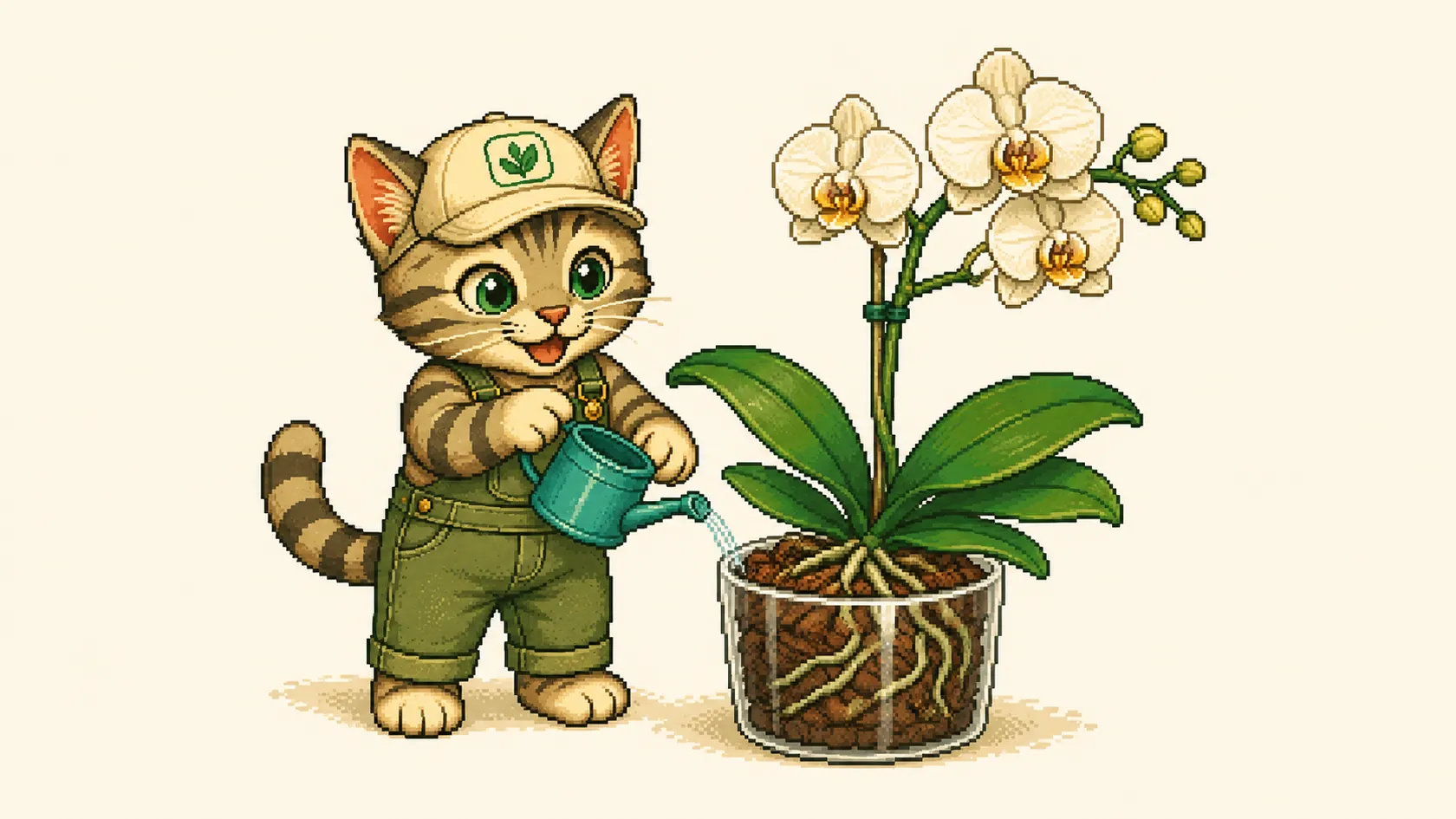
A moth orchid roots in bark, which supplies almost no nutrients itself and buffers salts poorly. So use an orchid fertilizer and dose it weaker still than stated.
The easiest way is to put the fertilizer in the soaking water. After the soak, let the pot drain completely so no solution sits in a leaf axil or between the roots.
Water with plain water in between, so salts get rinsed out of the bark. In the stretch without a new leaf and without a new root tip, stop feeding.
What home remedies do and do not do
Coffee grounds are no substitute for fertilizer. They hold a little nitrogen but only release it as they break down, and spread wet on the soil they grow mold and attract fungus gnats. If you want to use them, dry them completely and work a thin layer flat into the top of the soil a few times a year.
Crushed eggshells mainly deliver lime and dissolve very slowly. For plants that want lime free conditions, such as azalea or calathea, they are unsuitable.
Yeast and cinnamon are not fertilizers. Yeast delivers no nutrients worth counting for a pot, and cinnamon is used in practice as a powder on cut surfaces, not as a nutrient source.
Water that banana peels have stood in contains some potassium, in an amount nobody knows. Harmless as an occasional addition, not plannable as a basic supply. Cooled unsalted vegetable water falls in the same category.
Homemade nettle tea is a real nitrogen fertilizer, though at a strength that varies and with a smell nobody wants in an apartment. Heavily diluted and used outdoors it makes sense, indoors less so.
Spotting and fixing overfeeding
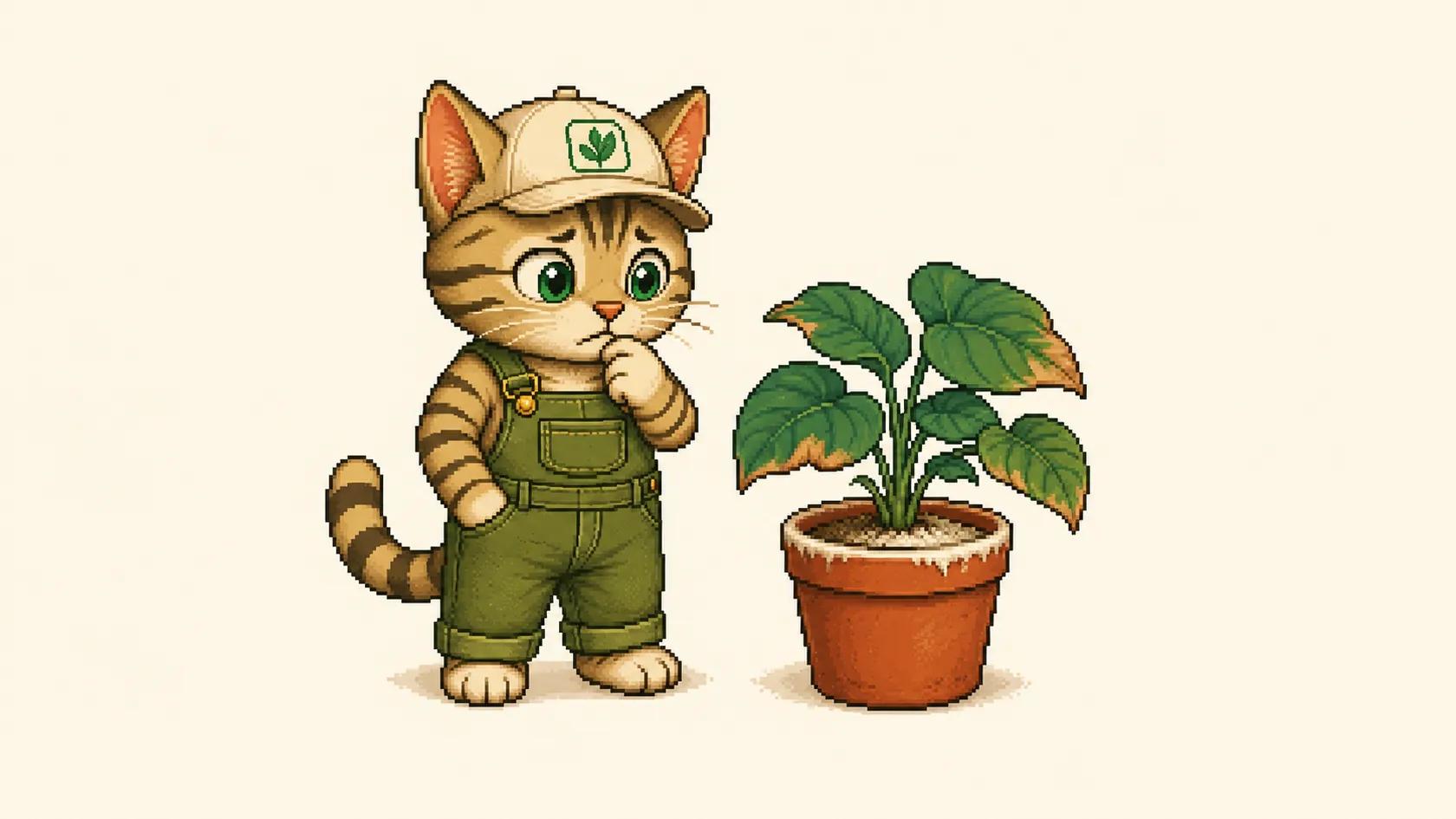
Too much fertilizer shows as dry brown leaf edges and tips, a white or yellowish crust on the soil and the rim of the pot, and limp leaves despite wet soil. Very young leaves often stay small and deformed with it.
To flush it out, stand the pot in the sink and run lukewarm water through slowly for several minutes, roughly four times the volume of the pot. Then let it drain completely.
After that, stop for at least a few weeks and start again only when a healthy new leaf appears. With heavy crusting, fresh mix and a repot is the safer route.
Burned leaf edges do not turn green again. Judge the result on the leaves that appear after the treatment.
Related plants
Keep reading
Common questions
When should you start fertilizing houseplants?
As soon as the plant is visibly growing again, meaning new leaves or shoots. For most houseplants that coincides with the longer daylight in spring. Freshly repotted plants stay without fertilizer for several weeks.
How often should you fertilize houseplants?
The frequency is on the product and differs sharply between liquid fertilizer and slow release granules. Stick to that instruction and feed weaker and a little more often rather than the reverse. In stretches without new growth, stop entirely.
Should you fertilize houseplants in winter?
If the plant is not growing in winter, the fertilizer stays behind as salt and harms the roots. If it stands very bright or under a grow light and keeps pushing, feed on, weaker and less often.
What is the best fertilizer for houseplants?
For a mixed collection a balanced liquid fertilizer for houseplants is the most practical choice, because you steer the amount through the dilution. Orchids, cacti and citrus get their own product.
Are coffee grounds a good houseplant fertilizer?
Coffee grounds replace no fertilizer, because they only release nutrients as they break down. Wet on the soil they grow mold and attract fungus gnats. Dried and worked in thin and flat, they are defensible as an occasional addition.
What do I do if I have fertilized too much?
Flush the pot in the sink with lukewarm water, roughly four times the volume of the pot run through slowly, then let it drain completely. Leave the fertilizer alone for a few weeks. Leaf edges that are already burned will not recover.
Last reviewed: 2026-09-07