

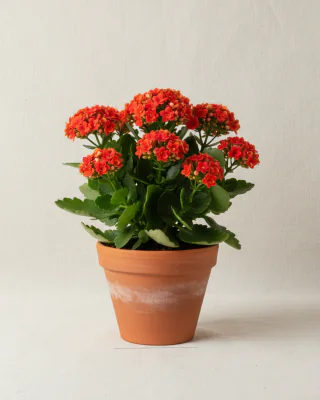
At a glance
- Light
- Bright light, some sun
- Typical interval
- Every 8 to 12 days (summer)
Every 20 to 30 days, sometimes less (winter) - Climate
- 18–24 °C
- Humidity
- 30–60 %
- Pet safety
- Toxic to cats and dogs
- Scientific name
- Kalanchoe blossfeldiana


When and how much water
Water flaming Katy when the soil has dried out completely. In summer that’s typically every 8 to 12 days. In winter, slow down to every 20 to 30 days, sometimes less. Use room-temperature water and let any excess drain. Never leave the pot sitting in standing water.
Light and placement
Flaming Katy needs bright light and a little gentle direct sun, such as morning sun. Strong midday sun can scorch the leaves. Place it close to an east- or west-facing window.
Feeding
Feed flaming Katy every 75 days while it’s actively growing. Use a cactus and succulent fertilizer, which is lower in nitrogen, at half the strength on the label, and only on soil that’s already damp.
When growth pauses, skip the fertilizer and let it rest.
Temperature & humidity
Flaming Katy is comfortable between 18 and 24 °C. Below 10 °C the leaves start taking damage, so keep it clear of cold drafts and unheated rooms.
It does best at 30–60% humidity. It doesn’t need misting.
Common problems
Yellowing, drooping, and dry edges often point to watering or drainage. Compare the signs before changing the routine.
Find what’s wrong
Toxic to pets?
Yes. Keep it out of reach.
Pet-safety information in the JungleBook uses ASPCA reference data where available. It is reference information, not veterinary advice.
Full Flaming Katy toxicity guide →
Pet-safe alternatives with similar light

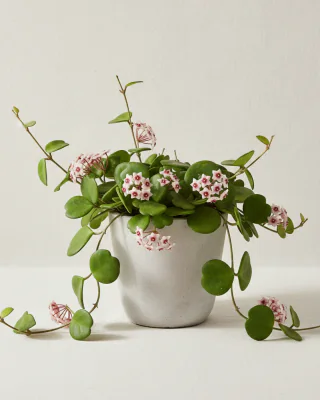
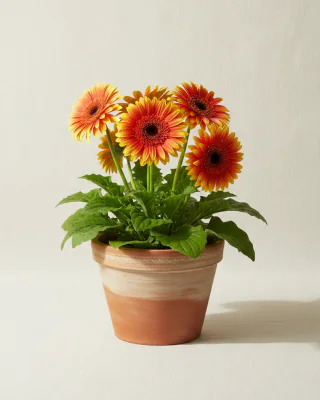
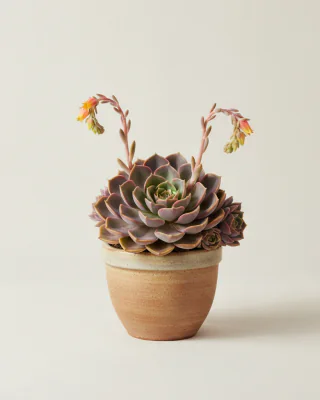
Common questions
How often should I water a Flaming Katy?
Water your flaming Katy (Kalanchoe blossfeldiana) when the soil has dried out completely. In summer, that’s typically every 8 to 12 days. In winter, slow down to every 20 to 30 days, sometimes less.
How much light does a Flaming Katy need?
Flaming Katy needs bright light and a little gentle direct sun, such as morning sun. Strong midday sun can scorch the leaves. Place it close to an east- or west-facing window.
Is Flaming Katy safe for cats and dogs?
The plant contains bufadienolides (cardiac glycosides). Chewing it can cause oral irritation, drooling, and vomiting. Keep flaming Katy out of reach of pets, or pick a non-toxic alternative like wax plant, sweetheart plant, Gerbera daisy, or Echeveria.
Why are my Flaming Katy’s leaves turning yellow or drooping?
On a flaming Katy, yellowing and soft growth usually mean overwatering: watch for yellowing leaves, mushy stem base, or root rot. Let the soil dry further between waterings and check drainage. If you see wrinkled leaves, puckered leaf tips, or limp drooping leaves instead, it’s likely thirsty. Water a little more often. With Botanicaly Pro, Botanicaly Bot can help assess visible signs from a photo and suggest possible causes.
Sources5 references
- Royal Botanic Gardens, Kew: Plants of the World OnlineTaxonomy · accepted name · native range · habit
- Royal Horticultural SocietyGrowing Conditions · Botanical Details · Cultivation · Pests · Diseases
- North Carolina State University Extension Gardener Plant ToolboxDescription · Cultural Conditions · Insects, Diseases, and Other Plant Problems
- University of Florida IFAS ExtensionFPS-309 · cultural conditions · diseases
- ASPCA Animal Poison ControlKalanchoe spp. pet-safety record · not species-exact for Kalanchoe blossfeldiana
Last reviewed: 2026-09-21