



The one situation with no plant answer is a room with no daylight reaching it. That needs a lamp or a rotation, and it is worth settling before you choose a pot.
What counts as a dark room
Your eyes adjust, so a room almost always looks brighter than it is to a plant. Judge the spot instead of the room.
Stand where the pot will go and look toward the window. How much open sky you can see from there is roughly the light the plant gets. A view of a wall opposite, or of a balcony floor above, cuts it a long way down.
Distance takes light away fast. A shelf ten feet into the room gets a small fraction of what the windowsill gets, even though the room feels evenly lit to you.
Curtains, a tree outside and a north-facing aspect each remove another share. A north window with clear glass and open sky is a better spot than a south window behind a hedge.
Plants that cope with little light
Cast-iron plant is the one that lives where nothing else does. It takes a dim hallway and a cool corner, grows very slowly there and asks for almost no water.
ZZ plant stores water in thick rhizomes and stalks. It stands well back from a window for weeks between waterings and keeps its glossy look.
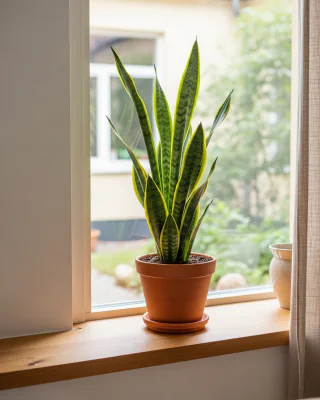
Snake plant holds up in a dim corner and takes up little floor space. It grows more slowly there, which mostly means you water it less.
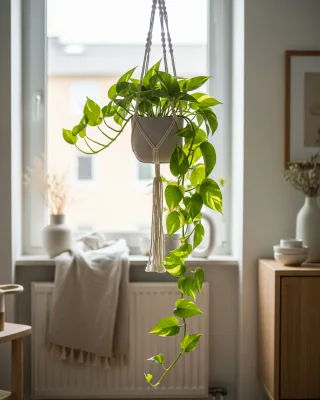
Golden pothos is the easiest trailing plant for a dark shelf. In low light the yellow marbling fades toward plain green, and the plant itself is fine.
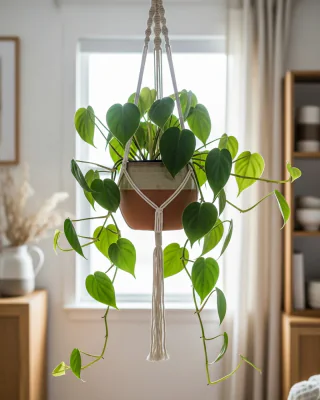
Heartleaf philodendron does the same job with softer leaves and forgives an irregular watering routine.
Chinese evergreen brings pattern rather than plain green, and the darker-leaved varieties handle a dim spot better than the pale pink ones.
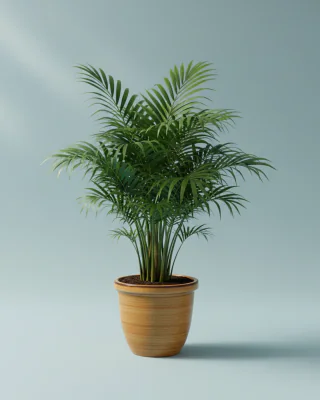
Parlor palm suits a corner that needs height without a bright window. It stays modest in size and dislikes direct sun anyway.
Peace lily flowers less in a dark room and still keeps its leaves. It also droops visibly when it is thirsty, which makes it easy to read.
Spider plant tolerates a dim spot, though it makes fewer of its trailing plantlets there.
Boston fern will hold on in low light as long as the air is not dry and the soil never dries out hard. It is the most demanding plant on this list.
Whether a species is a problem around pets or children is covered in that plant’s own care guide.
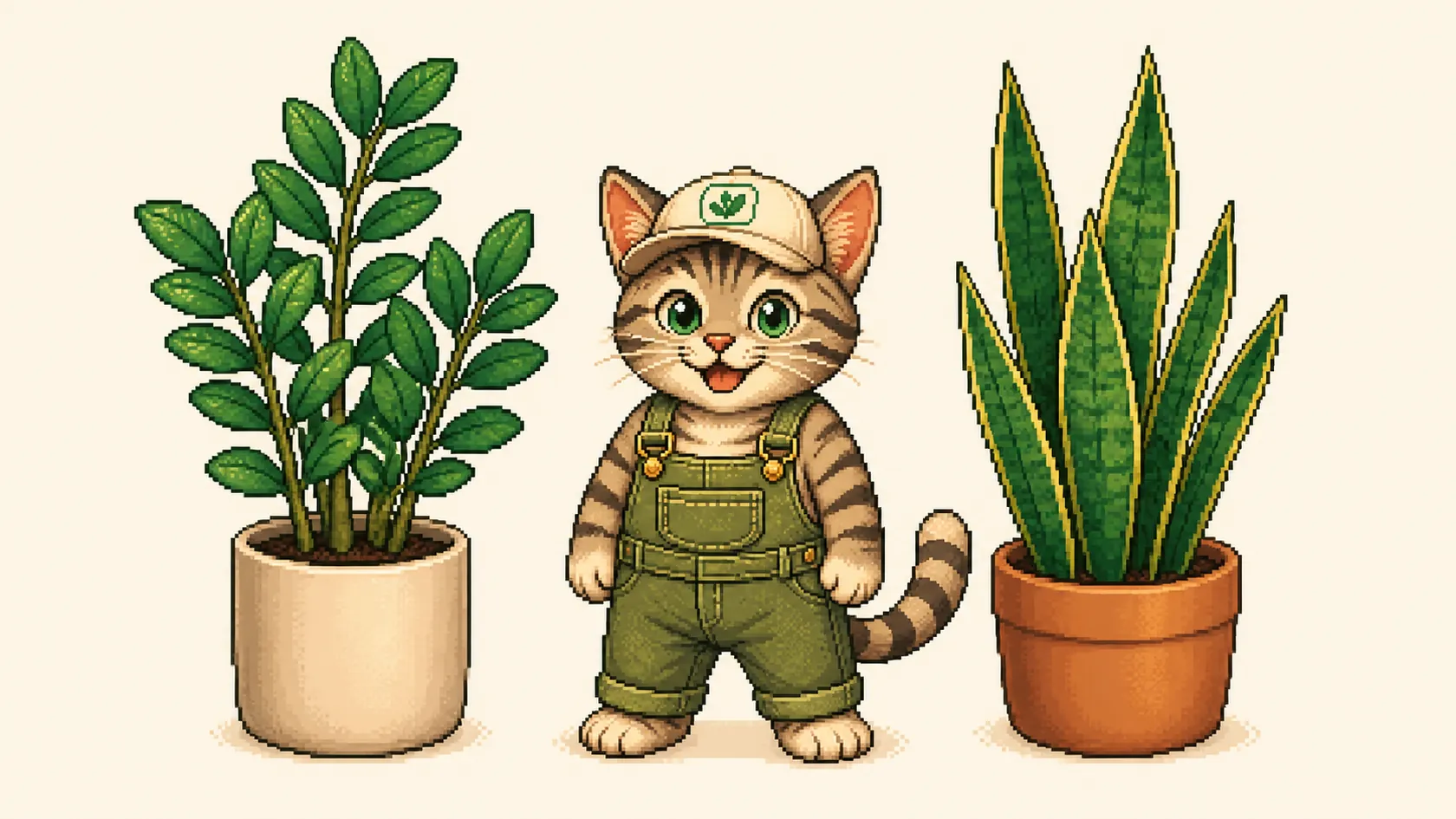
A room with no window
No houseplant lives long term in a windowless room. A bathroom with no window, an inner hallway and a basement corner all fall into this group, however tough the species is.
The first real option is a grow light on a timer for several hours a day, positioned close enough to matter. A ceiling light left on in the evening does not do this job.
The second option is a rotation. Keep two plants of the same kind, put one in the dark room for a couple of weeks and the other in a bright room, then swap them.
The third is to accept it. A cut stem in water or a plant you replace when it declines is an honest choice for a windowless downstairs toilet, and cheaper than watching a good plant fade.
Less light means less water
This is where most dark-room plants actually die. The plant grows slowly, uses little water, and the routine that suited it by the window drowns it in the corner.
Water by the soil, not by the day. Push a finger an inch or two down, and if there is any dampness there, wait and check again in a few days. Boston fern is the exception: water it as soon as the surface feels dry.
Pot weight is the faster check once you know the plant. Lift the pot right after watering so you learn what full feels like, then compare.
Water until it runs out of the drainage hole, then tip out whatever collects in the saucer or the cachepot after half an hour. In a dim corner that leftover water sits for a long time.
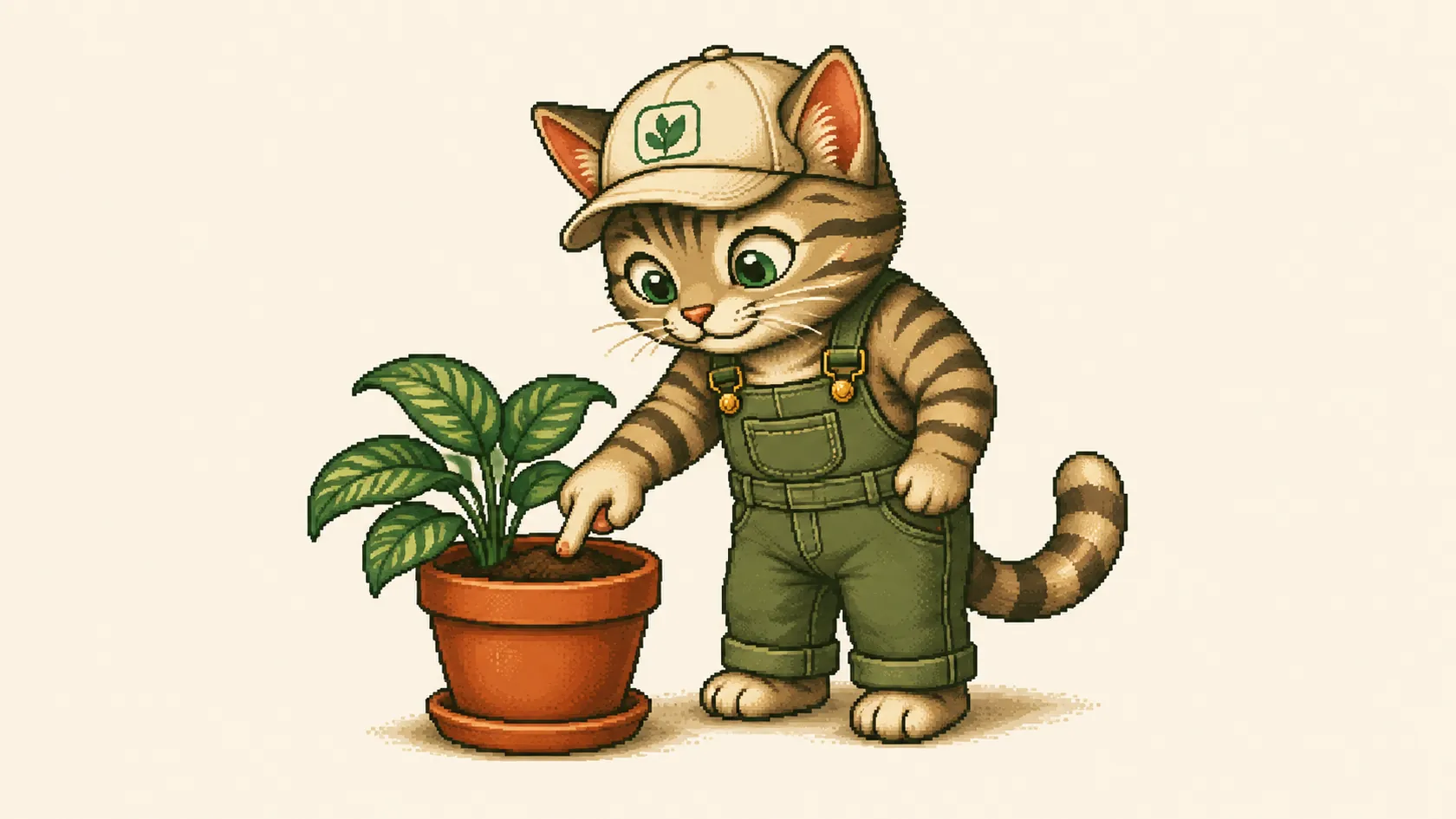
Where to put the pot in a dark room
Give the best light in the room to the plant rather than to the furniture. The floor beside the window beats a high shelf on the far wall.
Pale walls and a mirror opposite the window put a useful amount of light back into the room. A dark wall behind a pot absorbs it.
Keep the pot out of the draft from a door and away from a radiator. Cold air and dry heat both hit a plant harder when it is already growing slowly.
Turn the pot a quarter turn whenever you water it. In a dark room a plant leans hard toward the only light it has, and turning it keeps the shape even.
Signs the spot is too dark
New leaves come out small and sit far apart on a long bare stem. That stretch is the plant reaching for light and it does not reverse.
Variegated leaves turn plain green. The plant drops the white and yellow parts because they do no work in low light.
The whole plant goes pale rather than yellow in patches. Pale all over with slow growth points at light, while yellow lower leaves with wet soil point at watering.
Old leaves drop and nothing replaces them. At that point move the plant to a brighter room for a while, or add a lamp, and cut the watering back until it is growing again.

Keeping a plant going in a dim corner
Wipe the leaves every few weeks. Dust costs a plant light it cannot spare in a dark room, and wiping is also when you spot pests early.
Feed very little. A plant that is barely growing cannot use fertilizer, and what it does not use stays in the pot as salts.
Repot only when the roots come out of the drainage hole or water runs straight down the side. A larger pot in a dark corner means more wet soil with no roots in it.
Buy a plant that was grown in reasonable light and give it time to adjust. A plant moved straight from a bright shop floor to a dim corner usually drops a few leaves before it settles.
Related plants
Keep reading
Common questions
What are the best indoor plants for dark rooms?
Cast-iron plant, ZZ plant, snake plant, golden pothos and heartleaf philodendron are the most reliable. For a corner that needs height, a parlor palm works. All of them grow slowly in low light and need less water there.
Can plants survive in a room with no windows?
Not long term. A grow light running several hours a day is the real fix. Otherwise keep two plants and swap the one in the dark room with the one in a bright room every couple of weeks.
How do I know if my room is too dark for plants?
Stand where the pot will go and look at how much open sky you can see. If you can see none, the spot is dark for a plant. Slow growth is fine, but small pale leaves on long bare stems mean it is too dark.
How often should I water plants in a dark room?
Less often than the same plant by a window, and by the soil rather than a fixed day. Feel an inch or two down and water only when it is dry there. Wet soil in a dim corner is the usual cause of death.
Do plants in dark rooms need fertilizer?
Very little. Growth is what uses fertilizer, and a plant in low light barely grows. Anything it cannot take up stays behind in the soil as salts, which shows up as brown leaf tips and a crust on the pot rim.
Why did my variegated plant turn green in a dark room?
The pale parts of a variegated leaf collect little light, so in a dim spot the plant makes greener leaves instead. Move it somewhere brighter and the new growth comes back marked. The leaves that already turned stay green.
Last reviewed: 2026-09-07