



What a north window actually gives you
At a north window the light comes from the sky and never from the sun itself. That is exactly the light described in care guides as bright and indirect, and here it happens without a curtain and without any shading.
For tropical foliage plants it sits close to their conditions under a forest canopy. They get enough light to grow and no radiation that scorches leaves.
The amount is still limited. A plant that would stand three feet back from a south window needs the spot right against the glass on the north side.
Distance to the glass counts more than the compass
Light is strongest right at the pane at every window, and it falls away fast toward the back of the room. A plant six feet into the room gets a fraction of what lands on the sill, even when the room looks evenly bright to your eye.
At a north window you do not have that room to spare. Put the plants as close to the pane as draft and cold allow, and keep the area in front of the window clear.
Anything that narrows the opening costs light. A net curtain, a blind pulled halfway, a tree in front of the house, a balcony above, a wall opposite. A north window four floors up over the rooftops delivers far more than a ground-floor window in a courtyard.
Clean the pane before winter and wipe the dust off the leaves. Both do more than they sound like when light is short.

Plants that do well at a north window
Cast-iron plant is the most dependable choice. It holds up in dark corners and cool rooms and needs water only rarely.
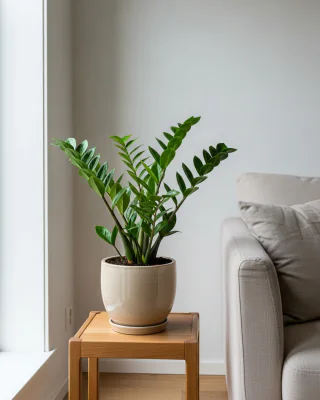
ZZ plant stores water in thick leaf stalks and forgives a missed watering, which is the more common situation in a dim spot anyway.
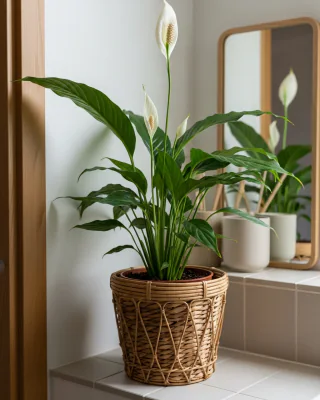
Peace lily flowers without direct sun and shows a shortage of water early and clearly by drooping its leaves.
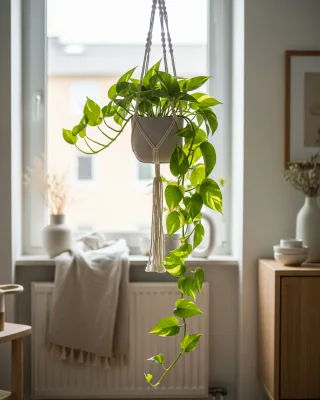
Golden pothos grows more slowly at a north window than in a bright spot. It keeps putting out shoots and can be shortened wherever you like.
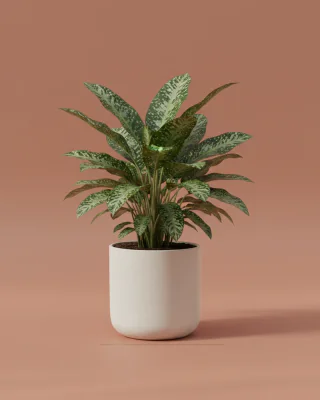
Chinese evergreen copes with little light, and the dark green varieties take it better than the heavily patterned ones.
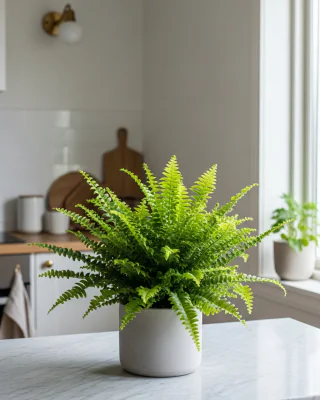
Boston fern accepts the even light and the higher humidity of that side, as long as the soil never dries out completely.
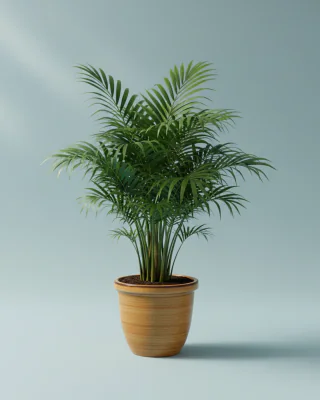
Parlor palm stays small, grows slowly and holds up at a north window better than any other indoor palm.
Peacock plant has its best spot on the north side, because direct sun bleaches out its markings.
Heartleaf philodendron keeps climbing a support in moderate light and stays presentable while it does.
Snake plant tolerates low light and gets through a north window without trouble. It grows very slowly there, which can be an advantage in a small apartment.
Whether any of these species is a problem around pets or children is covered in its own care guide. A vet or a doctor is the right call if you suspect poisoning.
What does not work at a north window
Cacti and most succulents need direct sun. On the north side they stretch, which means thin pale shoots reaching for the light and a lost compact shape. That cannot be undone.
Flowering plants set no buds without enough light. An amaryllis, a hibiscus or a lemon tree stays green at a north window and stops flowering.
Heavily variegated varieties with white or yellow leaf areas lose their markings. The pale areas hold no chlorophyll, and in short light the plant builds plain green leaves again.
Kitchen herbs do not belong there either. Basil, rosemary and thyme need sun and turn long and soft at a north window.
Watering and feeding on the north side
In low light a plant grows more slowly and uses less water. The soil stays wet for longer, and that is what kills most plants at a north window.
Water by pot weight and the finger test instead of a rhythm you brought over from a bright window. Dry an inch or two down is the threshold where you water again. Boston fern is the exception: water it as soon as the surface feels dry.
Empty the saucer and the cachepot after watering. Standing water is even less forgiving in a dim spot, because the soil barely dries out on its own.
Feed more sparingly than at a bright window. A plant that grows little takes up little, and the rest stays in the soil as salt.

Winter at a north window
Between November and February the north side is the darkest place in the home. Move the plants as close to the pane as they will go during those months and pull the curtains aside.
Watch the cold at the glass while you do it. Leaves resting against an old pane overnight pick up brown patches, and soil on a cold sill cools down further than soil in the room.
Water noticeably more sparingly in winter and stop feeding until new growth arrives in spring.
Expect no growth in that stretch. A plant that only holds its leaves from November to February has come through the winter well.
When the light is not enough
A shortage of light has its own picture. New leaves come in smaller and paler than the old ones, the gaps between the leaves get longer, the shoots bend toward the window and the lower leaves drop.
Move the plant closer to the window before you change anything else. A yard of difference does more than any change to water or fertilizer.
If the spot stays too dark, a grow light above the plant that runs several extra hours a day through winter helps. A normal ceiling fitting does not replace a window.
When neither is possible, change the species rather than the care. A cast-iron plant in the place where a fiddle-leaf fig gave up is the simpler answer.
Related plants
Keep reading
Common questions
What plants grow best in a north-facing window?
Cast-iron plant, ZZ plant, peace lily, golden pothos, Chinese evergreen, Boston fern, parlor palm, peacock plant and heartleaf philodendron all cope there. They come from places with even, filtered light and need no direct sun.
Is a north-facing window too dark for plants?
Not for many foliage plants, as long as they stand close to the pane. It gets too dark for cacti, succulents, flowering species and heavily variegated varieties, and for any spot well back in the room.
Which plants are good for the north side of a house?
The same ones as for a north window, with one addition: on the north side the distance to the glass counts double. Put the fussier species on the sill and only the toughest ones further into the room.
How often should I water plants at a north-facing window?
Less often than at a bright window, and by the same standard. Check pot weight and the soil an inch or two down, and water only when it is dry there. A fixed rhythm produces wet soil fastest in a dim spot.
How can I tell a plant is not getting enough light?
New leaves come in smaller and paler, the gaps between leaves get longer, the shoots grow toward the window and lower leaves fall. Move the plant closer to the window before you change anything else.
Does a grow light help at a north-facing window?
Yes, mostly from November to February. Hang it above the plant and let it run several extra hours during the day. An ordinary ceiling light gives too little for that.
Last reviewed: 2026-09-07