



How to tell a plant is short of light
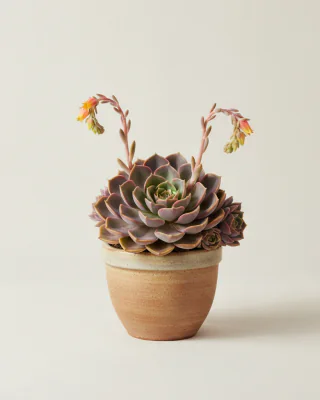
The clearest sign is stretched growth. The stem between two leaves gets long, the plant leans toward the window and the new leaves come out smaller than the old ones. On a rosette such as an echeveria the tight stack opens up and the plant reaches upward.
The second sign is even paleness. Older leaves lighten across the whole blade, variegated types lose their pattern and go plain green, and a flowering plant sets no buds.
The third is a plant that simply stands still through the bright half of the year while the watering and feeding have not changed. Soil that stays wet for a week or more in summer points the same way, because a plant in poor light uses very little water.
None of these is proof on its own. A plant that is stalling can also be root bound or short of nutrients, so lift it out and look at the roots before you buy a lamp.

What a lamp can and cannot do
Move the plant first. A spot right at the window, or a north facing window instead of a corner three yards back, often supplies more light than a small lamp will. Light drops away fast with distance from the glass, and a step closer costs nothing.
A grow light earns its place where that is not available. Rooms with one small window, a shelf away from the glass, a bathroom with frosted glass, a desk in the middle of the room and the dark months in a northern winter are the usual cases.
A lamp adds light. It does not add warmth worth counting on, it does not fix soil that stays wet, and it does not make a plant grow in a season when it has stopped by itself.
The ordinary bulbs in a room lamp are built to light a room for people, and they are far too weak at plant height to change anything. What they do is make the room look brighter to you, which is the reason rooms get misjudged.

Choosing a lamp
White full spectrum LEDs are the practical default. Full spectrum means the light covers the visible range instead of just the red and blue bands, which is why the plants look their normal color under it rather than purple. Plants grow under the purple lamps too, but you cannot judge a leaf under them.
The numbers printed on the box are hard to compare between makers, and a wattage figure tells you what the lamp draws rather than what reaches the leaf. Take the specification as a rough size guide and judge the result on the plant instead.
Match the shape of the lamp to the shape of the planting. A single clip lamp suits one plant, a bar or panel suits a shelf, and a bulb in an existing fixture suits a corner where a fitting already hangs.
Heat matters at close range. Put a hand where the top leaves sit and leave it there. If it feels warm, the lamp is too close for the plant as well.
Where to put it and how far away
Light falls off sharply with distance, so a lamp twice as far away delivers far less than half. That is the single thing that decides whether a small lamp does anything at all.
Hang it above the plant rather than to the side. A lamp off to one side pulls the plant over the same way a window does, and you end up turning the pot every week.
The maker states a hanging distance for the lamp, and that is the number to start from, because it is the one thing they know about their own product. Then correct it by what the plant does over the next few weeks.
Plants at the edge of a bar or panel get much less than the ones in the middle. Put the plant that needs the most light directly under it and the tolerant ones out at the ends.
How long to run it
Put the lamp on a timer on the first day. A grow light that depends on somebody remembering it delivers a different day length every day, and that is the one thing a lamp is supposed to fix.
A block of roughly 12 hours suits most foliage houseplants. Run it as one continuous block during the day rather than in pieces.
Every plant needs a dark period. Leaving a lamp on around the clock does not speed growth up and it disturbs plants that set flowers by day length, among them Christmas cactus and poinsettia.
In winter the lamp is doing most of the work, in summer it is topping up a bright room. Shorten the block or switch it off in the months when the window alone is enough.
Watering and feeding change under a lamp
A plant under a lamp uses more water than the same plant did in the dark corner. Check the soil more often for the first few weeks, and let the finger test set the interval as usual.
Growth that starts up again also uses nutrients. A plant that has been in the same mix for a long time and is now pushing new leaves under the lamp is the case for a weak, regular feed.
A plant that keeps growing under a lamp through winter keeps being fed, weaker and less often than in summer. A plant that stands still through winter regardless gets none.
Clean the lamp and the leaves now and then. Dust on the fixture and on the foliage costs light that you are paying for.
When the light is too much
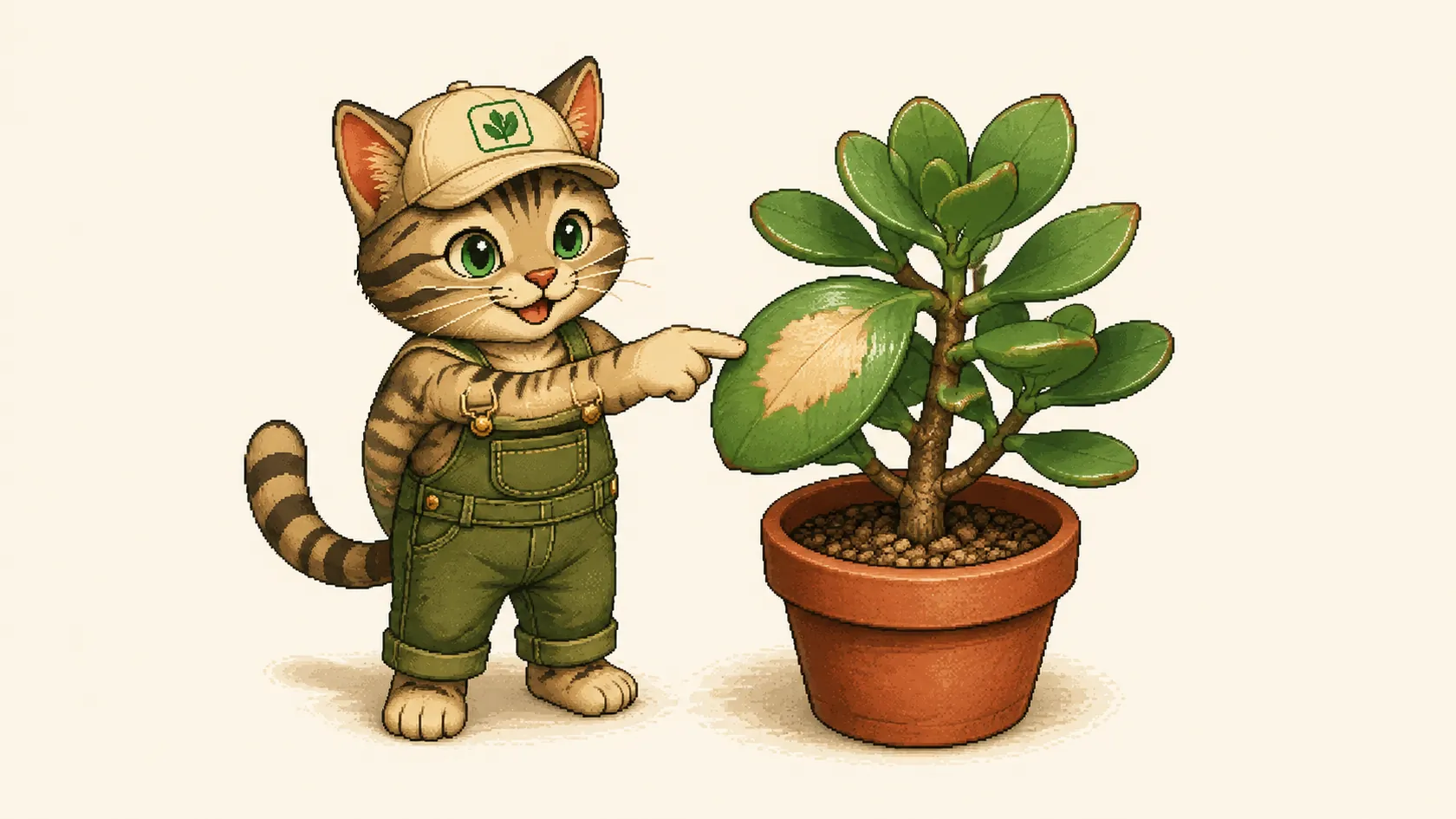
A dry, bleached patch on the upper surface of the leaves that face the lamp means the lamp is too close. Raise it and leave the plant alone, because the patch itself will not recover.
Leaves that turn dull red or curl inward under a strong lamp are the milder version of the same thing. Raise the lamp or shorten the daily block.
Move a plant into strong light in steps rather than in one jump. A plant that has spent months in a dim corner burns at a distance that would suit an acclimated plant.
You read the result on the new growth. Leaves that come out closer together, in normal color and normal size, mean the distance and the day length are right.
Related plants
Keep reading
Common questions
Do indoor plants really need a grow light?
Only where daylight in that spot is not enough for the plant you want there. A spot closer to the window often solves the same problem for nothing. A lamp is the answer for rooms with little glass, shelves away from the window and dark winters.
What does full spectrum mean on a grow light?
It means the lamp covers the visible range rather than just red and blue bands, so the light looks white and the leaves keep their normal color. Plants grow under the red and blue lamps too, but you cannot judge a leaf under that light.
How far should a grow light be from plants?
Start from the distance the maker states for that lamp, then correct it by what the plant does. Bleached patches on the upper leaves mean it is too close, and stretched growth means it is too far or the day is too short.
How many hours a day should a grow light be on?
A block of roughly 12 hours suits most foliage houseplants, run as one continuous stretch and set on a timer. Every plant needs a dark period, so leaving the lamp on around the clock helps nothing.
Can a normal LED bulb work as a grow light?
An ordinary room bulb is built to light a room for people and is far too weak at plant height to change how a plant grows. A bulb sold as a grow light fits a normal fixture and puts out enough at close range.
Which houseplants benefit most from a grow light?
The ones that stretch first: succulents, most flowering plants and variegated types that fade to plain green. Plants that already cope with a dim corner, such as ZZ plant or snake plant, gain the least from one.
Last reviewed: 2026-09-07