



So the choice falls on species that forgive dryness, get by on little light and grow slowly. Along with a clear agreement about who waters.
What makes an office different from a home
The biggest difference is the gap at weekends and over holidays. A plant that needs water every other day is the wrong choice for an office, even if it does well at home.
The second difference is the air. Air conditioning dries and chills one spot, and radiators under the sill dry the root ball from below. Both hit plants harder than a normal living room.
The third is who is responsible. When everyone may water and nobody is in charge, the same plant gets watered three times on a Monday. Wet soil kills more office plants than dryness.
So name one person per plant and write it somewhere visible on the pot. It sounds fussy, and it is the difference between a plant after two years and a plant after two months.
Species that hold up to office life
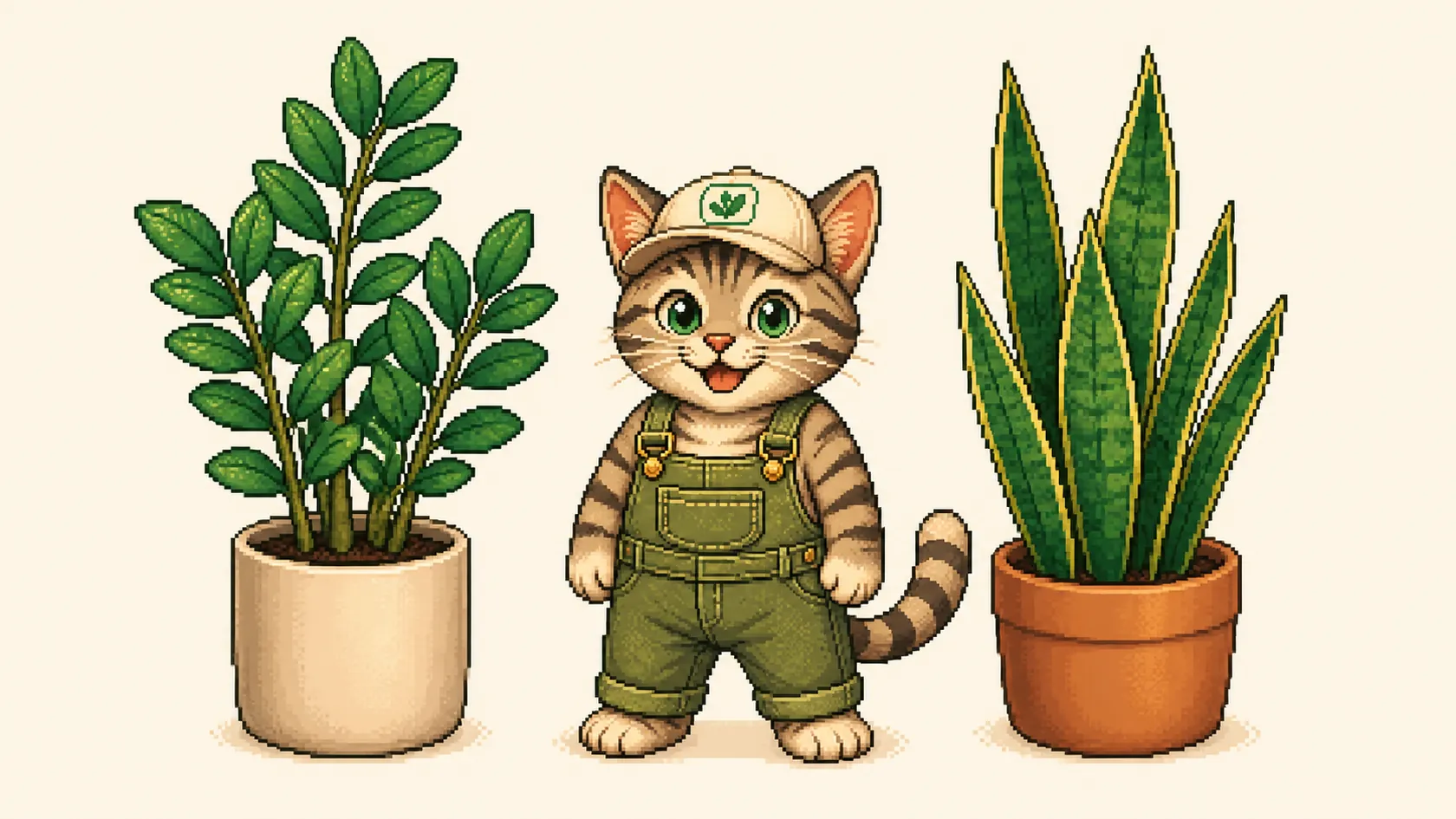
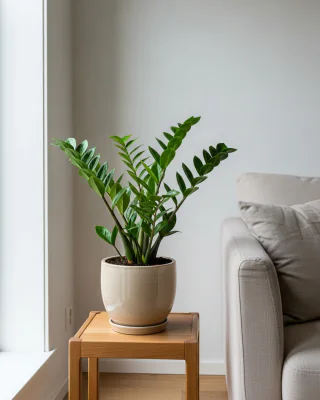
ZZ plant is the most reliable choice. It stores water in rhizomes and thick leaf stalks, stands well away from a window and gets through several weeks without water. In return it grows slowly.
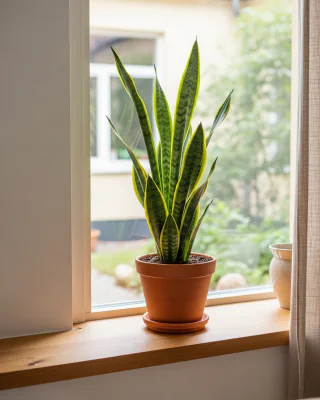
Snake plant comes from the same direction. It needs little water, stands upright and fits a narrow sideboard. Wet soil is the one thing that reliably kills it.
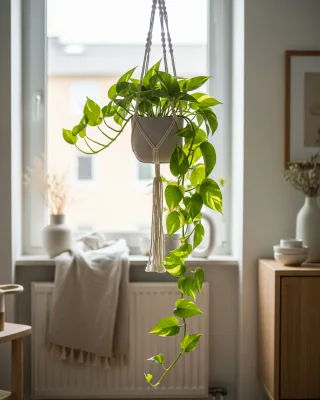
Golden pothos is the easiest trailing plant for a shelf or a room divider. It takes moderate light and can be shortened whenever the shoots get too long.
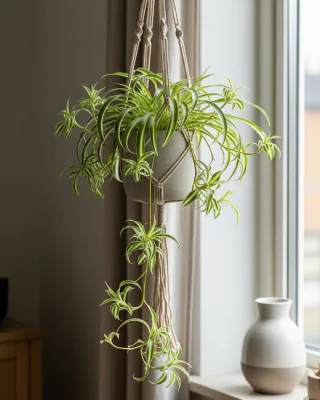
Spider plant forgives irregular watering and grows fast enough that an office gets something out of it. It picks up brown tips from dry air and hard water, and keeps growing anyway.
Cast-iron plant earns its name. It stands in dark hallways and cool corners where nothing else grows, and it needs almost no water there.
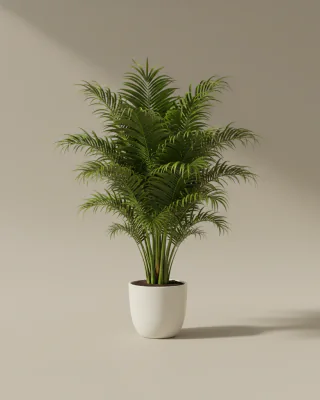
Kentia palm is the choice for a large corner in a meeting room. It handles a bright spot without direct sun and holds its shape for years.
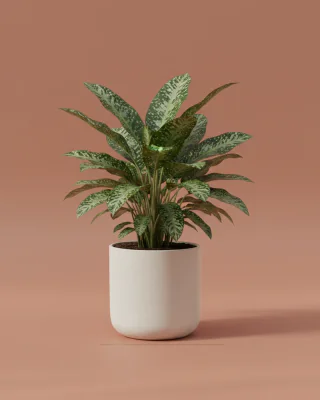
Dragon tree grows narrow and upright and takes little floor space. It answers hard tap water with brown leaf tips.
Baby rubber plant stays small enough for a desk, has firm leaves and forgives a skipped watering.
Leave peace lily and Boston fern out of an office unless someone checks them regularly. Both show a shortage of water quickly and take it badly.
Whether a species is a problem around pets or children is covered in its own care guide. In an office that mostly matters for rooms where dogs come along.
The spot matters more than the species
Stand at the planned spot and look toward the window. How much sky you can see from there is the light the plant gets. A desk in the middle of the room is much further away in light terms than the distance suggests.
Right on the sill of a south window it gets hot in summer, especially behind glass with no shade. That spot suits species that take full sun, or you move the pot a yard into the room.
In a windowless room no plant lasts, not even one with a reputation for being tough. Either you add a grow light that runs several hours a day, or you rotate the plants with ones from a bright room.
Keep some distance from radiators and from the air conditioning stream. Both dry the leaves out, and the cold draft makes sensitive species drop leaves.
Watering when nobody is in charge
Water by the state of the soil, not by the day of the week. Push a finger an inch or two in, and if it is damp down there you wait until next time.
Pot weight is the quicker check for a row of pots. Lift each one right after watering, and then you know what full feels like.
Use cachepots and tip out whatever is standing in them after half an hour. Otherwise water sits in the outer pot for weeks in an office, because nobody looks inside.
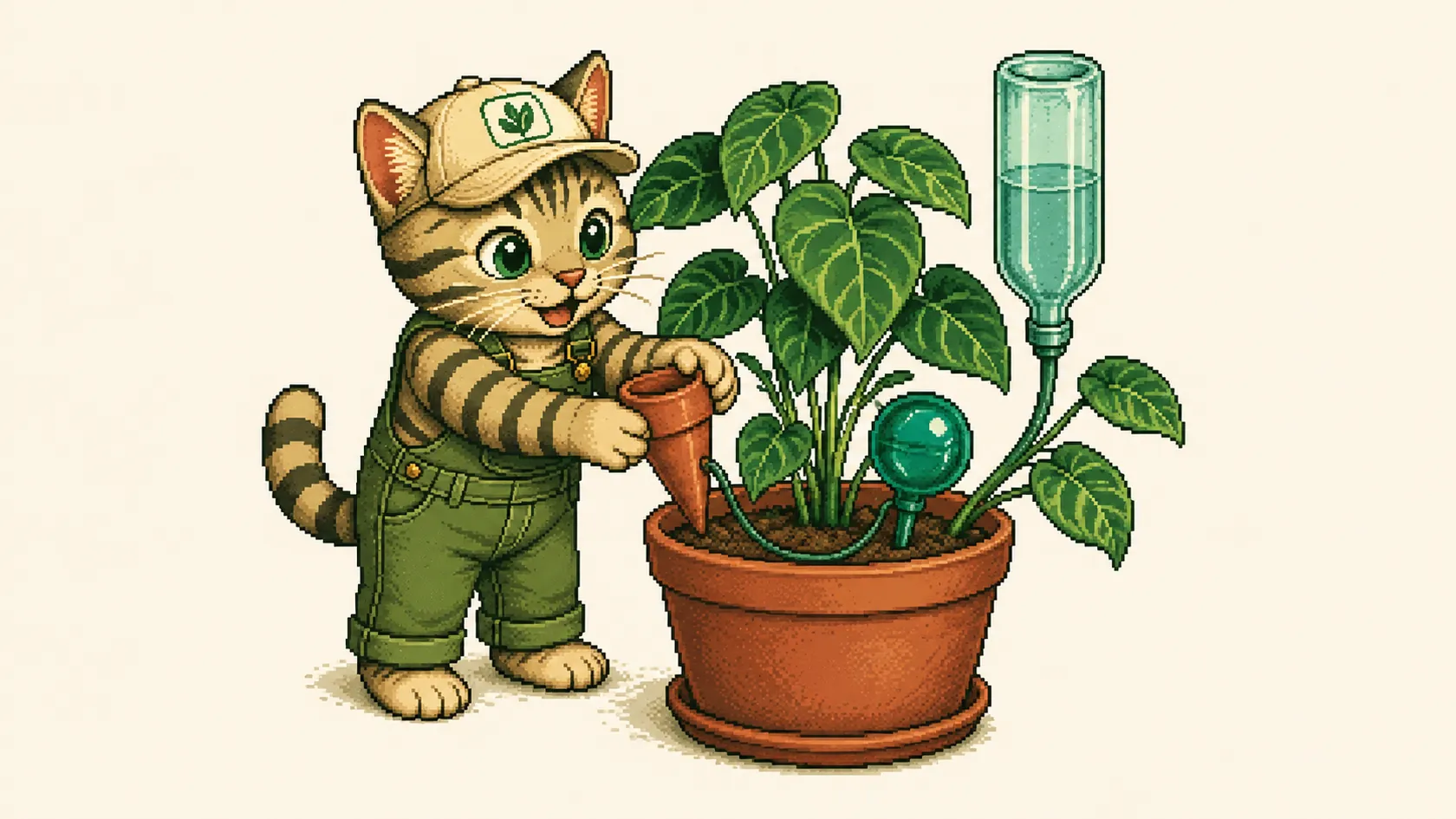
Before a long closure, water once thoroughly and move the plants further from the window. For pots that will not last that long, a water reservoir helps, or a colleague with a key and a clear request.
Pot, soil and repotting
The nursery pot needs an open hole in the bottom, even when it disappears inside a decorative one. Without drainage, every excess collects right at the root ball.
Take the smaller pot rather than the larger one. In a lot of soil with no roots in it, moisture stays for a long time, and in an office nobody notices in time.
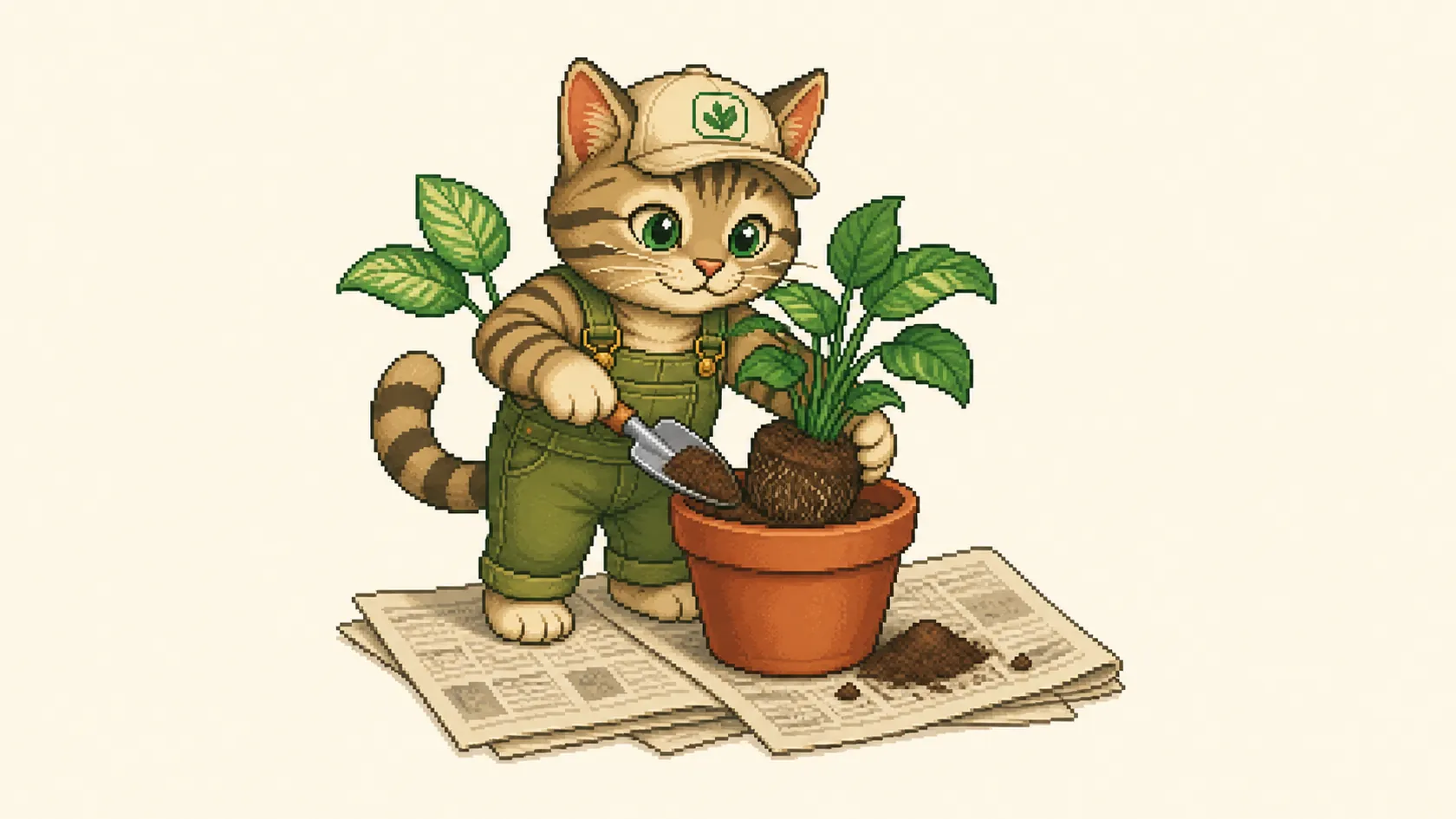
Repotting is due when roots grow out of the drainage hole or water only runs down the side. Plan it for a quiet day and work on a sheet of plastic rather than over the carpet.
An office plant needs little fertilizer. In moderate light it grows slowly, and feeding a plant that is not growing only leaves salts in the pot.
What usually goes wrong in an office
The most common mistake is well-meant watering by several people. A note on the pot with the date of the last watering settles that without discussion.
The second is dust. On large leaves it settles as a layer and takes away light. Wipe the leaves every few weeks, and you spot pests early while you are at it.
The third is pests arriving with a new plant. Keep new arrivals aside for two or three weeks and look at the leaf undersides.
The fourth is the heating season. Dry air, dark weeks and a spot above a radiator all land at once. Move the pots closer to the window then and water more sparingly, because the plants are barely growing.
How to start
Begin with two or three plants rather than twelve. A collection nobody can keep up with looks worse after six months than one well-kept pot.
Choose species with similar water needs when they stand next to each other. A snake plant beside a fern forces two rhythms in one place.
Size does more for a room than numbers. One large plant in the corner changes an office more than six small pots on desks, and it makes less work.
Related plants
Keep reading
Common questions
What are the best plants for an office?
Species that forgive dryness and cope with moderate light. ZZ plant, snake plant, golden pothos, spider plant and cast-iron plant are the most dependable. For a large corner, a Kentia palm fits.
Which office plants need low light?
Cast-iron plant, ZZ plant and golden pothos hold up in spots away from the window. They grow more slowly there and need correspondingly less water. None of them works with no daylight at all.
What plant survives in a room with no windows?
None, long term. Either you add a grow light that runs several hours a day, or you swap the plants regularly with ones from a bright room.
How often should office plants be watered?
By the state of the soil, not by the calendar. Feel an inch or two down and water only when it is dry there. For easy-going species that often means much longer gaps in winter than in summer.
What plant is good for a desk?
Something small with firm leaves that does not need constant water. Baby rubber plant, a small spider plant or a young snake plant all work. Use a saucer to keep water away from the keyboard and paper.
Who waters office plants over the holidays?
Settle it beforehand and write it on the pot. Before a long closure, water once thoroughly and move the pots away from the window so they use less. Sensitive species need somebody with a key.
Last reviewed: 2026-09-07