



How to tell the pot is too small
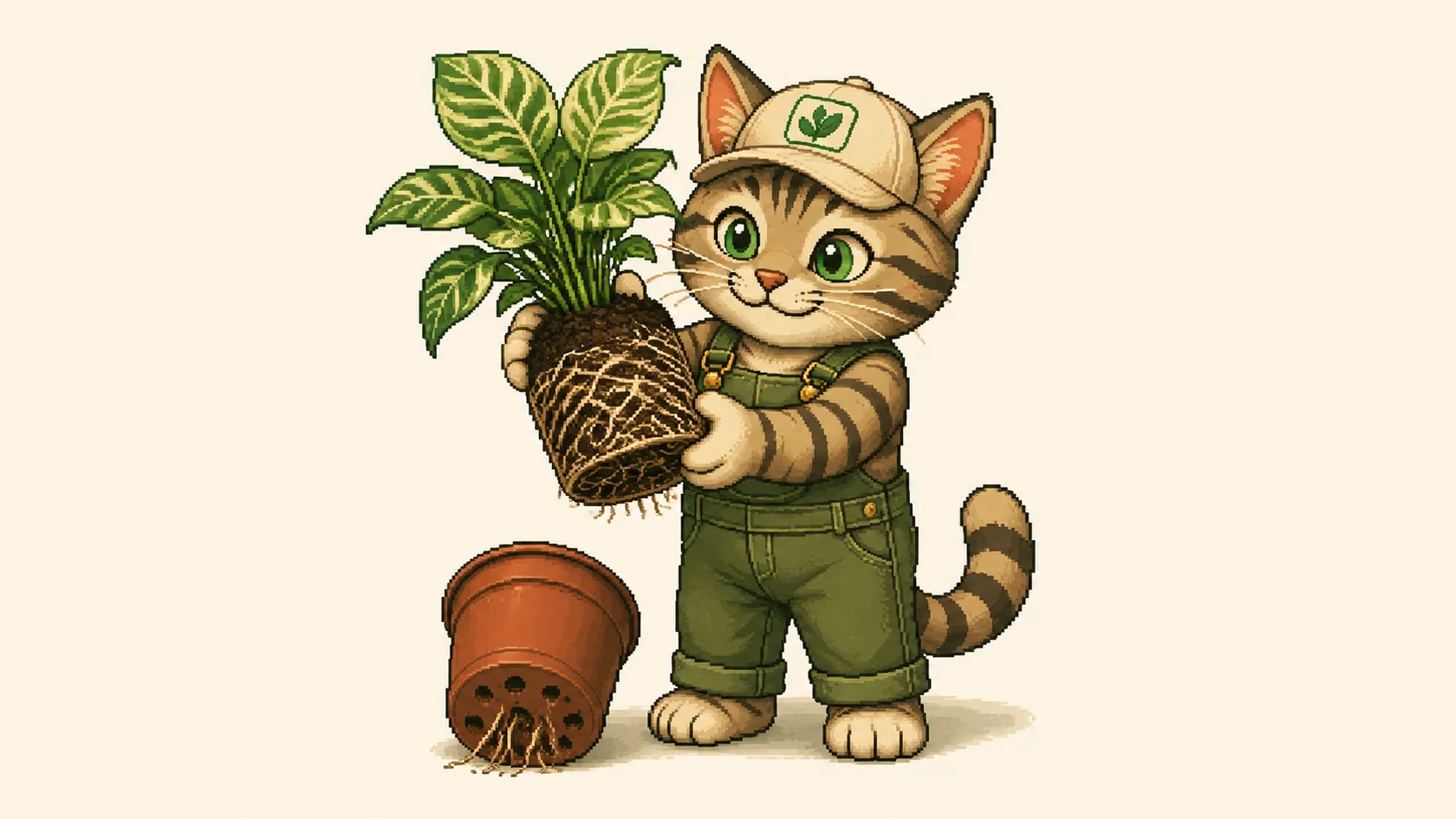
Turn the pot over and look at the underside. Roots coming out of the drainage holes and curling around outside mean the root ball has filled the pot.
The second sign shows up while you water. If the water runs out of the bottom almost without delay and the soil takes up little of it, the ball is mostly roots and has hardly any storage left.
Stability tells you as well. A plant that tips over in its pot, or a pot that feels feather light two days after watering, is growing in too little room.
When you are unsure, lift the plant out. A dense web of roots that holds the shape of the pot is the clearest result there is. If you mostly see loose soil with single roots running through it, the plant goes back into the same container.
The best window is active growth in spring and early summer, because new roots move into the fresh mix quickly then. In winter, repot only when a problem forces it, such as soil that stays wet or roots that have gone soft and brown.
The right pot size
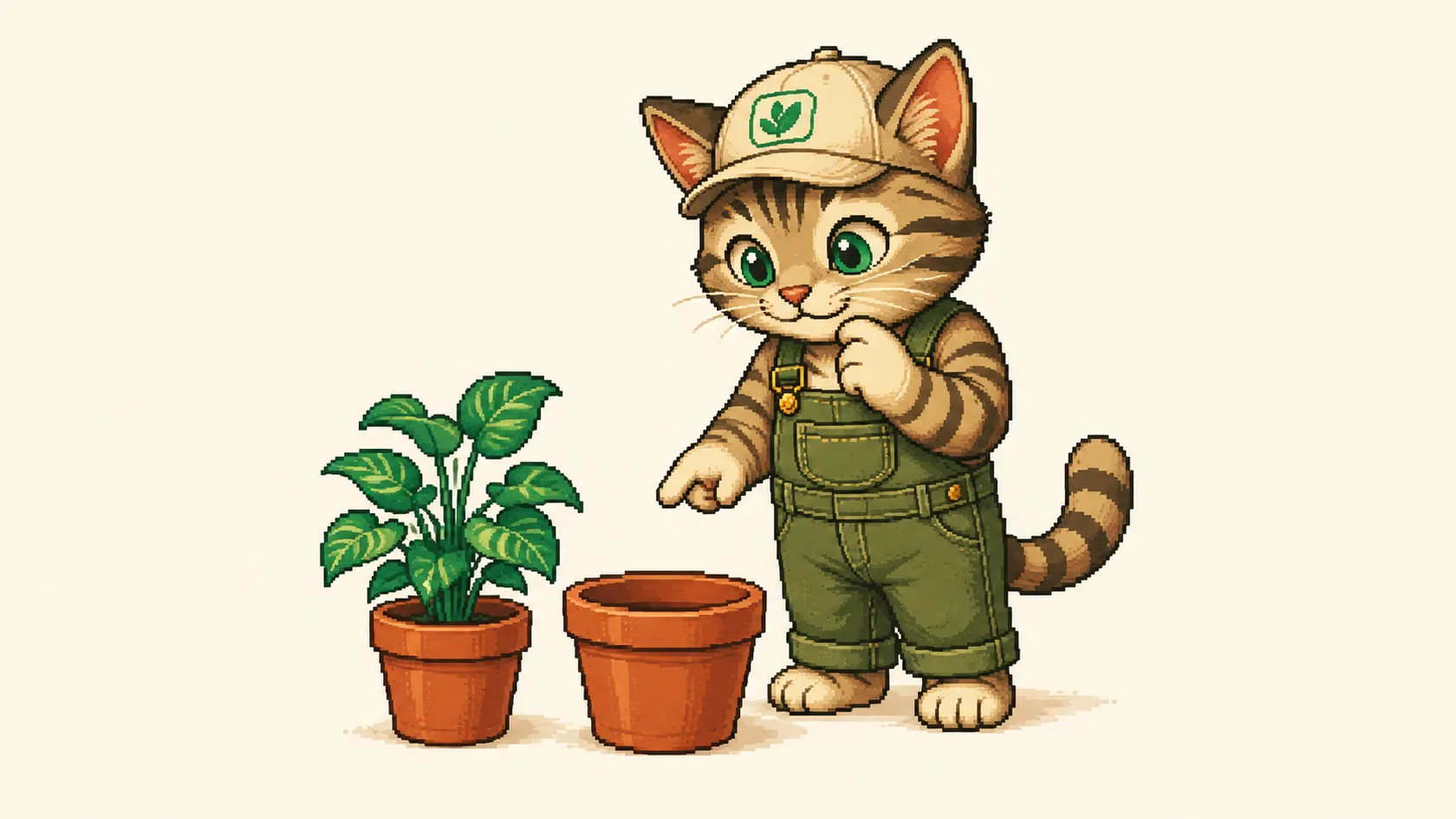
Go up one size only. On small pots that is roughly an inch more across, on large planters a little more. The new pot should surround the existing root ball with a narrow ring of fresh mix.
In a pot that is too large, a lot of soil sits with no roots in it. That zone barely dries out after watering, and root rot starts exactly there.
The material changes how often you water. Terracotta releases water through its wall, plastic holds it in the ball for longer. If you switch material, check the soil more often for the first few weeks.
A drainage hole is the one requirement that holds for every houseplant. Everything else depends on the plant and the spot.
Grow pot and outer pot
The grow pot is the container with holes in the bottom that the roots live in. The outer pot is the closed shell around it. It does no work for the plant and only protects the surface it stands on.
The simplest arrangement leaves the plant in its grow pot and the grow pot inside the outer pot. To water, lift it out, water it over the sink, and put it back once it has stopped dripping.
If you water straight into the outer pot, the water collects at the bottom out of sight. Tip it out after about ten minutes.
With a tall outer pot you cannot see into, stand the grow pot on an upturned saucer or a layer of clay pebbles. It then sits above the water that arrives at the bottom after watering.
Which potting mix fits
A good houseplant mix holds water and lets air reach the roots at the same time. Those two things together are the whole job.
Take the mix in your hand before you use it. It should be crumbly and carry visible coarse pieces such as bark, coir, perlite, or pumice. Fine dusty material that collapses when wet compacts in the pot and pushes the air out.
Peat-free mixes are the normal thing on the shelf now and carry most houseplants without any change in routine. Their surface often dries faster while the ball below still holds water, so check an inch or two down instead of feeling the top.
A cheap all-purpose mix can be improved. Stir in enough perlite, pumice, or fine clay pebbles that you clearly see the grains in the finished blend.
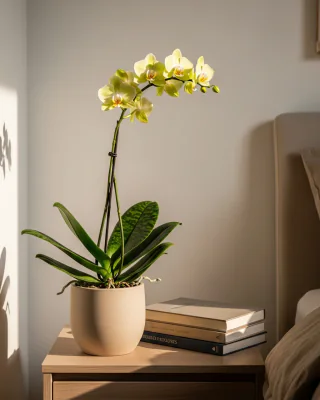
A special substrate earns its place where the roots are built differently. A moth orchid grows on bark in the wild and needs coarse bark pieces with air between them. In ordinary potting soil those roots suffocate.
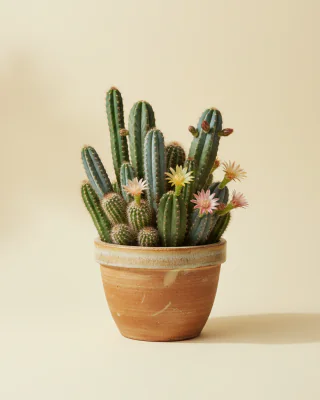
Cacti and succulents need a mix that dries out quickly after watering. Cactus mixes carry a high mineral share of sand, pumice, or lava grit for exactly that.
Drainage in the pot
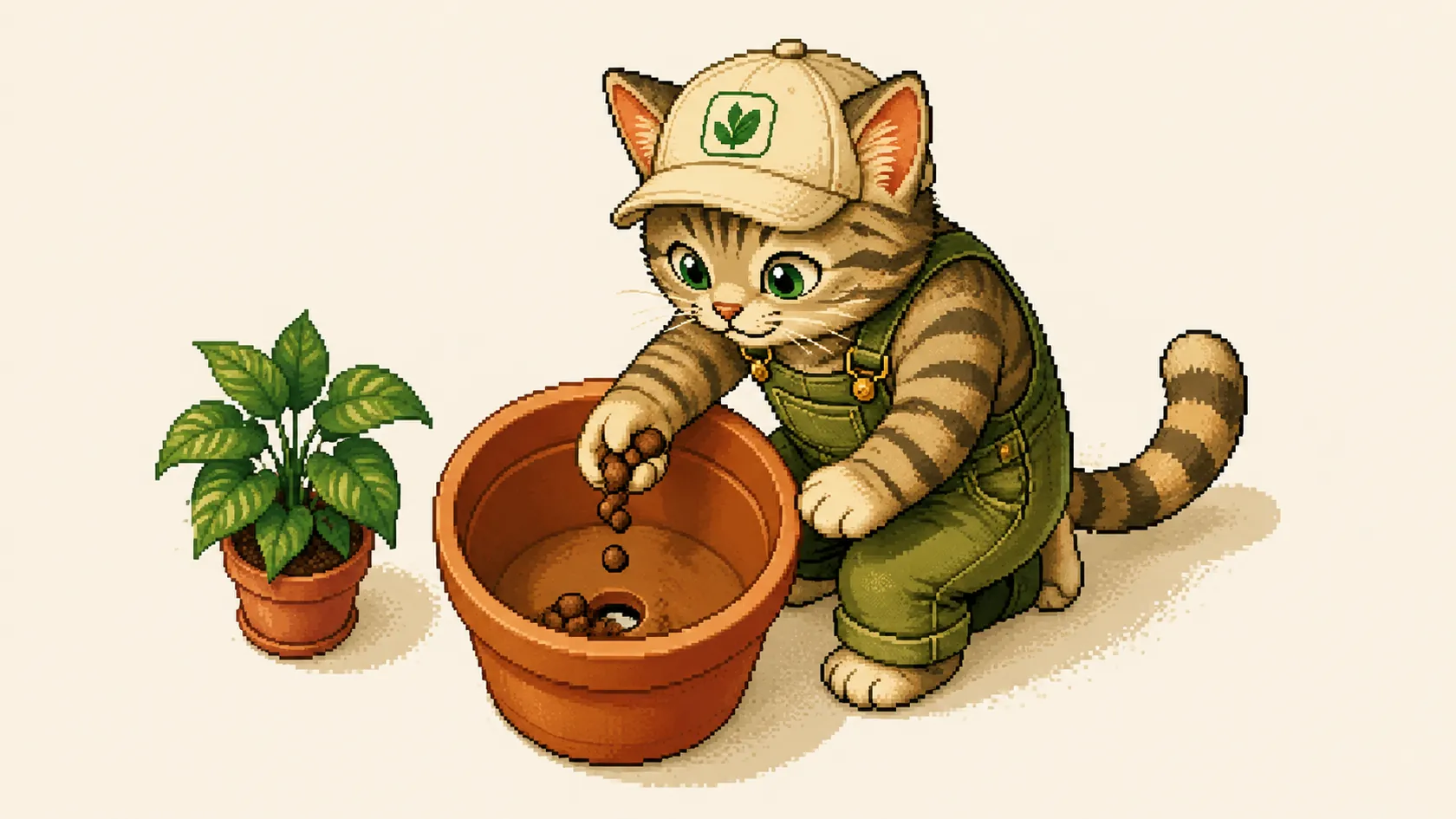
Drainage is decided at the hole. A container without one has none, whatever you put in the bottom.
A layer of clay pebbles inside the grow pot does not replace the hole. It shrinks the space the roots can use and moves the wet zone closer to the ball.
One rule holds for every houseplant. Water still standing in the saucer or the outer pot after ten minutes gets poured away.
How to repot, step by step
Water the plant the day before. A damp root ball comes out of the pot more easily and fewer roots break.
- Put some fresh mix in the new pot, enough that the plant later sits at the same depth as before.
- Free the old pot by squeezing the sides or running a knife around the rim. Do not pull the plant out by its stem.
- Look at the root ball. Firm, pale roots stay. Soft brown or black patches come off with a clean blade.
- Loosen the outside of the root web with your fingers if it has grown in a tight circle. Otherwise the roots keep following the old shape.
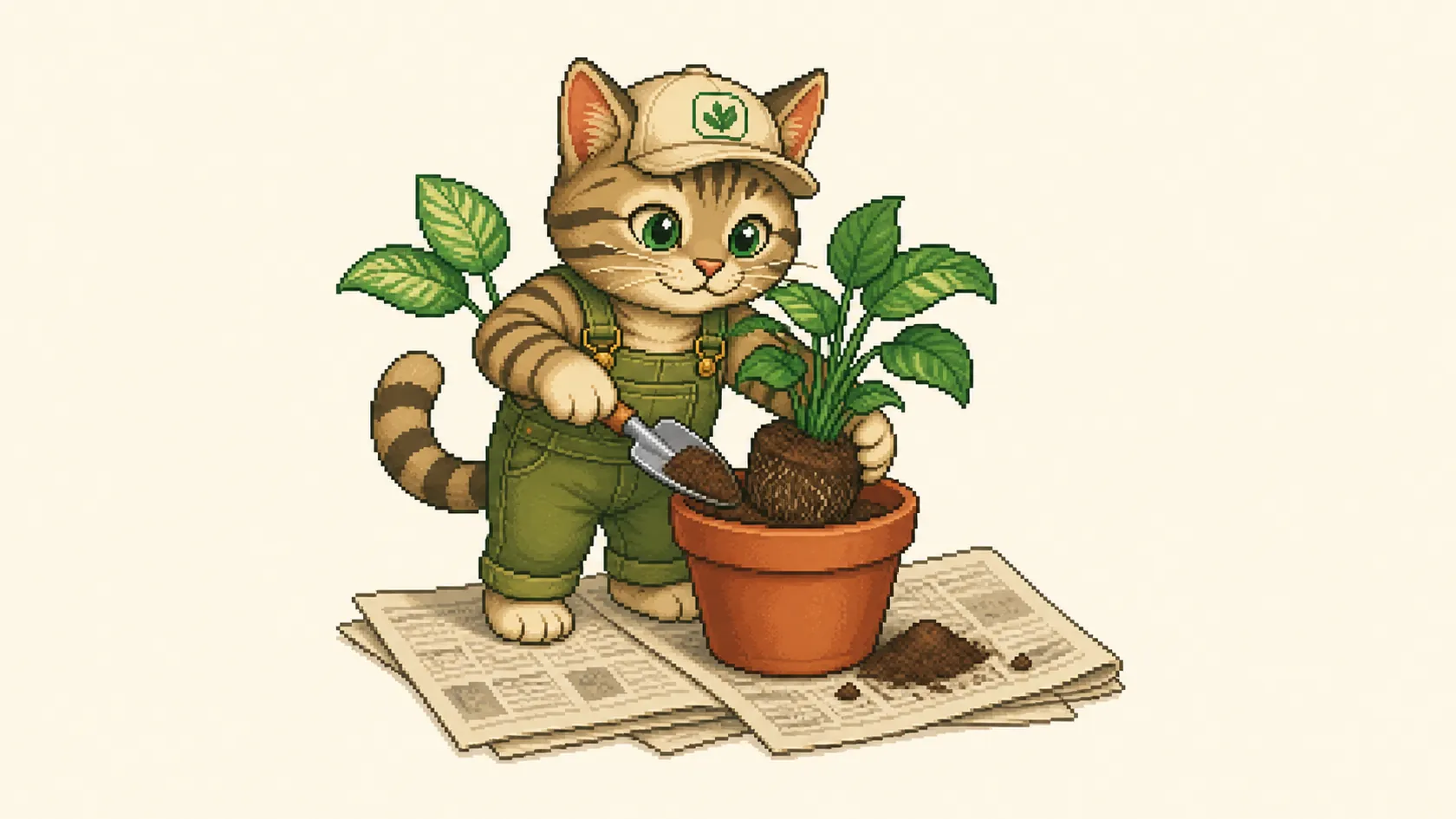
- Set the plant in the middle and fill mix in all around it. Tap the pot on the table a few times instead of pressing the mix down.
- Leave about two fingers of space between the mix and the rim so water has somewhere to sit.
- Water once until it runs out of the bottom, then empty the saucer.
The first weeks after repotting
Put the plant back in its usual spot. A new pot and a new position at once are two changes, and afterward you cannot tell which one the plant is reacting to.
After that first thorough watering, wait until the top inch or two feels dry. Fresh mix holds more water than the old rooted ball did, so the cycle runs longer than you are used to.
Do not fertilize for the first weeks. Fresh mix brings a supply with it, and damaged root tips take up little anyway.
Drooping leaves in the first days are normal as long as they lift again between waterings. Leaves turning yellow while the soil stays wet mean something else, usually a pot that is too large or water that is not leaving.
Related plants
Keep reading
Common questions
When should you repot a houseplant?
Once the roots have filled the pot. Roots at the drainage holes, water that runs straight through, and a root ball that keeps the shape of the pot are the three signs. A fixed rhythm in years does not fit, because a fast grower fills its pot long before a slow one.
Can you repot a houseplant in winter?
Yes, when there is a reason. Soil that stays wet, rotting roots, or a broken pot all mean repotting now. Without one of those, wait for spring, because the plant makes new roots slowly in winter.
What is the best soil for houseplants?
A structurally stable houseplant mix with visible coarse pieces in it. What matters is that it does not collapse after watering. Orchids, cacti, and succulents get their own substrate instead.
How do you repot an orchid?
Take the plant out, shake the old bark off, and cut away soft, hollow roots. Then set it into fresh coarse bark in a pot that sits close around the roots. Bark that collapses when you water it and smells musty has done its time.
How do you repot a cactus?
Repot it dry and handle it with folded paper or thick gloves. Set it into a mineral mix and wait several days before the first watering, so damaged roots can dry off.
Does an outer pot need a hole?
No, as long as the plant sits inside it in a grow pot that has one. The outer pot is then only a shell. It becomes a problem when you plant straight into it or leave water standing in it.
Last reviewed: 2026-09-07