What you see
Several soft yellow leaves low down. Soil still wet after days, pot heavy, sometimes a sour smell.



One yellow leaf says little. Which leaf, soft or dry, how fast, and what changed narrow it down.
Feel the soil before you react. Watering is the most common answer to yellow leaves and the wrong one when the soil is wet.
Go over the plant once from the bottom up and answer these four points before you change anything.
When two observations point the same way, you have something to act on. When only one does, wait a few days and look again.
Look at
Most likely cause
This is the most common combination on houseplants. The roots stand in water too long and get no air, so the oldest leaves give up first.
Stop watering and find out where the water is staying. The pot needs an open hole in the bottom, and nothing may be left standing in the saucer or the cachepot after watering. After that you wait until the soil feels dry an inch or two down.
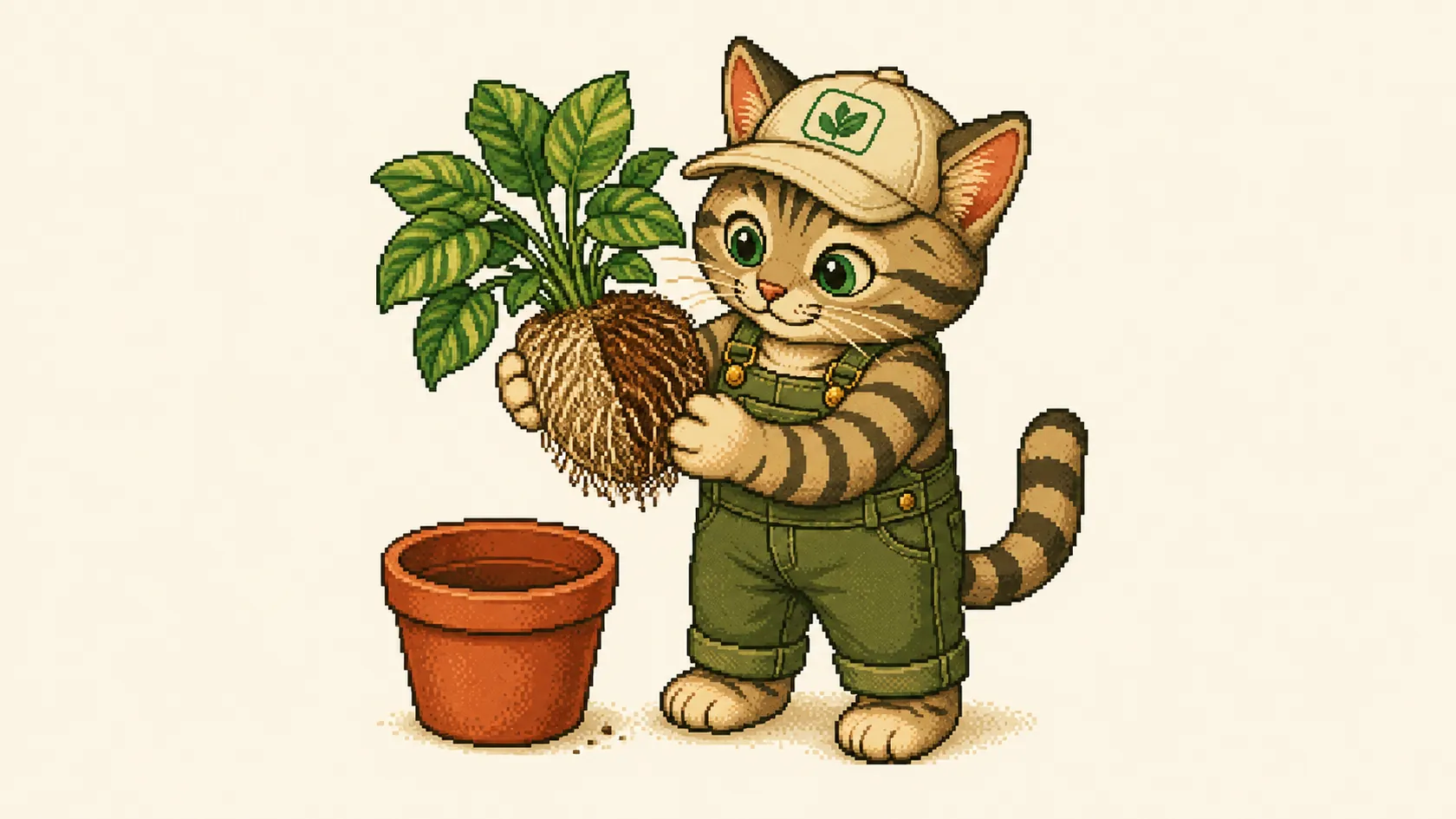
If the base of the stem feels soft or the soil smells sour, take the plant out of the pot and look at the roots. Firm, pale roots are fine. Brown, soft roots that strip away between your fingers get cut off, and the plant goes into fresh soil.
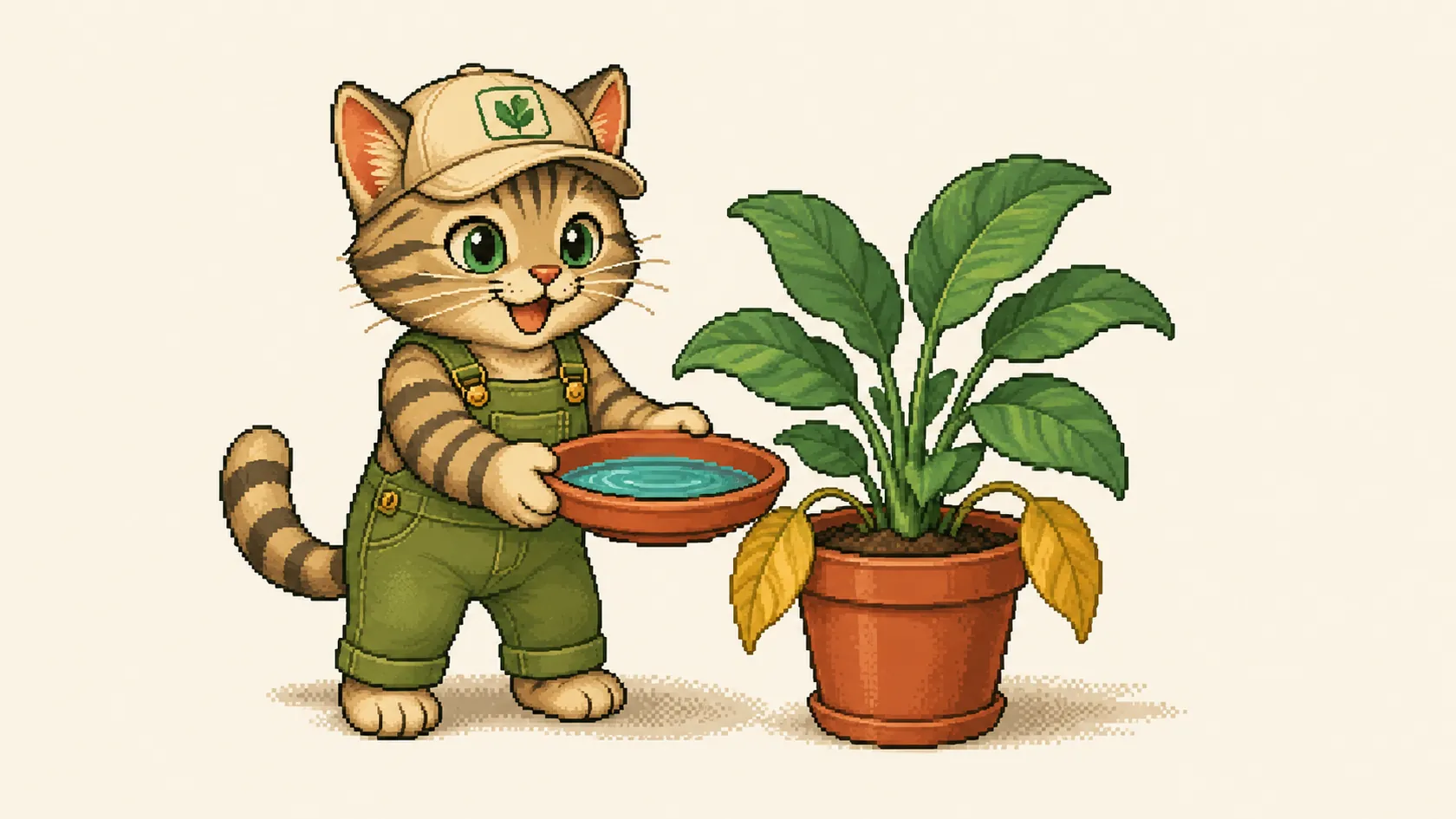
When a plant runs dry the leaves usually yellow along with drooping shoots, and the yellow looks matte rather than soft.
Water slowly until it runs out of the bottom, and empty the saucer after about twenty minutes. If the root ball is so dry that the water runs down the side, stand the pot in a container of water for a quarter of an hour and let it drain completely afterward.
From then on the finger test decides, not the day of the week. How often that turns out to be depends on the species, the pot size, the light and the season, and it changes with them.
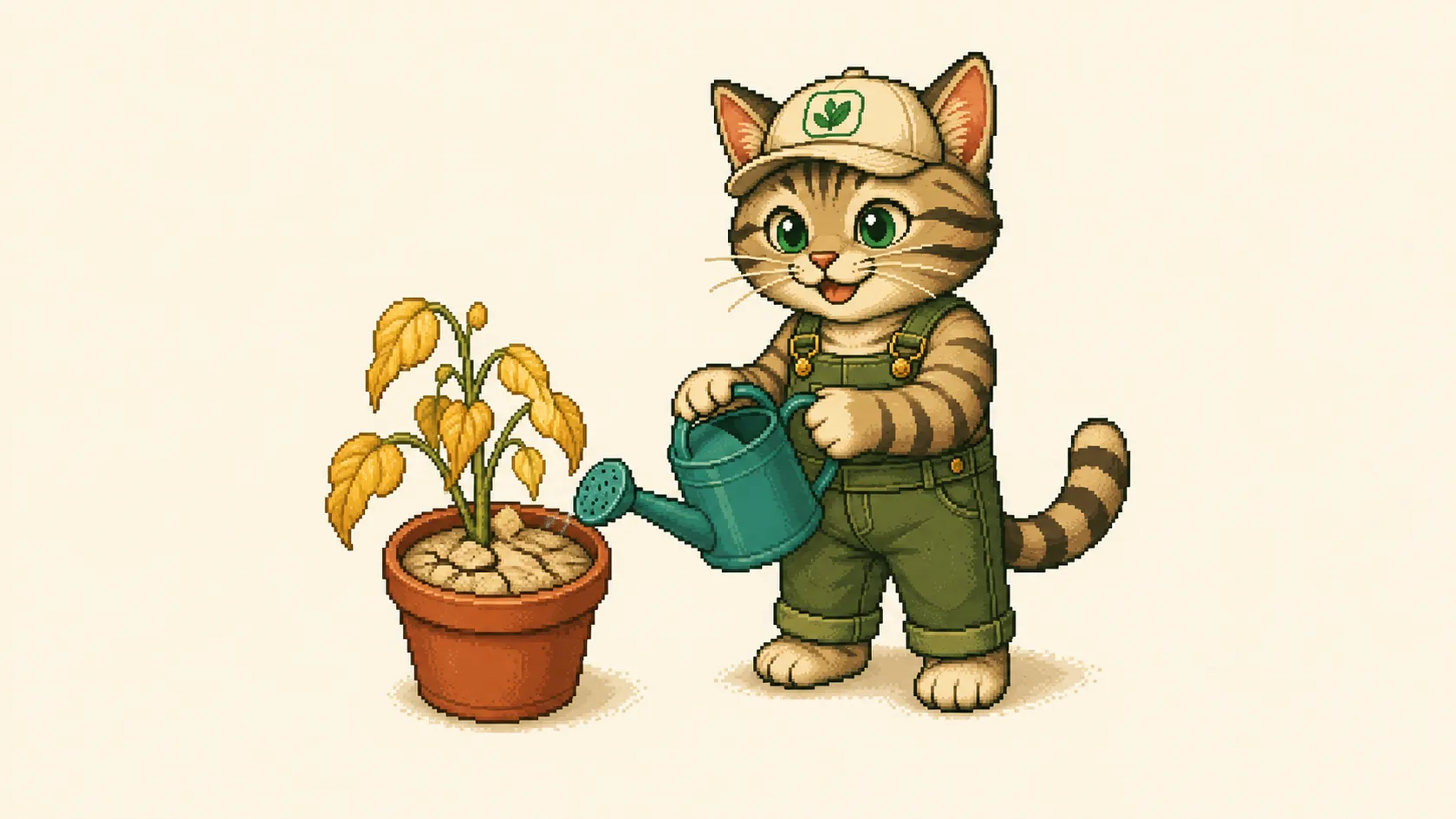
When the color lightens overall and no leaf is mushy, it is usually about light or nutrients. The new growth separates the two.
Small, pale leaves on long shoots that reach toward the window point to too little light. Move the plant closer to the window, out of hard midday sun.
Evenly pale older leaves on a plant that has almost stopped growing point instead to exhausted soil, especially if it has been in the same pot for over a year. Then you feed dilute during the growing season or repot. After repotting you need no fertilizer for several weeks, because fresh soil brings some of its own.
When one leaf low down yellows slowly while new leaves come in above, that is the normal turnover. Every plant sheds older leaves at some point.
Cut it off at the base once it comes away easily, and change nothing else about the care.
Yellow across a whole area comes about differently from yellow in speckles. If the leaves look finely dotted or silvery in places, look at the leaf undersides and the leaf axils in good light.
Fine webbing, white cottony pads, small brown bumps or a sticky film on the lower leaves point to pests. Stand the plant away from the others, rinse it with lukewarm water and wipe the leaf undersides afterward. Check it weekly from then on, because one treatment is rarely enough.
Yellow is a collective signal. Too much water, too little water, too little light and worn-out soil can look the same on one leaf, and two causes often run together. A root ball that dried out completely stops taking water up properly and then stays wet on the outside while the roots inside sit dry.
The root ball settles most of those cases. Slide the plant out of its pot and look: firm pale roots with the soil holding together, or brown soft roots and a sour smell. That one look separates a watering problem from a light or feeding problem.
So change one thing and watch for a week or two. Write down the date and how the soil felt the last time you watered, or you end up comparing against your memory.
Leaves that already turned yellow do not go green again. Whether your change worked shows in the new growth and in whether more leaves follow.
Most often because the soil stays wet too long and the roots get no air, which shows first on the oldest leaves at the bottom. Feel the soil an inch or two down before you water again. Dry soil with drooping shoots points the other way, to a plant that ran out of water.
A fully yellow leaf can be cut off at the base, since it does not recover. Leave a partly green leaf while it is still firm, because the plant is pulling nutrients back out of it. Cutting treats the look, not the cause.
No. Yellowed leaf tissue stays yellow even after you fix the cause. You see the result in the fact that no further leaves yellow and that the new growth comes in strongly colored.
Speckles and fine dots come about differently from an evenly yellow leaf. Look at the leaf undersides and axils in good light for webbing, white pads, brown bumps or a sticky film, which all point to pests rather than to watering.
Feel an inch or two into the soil and lift the pot. A light pot with dry soil means too little water, a heavy pot with wet soil means too much. Drooping leaves over wet soil mean the roots have stopped working, and watering makes it worse.
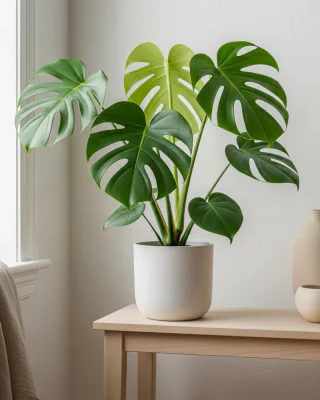
On a monstera it usually starts low down and comes back to watering. If the soil stays wet for days after watering, too much water is the likeliest cause. Check first that the pot really drains, and water again only once the top couple of inches are dry.
Last reviewed: 2026-09-12