What you see
The soil is wet two inches down days after watering and the pot never gets lighter. Water often stands in the saucer or cachepot.



Soil still wet days later, soft yellow lower leaves and wilting in a heavy pot mean too much water.
The signs below rarely arrive alone. One on its own can mean several things. Two or three together, read next to the weight of the pot, make a reliable case.
Take one minute with the pot in your hands. These five readings separate too much water from every other reason a houseplant looks unhappy.
Two readings pointing the same way are enough to act on. A single one is a reason to look again in a few days.
Look at
Most likely cause
This is the sign underneath all the others. A healthy pot gets noticeably lighter between waterings. One that never does is holding water the roots cannot use.
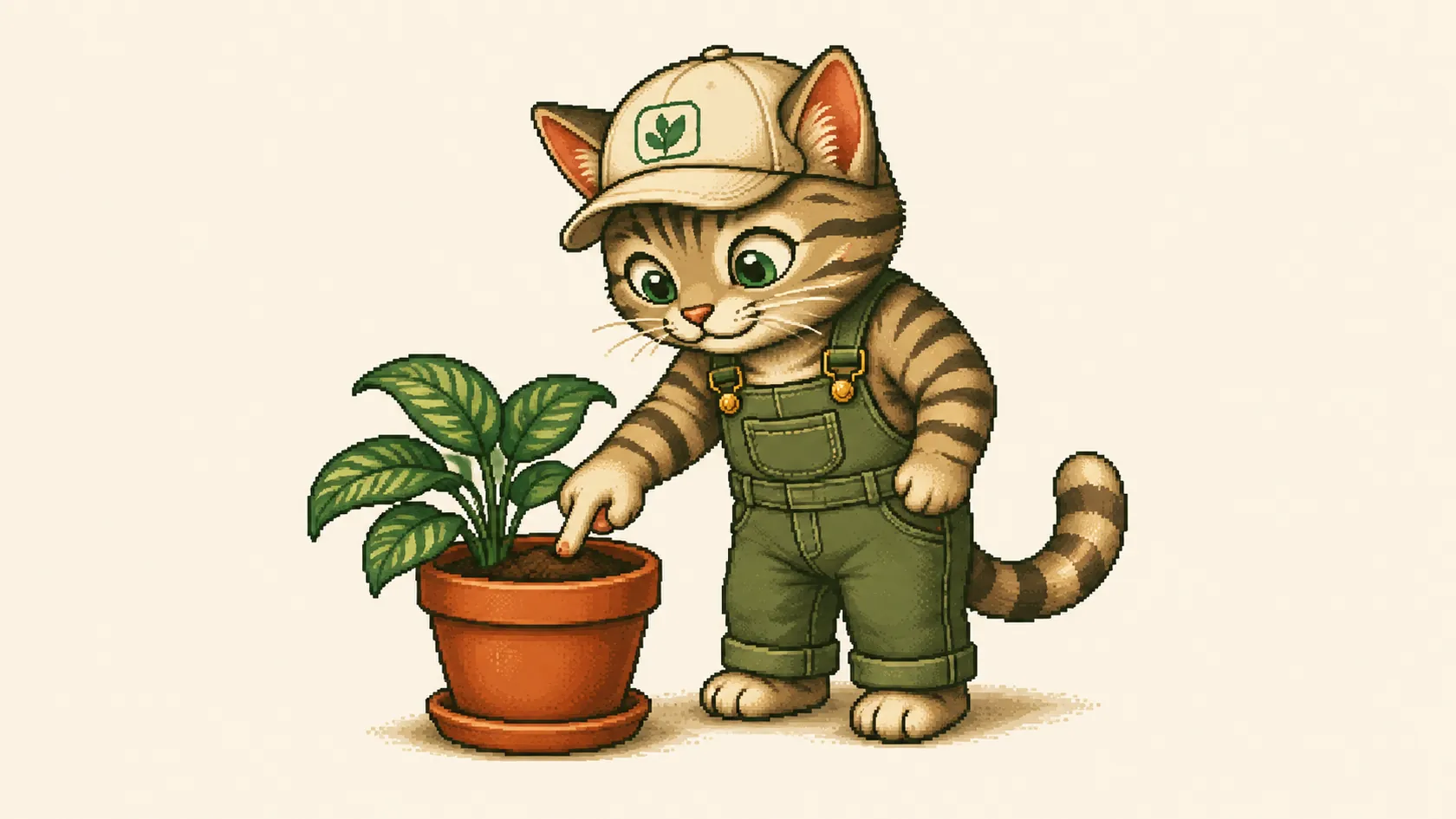
Push a finger into the soil about two inches down, away from the stem. The surface dries within a day and tells you very little, so the reading that matters comes from below it.
Look for the reason the water is not leaving. A growing pot with no open hole, a decorative pot with a puddle in the bottom, or a saucer nobody empties will all keep the root ball wet on their own.
A pot much larger than the root ball does the same thing quietly. The soil out at the edges holds water that no root reaches, so it stays wet for weeks.
The oldest leaves are given up first, so yellowing starts low and works upward. The color is even, and the leaf feels limp between your fingers instead of papery.
Whole leaves usually go rather than tips and edges. They often come away with a gentle tug and leave a clean scar on the stem.
One old leaf yellowing slowly while new leaves appear at the top is ordinary leaf turnover. Several going soft and yellow within a week, in soil that is still wet, is not.
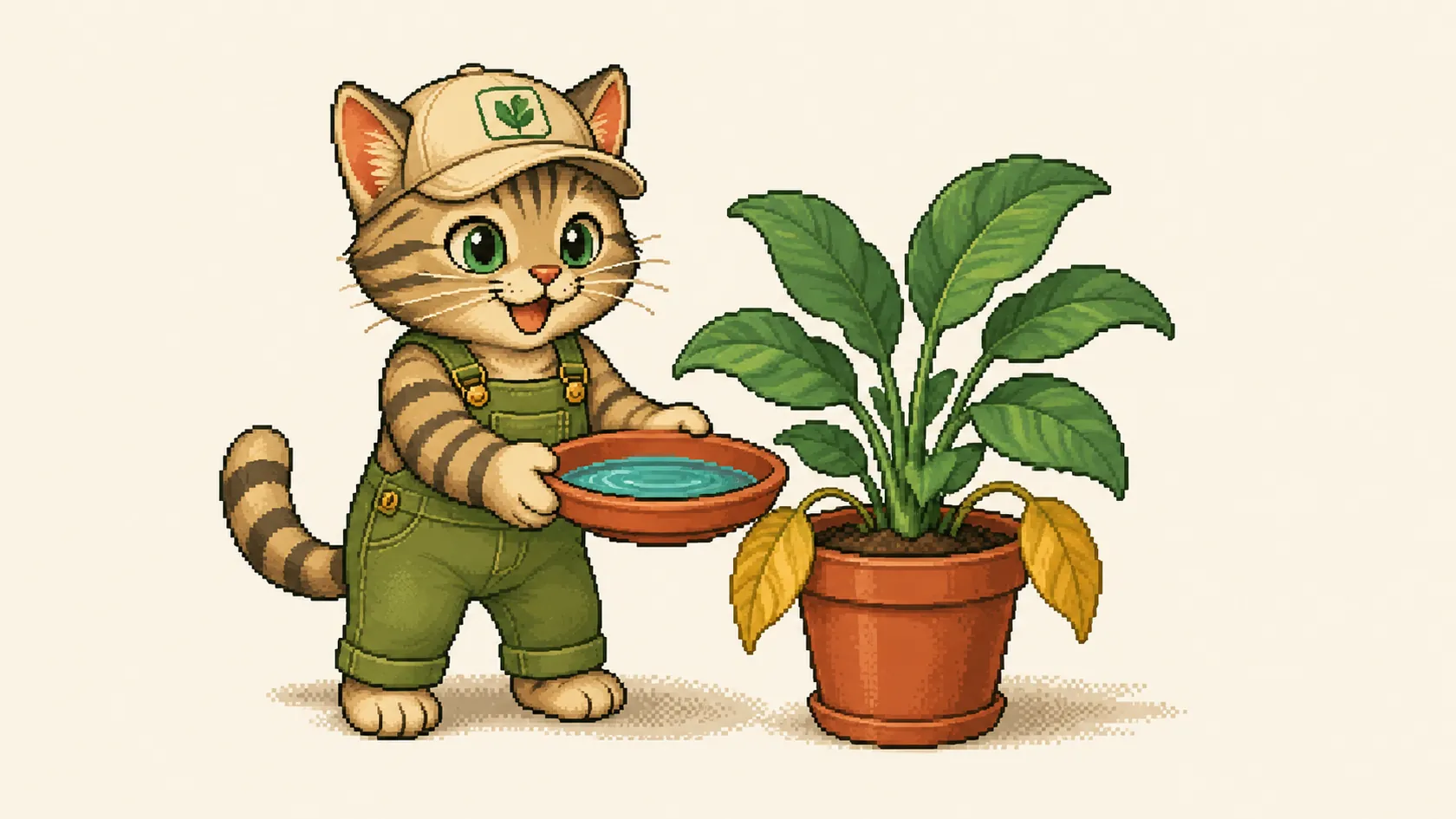
A drooping plant in wet soil is the sign people misread most often. Damaged roots cannot move water into the leaves, so the plant looks thirsty while it is standing in water.
The test is simple. Feel the soil first. If it is wet and the plant is still wilting, more water makes it worse, not better.
A dry plant firms up within a few hours of a thorough watering. A waterlogged one does not respond at all, or sags further the next day.
Brown from too much water looks different from brown caused by dry air. It appears as soft, dark patches in the middle of the leaf or spreading from the base, sometimes with a yellow ring around them, and the spot feels limp rather than crisp.
Run a finger around the stem where it meets the soil. Firm is fine. Soft, dark or slightly squashy tissue there means the damage has reached the stem, and that plant needs unpotting the same day.
Flowering plants often drop buds before anything else shows. Cyclamen, poinsettia and supermarket orchids sold in a sleeve with no drainage are the usual examples.
Wet soil smells. A sour or swampy smell from the pot means parts of the root ball have gone airless and roots are breaking down in it.
White fuzz on the surface is a saprophytic mold living on damp organic matter. It does not attack the plant, and scraping off the top inch removes it, but it is a clear report that the surface never dries.
Small black flies running across the soil are fungus gnats, whose larvae need a wet top layer. They are a symptom of the watering pattern more than a pest problem of their own.
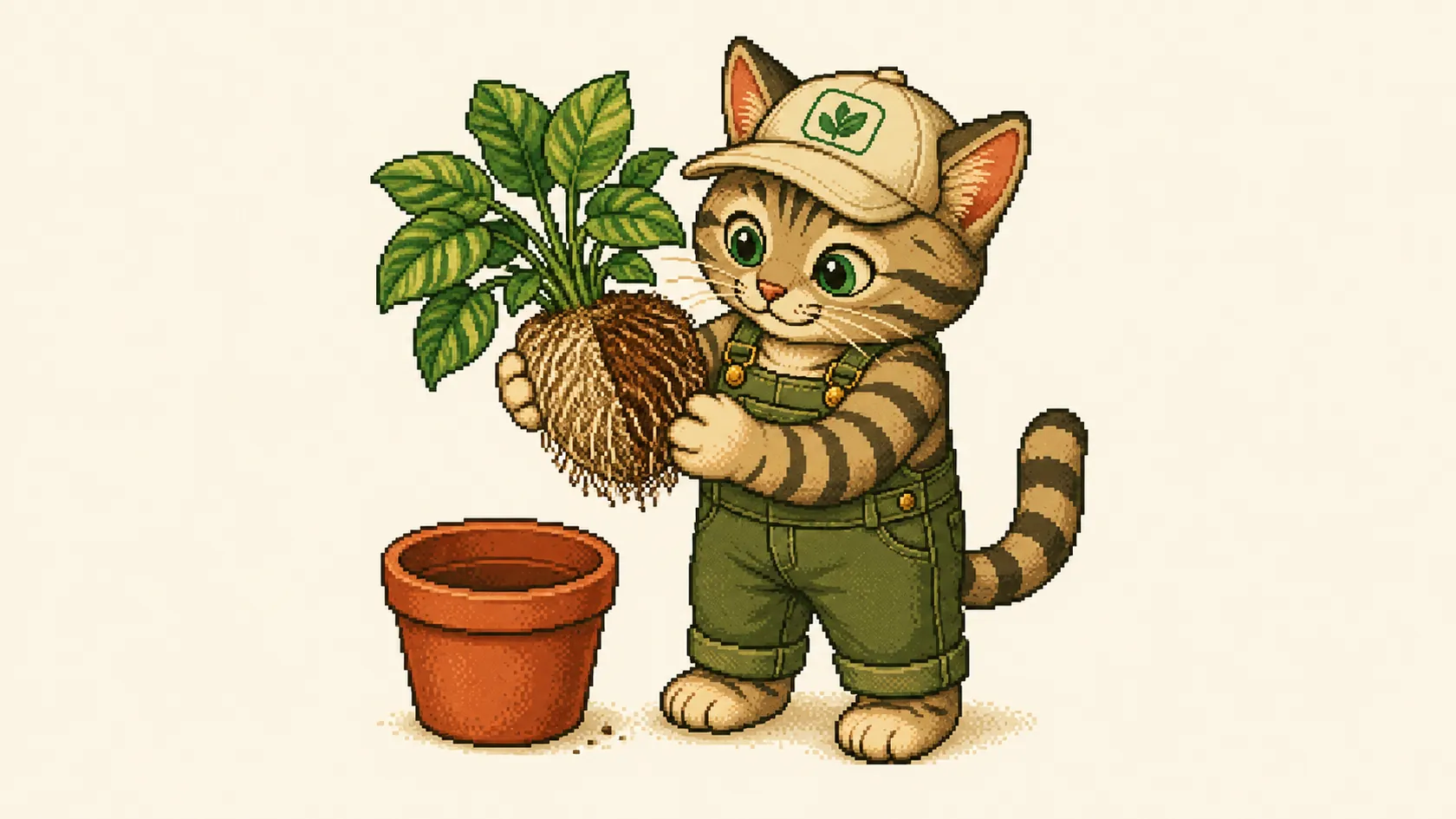
Roots settle the case. Firm and pale is healthy. Dark brown to black, soft, and slipping out of their skin when you pull gently is rot.
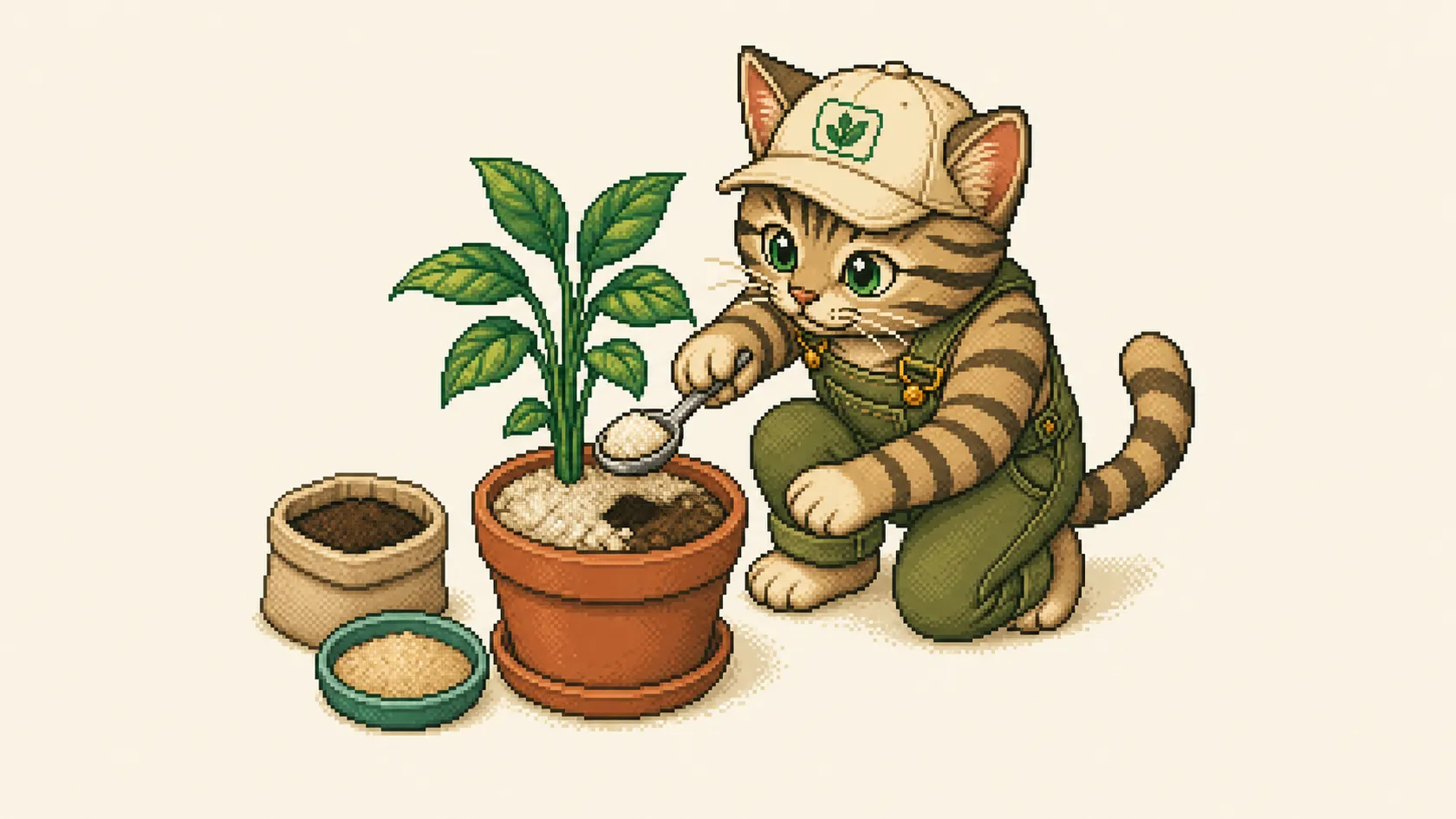
Start with the water that is already there. Pour out the saucer, take the plant out of any decorative pot that holds a puddle, and skip the next watering.
Move the plant somewhere bright and out of hard midday sun, and do not feed it. Damaged roots take up very little, and fertilizer salts in wet soil make the situation worse.
Repot only when the roots need it, which means dark soft roots to cut away or soil that stays wet no matter what you do. Choose a pot that fits the roots that are left, since a bigger one holds more wet soil.
Judge the result by new growth, not by the old leaves. Yellowed leaves stay yellow. A fresh, normally sized leaf means the roots are working again.
Soil that is still wet two inches down days after watering, a pot that never gets lighter, and lower leaves turning soft and yellow. Wilting while the soil is wet usually follows, and it means the roots have already been damaged.
Yes, as long as some firm pale roots remain. Stop watering, empty the saucer, and let the soil dry down. If the stem base is soft, unpot the plant, cut away dark soft roots and repot into fresh open soil.
Expect weeks rather than days, because the plant has to grow new roots before it can support its leaves. The signal to watch is a new leaf of normal size. Leaves that already yellowed will not turn green again.
Often, and it is the reason overwatering gets watered again. Rotting roots cannot move water upward, so the plant droops in wet soil. Feel the soil before you reach for the watering can.
Sour or swampy, rather than the earthy smell of healthy soil. That smell means airless pockets in the root ball where roots are breaking down. Take the plant out of the pot and look at the roots when you notice it.
It is a sign the surface stays damp, not that the plant is diseased. The fuzz lives on organic matter in the soil. Scrape off the top inch and let the surface dry between waterings, then check whether the pot is draining freely.
Last reviewed: 2026-09-07