What you see
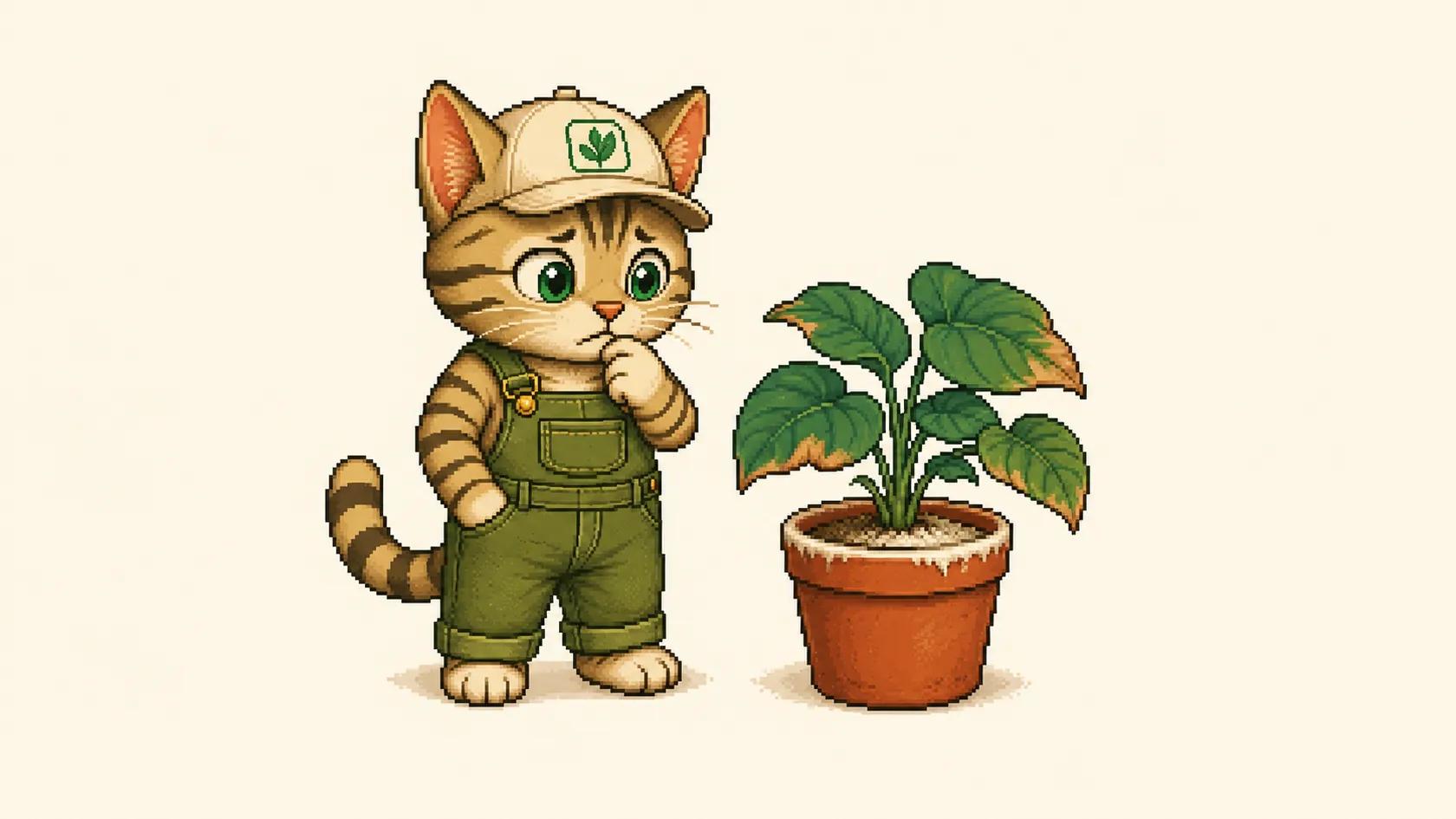
A loose white fuzz that lifts off, over soil that is still wet an inch or two down. Often there is water standing in the outer pot.



White fuzz on the soil is usually harmless and tells you the surface never dries out. Hard crust is something else.
It is still feedback. It appears where the surface stays wet for long stretches and little air reaches it, and those are the conditions that wear the roots down over time.
So feel the soil and look in the saucer before you lift the fuzz off. The film is the symptom and the permanently wet surface is the cause.
Go through these points before you change anything about your care. Two of them already decide whether you are looking at a fungus or at deposits from your tap water.
Look at
Most likely cause
This is the common case. The fuzz sits loosely on the surface, lifts off with a spoon, and comes back after the next watering as long as nothing changes about how wet the surface is.
Put a finger an inch or two into the soil. If it still feels wet down there, do not water and wait until that layer is dry. At the same time check whether water is standing in the outer pot or the saucer, because a wet layer underneath keeps the surface damp on top.
Pot weight is the second reference. Lift the pot straight after watering and again a few days later. The difference tells you more about the water still in there than looking at the soil does.
If you would rather not cut the amount of water because the plant reacts badly to that, water from below into the saucer and pour the rest away after half an hour. The surface then stays drier while the roots still get their fill.
When the deposit is hard, gritty, or crystalline and will not wipe away, it is a buildup of lime and fertilizer salts. It shows up as a pale ring on the pot as well, and on the outside of terracotta.
The cause is hard tap water, usually together with regular feeding and a mix that rarely gets flushed through. Take the crust off and water thoroughly next time until water runs out of the bottom, which carries some of the salts out with it.
Tap water that has stood overnight has the same lime content as fresh water. If lime is visibly troubling the plant, collected rainwater is the simpler answer.
With a heavily crusted surface and exhausted mix, repotting is a shorter route than flushing for years.
Mold takes hold where the surface never dries. A cool dark spot, a tight outer pot, and a room that is rarely aired in winter all keep evaporation low.
Move the plant somewhere brighter if its species allows it, and get some air moving. Opening a window wide twice a day does more at a windowsill than a fan does.
Look at the outer pot too. A grow pot sitting flat inside it traps damp air between the two walls. A few stones or clay pebbles at the bottom create a gap and let air in.
Loosen the top inch of soil carefully with a fork without damaging roots. A compacted surface dries noticeably more slowly.
The film turns up especially often after repotting. Fresh mix holds a lot of undecomposed organic material, and the roots have not yet run through the new pot, so the substrate stays wet for longer.
In that case it usually helps to water more sparingly and wait. Once the plant has rooted through the pot, the fuzz disappears on its own.
An opened bag stored damp and open brings the fungus in with it. Close what you have left over and store it dry.
Small pale yellow mushrooms in a pot come from the same fungi that break down bark and wood in the mix, and they do not feed on the roots. Pull them out with the top layer of soil. They cannot be identified from a pot, so keep them away from pets and children who chew, and call a vet or a doctor if something has been eaten.
Clear fallen leaves and old flowers off the soil. They are exactly the material the mold lives on.
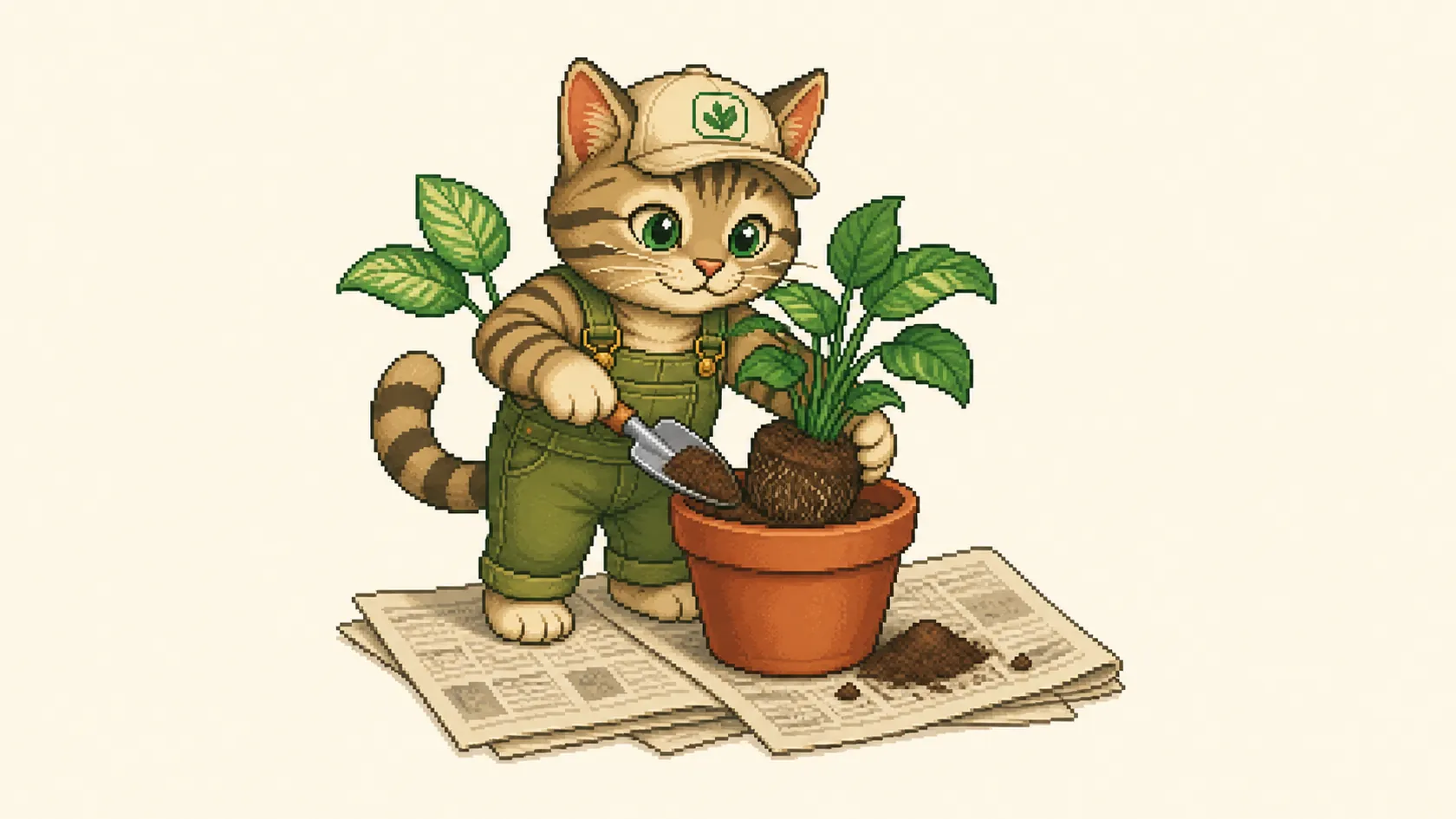
Lift the top layer off with a spoon, about half an inch to an inch, and throw it away. Disturb the rest of the soil as little as you can.
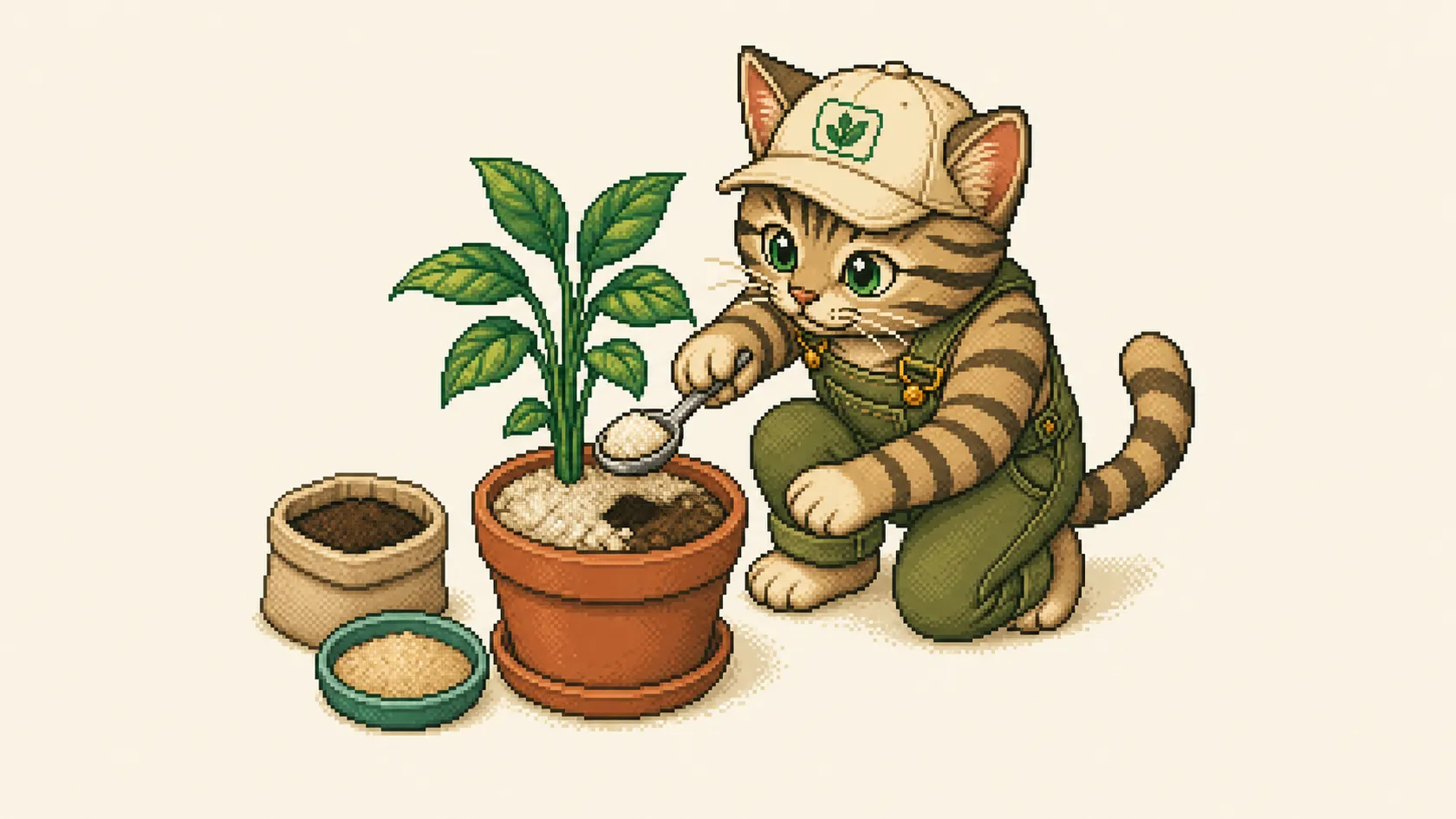
Top the pot up with fresh substrate, and add a thin layer of sand, fine grit, or clay pebbles if you like. A mineral cover dries faster and gives the fungus less to feed on.
Do this outdoors or on a balcony if you react to spores, and wipe the pot rim and the saucer afterward.
Cinnamon on the surface is often recommended and at best slows a fresh film for a short while. As long as the soil stays wet, it is back within a week.
If the soil smells sour or foul as you lift the layer off, this is no longer about the surface. Take the plant out of the pot and look at the roots.
Firm, pale roots are fine. Brown, soft roots whose skin slides off between your fingers come off, and the plant goes into fresh substrate in a pot with an open drainage hole.
If small dark flies rise when you water, fungus gnat larvae are living in the same wet layer. The cause is the same and the treatment is different.
A deposit on the leaves rather than on the soil does not belong here. A white powdery coating on the upper and lower leaf surface is powdery mildew, and it is treated on the plant.
For the plant the white fuzz is usually harmless, because it lives on dead organic material rather than on the roots. For the room, lift the layer off instead of leaving it, and work outdoors if you react to spores.
Lift the top half inch to inch off and top up with fresh mix. After that, water only when the surface feels dry and empty the saucer every time. Without that second part the film is back within weeks.
Because the surface does not dry out between waterings. That comes from watering too often, water standing in the outer pot, a dark cool spot, or a room that is rarely aired. Change the one that applies to you and watch for two weeks.
Loose cottony fuzz is a mold. Hard gritty crust that will not wipe away is lime and fertilizer salt from your tap water. The difference decides what you do next.
They live on wood and bark in the mix and do not attack the roots, so the plant is not the concern. Pull them out with the top layer of soil and keep them away from pets and children who chew on things, and call a vet or a doctor if any were eaten.
Usually not. Taking the top layer off and keeping the surface drier is enough. Repotting earns its place when the soil smells sour, is heavily crusted, or the roots have already gone brown and soft.
Last reviewed: 2026-09-07