What you see
The soil is still damp two inches down days after watering and the pot stays heavy the whole time.



Drooping leaves over wet soil is the sign. Unpot the plant, cut the brown soft roots away, then keep it dry.
The confusing part is what you see above the soil. The plant wilts and looks thirsty while its soil is wet, because the roots can no longer move water up to the leaves.
So feel the soil before you answer drooping leaves with the watering can. When the soil is wet, watering is the wrong move.
These four separate waterlogging from simple drought, and they take about a minute.
Look at
Most likely cause
This is the most common cause and the easiest one to stop. Water according to the state of the soil, not the day of the week.
Push a finger two inches into the soil before every watering. If it is damp down there, wait and check again in a couple of days. Pot weight is the second reading and often the more honest one, because the surface dries long before the root ball does.
How often that works out to depends on the species, the pot, the soil, the light and the season. The same plant drinks far more in bright July than it does in December.
When you do water, water thoroughly until it runs out of the bottom rather than giving a splash every day. Small amounts wet only the top layer, so the roots underneath stay dry while the surface stays permanently damp.
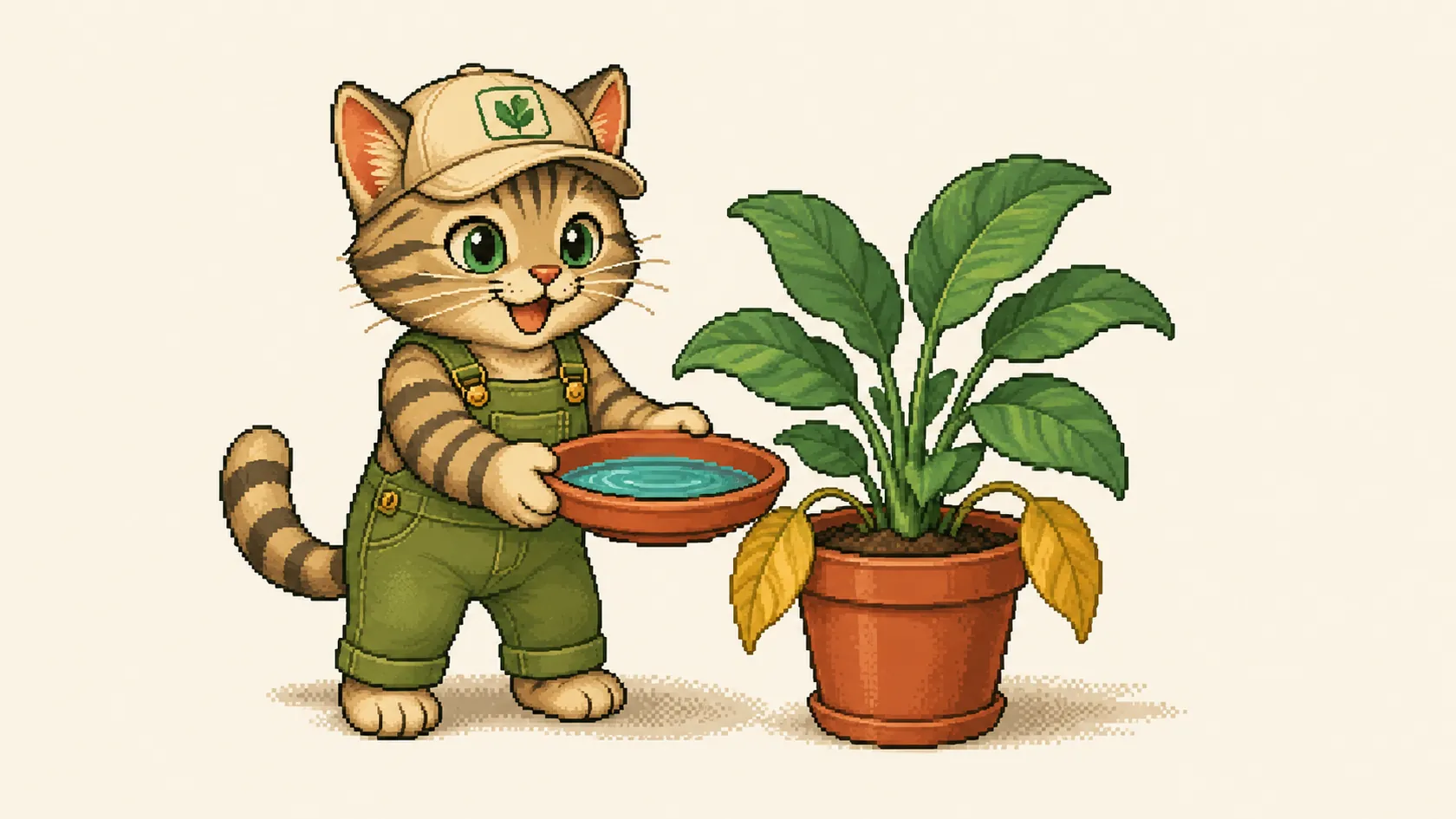
The growing pot needs an open hole in its base. A decorative pot without one collects every excess drop right at the root ball.
Check the saucer and the cachepot after each watering. Whatever is still standing there half an hour later gets poured away. For a heavy floor pot, a sponge or a small cup lifts the water out.
A layer of clay pebbles in the bottom of a cachepot keeps the growing pot above the wet zone. Inside the growing pot itself, a drainage layer is no substitute for a hole.
Blocked holes are a quiet cause. Look at the base of the pot next time you lift the plant, and open up anything that roots or compacted soil have sealed.
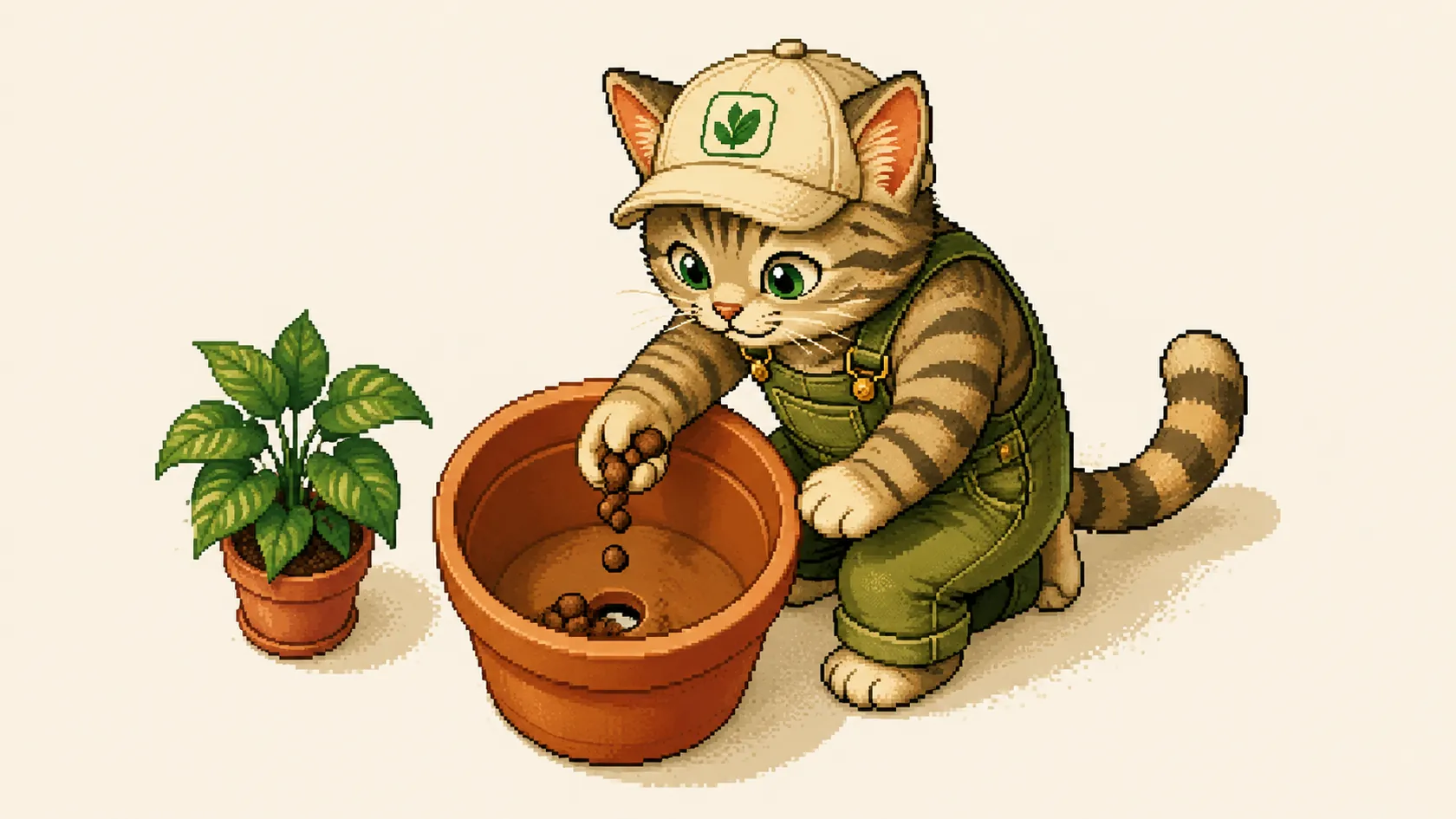
In a pot much wider than the root ball, most of the soil holds no roots at all. Those areas barely dry out and stay wet for weeks after each watering. A new pot only needs to be an inch or two wider than the old one.
Old soil that has slumped together does the same thing. Once it turns dense and greasy after years in the same pot, it holds water and lets no air through.
Mix perlite, pumice or coarse sand into the soil when you repot a plant that prefers to drain fast. For species with thick fleshy roots and for succulents, that is the more important half of repotting.
Terracotta and plastic behave differently. Clay gives up water through the wall of the pot, while the same root ball stays wet longer in plastic.
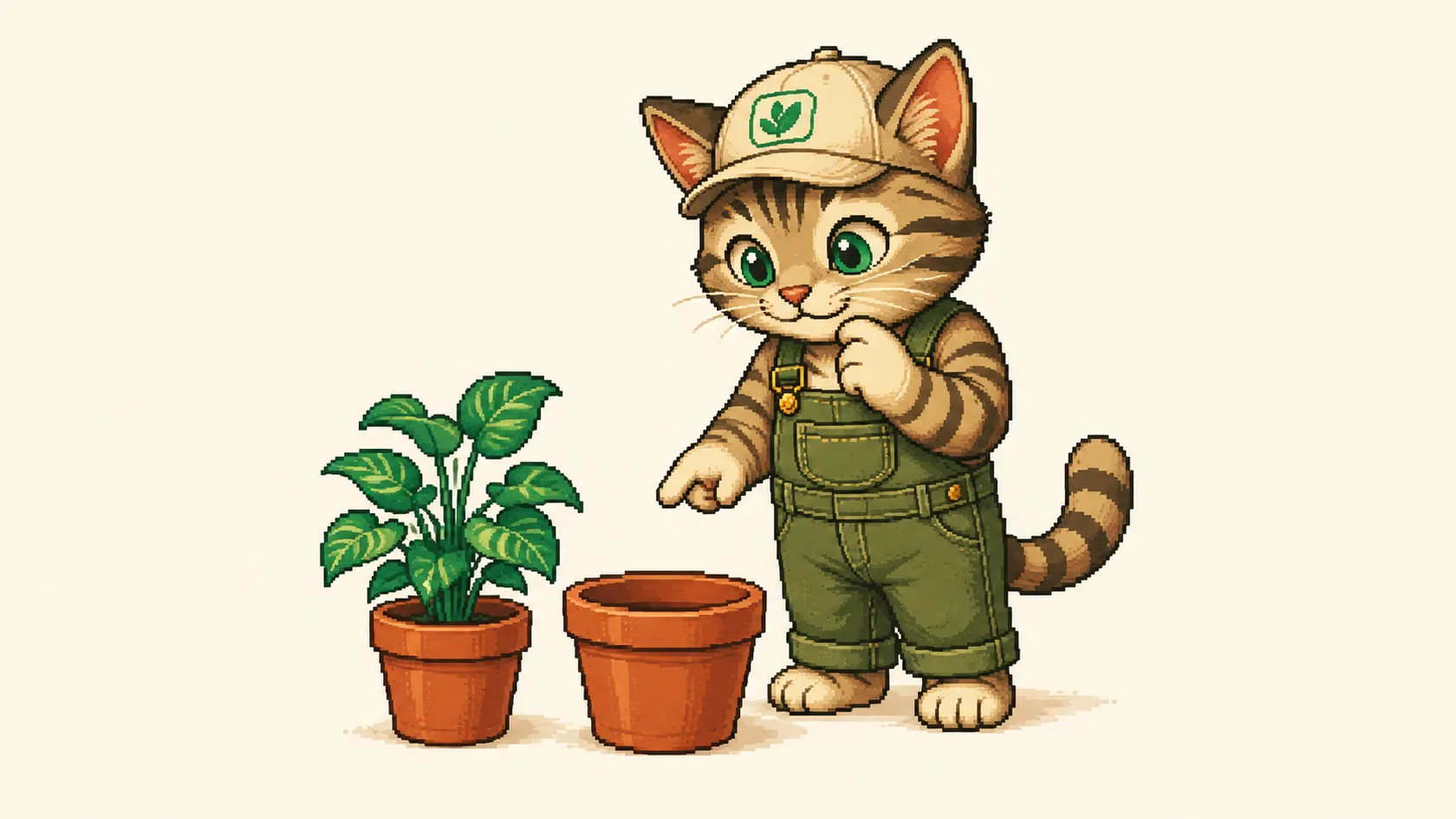
Water use follows growth. Through the dark half of the year, in a cool room, or after a hard prune, a plant draws far less than it does in summer, and the same amount of water becomes too much.
Go down in quantity and stretch the intervals in winter rather than running the summer routine into the dark months. The finger test shows the difference clearly.
Watch cold windowsills and drafts. Cold soil dries slowly, and cold wet roots are the condition rot starts in fastest.
Freshly repotted plants need less as well. The roots have not grown into the new soil yet, so it stays damp longer than you expect.
Take the plant out of the pot and shake the soil off gently. Healthy roots are firm and pale, often white to light tan, and they hold when you tug them.
Rotted roots are dark brown to black, soft, and they smell bad. The outer skin slides off between your fingers and leaves a thin thread behind. Rinse the root ball under lukewarm water so you can see what is still firm.
Cut everything soft away with clean scissors until you reach firm, pale tissue, and wipe the blade as you go. If a large share of the roots is gone, shorten the top as well so the plant is not supporting more leaves than its roots can supply.
Then set it in fresh, open soil, in a pot that matches the roots it has left. A bigger pot is the opposite of help at this point.
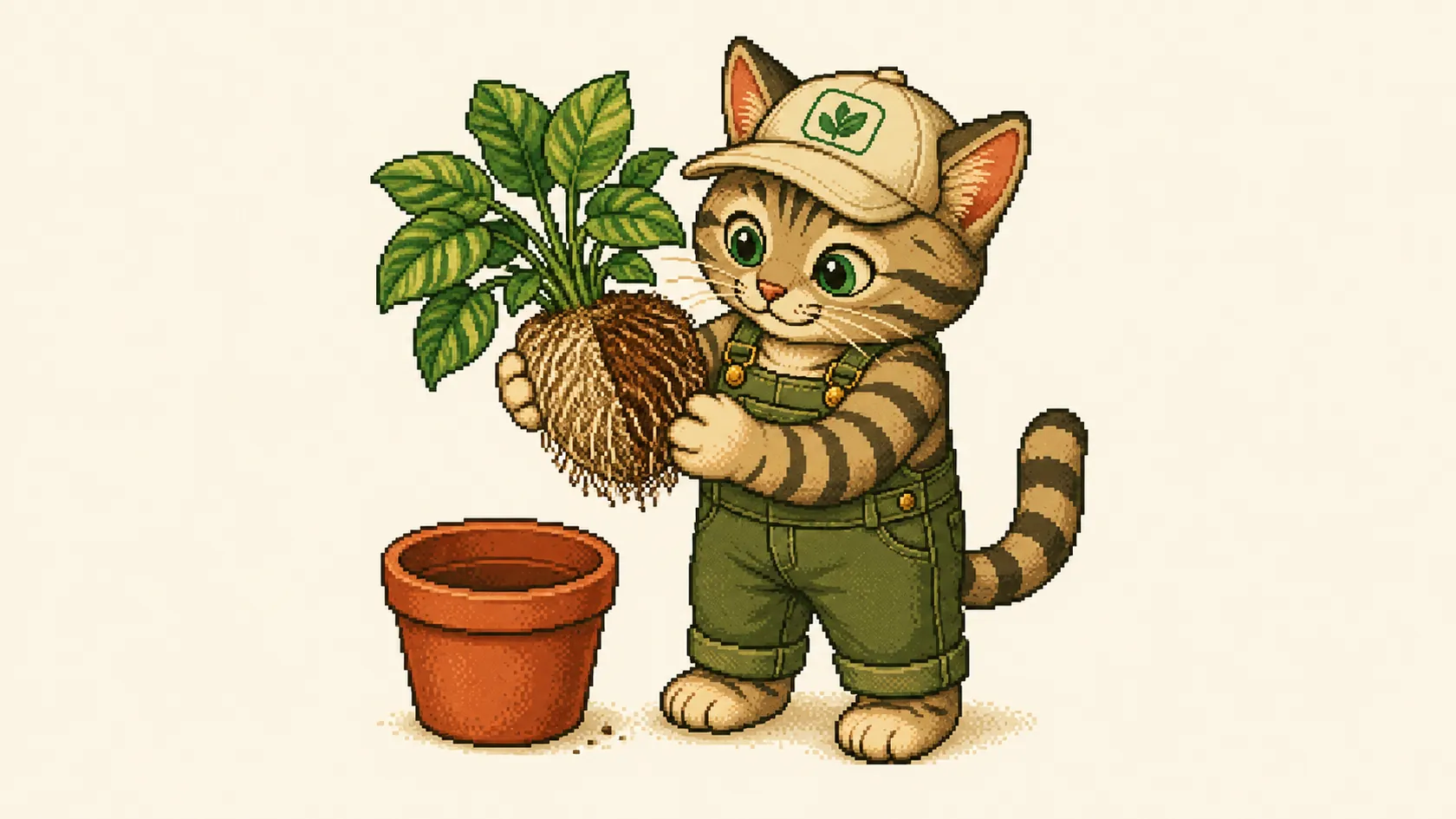
Water once after repotting, then sparingly. Few roots take up little water, and this is exactly where the original mistake repeats itself fastest.
Keep the plant bright but out of hard midday sun, and do not feed it for several weeks. Freshly cut roots are sensitive to fertilizer salts, and fresh soil brings nutrients of its own.
Expect more leaves to drop during this period. Whether the rescue worked shows in new growth, not in the old leaves.
If the stem is soft well above the soil and no firm root is left, the plant is past saving. Cut healthy shoot tips while they are still firm and take cuttings from them instead.
The soil stays wet for days, the pot stays heavy, and the leaves droop anyway. Add a sour smell or a soft spot where the stem meets the soil and it is time to unpot the plant. Brown, soft roots whose skin slides off are rotted.
Yes, as long as some firm pale roots remain. Cut away everything soft, repot into fresh open soil and water sparingly afterward. You will see the result in new growth rather than in the old leaves.
Stop watering, pour off any standing water and check that the growing pot drains. If the soil stays wet regardless, unpot the plant, rinse the roots, cut back to firm pale tissue and repot into fresh, open soil in a pot that fits.
Dark brown to black roots that feel soft and mushy, with an outer skin that pulls off between your fingers and leaves a thin thread. Firm, pale roots that hold when you tug them are healthy.
No. There is less root mass after cutting, and a large pot holds a lot of wet soil with nothing growing in it. Use a pot that matches the roots the plant has left.
Leave the plant in a growing pot that has a hole and set that inside the decorative one. After watering, tip the water out of the outer pot. Planted straight into a sealed container, the amount of water in the soil is almost impossible to control.
Last reviewed: 2026-09-07