

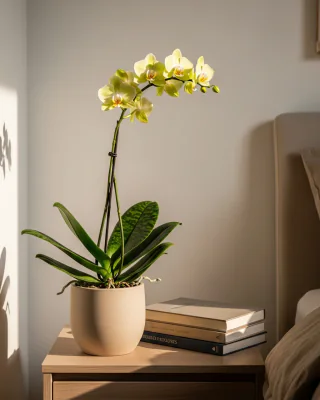
At a glance
- Light
- Bright filtered or indirect light
- Water
- When the bark is nearly dry
- Potting mix
- Airy orchid bark
- Climate
- 18–29 °C
- Pet safety
- Pet-safe (ASPCA)
- Scientific name
- Phalaenopsis spp.


Bark, roots and repotting
Use fresh, airy bark-based orchid mix and a container with excellent drainage. Repot when the bark breaks down, drainage worsens or the plant outgrows its pot. A transparent pot can make root and moisture checks easier.
When and how much water
Water when the bark is nearly dry and firm roots look silvery, before the plant wilts. Water thoroughly, let the pot drain completely and keep water out of the crown.
Check the bark again before the next watering. Pot size, bark age, light, temperature, humidity, season and active growth all affect how quickly it dries.
Light and placement
Give Phalaenopsis bright, filtered or indirect light. An east- or west-facing position can work, but shield the leaves from hot summer sun. Brighter winter light may suit an acclimated plant.
Feeding
During active growth, use orchid fertilizer lightly and follow its label. Flush the pot with plain water periodically, and reduce or pause feeding during cool, low-light winter conditions.
Temperature & humidity
Keep Phalaenopsis warm and stable, generally above 16°C, and away from cold drafts, direct heat and abrupt changes. Conditions can vary among common hybrids.
Give the plant moderate humidity and gentle airflow. Keep water out of the crown, where it can remain trapped between the leaves.
Common problems
The roots tell you more than a limp leaf on its own. Check whether they are firm or soft and whether the bark is wet or dry before changing the watering routine.
Find what’s wrong
Toxic to pets?
No. Pet-safe.
ASPCA lists Phalaenopsis sp. as non-toxic to cats and dogs. That genus-level classification does not establish the safety of every orchid, an unidentified plant or non-plant material in the pot. Contact a veterinarian if an animal is unwell or the plant identity is uncertain.
Pet-safety information in the JungleBook uses ASPCA reference data where available. It is reference information, not veterinary advice.
Common questions
How often should I water a moth orchid?
Water when the bark is nearly dry and firm roots look silvery, before the plant wilts. Let the pot drain completely and keep water out of the crown.
How much light does a Phalaenopsis orchid need?
Give it bright, filtered or indirect light. An east- or west-facing position can work, but shield the leaves from hot direct summer sun.
What do healthy moth-orchid roots look like?
Healthy roots are generally plump and firm. Roots can look silvery before watering and pale green after watering. Brown, hollow, mushy or badly shriveled roots need closer inspection.
When should I repot a moth orchid?
Repot when the bark breaks down, drainage worsens or the plant outgrows its container. Use fresh airy orchid bark and a pot with excellent drainage rather than ordinary potting compost.
Are Phalaenopsis orchids toxic to cats and dogs?
ASPCA lists Phalaenopsis sp. as non-toxic to cats and dogs. This genus-level record does not establish every orchid or an unidentified plant as non-toxic.
Sources6 references
- Royal Botanic Gardens, Kew: Plants of the World OnlineAccepted genus · species count · distribution · life form
- Royal Horticultural SocietyLight · temperature · compost · watering · indoor cultivation and flowering · Plant group overview · roots · flowering · propagation · pests and problems
- University of Maryland ExtensionLight · watering · fertilizer · potting and repotting · reblooming · problems
- North Carolina State University Extension Gardener Plant ToolboxPlant description · cultural conditions · insects, diseases, and other plant problems
- Royal Horticultural Society and the Orchid Society of Great BritainTemperature · leaves · flowering · reblooming · mealybug and scale notes
- ASPCA Animal Poison ControlScientific name · toxicity classification · animal classes
Last reviewed: 2026-09-21