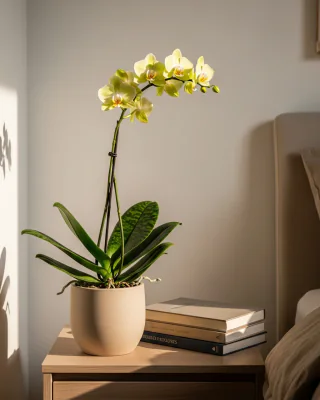
Just the very tips and edges go brown and papery while the rest of the leaf is fine. This is most common in winter with the heating on, and moth orchid prefers 50–70% humidity.
The fix
Raise humidity with a pebble tray or humidifier nearby. Skip misting directly on the leaves, which can encourage rot on this plant.
Other possible causes
Not a match? Compare the signs below to find the one you have.
Inconsistent or under-watering
How to tell
The bark mix dries out hard between waterings, so the tips (the last to get water) crisp first.
The fix
If the bark is dry and the firm roots look silvery, water thoroughly and let the pot drain completely. Then check the bark and roots before every watering rather than watering on a fixed day.
Hard-water minerals and accumulated salts
How to tell
Tips brown slowly over months despite even watering, and a white crust builds up on the bark or the pot rim. Hard water or fertilizer salts can leave this crust. It does not identify fluoride injury.
The fix
Switch to rainwater or distilled water, and flush the pot occasionally to wash out built-up salts.
Fertilizer burn
How to tell
Tips brown within a week or two of feeding, sometimes with a white crust on the bark or the pot rim. It follows feeding too often or too strong.
The fix
Flush thoroughly with plain water and feed less often, always diluted.
Too much direct sun
How to tell
Dry brown patches or scorched edges show up where strong sun hits the leaf. Moth orchid wants bright, indirect light.
The fix
Move it back from the glass, or filter the strongest sun with a sheer curtain.
Thrips
How to tell
Silvery patches with tiny black dots point to thrips.
The fix
Isolate the plant and remove badly damaged flowers or leaves. Avoid soaking the foliage or crown. Use only a thrips treatment labelled for this plant, follow its instructions and test a small area first. If leaves get wet, dry them promptly.