



How to propagate moth orchid
Phalaenopsis spp.
Moth orchids may produce keikis on mature plants. Wait for new roots, then pot the keiki in open orchid bark rather than treating it like a soil offset.

 Not sure it’s this plant?Check yours with a photo, free
Pet-safe
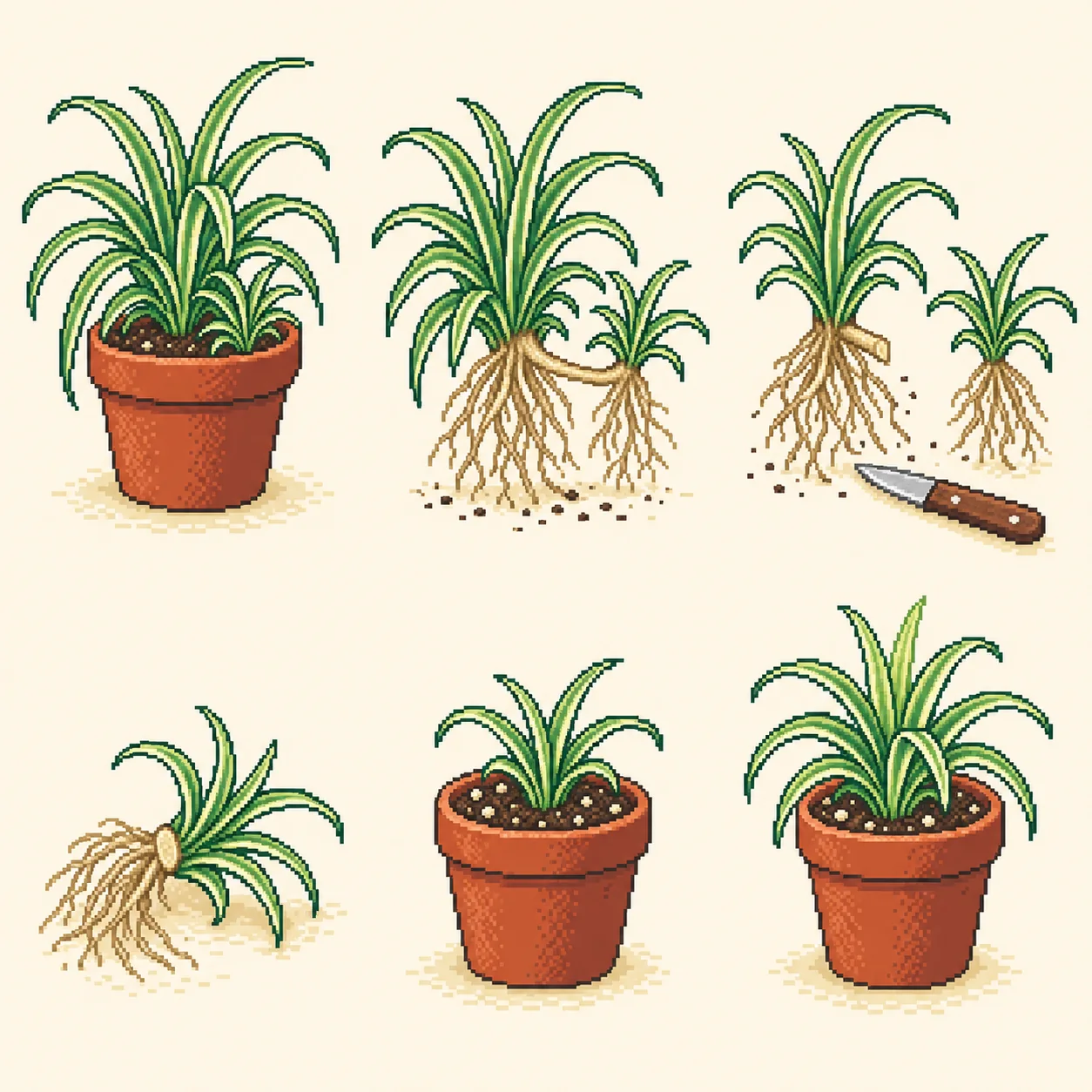
How to propagate by offsets / pups
Moth orchids may make keikis, or side shoots, on mature plants. A keiki can be removed once it has 2 to 3 roots about 5 cm (2 in) long and potted in orchid propagation mix.
- 01
Look for a keiki with leaves and developing roots on a mature moth orchid.
- 02
Wait until it has 2 to 3 roots about 5 cm (2 in) long before separating it.
- 03
Use a clean sharp tool and cut below the root tissue so the keiki keeps its roots.
- 04
Pot it in open bark-based orchid propagation mix with good drainage. Do not use ordinary garden soil.
- 05
Water sparingly at first and keep the bark airy rather than constantly wet.
- 06
Give bright filtered light, away from direct midday sun and heating.
- 07
Water when the bark is almost dry, keep water out of the crown, and wait for stable new growth.
All moth orchid guides
Related plants

Common questions
What is the best way to propagate a moth orchid?
Mature Phalaenopsis may produce keikis, or side shoots, that can be removed and potted separately. Seed propagation is limited to controlled laboratory conditions, so this guide focuses on keikis.
When is a moth orchid keiki ready to separate?
Wait until it has 2 to 3 roots about 5 cm (2 in) long. Cut below the root tissue so the keiki keeps the roots it needs for potting.
How long does a moth orchid keiki take to establish?
After potting, keep the bark airy, water when it is almost dry, and watch for stable new growth.
Sources: RHS Phalaenopsis profile and the RHS Phalaenopsis growing guide support an open bark-based medium and careful watering. The University of Washington Miller Library says a keiki can be removed once it has 2 to 3 roots, by cutting between the stem and the keiki.
7 steps · Pot when it has 2 to 3 roots about 5 cm (2 in) long · Last reviewed: