

Spots, webbing, or bugs on my Moth orchid?Phalaenopsis spp.

Most likely cause

Spider mites. Wipe the leaves down (avoid soaking the crown), raise humidity nearby without wetting the leaves, and treat with insecticidal soap or neem oil weekly until clear. Isolate it from other plants.

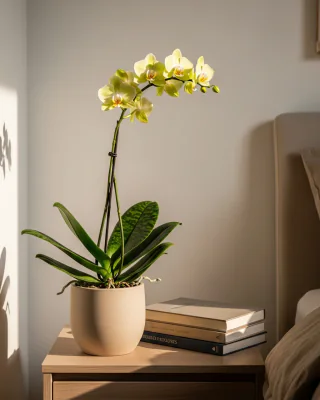
Moth orchid (Phalaenopsis spp.) — a healthy specimen photographed indoors

If something is visibly living on your Moth orchid — or its leaves have suspicious spots — catching it early is everything. Here's how to identify the usual suspects and treat them.

Not sure this is it? Snap a photo — the Plant Doctor answers in seconds.Get the app →

What's causing it

Spider mites

How to tell: Fine webbing in the leaf joints, tiny moving dots, and a stippled, dusty look to the leaves. They thrive in the dry air many homes have.
The fix: Wipe the leaves down (avoid soaking the crown), raise humidity nearby without wetting the leaves, and treat with insecticidal soap or neem oil weekly until clear. Isolate it from other plants.

Mealybugs

How to tell: White, cottony fluff tucked into leaf joints and along stems, sometimes with sticky residue.
The fix: Dab each one with a cotton bud dipped in rubbing alcohol, then treat with neem oil. Check weekly — they hide.

Scale

How to tell: Small, brown, limpet-like bumps stuck to stems and the undersides of leaves, often with sticky honeydew.
The fix: Scrape them off gently with a fingernail or old toothbrush, then treat with neem oil and keep checking.

Fungal or bacterial spot

How to tell: Soft, translucent, or black-edged spots on leaves, often after water sat in the crown or on the leaves.
The fix: Remove affected tissue with a clean blade, keep water off the crown and leaves entirely, and improve airflow around the plant.

Sunburn (not a pest)

How to tell: Dry, bleached, or brown dry patches only where strong direct sun hits the leaf, with no bugs or webbing — Moth orchid is medium / indirect light.
The fix: Move it back from the glass into its medium / indirect light range.

Light
Medium / indirect light
Watering (summer)
every 7 to 10 days
Watering (winter)
every 10 to 14 days
Pet safety
Pet-safe (non-toxic)

Not sure which one it is?

Share photos of your Moth orchid and a few care details. Botanicaly's Pro Plant Doctor builds a step-by-step rescue plan; try it with the 7-day free trial.

App Store Google Play
Get the app →

Prevention

Inspect new plants before bringing them home, keep water off the crown and leaves, check the undersides of leaves now and then, and isolate anything infested.

Common questions

How do I get rid of bugs on my Moth orchid naturally?

For most houseplant pests: isolate the plant, rinse it off, wipe the leaves, and treat with insecticidal soap or neem oil once a week until they're gone. Dab mealybugs with rubbing alcohol. Persistence beats strength.

Are pest treatments safe around pets?

Neem oil and pesticides can irritate or harm curious pets — keep treated plants out of reach while they dry, follow the label, and check with your vet or ASPCA if a pet ingests any.

More for your Moth orchid

Hand-checked against Botanicaly's verified plant catalog and ASPCA records by the Botanicaly team, led by founder Ludvig Nyström. How we verify our plant data → · Last reviewed: 2026-07-19