What you see
White cottony pads in leaf joints, on leaf stalks, and tight against the stem, with a pink to gray oval insect underneath. Sticky leaves below them.



White cottony pads in the leaf joints are mealybugs. Each insect has to come off by hand.
The wax they produce is why they are so stubborn. It keeps water and sprays out, so every insect has to be broken open or lifted off by hand.
The second clue is a sticky film on the leaves underneath and on the furniture below. When you find that, look closely at the leaf joints above the sticky patch.
A white pad that slides aside with a toothpick and shows a pink to gray oval insect underneath is a mealybug. They move slowly, but they do move.
Mold on the soil surface is flat and fuzzy and does not sit on the plant. Mealybugs are always on plant tissue, and they leave a greasy smear when you wipe them off.
Mineral spots from hard water are hard and flat and cannot be pushed aside. They sit on the upper surface of a leaf rather than in the joints.
Whenever you suspect them, also check the leaf undersides, the strip just under the pot rim, and the point where the stem meets the soil. That is where an infestation is most often missed.
Look at
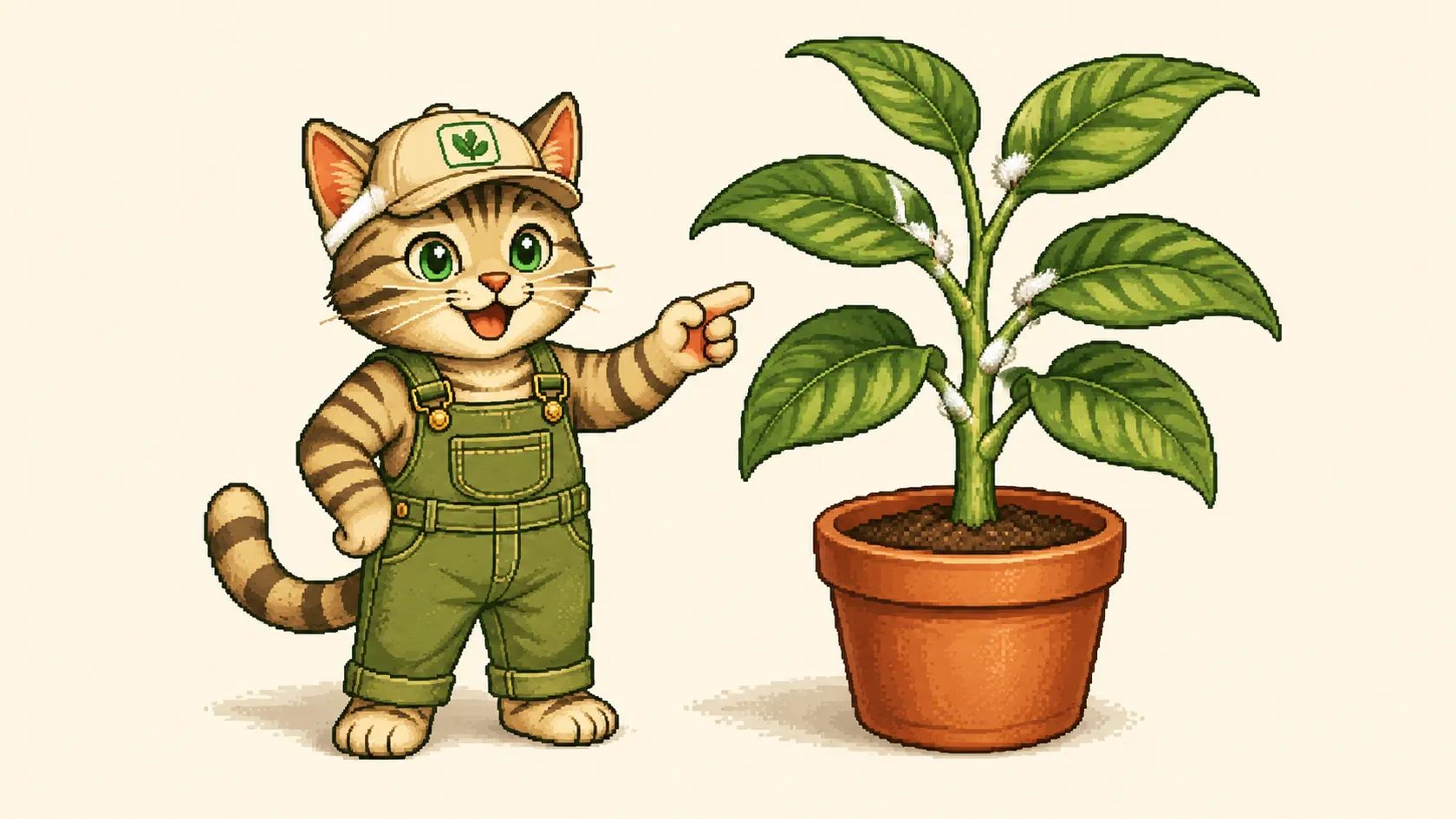
Move the plant away from the others first. Young mealybugs walk across touching leaves to the next plant and are small enough that you will not see them go.
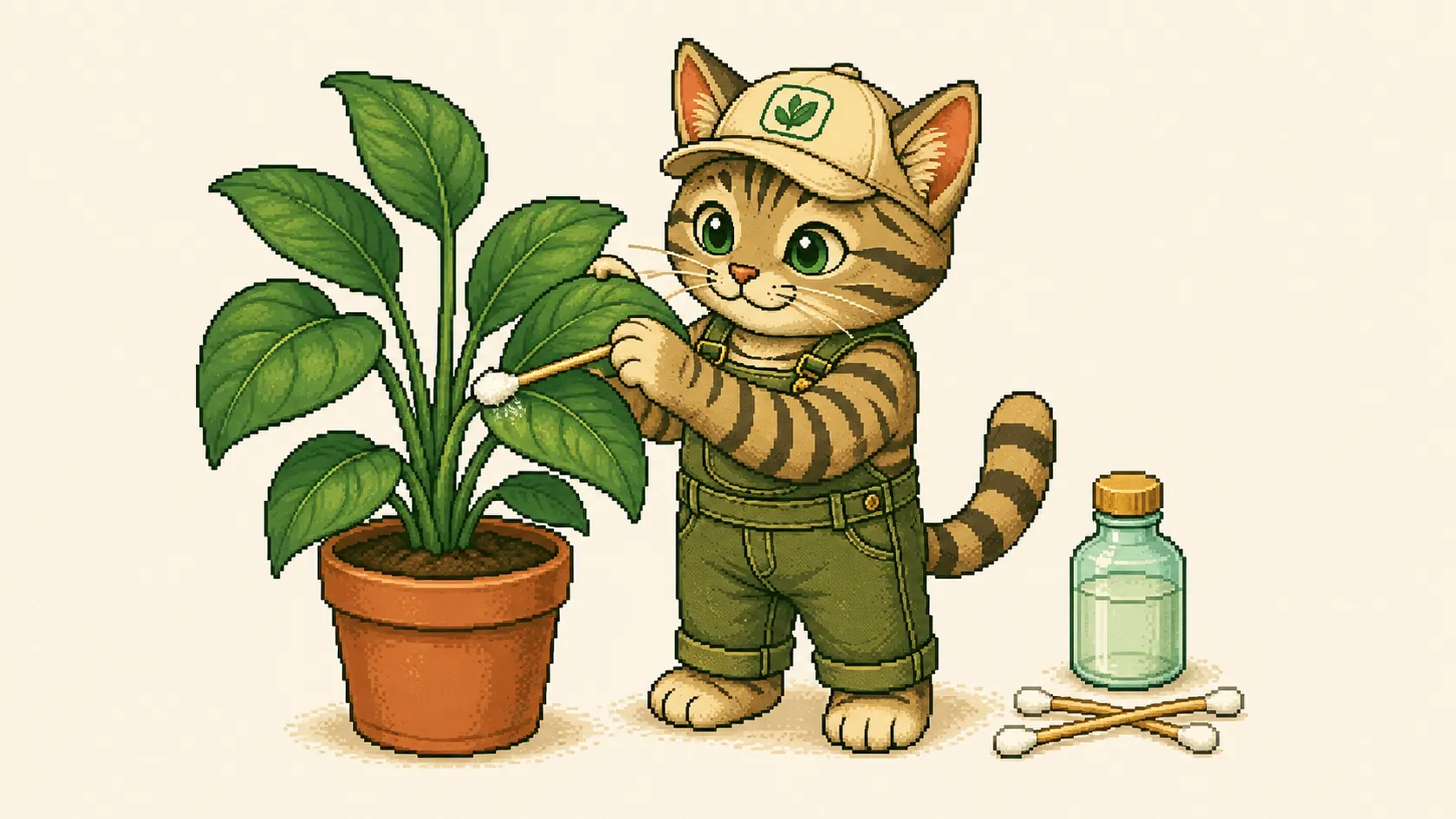
Then dab every visible pad with a cotton swab. A little rubbing alcohol on the swab dissolves the wax coat and the insect comes away with it. Use a fresh swab for each round.
Sensitive leaves can mark where alcohol touches them. Test on a single leaf and look again two days later before you treat the whole plant that way.
Rinse the plant afterward with lukewarm water, aimed into the leaf joints and at the undersides. That takes off the ones you missed and the sticky film with them.
Cut out growing tips that are covered in pads. That removes more insects in one go than any follow-up treatment.
A related kind lives on the roots. If a plant is struggling and barely growing while you find nothing on the leaves, take it out of the pot and look at the root ball.
White cottony deposits on the roots and on the inside wall of the pot are the sign. They look like mold but sit on the root network itself.
In that case, wash the mix off the roots completely and set the plant into fresh substrate in a cleaned or new pot. The old mix goes in the trash rather than back into another pot.
Check that plant’s root ball again over the next months while you water. A remnant left in the mix rebuilds the population slowly.
Insecticidal soap solutions work on contact and have to reach the insect under its wax. Spray slowly and directly into the joints rather than misting the foliage as a whole.
Dish soap is not a substitute, because its additives can burn sensitive leaves. Never treat in full sun or with a bone-dry root ball. Water first and spray in the evening.
Products based on rapeseed oil or neem oil smother the insects under a film. They need the same complete coverage and can mark hairy leaves and leaves with a waxy bloom.
Predatory ladybirds and parasitic wasps can be ordered for indoor use. They need several weeks and a plant that is not sprayed during that time, and they work more reliably in a densely planted conservatory than on a single pot.
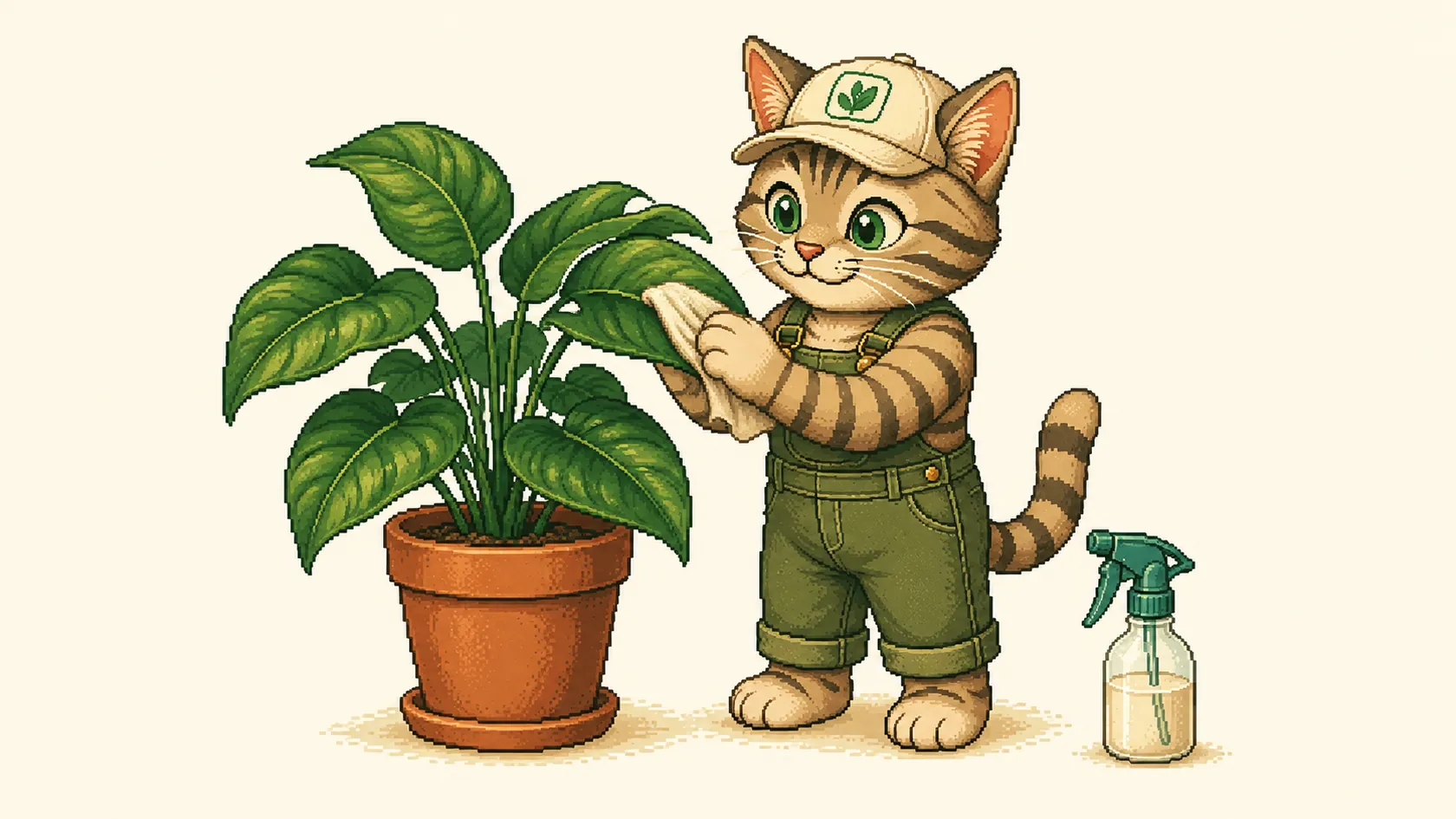
Mealybugs lay their eggs in a wax nest that survives any single treatment. That is why very small insects turn up again a few days later.
Look at the same places every three or four days: leaf joints, leaf stalks, growing tips, leaf undersides, and the area under the pot rim. Whenever you find pads, dab them off straight away.
Only after two checks with nothing found does the plant go back with the others. Keep watching its neighbors for weeks, because a second pot is often quietly infested.
Wipe the spot it stood in. Mealybugs survive in the crevices of a windowsill, an outer pot, and a saucer, and they come back from there.
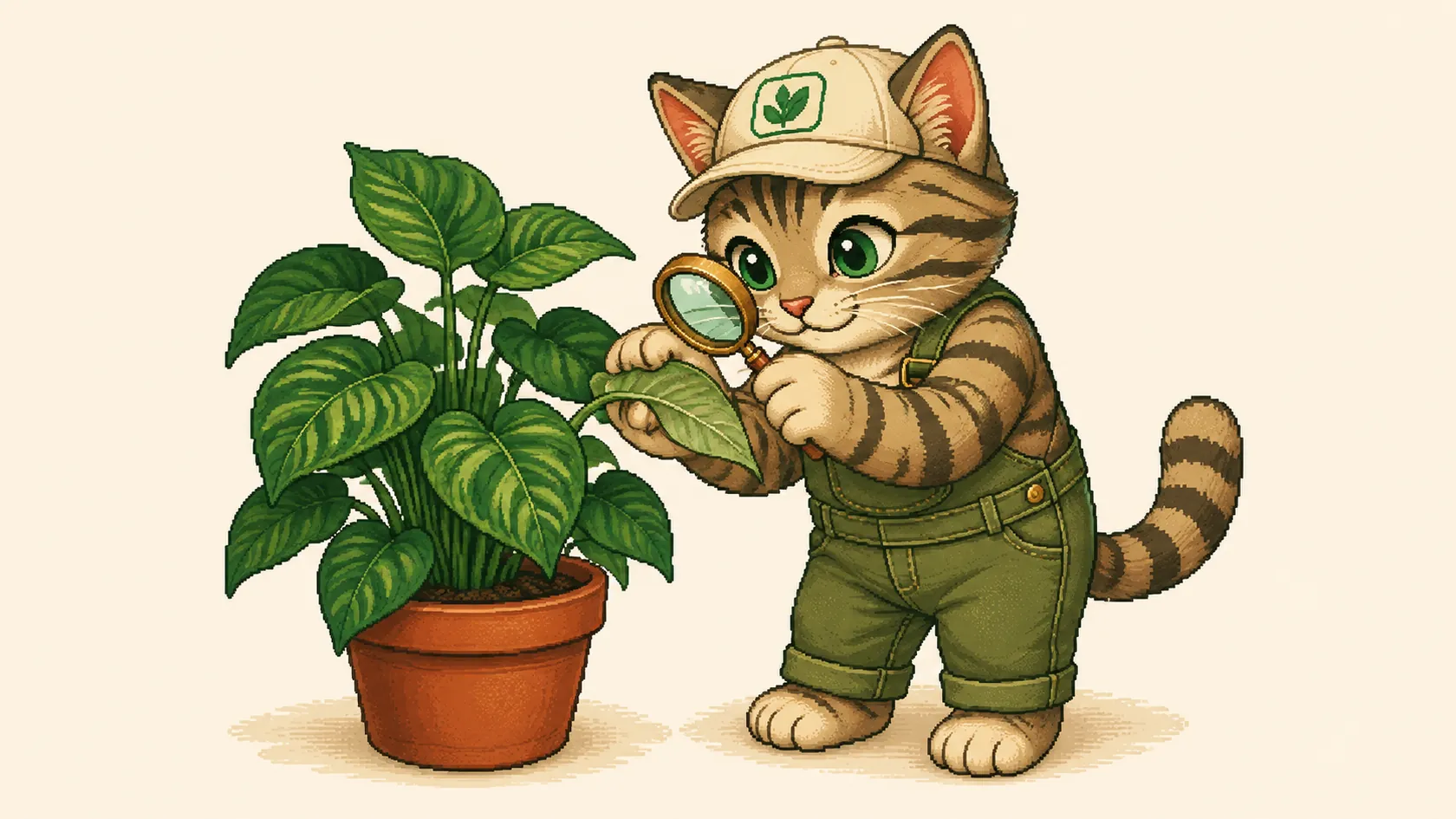
The most common route in is a newly bought plant. Keep every new arrival on its own for two or three weeks and go through the leaf joints during that time.
Warm, still room air and pots standing close together help them spread. A little space between plants makes checking easier and slows the crossing.
Leaves that were deformed or turned yellow by feeding do not recover. The new growth is what tells you the plant is through it.
Whether a plant is a risk to pets or children is answered on that plant’s own care guide. If you suspect a poisoning, a vet or a doctor is the right call.
Dabbing each pad off with a cotton swab is the most reliable method, and a little rubbing alcohol on the swab dissolves the wax coat. An insecticidal soap solution adds to that when it goes directly into the leaf joints. Misting the leaf surfaces achieves little, because the insects sit in crevices.
By repeating. Separate the plant, remove every visible insect, rinse it, and check every three or four days. Only after two checks with no finds does it go back, and the neighboring plants stay under observation for weeks after that.
By white cottony pads in the leaf joints and on leaf stalks, and by a sticky film on the leaves below. Push a pad aside with a toothpick. If a pink to gray oval insect sits under it, it is a mealybug and not mold.
A small infestation barely troubles a strong plant. Left unnoticed, new shoots stay small, leaves yellow, and the sticky honeydew attracts black sooty mold. A root infestation sets a plant back with nothing visible on the leaves at all.
Only if you find white cottony deposits on the roots or on the inside of the pot. Then wash the mix off completely and repot into fresh substrate in a cleaned pot. For an infestation on the leaves alone, repotting changes nothing.
Usually from the store, on a newly bought plant. Two or three weeks apart from the others, with regular looks into the leaf joints, catches most of them. Pots crowded together in warm still air speed up the spread afterward.
Last reviewed: 2026-09-07