What you see
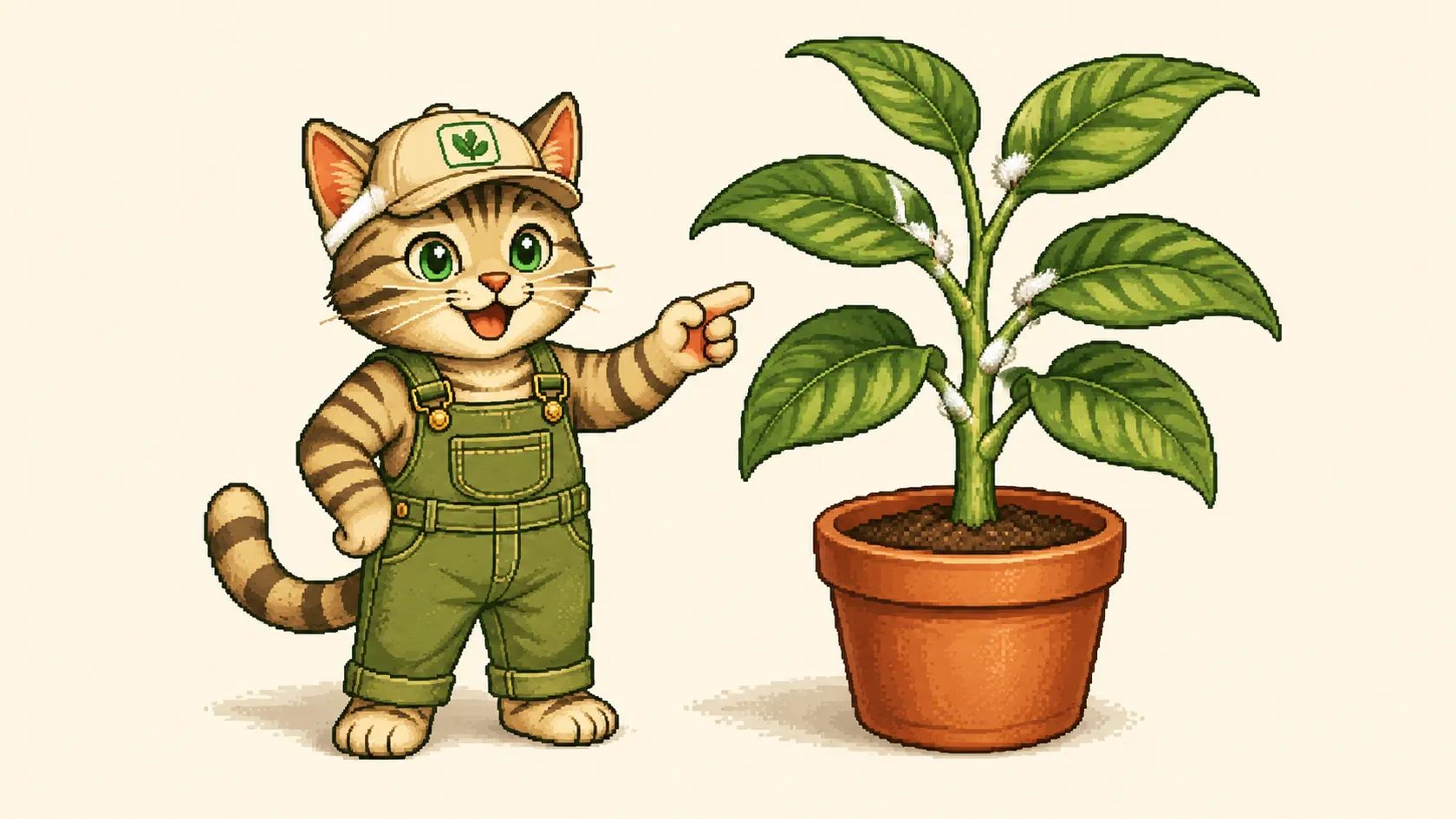
Soft white cottony pads in leaf joints, on stalks and at shoot tips, with an oval pink to gray insect under a pad you push aside.



White cottony pads in the leaf joints, sticky leaves below. Push one aside and look for the insect.
The signs below appear in a fairly reliable order. The sticky film is usually noticed first, the white pads second, and the damage to growth only once the infestation has been running for a while.
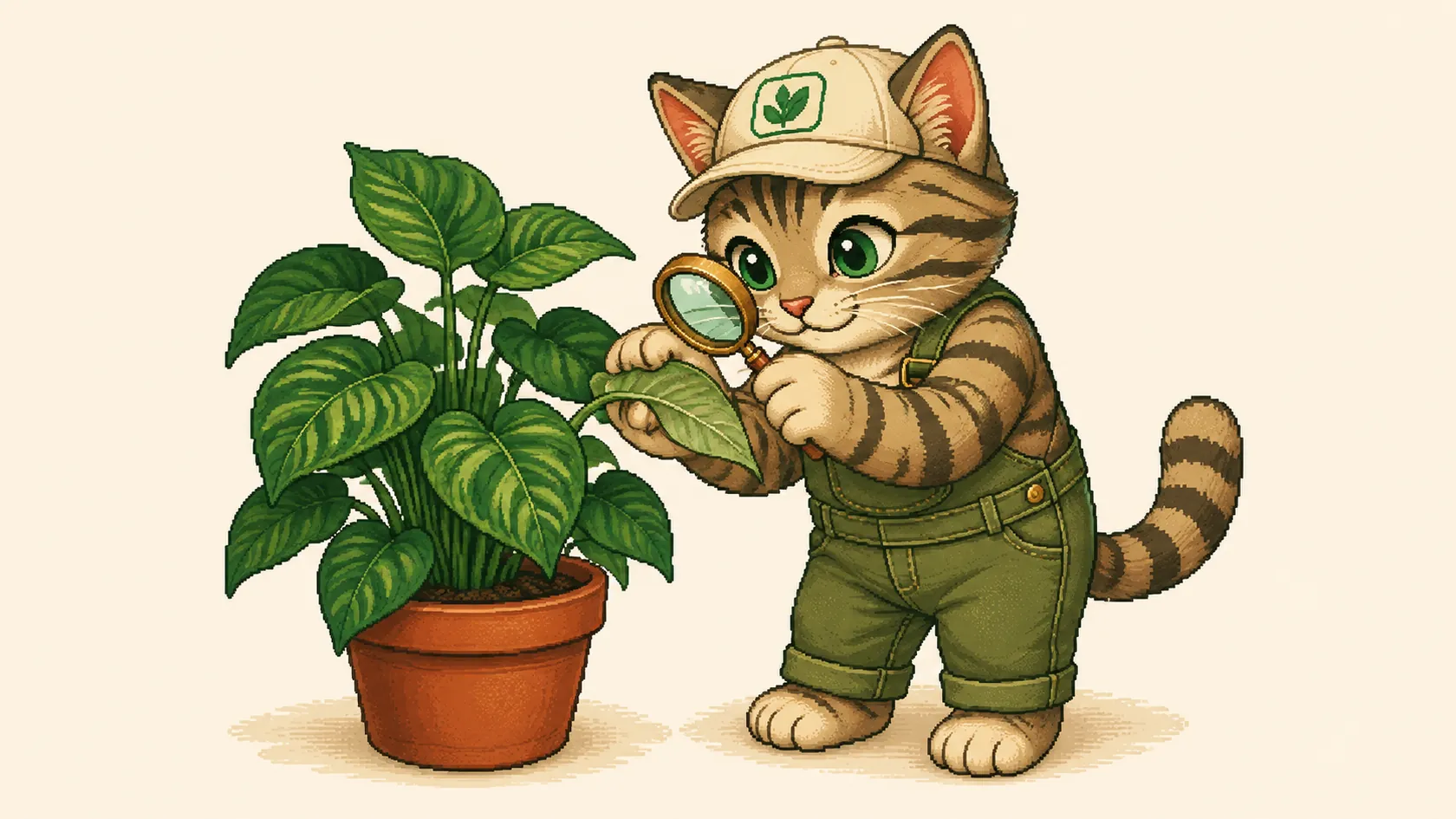
Mealybugs hide in the places you do not normally inspect, so a search that only covers the top of the leaves misses them. Take the plant to a window or use a flashlight.
Two findings together are enough to be confident. White pads plus a sticky film below them means mealybugs, whether or not you have seen an insect yet.
Look at
Most likely cause
The classic sign is a soft white pad a few millimeters across, looking like a speck of cotton wool or a crumb of fluff stuck to the plant. Around it you often find a fine white powder or waxy threads.
Push a pad aside with a toothpick. An oval, pink to gray insect underneath, moving slowly, is a mealybug. That is the finding that settles it.
The wax is the reason they are so persistent. It repels water and sprays, so the insect has to be broken open or removed by hand.
Colonies cluster where the plant is softest and best sheltered, which is why the shoot tip and the leaf joints are always worth checking first.
Mealybugs feed on sap and excrete honeydew, which lands on everything below. Shiny patches on lower leaves, on the windowsill or on the floor are often the first thing anyone notices.
Trace stickiness upward. The source sits above the sticky spot, and a leaf that is sticky on top is usually catching drips from a colony higher on the plant.
Sooty mold settles on a film that has been there a while. It is a black or gray coating that wipes off fresh leaves with a damp cloth, and it shades the leaf rather than infecting it.
Ants running up and down a stem are worth a second look. They feed on honeydew and are often easier to spot than the insects producing it.
Damage builds slowly. A few insects on a vigorous plant hardly show, which is why an infestation is usually well established by the time it is noticed.
New leaves are the first to suffer, because the colonies sit at the shoot tips. They come out small, puckered or unevenly shaped, and the plant stops making the growth you expect in its growing season.
Older leaves yellow, in patches rather than the even yellowing that comes from wet soil, and they may drop while the soil reading is perfectly normal.
Damaged leaves do not recover. New growth that comes out clean and normally sized is how you tell the plant is past it.
White fuzz on the soil surface is a saprophytic mold living on damp organic matter. It sits on the soil rather than on the plant and spreads flat, while mealybugs sit on plant tissue and leave a greasy smear when wiped.
Hard water leaves pale deposits on the upper surface of leaves. They are flat, hard and cannot be pushed aside.
Scale insects are the closest relative you might confuse them with. They form firm brown domes rather than soft white pads, and they do not move at all as adults. Both produce the same sticky honeydew.
Woolly aphids and some scale species also carry white wax. For treatment at home the distinction matters less than the finding itself, since the approach is the same.
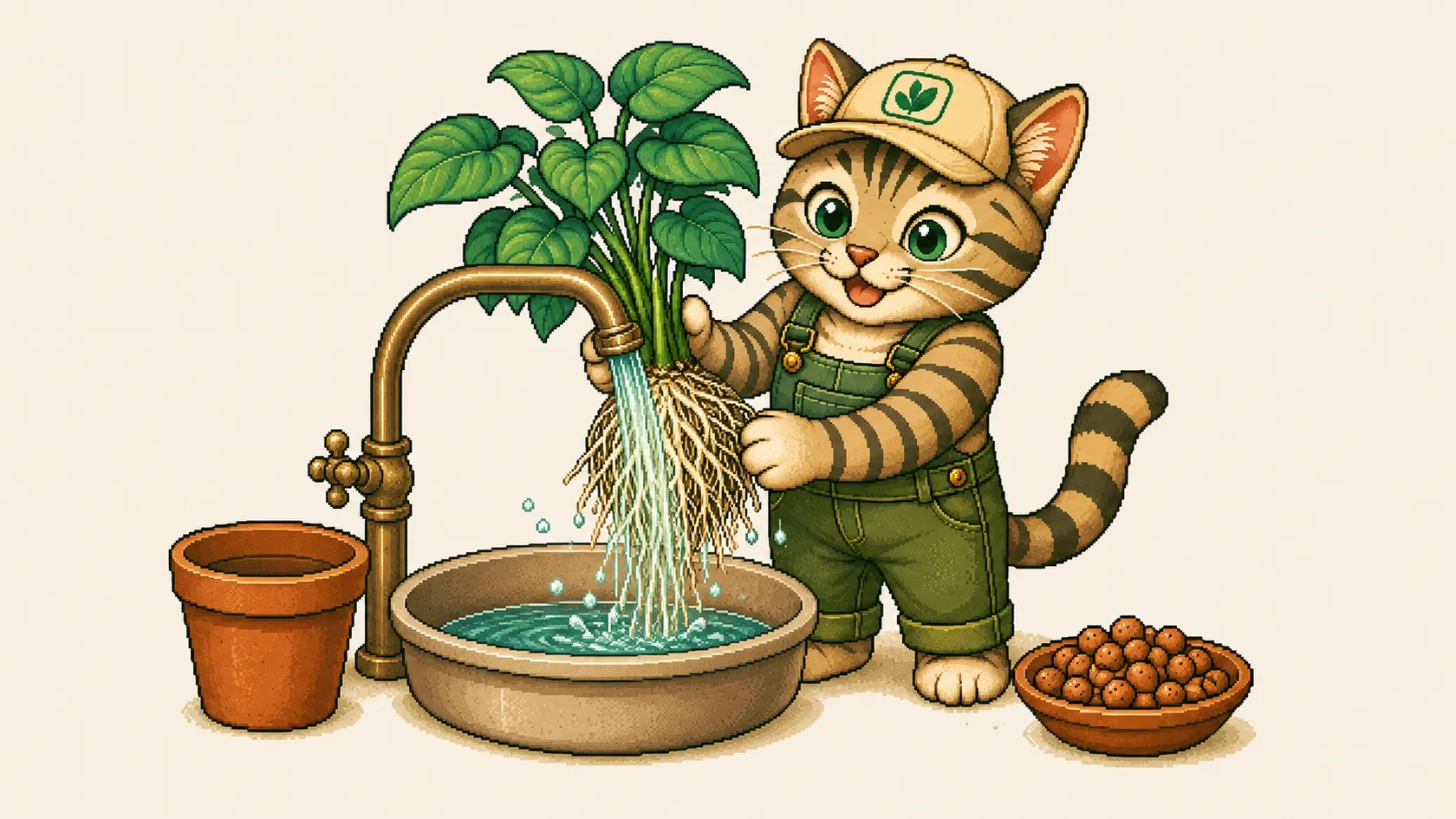
A related kind lives on the roots. When a plant weakens, barely grows and you find nothing on the leaves, take it out of the pot and look at the root ball.
White, cottony deposits on the roots and on the inside wall of the pot are the sign. They look like mold, but they sit on the root network itself.
In that case wash the soil off the roots completely and put the plant into fresh soil and a cleaned or new pot. The old soil goes in the trash.
Keep checking that plant when you water over the next few months. Anything left in the soil rebuilds the infestation slowly.
Move the plant away from the others first. Young mealybugs walk across leaves that touch and are small enough to miss entirely.
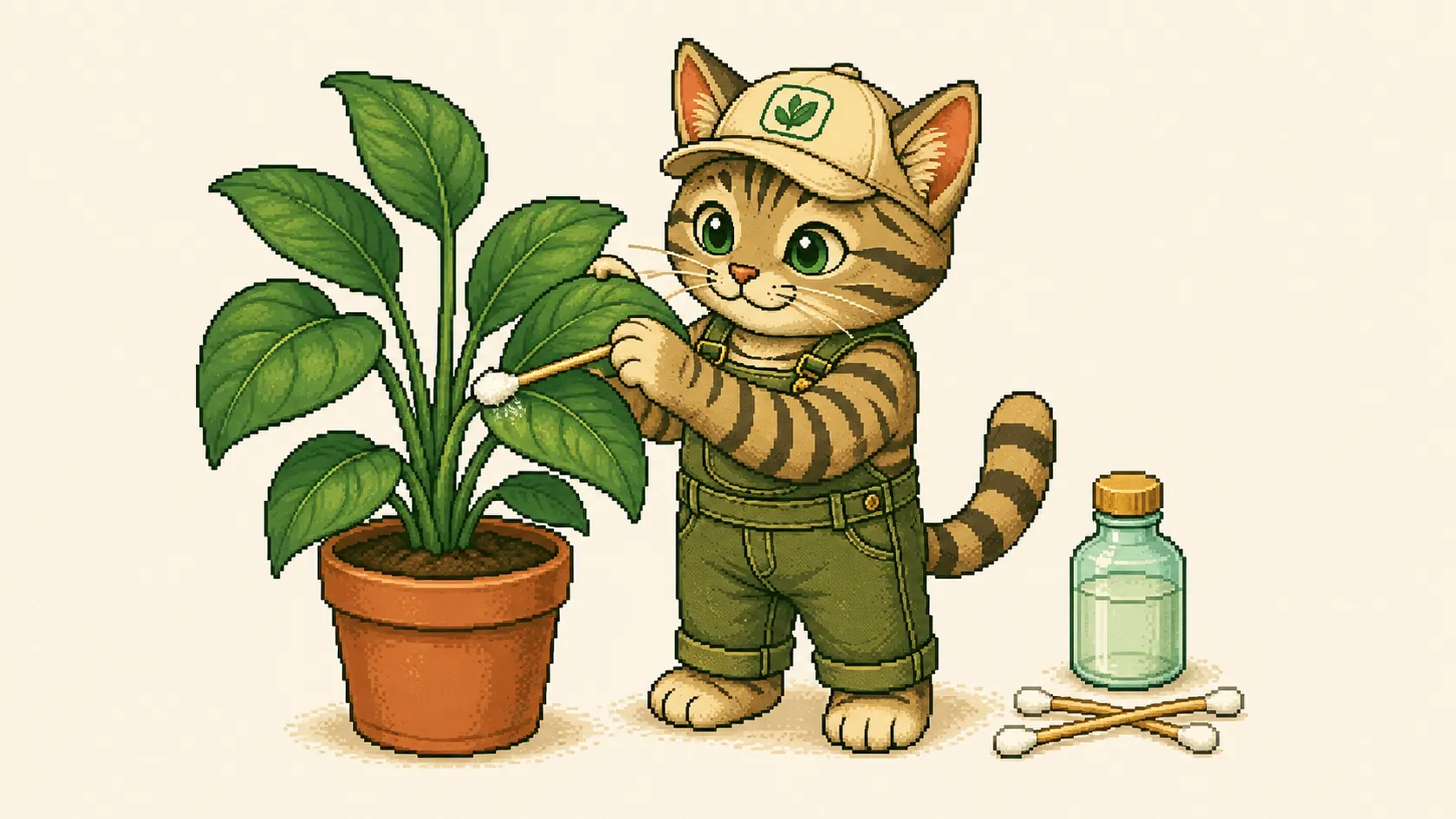
Dab every visible pad off with a cotton swab, using a fresh swab for each round. A little rubbing alcohol on the swab dissolves the wax, and sensitive leaves can spot from it, so test one leaf and look again two days later.
Rinse the plant with lukewarm water afterward, aimed into the leaf joints and undersides, and wipe the sticky film away while you are there.
Then check the same places every three or four days for several weeks. Eggs sit in a wax nest that survives a single treatment, so repetition is what finishes an infestation.
Whether a plant is a risk to pets or children is answered in its own care guide. If you suspect poisoning, a veterinarian or a doctor is the right call.
Small white cottony pads a few millimeters across, in leaf joints, on leaf stalks and at shoot tips, often with fine white powder around them. Push one aside and an oval pink to gray insect sits underneath, moving slowly.
They feed on sap and excrete honeydew. New leaves come out small or puckered, growth stalls, older leaves yellow in patches, and sooty mold settles on the sticky film and shades the foliage.
Look at where it sits. Mold spreads flat across damp soil. Mealybugs sit on plant tissue, mostly in leaf joints and at shoot tips, and leave a greasy smear when you wipe one off.
They feed on plant sap and do not bite or damage the home. The damage is to the plant. The sticky honeydew they drop on floors and furniture wipes off with a damp cloth.
Usually on a newly bought plant, sometimes on cut flowers. Keeping new arrivals apart for two or three weeks and looking into the leaf joints during that time catches most of them.
Yes, once every insect is off it and it stays clear through several checks. Puckered and yellowed leaves stay as they are, so judge the recovery by new leaves that come out clean and normally sized.
Last reviewed: 2026-09-07