What you see
Dark, fly sized insects rise from the soil when you water and stay low over the surface. The top of the soil is still wet an inch or two down.



Most soil life is harmless. Size, movement and how wet the pot stays tell you which ones are worth treating.
Look before you treat. Size, color, where the insects sit and whether they fly, jump or run narrow it down in a minute.
Water the plant, wait a moment and watch the surface. Most soil dwellers only come up when the soil is disturbed or damp.
Then go through these four points. Two answers pointing the same way are usually enough to name what you have.
Look at
Most likely cause
These are fungus gnats, and they are by far the most common thing people find in houseplant soil. The adults are dark, a few millimeters long and fly in a wobbly line close to the surface rather than around your food.
The adults do no damage. Their larvae are thin, translucent white with a black head, and they live in the top inch or two of the soil, where they eat dead material and fine roots. Established plants shrug that off. Seedlings, cuttings and fresh repots do not.
Every effective step goes at the larvae and at the wet surface they live in. Letting the top layer dry out between waterings is the first one, yellow sticky cards low over the soil catch the flying females, and nematodes go after the larvae already in the pot.
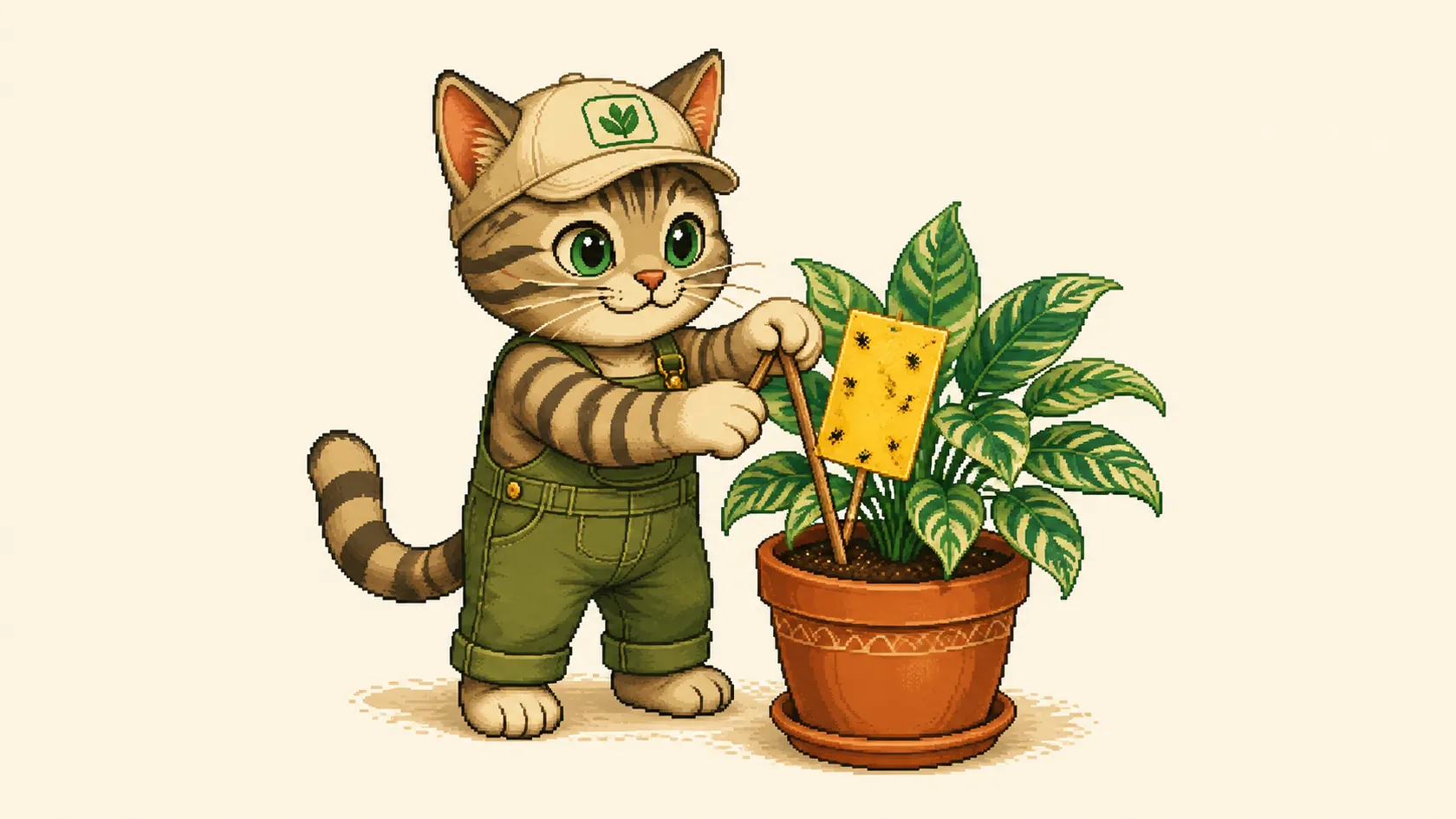
White or gray specks the size of a grain of dust that spring away when you disturb the surface are springtails. They turn up in numbers on soil that stays wet, and they are often mistaken for young pests.
They eat decaying material and fungi, not living roots. On a houseplant they are a sign about the watering rather than a problem in themselves.
Let the surface dry out between waterings, clear fallen leaves off the soil and check that the pot drains. The population drops on its own once the top layer stops staying wet.
If you want them gone faster, repot into fresh mix and shake most of the old material off the roots.
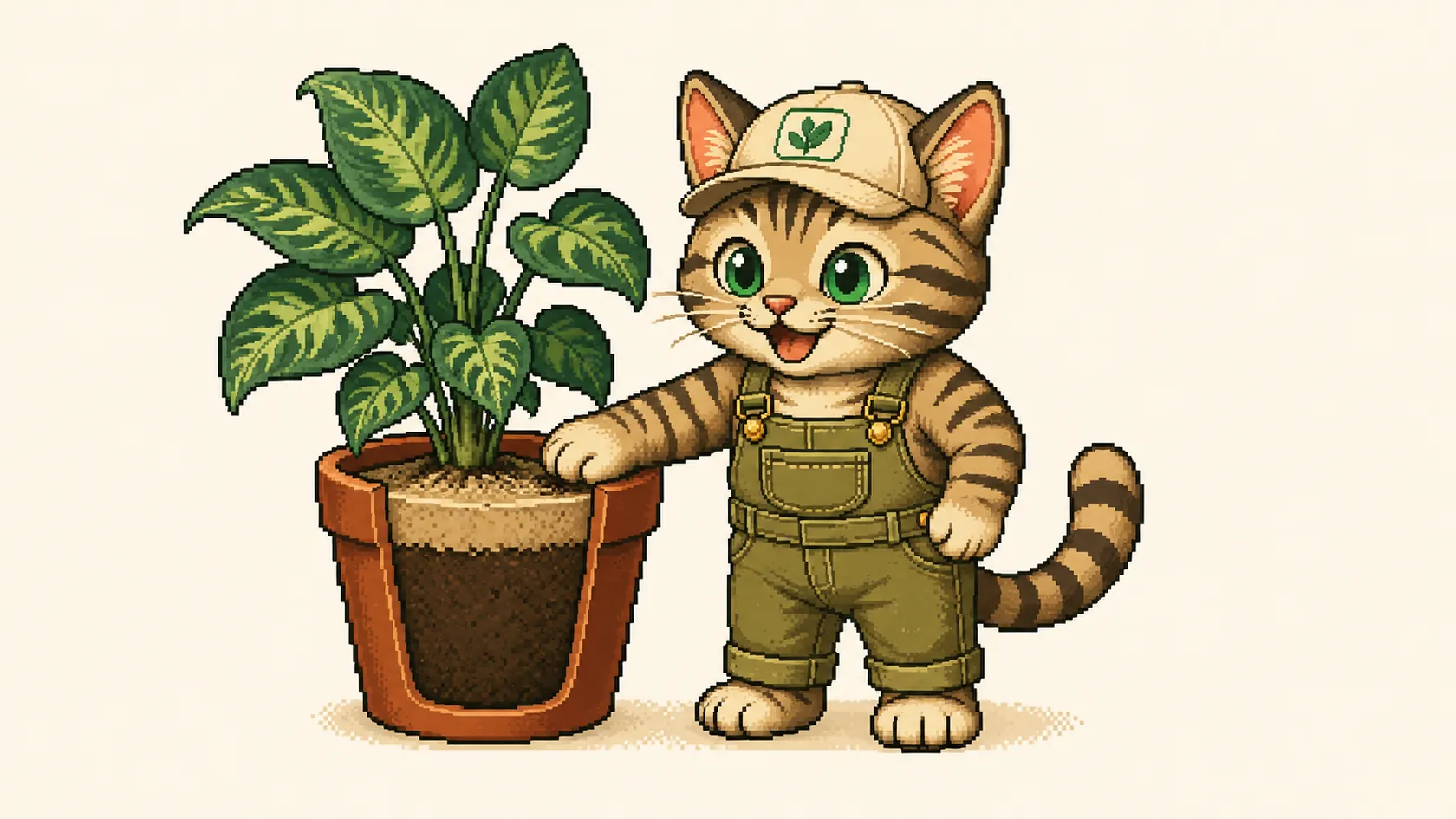
White, waxy fluff along the roots and on the inside wall of the pot points to root mealybugs. You only find them by lifting the plant out and looking at the root ball, so this is worth checking on any plant that keeps stalling for no visible reason.
Above the soil the plant grows slowly, stays pale and wilts between waterings, because the insects are feeding on the roots.
Wash the whole root ball clear of soil under lukewarm water, cut damaged roots away, and repot into fresh mix and a clean pot. Anything reusable gets washed out first, because the pot itself carries them over.
Keep the plant separate from the others afterward and look at the root ball again a few weeks later. Sister plants that shared a saucer are worth checking too.
Ants do not eat the plant. They come for honeydew, which means they are usually farming aphids, mealybugs or scale on the plant above the soil. If a nest sits in the pot, they loosen the root ball as they dig and the plant dries out faster.
So look over the shoot tips, the leaf undersides and the leaf axils first. Deal with the insect the ants are visiting and the traffic stops on its own.
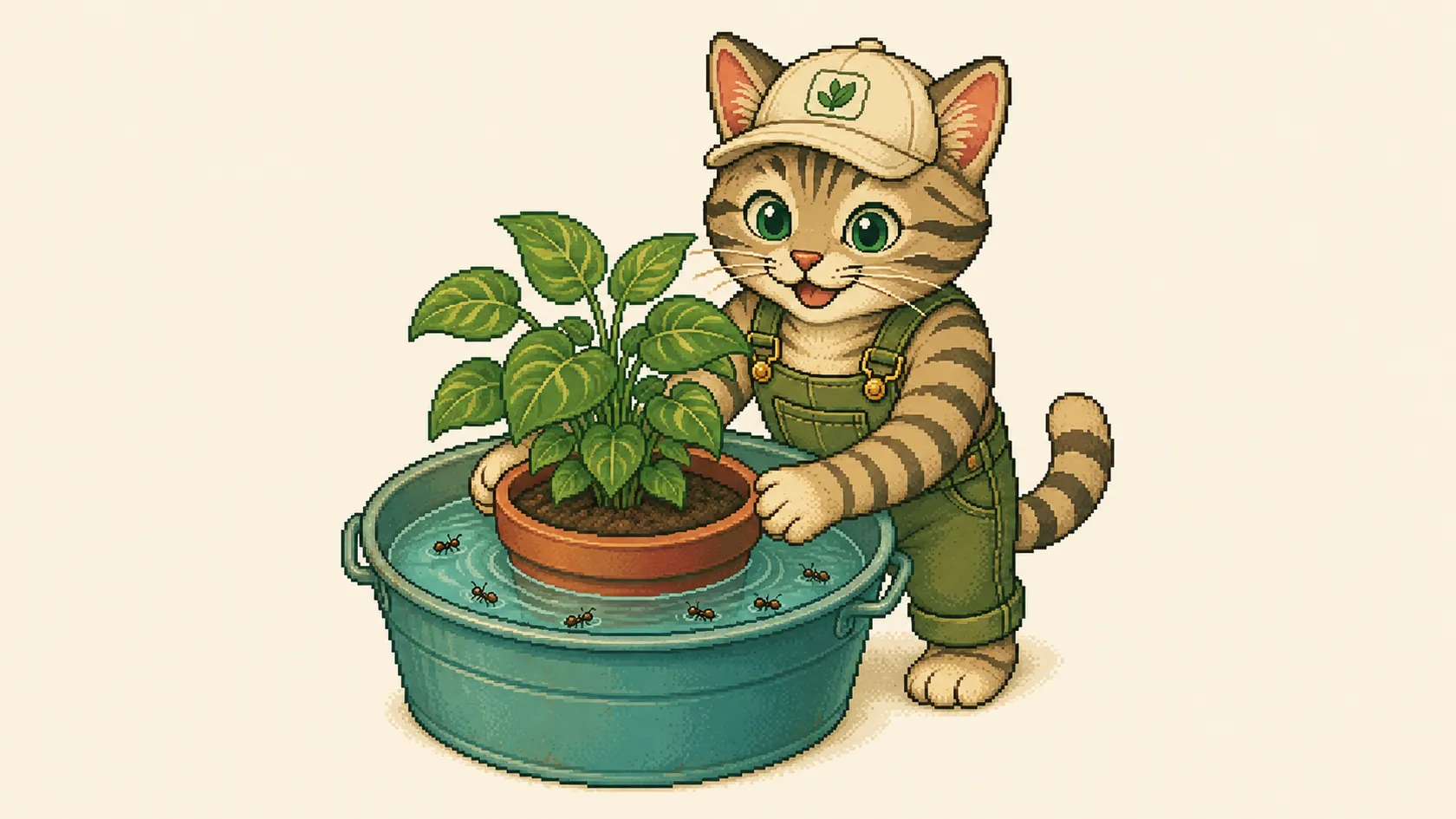
To move a nest out of the pot, stand the pot in a bucket of water until the level sits just below the rim and wait until the ants come up. Let the pot drain completely afterward.
Do not use ant baits or powders in a plant pot indoors. They are made for a different job and the residue stays in the mix.
Not everything white in a pot is alive. Perlite is white to pale gray, round and stays exactly where it is. If the grains never move, that is the mix.
Slow, pale mites the size of a pinhead on the surface of damp soil are soil mites. They eat decaying material and are harmless. As with springtails, they follow surfaces that stay wet.
Small white grains that turn out to be fertilizer prills are a third look alike. Slow release granules are round, hard and evenly colored, and they get soft over months.
A white film across the whole surface is mold rather than an insect. It grows on soil that stays wet, and it goes when the surface dries out between waterings.
Most of them come in with a plant or with the mix. A bag that stood open or outdoors at the store carries eggs and larvae more often than a dry, undamaged one, so close opened bags and store them dry.
Keep a new plant separate from the rest for two to three weeks and look at the leaf undersides and the surface of the soil in that time. That is also the moment to lift it out of the pot once and look at the root ball.
Plants that summer outside come back with company. Look them over before they come in and check the drainage holes, where slugs and ants like to sit.
The routine that prevents most of this is unglamorous. Water only when the top layer has dried out, empty saucers, and take dead leaves and spent flowers off the soil.
If they jump when you disturb the surface, they are springtails, and they eat decaying material rather than roots. If they sit still and never move, they are perlite or fertilizer grains. White waxy fluff on the roots themselves is a different case and points to root mealybugs.
Most soil dwellers eat dead material and leave the plant alone. Fungus gnat larvae damage seedlings, cuttings and fresh repots, and root mealybugs feed on roots at any age. Those two are worth acting on, the rest are a signal about how wet the pot stays.
Start with the watering, because nearly all of them depend on a surface that stays wet. Let the top layer dry out between waterings, empty the saucer and clear dead leaves off the soil. Repot into fresh mix if the population holds after a few weeks.
It helps only if you shake most of the old mix off the roots and use a clean pot. Leave the root ball intact and the insects move house with it. With a weakened plant, wait until it has recovered before repotting.
Ants come for honeydew from aphids, mealybugs or scale on the plant, or they have started a nest in dry soil. Look over the shoot tips and leaf undersides first. Do not put ant baits or powders in a plant pot indoors.
Dish soap in the root zone harms the plant more than it harms the insects, and cinnamon works at most against mold on the surface. Neither reaches larvae in the mix. A surface that dries out does more than either.
Last reviewed: 2026-09-07