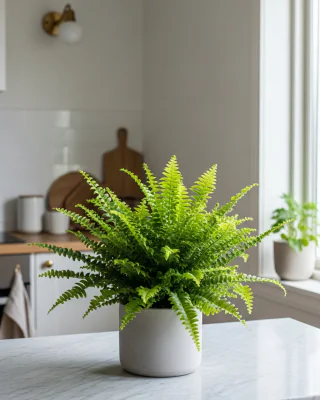
What you see
Flat or domed brown bumps a few millimeters across on leaf veins, stalks and stems, with a sticky shiny film on the leaves below.



Brown bumps on stems and leaf veins are scale. Scrape them off, rinse the plant, then keep checking for weeks.
Adults no longer move. They sit fixed under their shell, and that shell keeps sprays off them, which is why scraping comes first and matters most.
The most common tip off comes from below. A sticky, shiny film on the lower leaves, the windowsill or the floor means something above it is feeding.
Push a suspect bump sideways with a fingernail or a toothpick. If it lifts off like a small lid and leaves a damp mark or a soft body underneath, it is a scale insect.
A fungal or sun spot lies in the surface of the leaf and cannot be lifted. Hard water deposits sit on top as a pale crust and do not look domed.
Soft scales are rounded and glossy brown, armored scales are flat, gray and easy to miss. For treating a plant at home the difference does not change what you do.
Look first along the midrib on the undersides, in the leaf joints, on the leaf stalks and on woody stems. That is where most of them sit and where an infestation goes unnoticed longest.
Look at
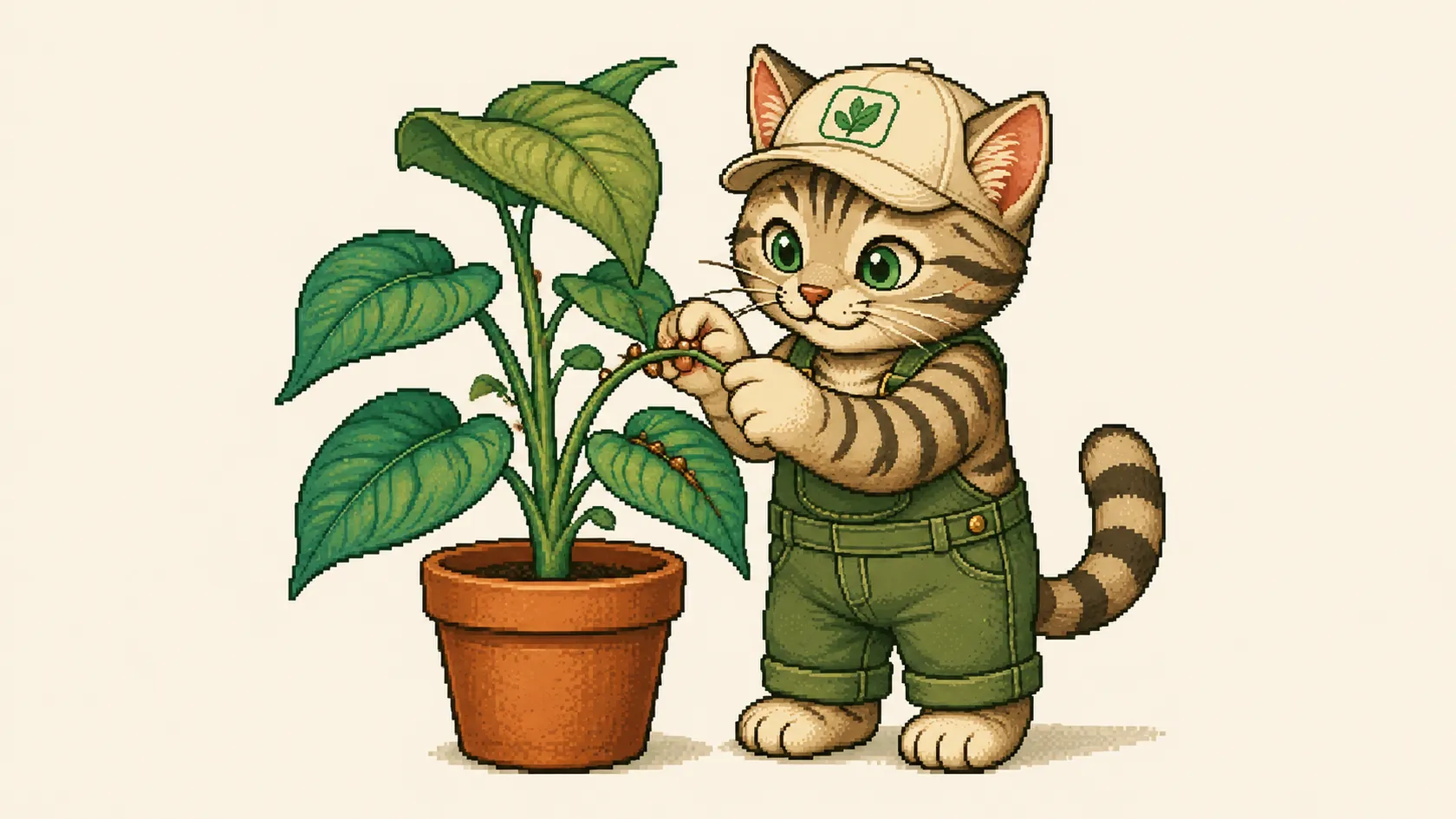
Move the plant away from the others first. Newly hatched crawlers are tiny, mobile, and they walk across any leaves that touch.
Then take the shells off mechanically. A fingernail, an old toothbrush or a wooden stick works on firm leaves and stems. Work through every leaf joint and every underside along the midrib.
A little rubbing alcohol on a cotton swab loosens the grip and makes them come away more easily. Sensitive leaves can spot from it, so test one leaf and look again two days later.
Rinse the plant with lukewarm water afterward and wipe the sticky film off the leaves with a damp cloth. Sooty mold settles on a film that has been there a while, shading the leaf and coming off badly later.
Cut out heavily colonized woody shoots if the plant keeps enough healthy foliage. You will never get every insect out of densely covered bark.
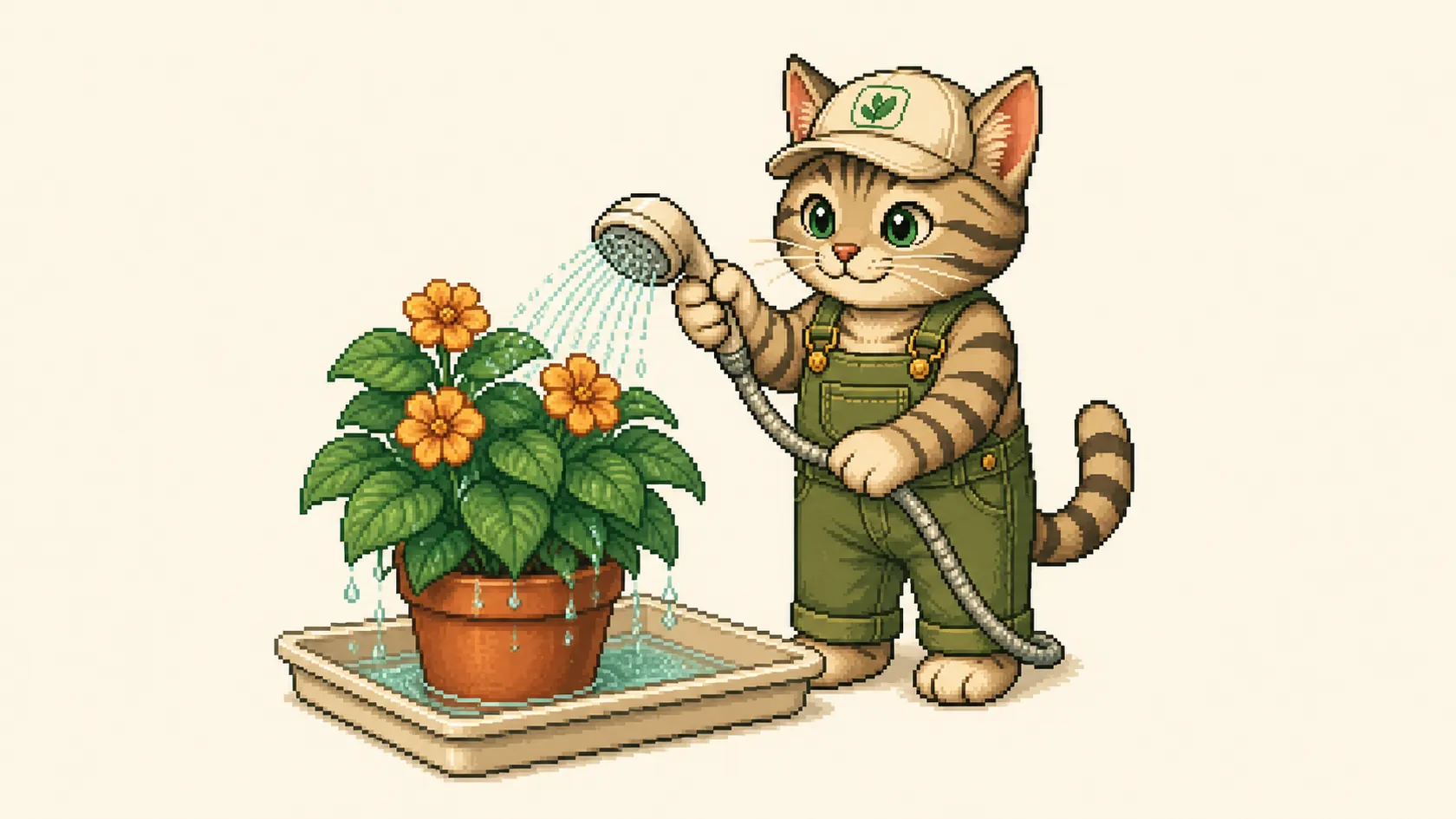
Insecticidal soap reaches the crawlers, which have no firm shell yet. It does very little to adults, because the lid protects them.
Oil based products such as horticultural oil and neem oil lay a film over the shell and smother the animal underneath. They need complete coverage and can mark hairy leaves, waxy succulents and soft new growth.
Dish soap is not a substitute for insecticidal soap, since its additives can leave scorched edges and spots. Never treat in full sun or with a dry root ball. Water first and spray in the evening.
The best moment to spray is right after scraping. That is when you catch the crawlers moving between the old feeding sites.
Parasitic wasps and predatory beetles sold for indoor use are the biological route. They need several weeks and a plant that is not sprayed during that time.
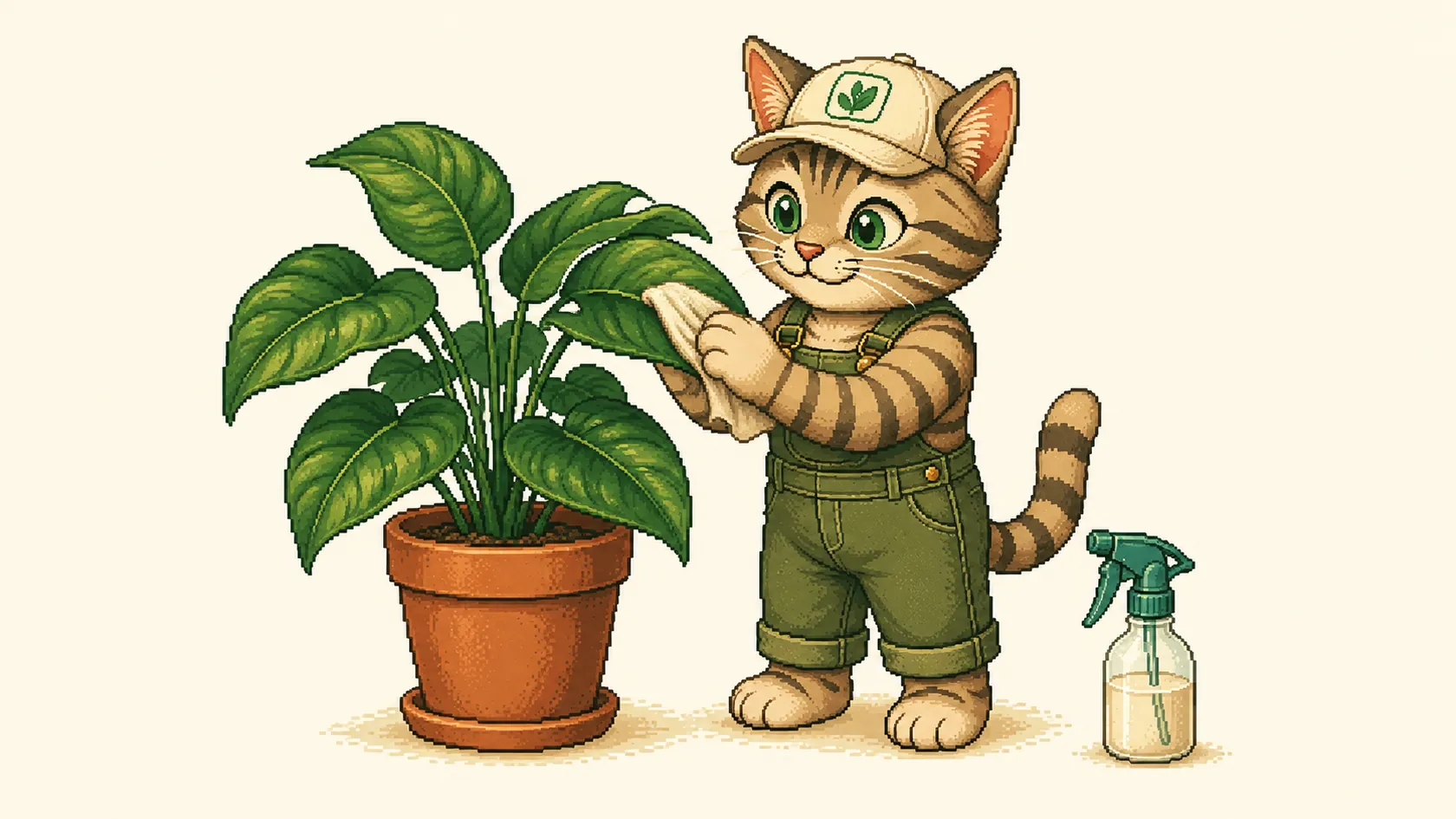
Eggs can still sit under a dead shell, and the crawlers hatch at different times. One round is never enough.
Look at the same places every three or four days: midrib, leaf undersides, leaf joints, leaf stalks and woody stems. Scrape again the moment you find new bumps or fresh stickiness.
An empty, dry lid with nothing soft underneath is a dead insect. Take it off anyway, otherwise you cannot tell old from new at the next check.
The plant goes back with the others only after two checks with nothing found. Keep watching the neighboring plants for weeks and wipe out the windowsill, the cachepot and the saucer.

New plants bring scale insects into the house more often than anything else. Keep every new arrival on its own for two or three weeks and go over the leaf undersides and stems while it stands there.
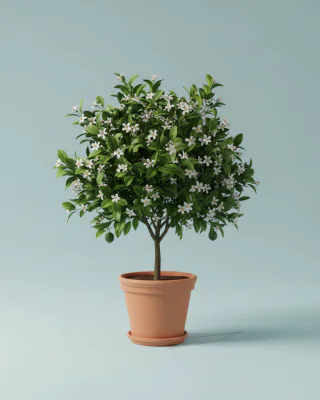
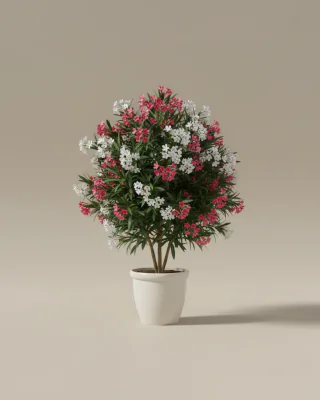
Container plants that spent the summer outdoors are the second route. Check citrus, bay laurel and oleander thoroughly before you bring them back in for the fall.
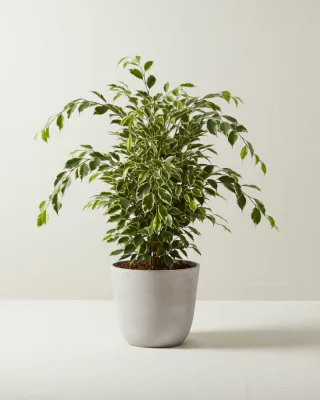
Tough leaved and woody species are hit first, among them citrus, ficus species, ivy and ferns. Their veins and stems give the insects a good hold.
Dry heated air and a plant weakened by drought or waterlogging make an infestation easier. A well supplied plant in the right spot is attacked less often.
Leaves that yellowed or stippled do not turn green again. Remove them only if the plant keeps enough healthy foliage.
Sooty mold on the sticky film wipes off with a damp cloth while it is fresh. Older coatings often leave a gray haze that goes when the leaf does.
New growth shows whether the plant is through. Clean, even new leaves mean the treatment worked. New growth that turns sticky again means insects are still sitting somewhere.
Whether a plant is a risk to pets or children is answered in its own care guide. If you suspect poisoning, a veterinarian or a doctor is the right call.
Scrape them off. A fingernail, a toothbrush or a wooden stick removes the shell that keeps sprays out, and a little rubbing alcohol on a swab loosens the grip. Rinse the plant afterward and keep checking every three or four days for several weeks.
The test is whether it lifts. A fungal or sun spot lies in the surface of the leaf and cannot be pushed aside. A scale insect comes away like a small lid and leaves a damp mark behind.
Honeydew, excreted by sap feeding insects. It lands on everything below and sooty mold settles on a film left too long. Wipe it off with a damp cloth and look for the source above the sticky spot.
A small number on a vigorous plant hardly registers. Left unnoticed, leaves yellow, growth stalls and sooty mold shades the foliage on top of that. On woody species a heavy infestation can kill whole branches.
Expect several weeks, because crawlers keep hatching from eggs under old shells. Repetition decides the outcome. Move the plant back to the others only after two checks in a row with nothing found.
Oil based products smother the insect under a film, so they need complete coverage and work over several applications rather than at once. They can mark hairy leaves, waxy succulents and soft new growth, so test one leaf first.
Last reviewed: 2026-09-07