What you see
They cluster on the soft shoot tips, with the larger part of the colony on the undersides of the leaves.



Move the plant away from the others and rinse it off. The follow-up checks tell you whether they are gone.
The second clue is sticky. Aphids give off honeydew, which leaves a shiny film on the leaves below them, on the windowsill and on the floor. When you find that film, turn over the leaves above it and look at the undersides.
The approach is the same on any houseplant. Take the insects off by hand first, then check, then treat again as often as it takes until a check turns up nothing.
Carry the affected plant away from the group as soon as you see the aphids. They walk from leaf to leaf where plants touch, and winged ones cross short open stretches of a room.
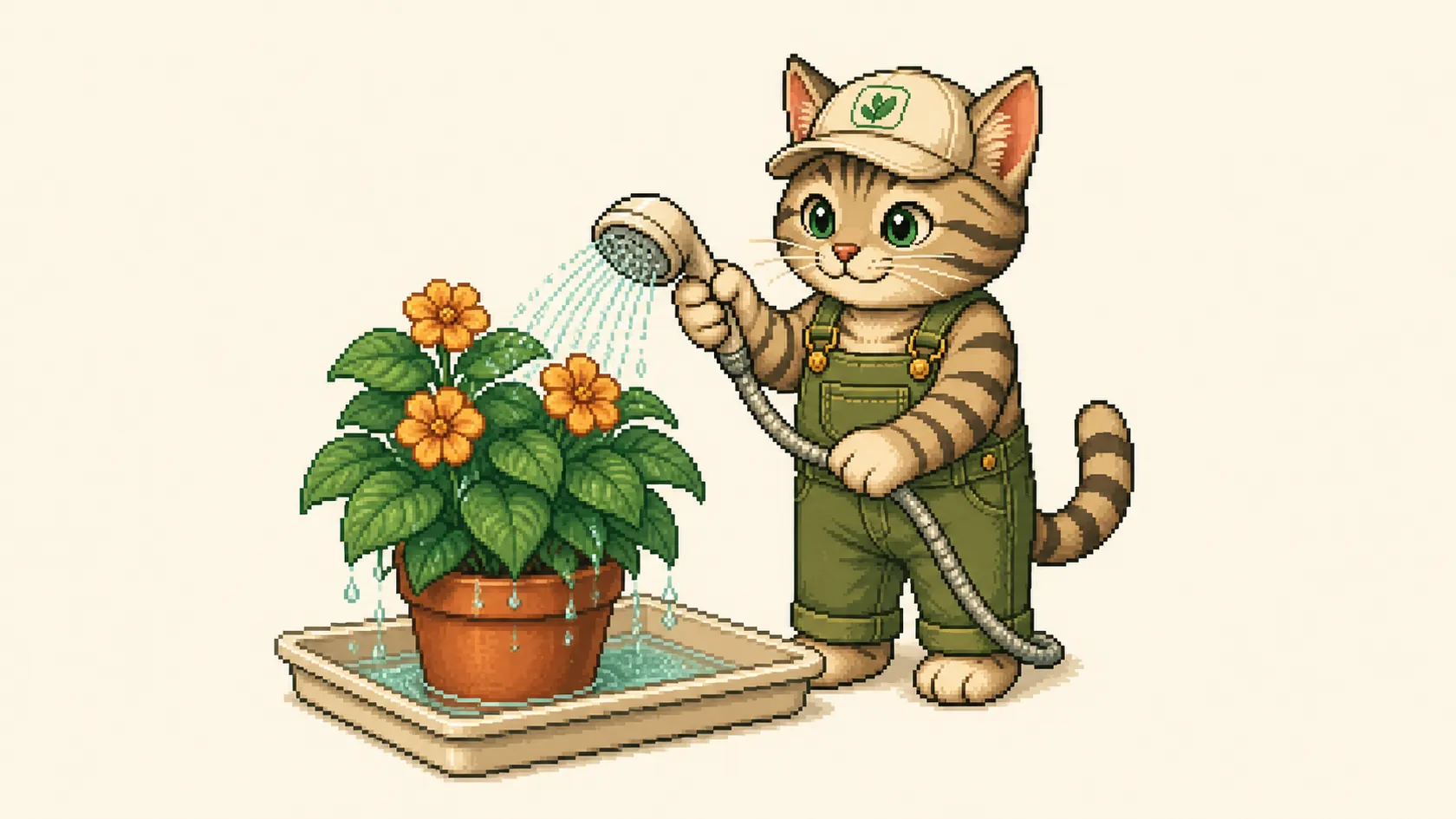
Then rinse the plant with lukewarm water. Tilt the pot so the water does not collect in the soil, and aim the spray upward at the leaf undersides. That is where most of the colony sits.
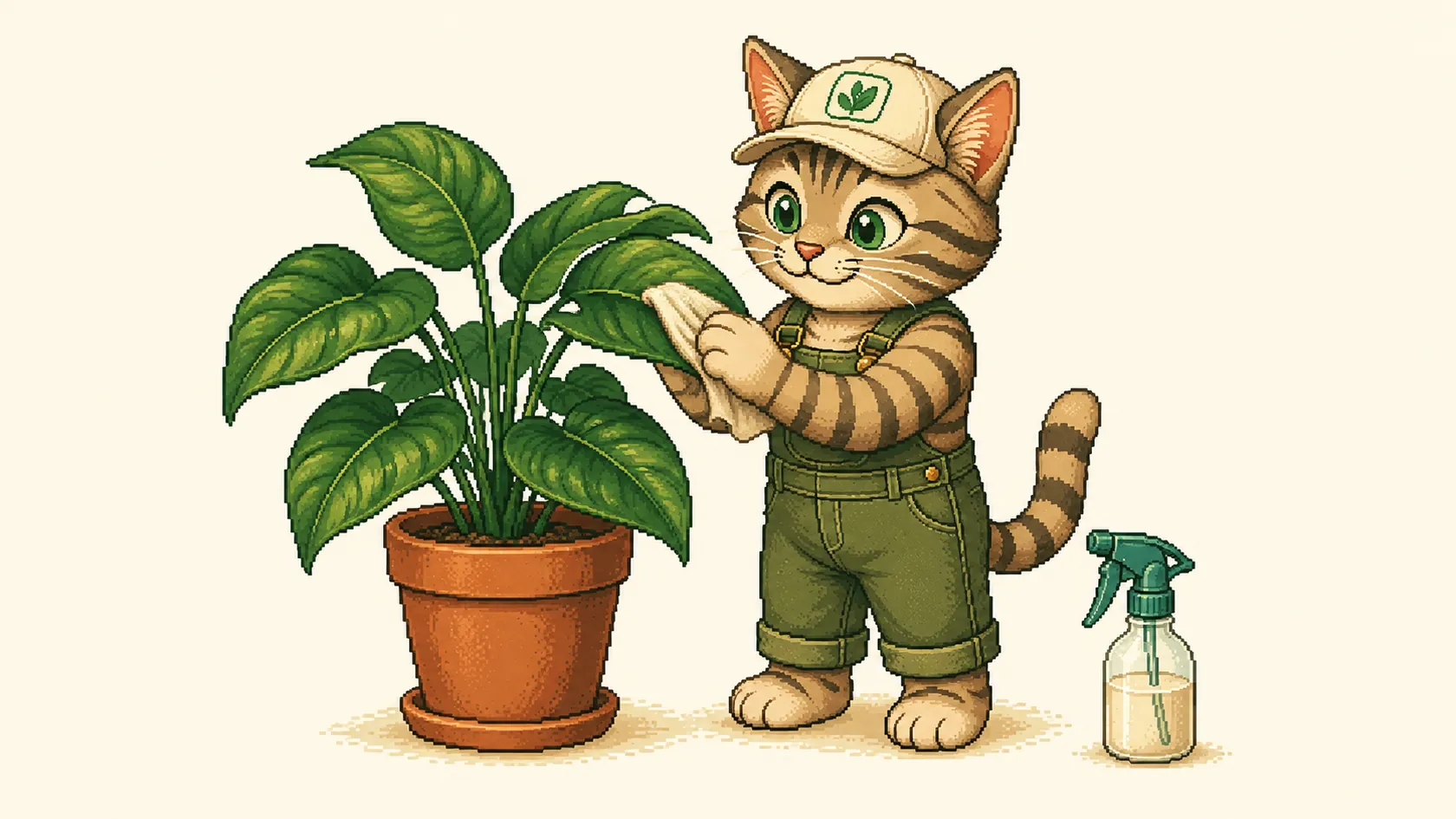
On soft new growth, thin leaves and open flowers the spray is too rough. Wipe the insects off with a damp cloth or a soft brush instead, rinsing the cloth as you go.
Cut out single shoot tips that are covered end to end. That removes more insects in one motion than any treatment afterward.
Look at
The common home remedy is insecticidal soap in water, sometimes with a little rubbing alcohol added. It works only where it actually wets the insects. Anything you miss while spraying survives and keeps breeding.
So spray slowly and from below, until leaf undersides, shoot tips, leaf axils and leaf stalks are evenly wet. After about an hour most plants take a rinse to get the solution back off.
Dish soap is not a substitute. It carries additives that can spot or scorch sensitive leaves. Test any solution on one leaf first and look at that leaf two days later before you spray the whole plant.
Never treat in full sun and never on a dry root ball. Water first, spray in the evening and keep the plant out of direct light for the rest of the day.
Garlic tea, nettle tea and coffee grounds turn up on a lot of lists. Indoors the first two smell strong, their effect on an established colony is weak, and coffee grounds never reach the insects on the shoots at all.
Garden centers sell sprays for houseplants based on potassium soap, canola oil or neem oil. They also work on contact and need the same complete coverage. Follow the dose on the label and the note about whether the product is meant for indoor use.
Oil-based products leave a film on the leaf. On hairy leaves, on succulents with a powdery bloom and on young growth that can cause damage, so test one leaf here too.
Beneficial insects such as lacewing larvae and parasitic wasps can be ordered for indoor use. They need several weeks and a plant that is not sprayed again in that time. In a single pot at a window they wander off easily, and in a densely planted sunroom they work more reliably.
Aphids breed fast, and the newly hatched ones are hard to see at first. One treatment rarely catches the whole population.
Look at the same places every two or three days: shoot tips, young leaves, leaf undersides, flower stalks and leaf axils. If you find insects again, treat again the same day.
Only after two checks in a row turn up nothing does the plant go back with the others. Go through the neighboring plants over the following weeks as well.
Wipe the sticky honeydew off the leaves with a damp cloth. Black sooty mold settles on a film that sits for a while, and it shades the leaf and comes off badly.

The usual route is a new plant. Keep every new arrival on its own for two or three weeks and look it over regularly before it takes its place.
In summer winged aphids come in through open windows and on plants that spent the season outdoors. Go over patio plants closely before you bring them back in for fall.
Cut flowers and a fresh bunch of potted herbs bring aphids in too. Keep both away from your houseplants.
Very soft, dark green growth comes from generous nitrogen and is especially attractive to aphids. So keep liquid fertilizer at the strength on the package and no stronger.
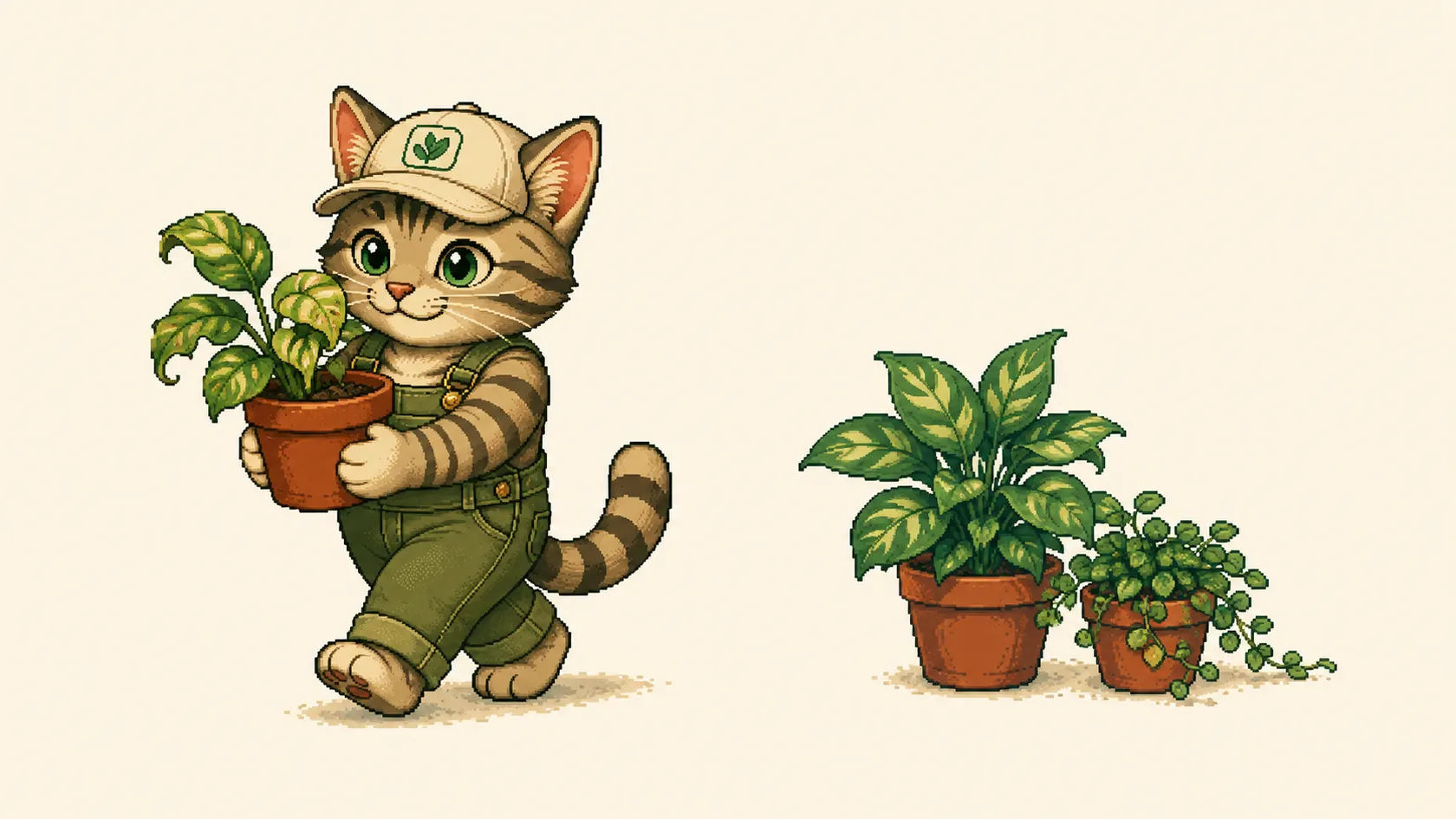
Leaves that were distorted, curled or spotted by feeding do not grow smooth again. They stay that way until they drop on their own. Cut them off only if the plant keeps enough healthy foliage.
New growth tells you whether the plant is clear. If it comes in smooth and even, the treatment worked. If it comes in stunted again, insects are still sitting somewhere, and you go back over the shoot tips and leaf axils.
Whether a plant is a problem around pets or children is covered in its own care guide. If you suspect poisoning, a vet or a doctor is the right call.
Set the plant on its own, cut out the shoot tips that are covered and rinse the rest from below. That takes off most of the colony in one pass. The rest come off through the follow-up checks over the next two weeks.
The simplest one is the most reliable: rinse them off with lukewarm water or wipe them off with a damp cloth. Insecticidal soap in water adds to that, but only on the spots you actually wet. Garlic or nettle tea does very little on indoor plants.
As often as a check still turns up insects. Look every two or three days and repeat the treatment the same day you find any. Two clear checks in a row are the signal to stop.
A strong plant shrugs off a small infestation. Left alone, new shoots stay small, leaves curl and buds stop opening. The sticky honeydew also brings sooty mold onto the leaves.
Usually from the store. New plants, cut flowers and potted herbs carry a few in, and they breed undisturbed in a warm, dry room. Two or three weeks of quarantine for every new plant catches that.
No. Aphids live on shoots and leaves, not in the potting mix. Repotting does nothing against them and costs a weakened plant energy it needs.
Last reviewed: 2026-09-07