What you see
A cloud of small white insects rises when you touch the plant and settles back on the leaf undersides. The leaves below turn sticky.



The flies are half of it. The larvae sit under the leaf and get treated there.
An adult whitefly is about two millimeters long and looks dusted with flour. It is not a fly but a relative of the scale insects, and it feeds on sap the way an aphid does.
Most of the infestation sits where you do not see it. Immobile larvae stick to the leaf undersides, and the next generation comes out of them. A treatment that only reaches the fliers buys you a quiet week.
Turn a few leaves over and look at the undersides, ideally the younger leaves in the upper part of the plant. The adults sit there in groups and walk a short way before they take off when disturbed.
On the leaves below you soon find a sticky film. That is honeydew, the sugar the feeding insects give off. It shines, feels tacky and tells you how long the infestation has been running.
The usual mix-up is with fungus gnats. Those are dark, rise out of the soil when you water and stay close to the surface. Whiteflies are pale and sit on the leaves.
White cottony pads in the leaf axils belong to mealybugs instead. They do not move and lift off with a fingernail.
Look at
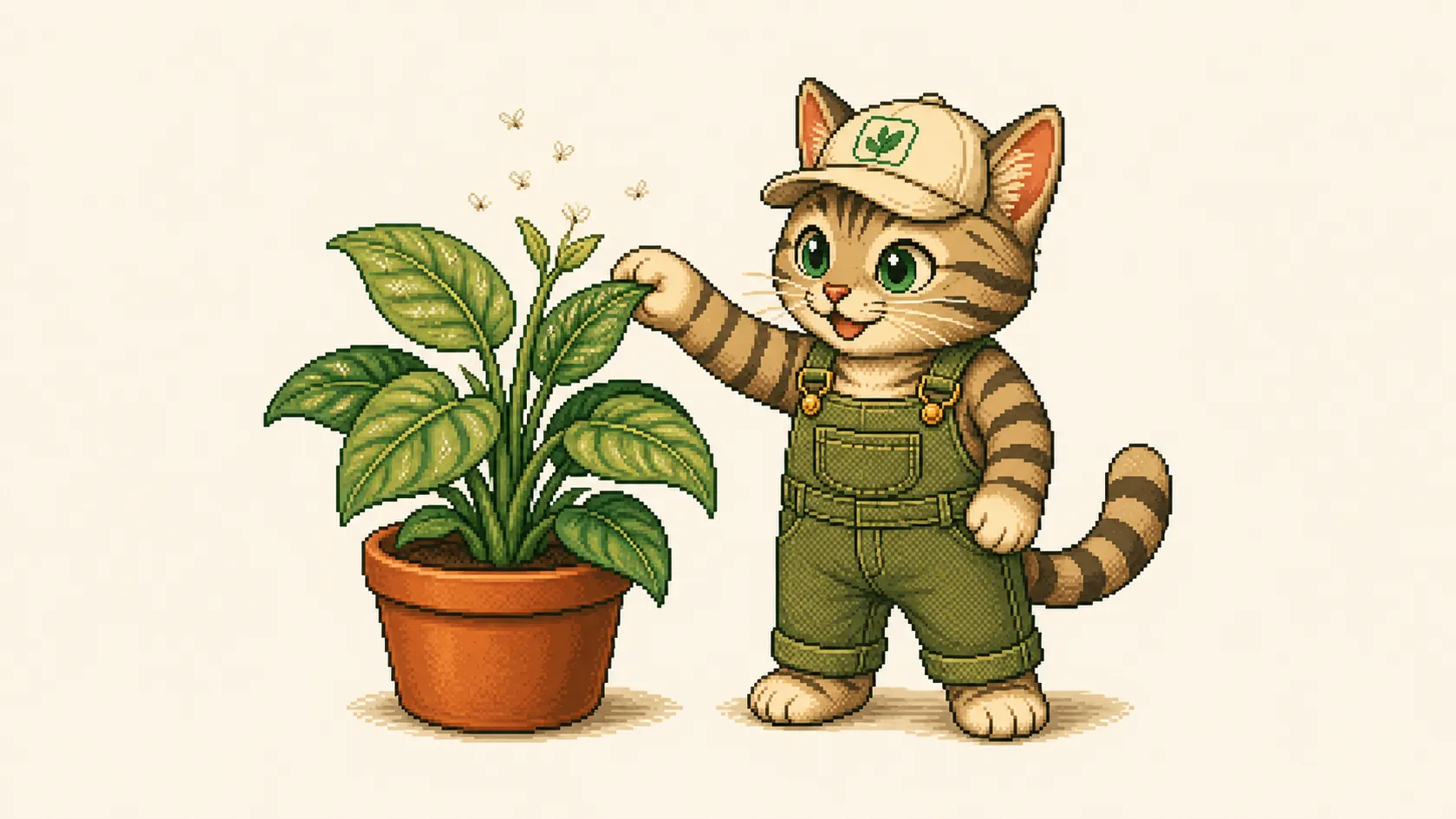
After hatching, the larvae walk briefly and then settle and feed. From that point they do not move and look like flat, pale green to whitish scales, packed side by side on the underside.
Because they are stuck down they do not fly off when you rinse the plant and cannot be vacuumed away. These stages are the reason an infestation shows up again three weeks after the first treatment.
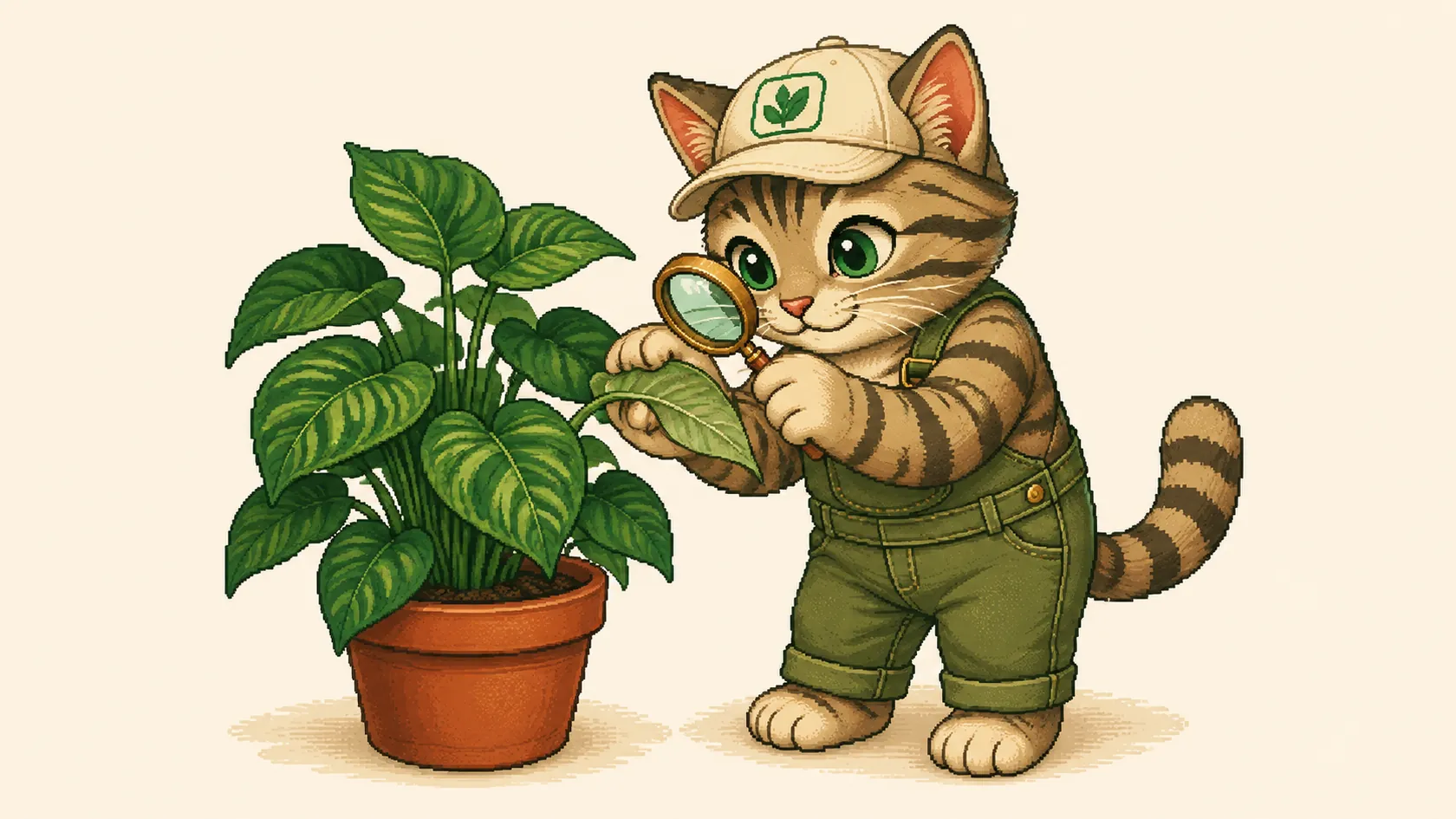
Use a hand lens or take a sharp photo of the leaf and zoom in. If you find the scales, the leaf undersides belong in every further treatment.
Whiteflies fly to yellow. Sticky cards set between the shoots therefore take out a fair share of the adults before they lay more eggs.
Hang them close to the plant and change them once the surface is covered. The second use is the count: if fewer insects stick week by week, the population is going down.
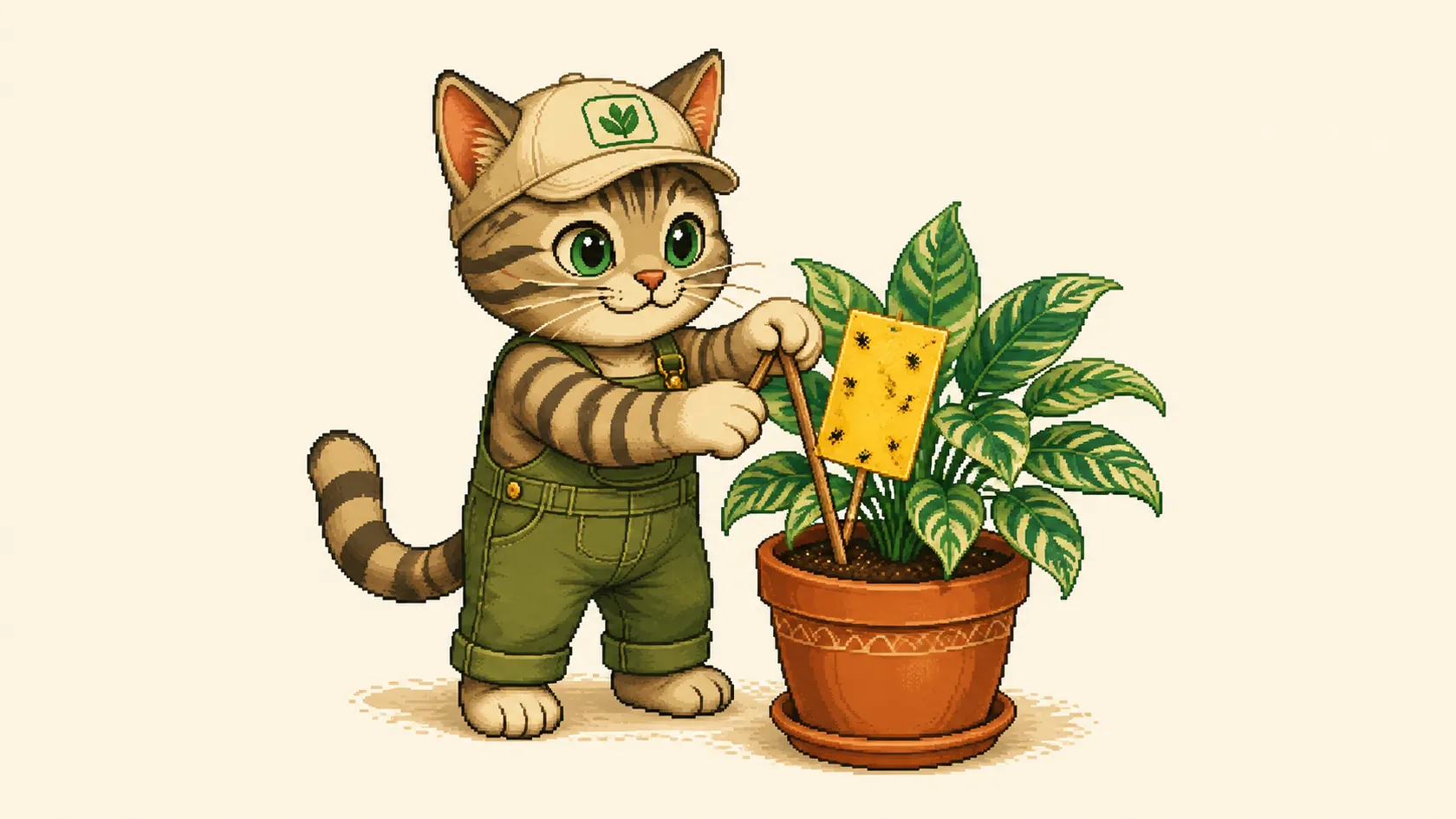
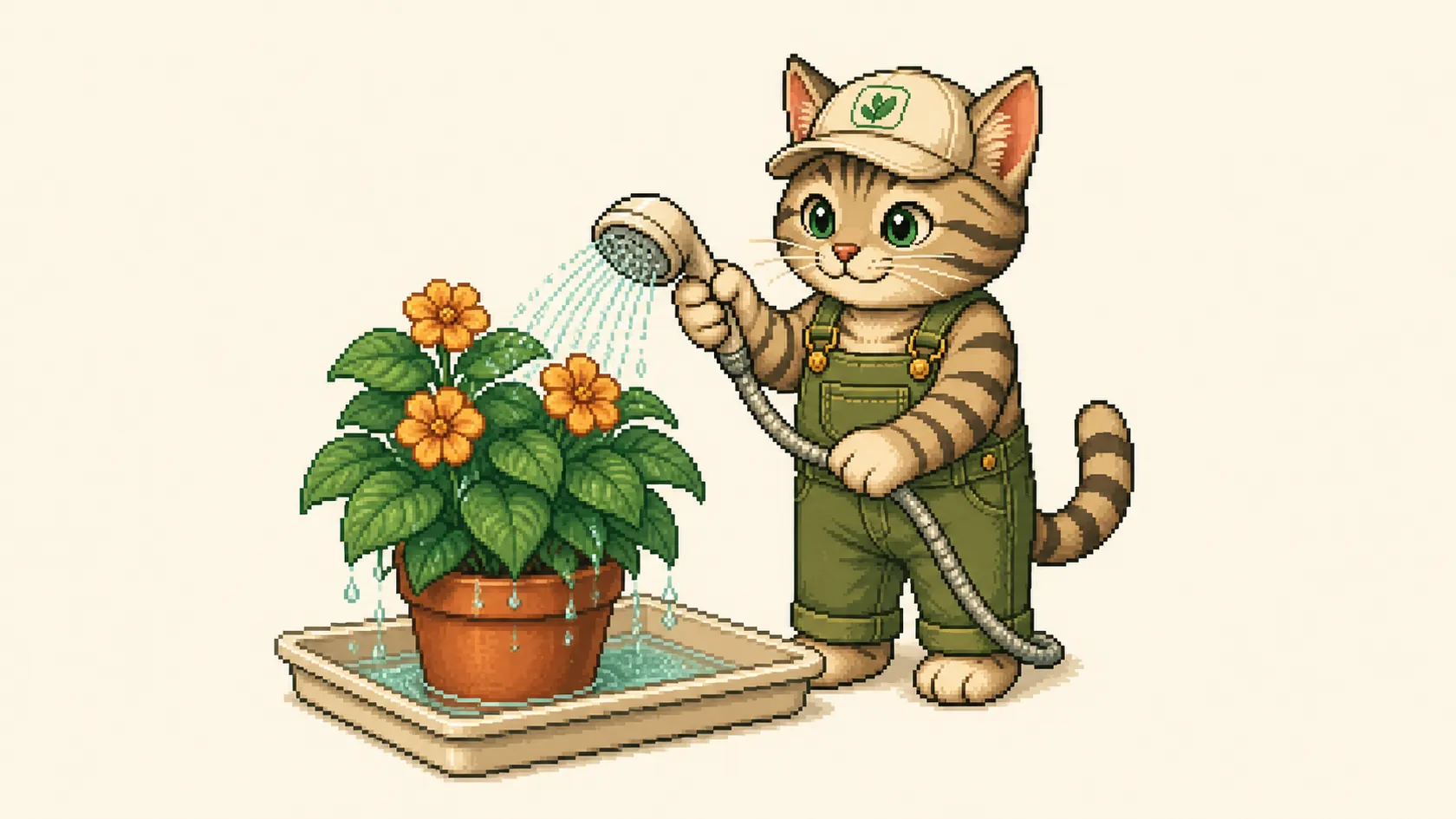
Rinse the plant with lukewarm water and aim the spray at the leaf undersides. Tilt the root ball so the soil is not washed out.
The insects that rise can be taken out of the air with a vacuum cleaner. Go slowly over the plant and tap a shoot lightly so they lift off. That cuts the number of egg-laying females noticeably and replaces no leaf treatment.
A soap solution or a product based on canola or neem oil works on contact and reaches the settled stages too, as long as you really wet the undersides. Spray in the evening or out of direct sun, and test one leaf first, because soft and hairy foliage reacts badly.
Repeat at the interval on the package. A single application never reaches all the stages at once.
There is an established biological control for whitefly indoors, the parasitic wasp Encarsia formosa. It lays its eggs into the larvae, which then turn dark.
The wasps arrive on cards that you hang in the plant. They need warmth and light, so they work slowly at a window in the winter half of the year, and they do not tolerate a spray treatment running alongside them.
Take the yellow cards down while they are working, because those catch the wasps just as well as the pest. Choose one route or the other per room.
Sooty molds settle on the honeydew. They do not damage the tissue directly, but they lie across the leaf as a black film that wipes off and take light away from it.
Wipe the leaves with a damp cloth, top and underside. The film comes off while it is fresh. As long as the insects are feeding, it comes back.
Check what stands under the plant as well. Furniture, windowsill and floor get the same sticky film, and warm water cleans it off.
Eggs, settled larvae and flying adults are on the plant at the same time, and no treatment reaches all three. So every treatment gets a repeat, until nothing flies up for two weeks.
A second reason often stands in the same room. Take every plant in the room into the check, above all the soft-leaved ones, and treat affected neighbors at the same time.
Plants that spent the summer outdoors bring the infestation back inside in fall. Look at the undersides before they come back into the room.
Yellow sticky cards for the fliers plus a contact treatment of the leaf undersides for the settled larvae. Both get repeated until nothing flies up for two weeks. Parasitic wasps are the biological route, and then without a spray treatment alongside.
Usually with a new plant, with cut flowers, or on pots that spent the summer outdoors. In a warm room they keep breeding all year, which is why they often first stand out in fall and winter.
A soap solution on the leaf undersides reaches the insects it wets and needs several applications. It can damage soft or hairy foliage, so test it on one leaf first. Yellow cards are a trap rather than a treatment and still bring the numbers down measurably.
A heavy infestation weakens the plant, because many insects draw sap at once. It shows as yellowish, mottled leaves, sticky honeydew and leaves that drop early. A vigorous plant shrugs off a short infestation.
Count on several weeks and on repeated treatments, because new larvae keep hatching. Judge the course by the sticky cards and by whether anything still flies up when you tap the plant.
Whiteflies are pale, sit on the leaf undersides and leave the leaves sticky. Fungus gnats are dark, rise out of the soil when you water and stay close to the surface. The treatment is a completely different one.
Last reviewed: 2026-09-07