What you see
Dry, rustling leaves with a light pot, or soft yellow leaves with a heavy pot and soil that smells sour.



The age, speed and feel of the fallen leaves narrow the cause. Check the pot weight before you change anything.
Which case you have is written in the age of the leaves, the speed they are falling and what changed in the weeks before. The pile on the floor is not enough to decide on.
Pick the fallen leaves up and look at them before you change anything about your care. A soft yellow leaf from the very bottom and a green leaf from the middle of the plant lead to different causes.
Count roughly how many have dropped and over what period. Two leaves in a month is ordinary turnover. A third of the canopy in ten days is a reaction to something.
Look at
Most likely cause
Water is behind most cases. Both directions end in falling leaves and the plant looks similar either way, so decide at the pot rather than at the foliage.
Lift the pot and feel the soil two inches down. Dry soil and a light pot means the lower leaves dried out and rustled off. Water thoroughly until it runs out of the bottom, then empty the saucer.
Wet soil and a heavy pot means the leaves fall soft and often yellow, and the soil may smell sour. In that case the roots have stopped working. Lift the plant out, cut off dark soft roots, set it in fresh open soil and water sparingly afterward.
A cachepot with water standing in it is the fastest route to that state. Water over the sink and put the plant back only once it has finished draining.
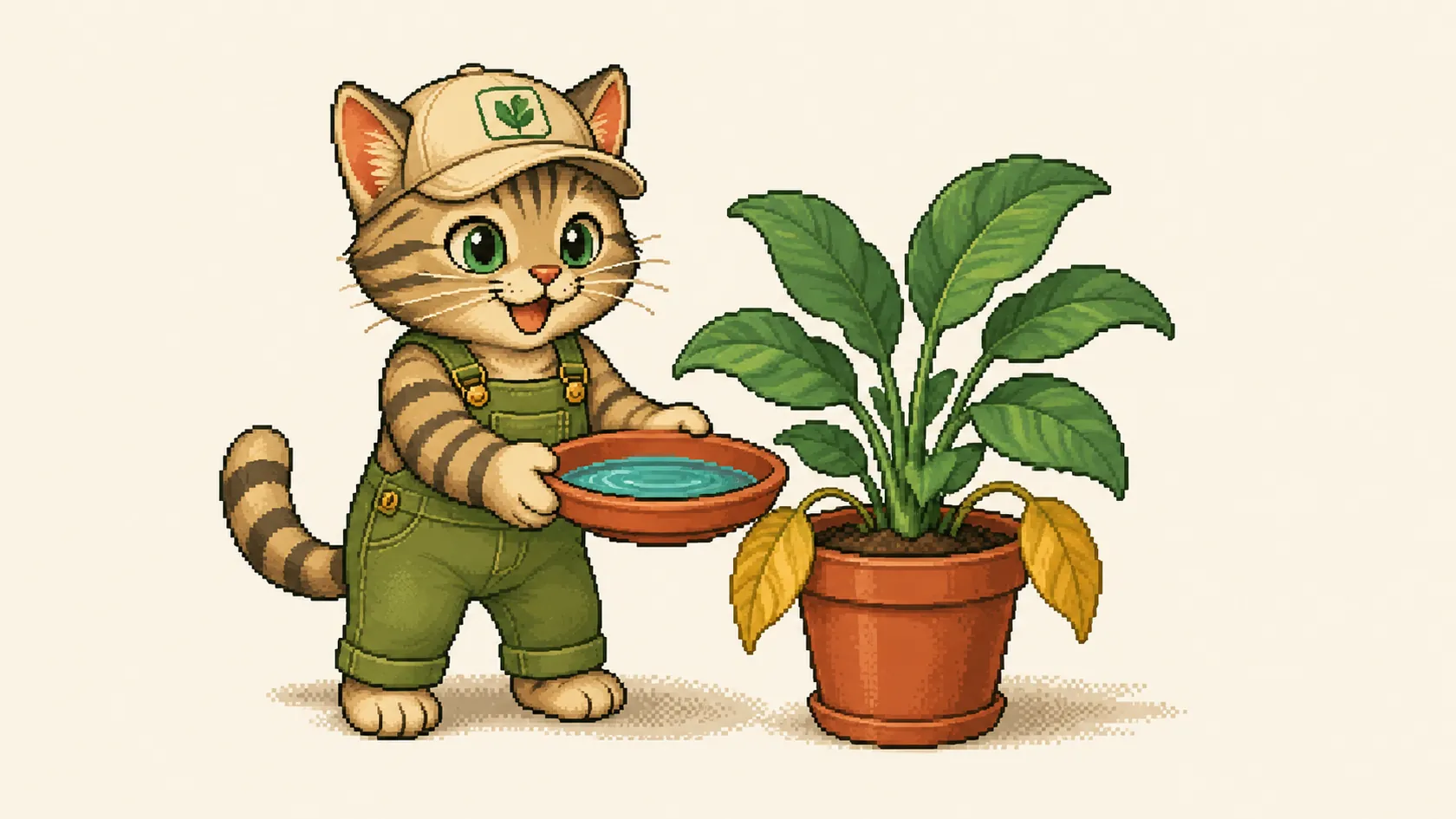
Many plants drop leaves after a move, because the leaves they are carrying were built for the light they had before. It happens routinely after a purchase, after moving apartments and after coming back indoors in fall.
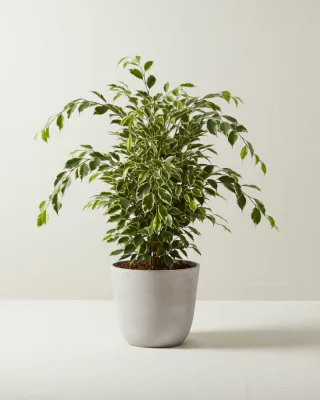
The weeping fig is known for it. It can lose a large share of its leaves after a change of position and will grow them back in the same spot if you leave it alone.
So keep the position steady rather than moving the plant again with every leaf that falls. Water for the smaller canopy it now carries, which means less than before, and do not feed it during this phase.
New shoots tell you the phase is over. They come out matched to the light of the new spot and they stay.
Between October and February the light at a window drops sharply. A plant that managed six feet from the glass in summer gives up its inner and lower leaves in winter, because it can no longer supply them.
Move plants closer to the window for the winter and clean the glass. A north window with nothing in front of it delivers more than a south window behind a curtain in the middle of the room.
Water more sparingly through this period. In low light a plant grows slowly, uses less water and the soil stays wet longer, which adds to the leaf drop.
Bare stems from the bottom up, while smaller and paler leaves appear at the top, is the typical picture. Cutting back in spring brings the plant back into shape.
A cold draft from a window left ajar, or a spot beside a door that opens all day, drops leaves within days, often green and without warning.
The trip home after buying counts here too. A plant carried through winter air without a sleeve can still be dropping leaves weeks later.
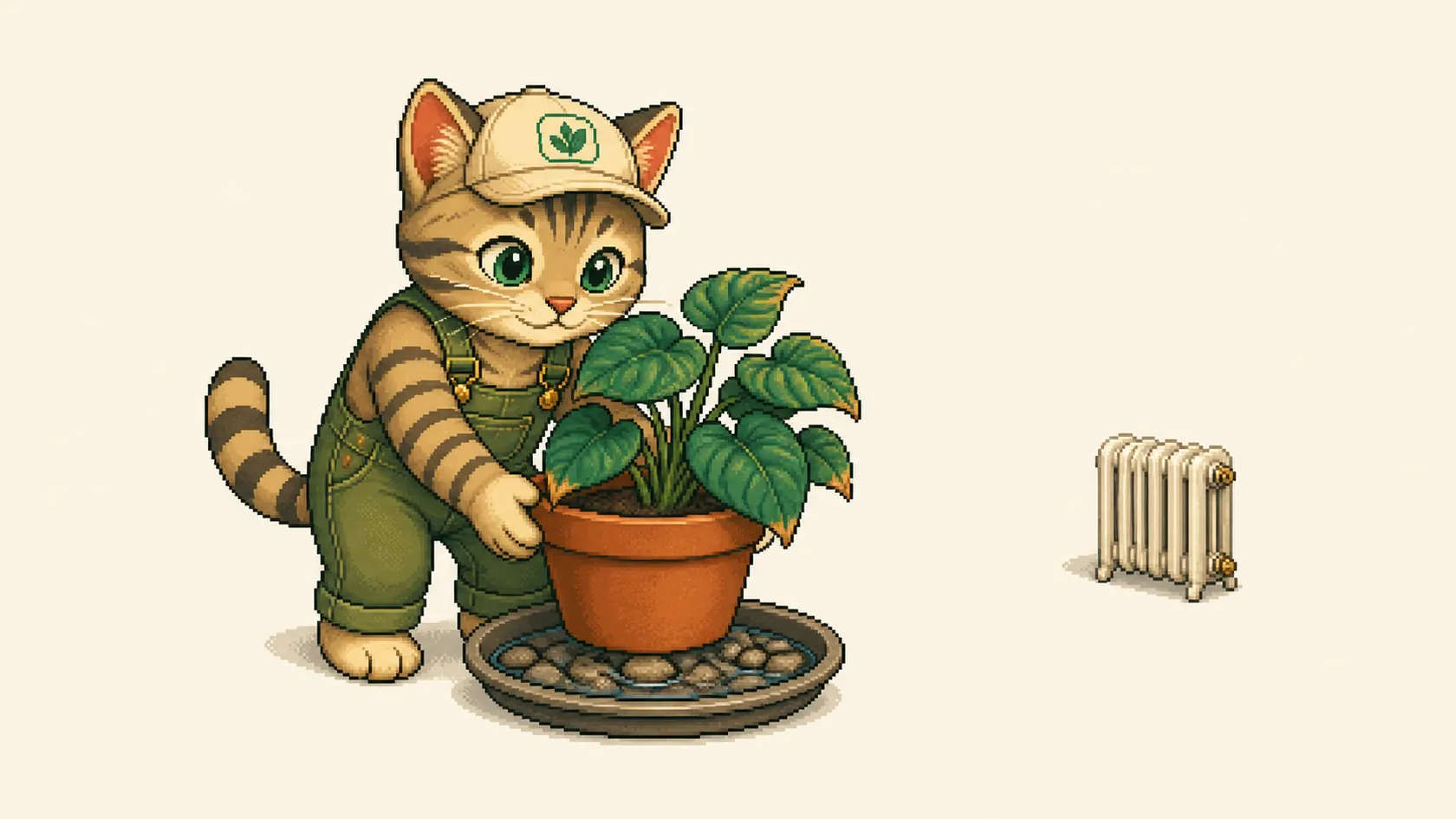
A spot directly above a radiator produces the same result by the other route. Warm dry air pulls water out of the leaves faster than the roots replace it, so they dry from the tip inward before they fall.
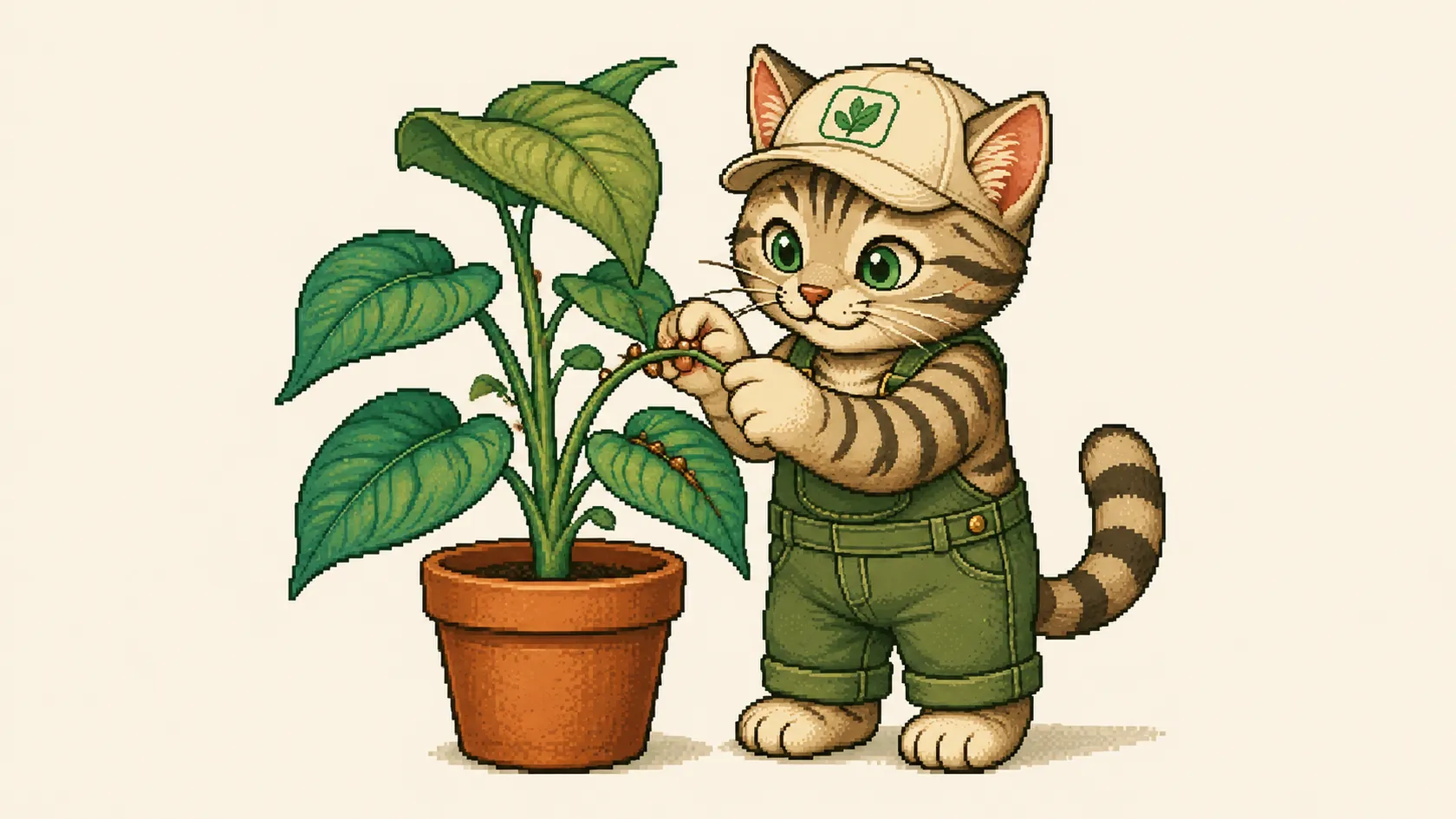
If the leaves that fell were speckled, blotchy or sticky beforehand, look at the undersides in good light. Sap feeding insects drain a leaf until the plant lets it go.
Fine webbing in the leaf joints with pale speckling on the upper surface fits spider mites, which build up fast in dry heated air. Brown or white bumps on stems and along the veins fit scale insects and mealybugs.
A shiny, sticky film on the leaves below or on the windowsill confirms the suspicion, even before you find the insects themselves.
Leaf drop is the end of many different stories. Drought, rotting roots, a change of place, low light and pests all finish with leaves on the floor, and the wrong response costs another few weeks.
Take the pot weight, the soil, the leaf undersides and the last few weeks together before you change anything. Then change one thing and give it two or three weeks.
Read the result in new growth rather than in the absence of falling leaves. A plant that is making new leaves has put the cause behind it.
Sudden leaf drop almost always follows a change. A purchase, a move, a new position, a cold draft or a change in watering are the usual candidates. Look at the last two or three weeks first, then check the pot weight and the soil.
Yes. The oldest leaves sit lowest and are given up first when new growth appears on top. It only becomes a problem when several fall at once or the stems stay bare from the bottom.
The leaves it was carrying were built for the old light and become too expensive in the new spot. A weeping fig can shed a large share of them. Leave it in place, water more sparingly and wait for new growth.
Yes. When soil stays wet, roots die back and the plant drops soft, often yellow leaves even though the pot is heavy. The smell of the soil and the state of the roots separate this case from drought.
Usually not on the bare parts of old stems, where there are no buds left. New leaves come from the shoot tips. Cutting back in spring encourages growth lower down the stem.
Not at first. A plant with less foliage and possibly damaged roots has no use for extra salts in its soil. Start feeding again once new leaves appear.
Last reviewed: 2026-09-12