What you see
The leaf rolls in along its length and hangs down softly. The pot is noticeably light and the soil is dry an inch or two down.



Curled and soft points to dry soil. Curled and firm points to sun and heat. Feel the leaf first.
Which of the two it is does not show in a photo. The direction of the curl, how firm the leaf feels, and the weight of the pot lead to opposite actions.
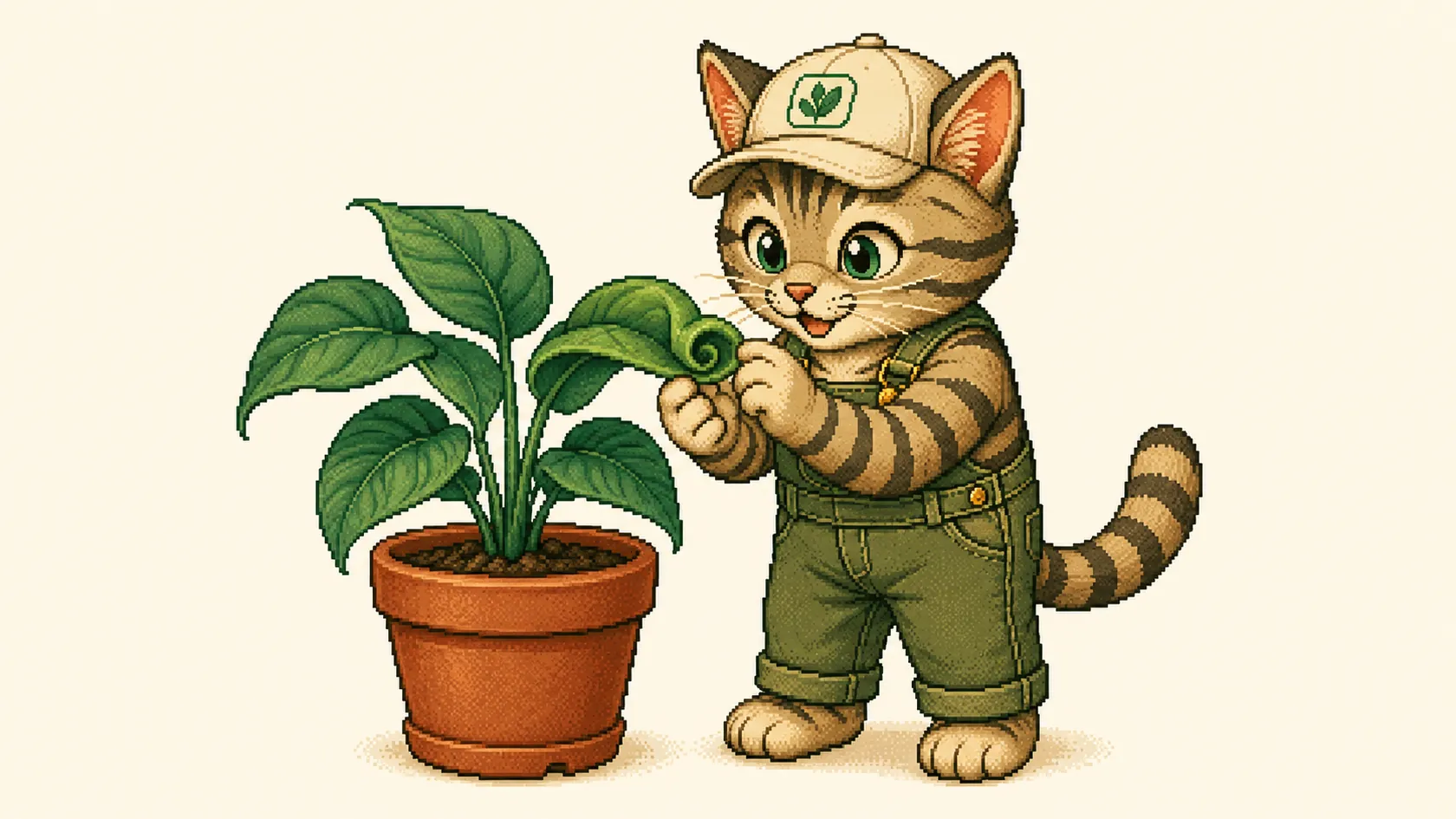
Take an affected leaf between your fingers before you change anything about your care. A soft curled leaf and a firm curled leaf look identical from across the room and need the opposite response.
Then look at whether it is the young or the old leaves, and whether the whole plant is doing it or only the side facing the window.
Look at
Most likely cause
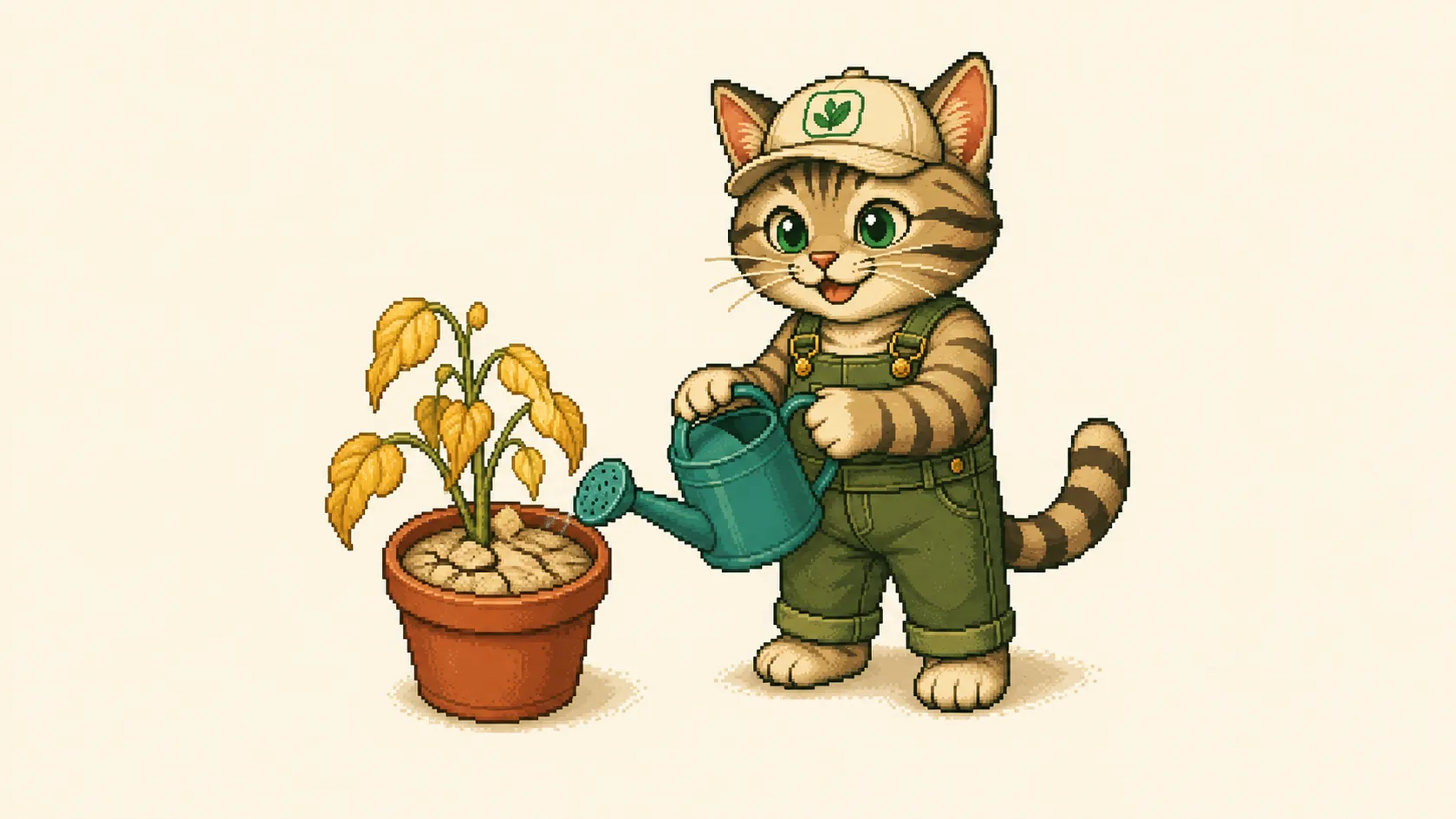
A leaf that rolls in along its length and hangs down softly is not getting enough water. In a normally heated home this is the most common case by a distance.
Feel the soil an inch or two down and lift the pot. Light and dry confirms it. Water thoroughly until it runs out of the bottom, and empty the saucer after half an hour.
If the water runs straight past the root ball without wetting it, the ball has dried out completely and is repelling water. Stand the pot in a container of water until it has taken up its fill, then let it drain.
The leaves usually stretch out again within a day. If they stay curled while the soil is now damp, the problem is at the roots rather than in the watering can.
When the curled leaf stays firm and leathery while the soil is damp, the plant is protecting itself from light and heat. Behind glass at a south window, right above a radiator, and on hot summer days, this happens regularly.
Look again in the evening. A leaf that curls during the day and opens after sunset is reacting to the sun rather than to a shortage.
Move the plant a couple of feet back from the glass or hang a light curtain between the two. Spring is when it shows most, because the plant spent winter used to weaker light.
Thin-leaved species do it first. A calathea, prayer plant, or peace lily curls in conditions that leave the rubber plant beside them looking unchanged.
When the leaf edges bend down and the foliage looks dark and heavy, go to the roots. Soil that stays wet makes them rot, and rotting roots deliver no water even though the pot is full of it.
Lift the plant out of the pot for that. Firm, pale roots smell earthy. Soft, dark roots whose skin slides off between your fingers, together with a sour smell from the soil, are a clear result.
Cut the damaged roots back, set the plant into fresh open mix, and water sparingly until new leaves appear. A pot without a drainage hole and an outer pot with water standing in it are the usual triggers.
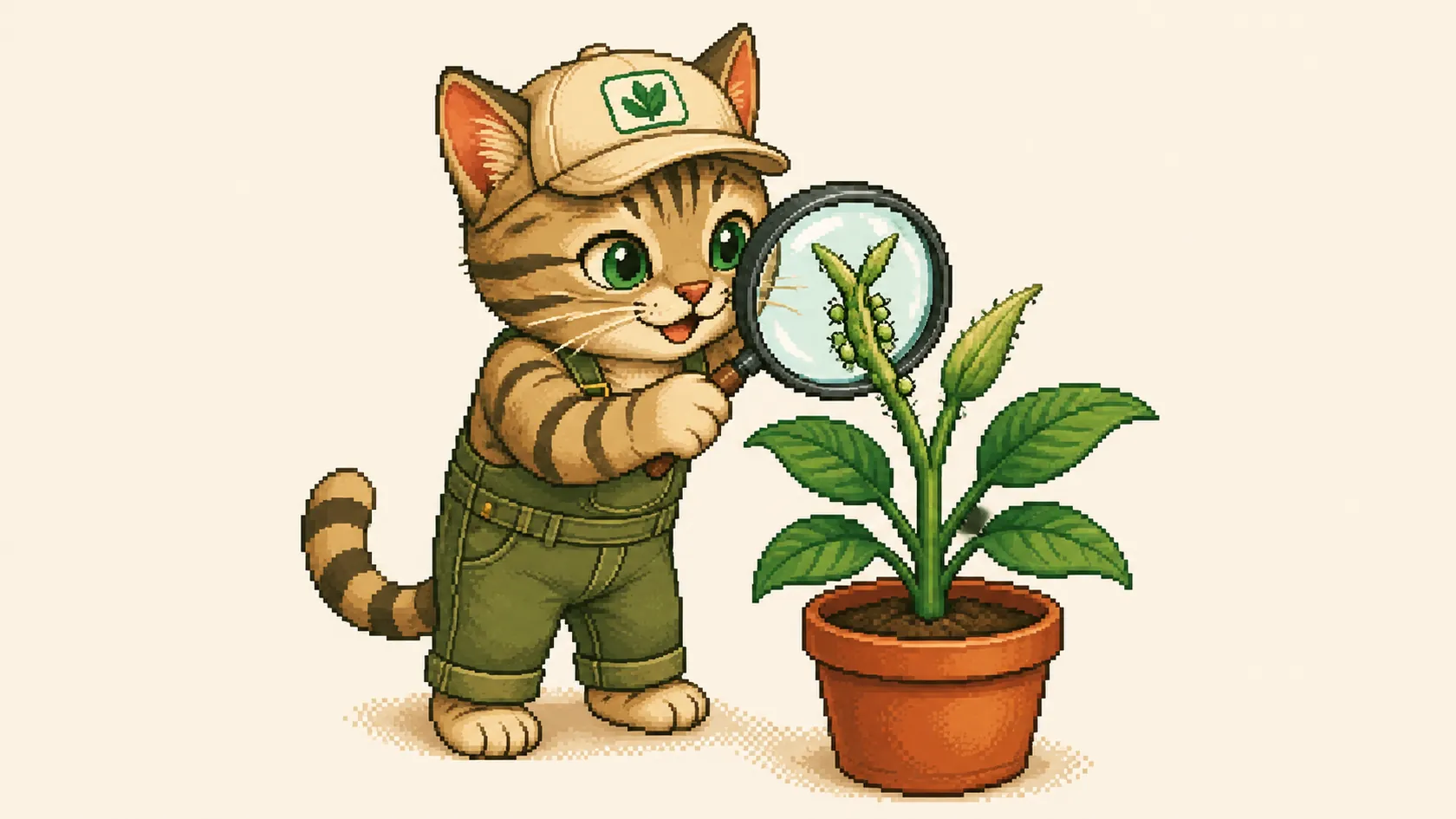
When only the new leaves come out crooked while the older ones stay flat, there is usually something feeding on the plant. Aphids sit on the soft growing tip, and the leaf that follows opens crooked and wavy.
Turn the young leaves over and look at the undersides, the leaf joints, and the buds in good light. A sticky film on the foliage below, fine webbing in the leaf joints, or pale speckling on the upper side belong to the same finding.
Deformed leaves do not grow flat again. Whether the treatment worked shows in the next leaf, not in the old ones.
A cold draft from a tilted window or the stream from an air conditioner curls leaves within hours. It shows on the side of the plant facing the draft, and the leaf stays firm while it does it.
A plant you just bought or just moved often curls its foliage for a week or two while it settles into the new light. Leave it where it is during that time instead of moving it again.
Cold water straight from the tap is noticeable to tropical plants. Fill the can before you need it and water with water that has come to room temperature.
A leaf curls when the soil is bone dry and it curls when wet roots are rotting. In both cases too little water reaches the leaf, and the leaf alone does not tell you which. Pot weight, the soil, and the state of the roots separate them.
So change one thing and watch for two to three weeks. Write down the date and how the soil felt, otherwise you end up comparing against your memory.
The new leaves give the verdict. If they open flat and even, the change was the right one.
Most often too little water is reaching the leaves. Feel the soil an inch or two down and lift the pot. Light and dry means water it thoroughly. Wet soil with a curled leaf points at the roots instead.
Pest damage hits the young leaves and leaves the old ones flat. Turn the growing tips over and check the undersides and leaf joints in good light. A sticky film, fine webbing, or pale speckling confirms it.
A leaf that only reacted to dry soil or strong sun usually stretches out within a day once the cause is gone. A leaf deformed by sap-feeding insects or by root rot stays that way and drops later.
Leave them on while they are green and firm, because they still work for the plant. Cut only once a leaf has dried out or gone soft and brown. Cutting changes nothing about the cause.
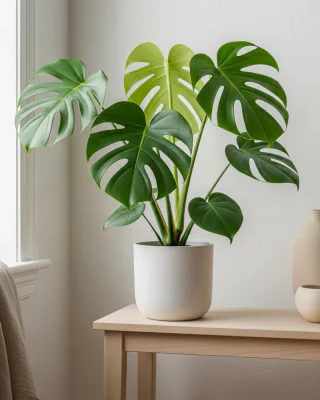
On a monstera this is almost always about water. A light pot with dry soil means it is short. A heavy wet pot with dark foliage means the roots are sitting in water. Direct midday sun through glass curls the leaves on top of either.
Warm dry air increases water loss, most of all on thin-leaved plants above a radiator. Move the plant away from the heat and water more evenly. Spraying lifts the humidity for a few minutes only.
Last reviewed: 2026-09-07