What you see
Silvery, shiny patches on the top of the leaf with minute black dots of frass. Young leaves come in distorted and there is no webbing.



Silvery patches with black dots are thrips. The leaves and the potting mix both need treating.
The insects themselves are narrow, about one to two millimeters long, and they run off fast or drop when disturbed. The adults are dark, the larvae pale to yellowish and wingless.
An infestation can be brought under control, and it takes weeks. The reason is the life cycle: part of the population sits on the leaf and part pupates in the top layer of the potting mix. Treat only the leaves and the next generation comes back out of the pot.
Hold an affected leaf at an angle to the light. The emptied cells fill with air, so the area looks silvery and matte instead of green. It is usually the upper surface, often in streaks along the veins.
The black dots on that area are frass. They wipe off, the silvery patches do not. That is exactly how you tell fresh feeding from old damage.
Then look into the youngest leaves and the leaf axils. That is where the insects sit by preference, and on an infested plant new leaves come out of the shoot distorted, curled or brown-edged.
With spider mites you find fine webbing and an even, finely dotted speckling, usually working up from the underside. With thrips you get larger silvery areas with dots of frass and no webbing.
Look at
Move the affected plant to another room before you do anything else. Thrips fly short distances and walk onto a neighboring plant wherever leaves touch.
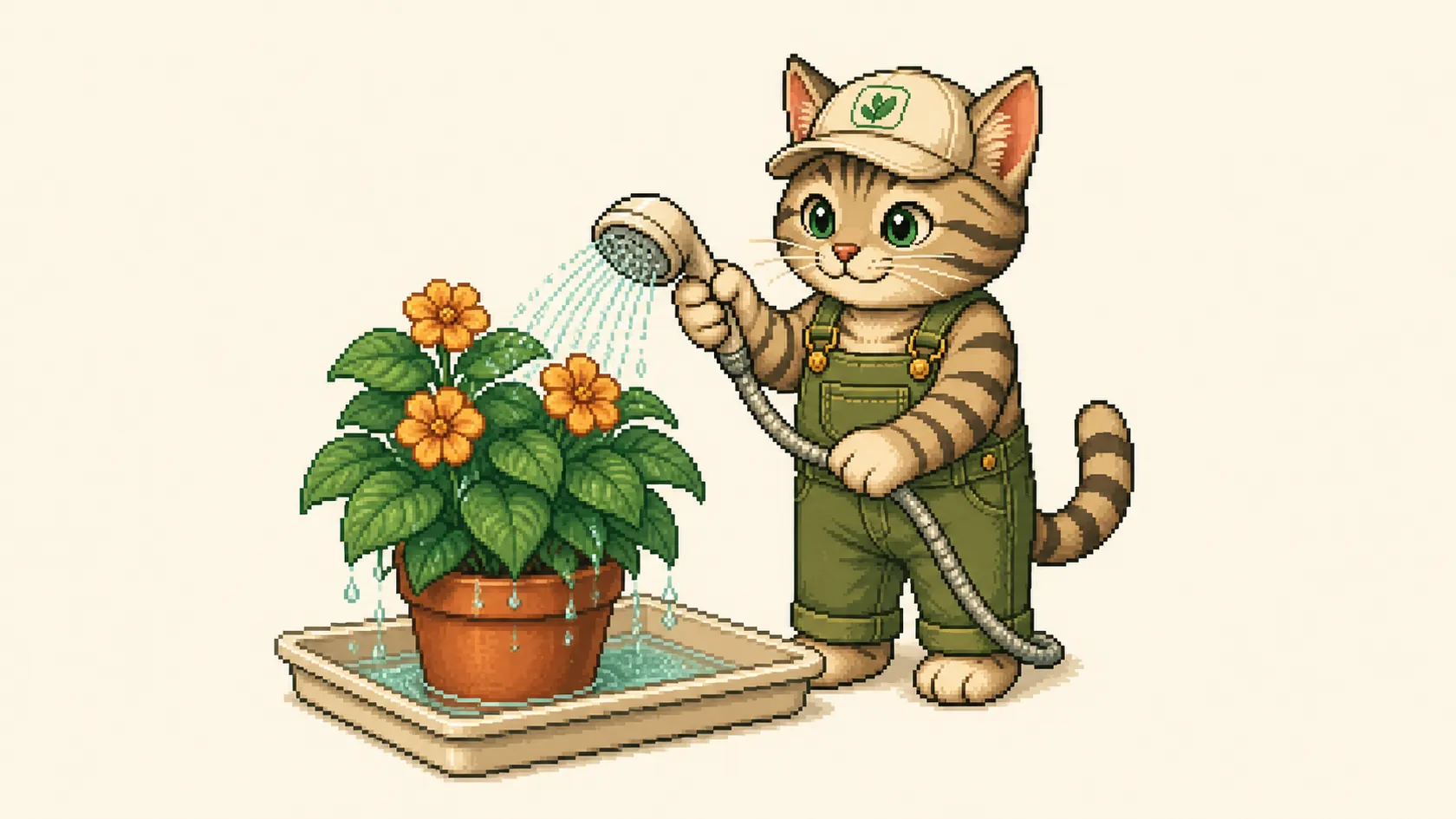
Then rinse the plant with lukewarm water, tops and undersides. Tilt the pot or cover the mix with a bag so half the soil does not end up in the tub. Rinsing takes off a large share of the mobile insects and is the cheapest step of the whole treatment.
Cut off badly destroyed leaves if the plant keeps enough healthy foliage. A leaf that is three quarters silvered barely works any more and goes on carrying eggs.
Look over the neighboring plants the same day, above all the ones with soft, thin leaves. An infestation that shows on one plant is often already on two.
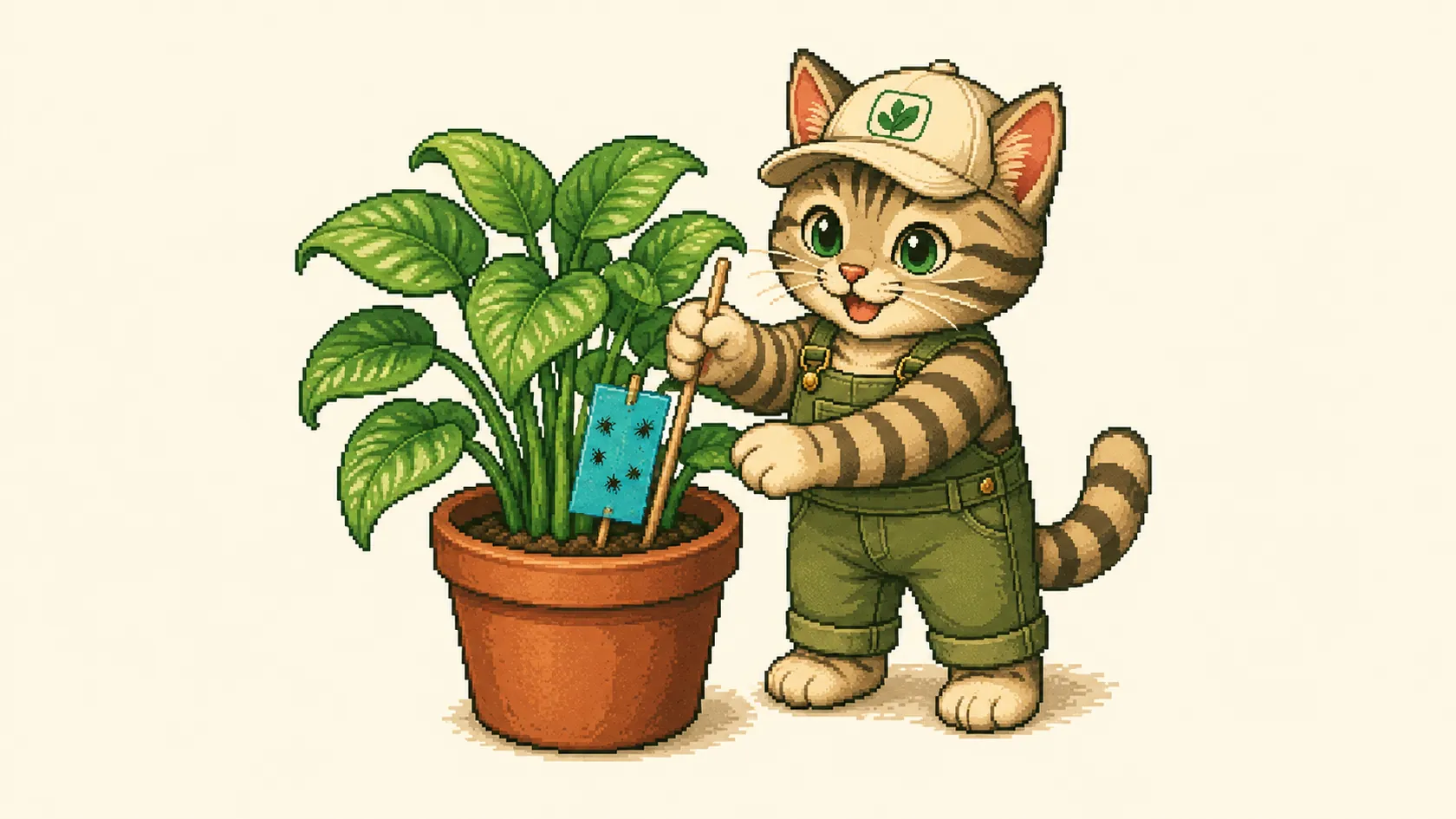
Thrips respond to blue more strongly than to yellow. Blue sticky cards set between the shoots catch the adults and show you whether the numbers are falling.
On their own they are not enough, because larvae, eggs and pupae stay untouched. Their value is the count over the weeks. If fewer insects stick to the card week by week, the rest of your treatment is working.
Part of the population leaves the leaf and pupates in the top inch or so of the potting mix. That is why the insects come back after a leaf-only treatment.
Against that stage there are nematodes of the species Steinernema feltiae, which you stir into water and pour over the surface. They need an evenly damp mix, because they move only in the film of water between the particles. A surface that dries out ends the treatment early.
Predatory mites that hunt in the soil are the second biological route. Both are living organisms, both are shipped chilled, and neither works any more once the package has stood warm too long. Use them fresh and follow the repeat interval on the package.
A layer of sand or fine grit on the surface makes the trip down harder for the larvae. It does not replace the treatment, it takes the speed out of the infestation.

Insecticidal soap in water reaches the insects it actually wets. It has no effect on the eggs inside the leaf tissue, and it can damage sensitive or hairy foliage. Try it on one leaf and look again two days later before you spray the whole plant.
Neem-based products are a common indoor choice and work over several applications rather than at once. They do not replace treating the potting mix.
Alcohol, vinegar and strong cleaners on the leaf usually leave more damage than effect. The leaf edges burn while the insects sit on in the axils.
Oily products and full sun go badly together. Spray in the evening or in a spot out of direct sun and let the plant dry off.
Most infestations come in with a new plant, sometimes with a bunch of cut flowers. Keep new arrivals away from the collection for two or three weeks and look at the young leaves in that time.
Warm, dry air speeds the life cycle up. In the heating season an infestation therefore builds faster than in a cool spring. A cooler spot and regular airing slow it down without solving it.
Check affected plants weekly even when there is nothing to see. Eggs in the leaf tissue hatch at different times, and the infestation often only shows again once the new leaves are already damaged.
Eggs, larvae, pupae and adults are all present at the same time, and no treatment reaches all four. Each round hits a part of the population, so it gets repeated until nothing follows on.
Space the repeats the way the package of the product you use sets out, and treat leaf and mix in parallel. Write down the date of each application, or you lose track after the third week.
Judge the result by the new growth. Silvery marks stay on old leaves even when nothing is alive on them. Once the next leaves come out clean and undistorted, the infestation is over.
A leaf treatment and a soil treatment together, repeated several times. Rinsing and a product on the leaf reach the visible insects, nematodes or predatory mites reach the stage in the potting mix. Blue sticky cards tell you whether the number of fliers is dropping.
Insecticidal soap reaches the insects it wets directly and leaves the eggs in the leaf tissue untouched. It can damage sensitive foliage, so test it on one leaf first. Alcohol, vinegar and strong dish soap usually harm the plant more than the infestation.
Look for silvery, shiny patches on the top of the leaf with minute black dots on them. The dots wipe off and the silvery damage stays. Webbing is not part of the picture and points to spider mites instead.
Count on several weeks and on repeat treatments, because new larvae keep hatching. The reliable proof is the new growth: once the next leaves come out undamaged, the infestation is done.
They live on plant sap and do no harm in a household. On skin they can give a brief prickling itch, which passes without consequence. The damage is to the plant.
They almost always come in on a new plant or on cut flowers. After that you find the pupae in the mix, because part of the population pupates there. That is why the potting mix belongs in the treatment.
Last reviewed: 2026-09-07