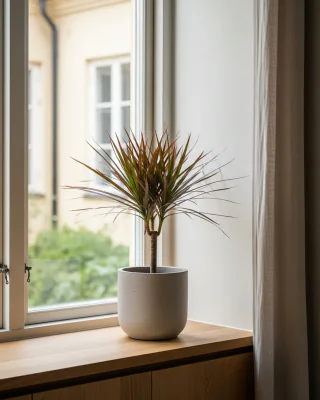
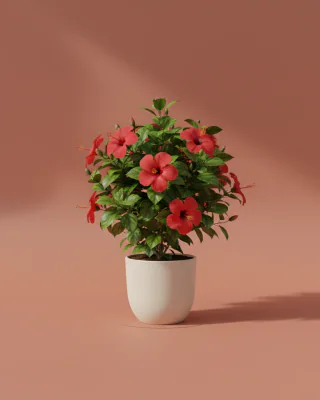
What you see
Silvery streaked patches on the upper leaf surface with minute black specks on them. The specks wipe off, the silvering stays.



Silvery patches with tiny black specks on the upper leaf surface, and new leaves that come out puckered.
The insects themselves are slim, roughly a sixteenth of an inch long, and they run or drop when disturbed. Adults are dark, the larvae pale to yellowish and wingless.
Signs on old leaves stay for good, so read the newest growth to judge whether an infestation is still active.
Hold a leaf at an angle to the light. Thrips damage catches the light because the emptied cells fill with air, and it is easy to miss when you look straight down at the plant.
Start at the newest leaves and the leaf joints. That is where the insects sit, and it is where the first evidence appears.
Look at
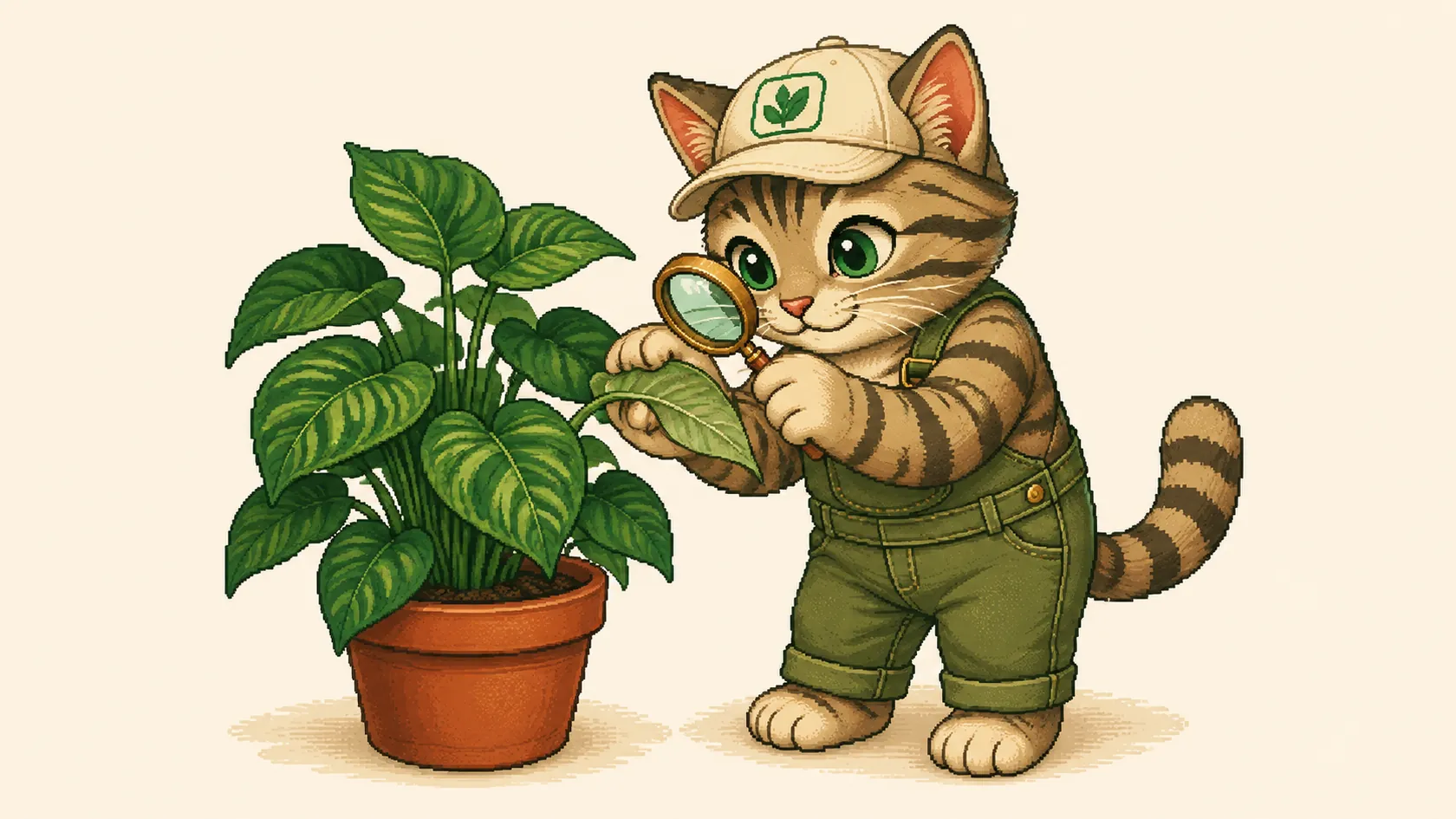
Most likely cause
The signature sign is a silvery, glassy sheen on the upper surface, often in streaks that follow the veins. Where a plant is badly affected the whole leaf can look dull and metallic instead of green.
The black specks on the surface are droppings. They wipe off, the silvery patches do not, and that difference tells fresh feeding apart from old damage you already treated.
Look closely and the silvered area is stippled rather than solid, made of many tiny emptied patches that run together. Held up to the light it looks slightly translucent.
Silvered tissue never turns green again. It is a record of what happened, not proof that the insects are still on the plant.
Adults are narrow and dark, about a sixteenth of an inch long, and they look more like a moving splinter than an insect. They run quickly when the leaf moves and can fly short distances.
Larvae are pale yellow to whitish, wingless, and slower. Finding both stages on the same plant means the infestation is breeding there rather than passing through.
Tap a leaf or a flower over a sheet of white paper. Anything that lands and immediately starts running is worth a closer look.
A blue sticky card set among the shoots catches the flying adults. Thrips respond to blue more than to yellow, and the card also tells you over the following weeks whether the numbers are falling.
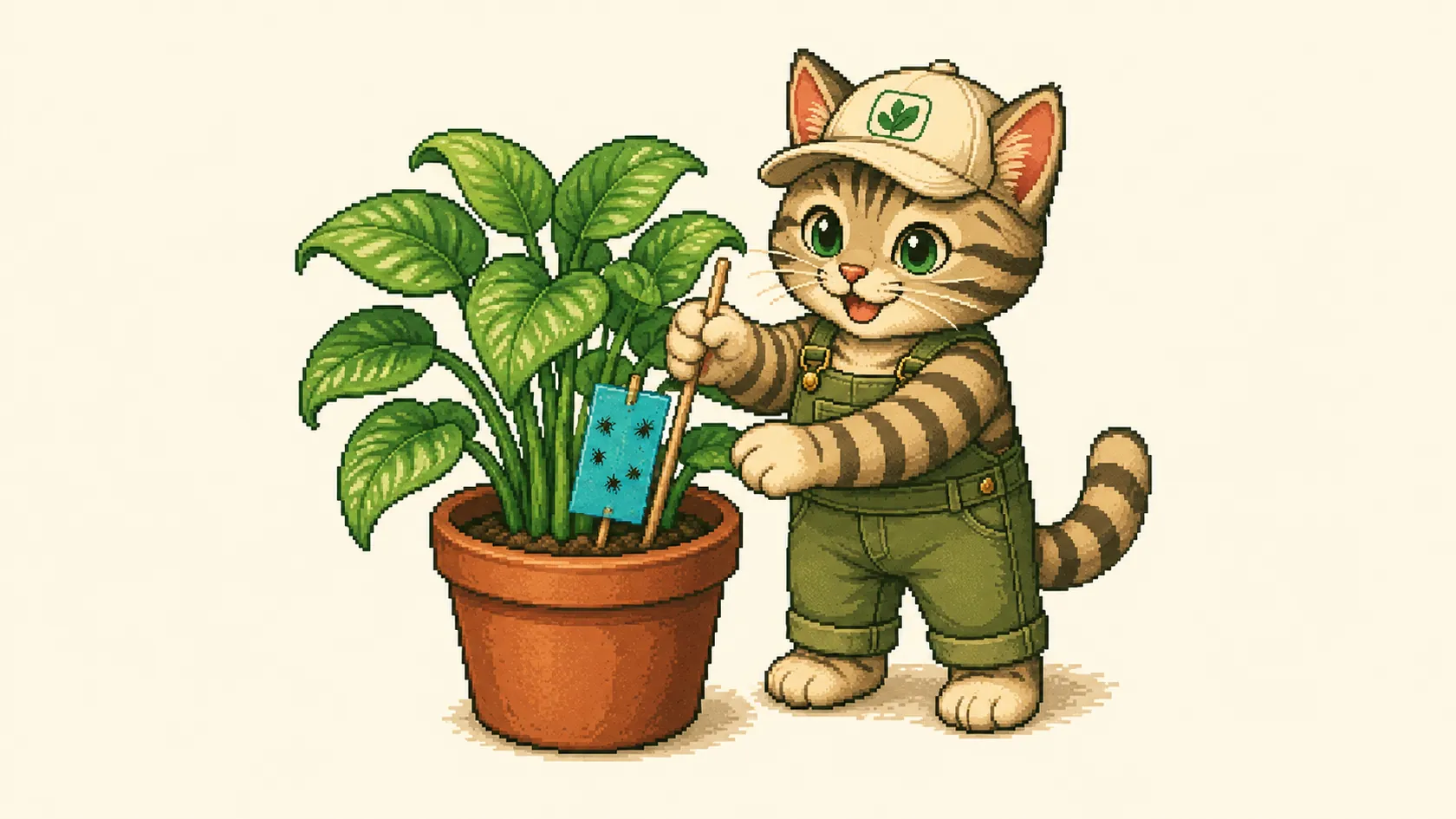
Thrips feed on the tissue that is still forming, so the damage shows up as the leaf expands. New leaves emerge puckered, curled, narrowed or with brown edges.
On a flowering plant the buds are hit too. Flowers open streaked or flecked, or fail to open at all.
This sign matters more than the silvering, because it is current. Silvered old leaves date the problem, deformed new leaves say it is still going on.
It is also the measure of success. When the next leaves come out clean and normally shaped, the infestation is over, whatever the old leaves look like.
Spider mites give the closest picture. They leave a fine, even speckling, usually working from the underside, and they spin webbing in the leaf joints. Thrips leave larger silvery areas with droppings on them and no webbing.
Sun damage on a leaf that was moved into direct light bleaches a patch that is dry and papery, with no black specks and no fresh damage on later leaves.
Hard water and spray marks sit on the surface as pale flat deposits, and they wipe off entirely. Silvering is inside the leaf and does not.
Mechanical scarring from leaves rubbing on a window or a wall is limited to the spot that touches, and it does not spread to new growth.
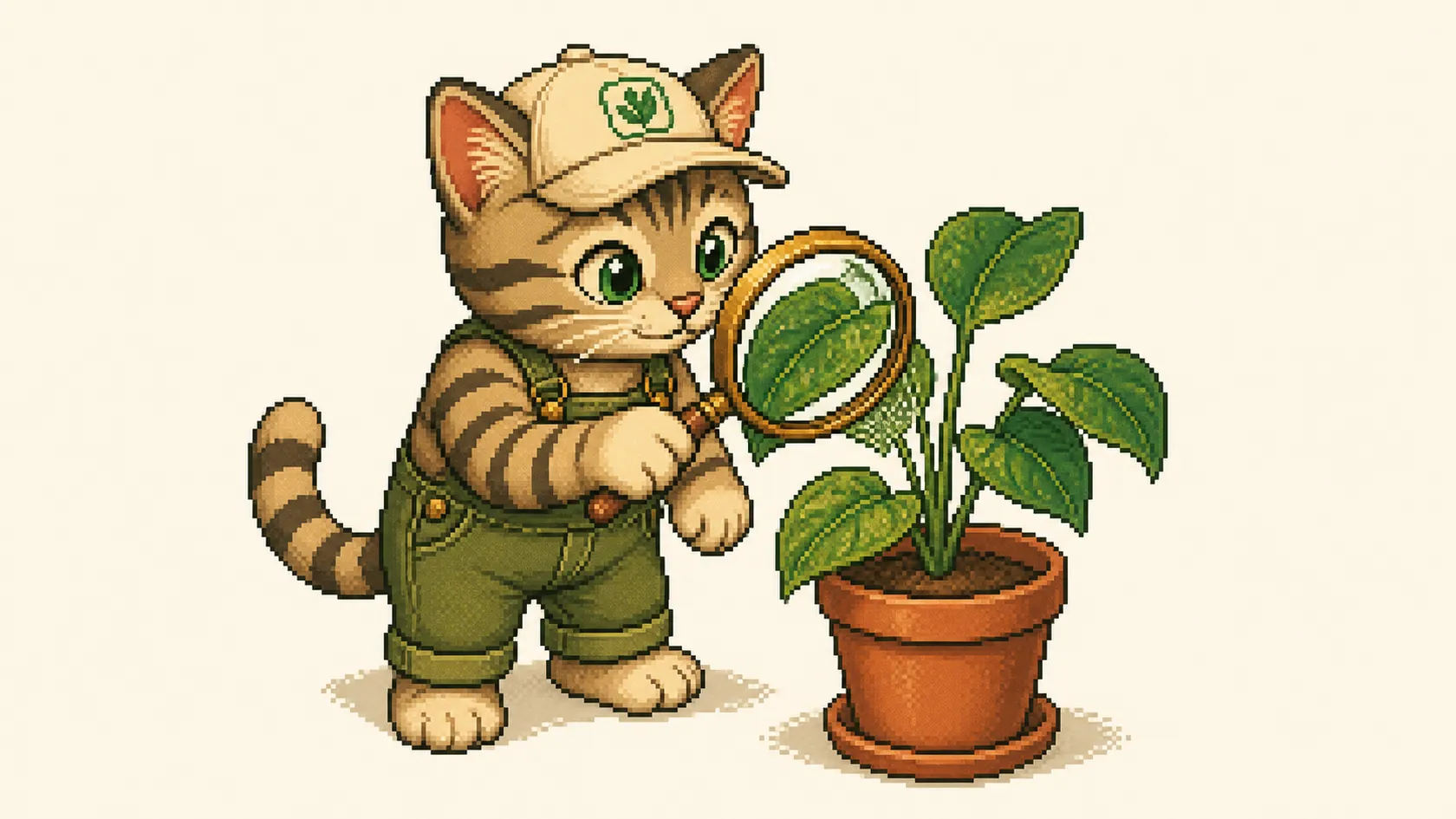
Most start with a new plant, and cut flowers are the other common route. Keep new arrivals apart from the collection for two or three weeks and inspect their young leaves while they stand there.
Warm dry air speeds up their development, so an infestation builds faster in a heated room in winter than in a cool spring. A cooler spot and regular airing slow it down without solving it.
Part of the population leaves the leaves and pupates in the top layer of the soil, which is why plants that looked clear can show damage again a week or two later.
Keep checking a plant that has had thrips even when nothing is visible. Eggs are laid inside leaf tissue and hatch at different times.
Move the plant into another room before anything else. Thrips fly short distances and walk between leaves that touch.
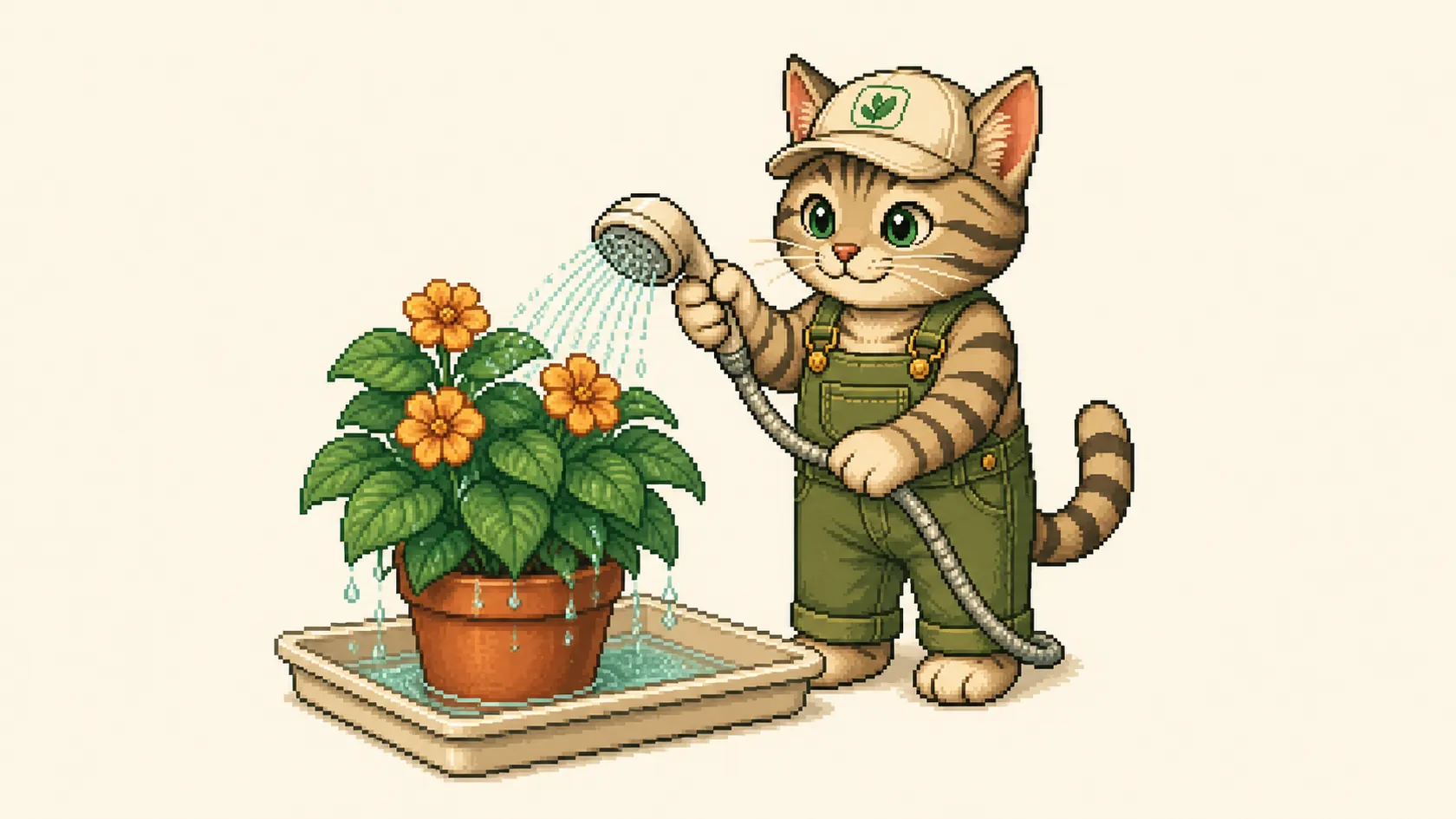
Rinse the plant with lukewarm water, upper and lower surfaces. Tilt the pot or cover the soil with a bag so it stays in the pot. Rinsing removes a large share of the mobile insects and costs nothing.
Check the neighboring plants the same day, especially those with soft thin leaves. An infestation that is obvious on one plant often sits on two.
Then plan for weeks rather than days, and treat the soil surface as well as the leaves. A single round of anything leaves the next generation to come back.
Whether a plant is a risk to pets or children is answered in its own care guide. If you suspect poisoning, a veterinarian or a doctor is the right call.
Slim dark insects around a sixteenth of an inch long that run or drop when the leaf moves, with pale wingless larvae beside them. The damage is easier to spot: silvery patches on the upper leaf surface with tiny black specks on them.
Silvery, glassy streaks on the upper surface of leaves, often along the veins, with minute black droppings scattered over them. New leaves unfurling puckered or brown edged follows soon after.
Look for webbing. Spider mites leave fine even speckling and webbing in the leaf joints, usually working from the underside. Thrips leave larger silvery areas with black specks on the upper surface and no webbing.
No. The emptied cells stay silver for the life of the leaf. Judge whether the infestation is over by the next leaves that open, which should come out clean and normally shaped.
They live on plant sap and do no damage in the home. They can prick skin briefly and cause an itch, without further consequences. The damage falls on the plant.
Almost always a new plant or a bouquet of cut flowers. After that you also find the pupal stage in the top layer of the soil, which is why the soil surface belongs in any treatment.
Last reviewed: 2026-09-07