What you see
Tiny oval dots on the leaf underside, yellowish, greenish or reddish, moving slowly. Round clear eggs and pale empty skins beside them.



The mites are almost too small to see. The pale speckling and the fine webbing give them away.
Both of those can be checked at a window in a couple of minutes, with no equipment. A phone photo at full zoom does the work of a hand lens.
The point of looking closely is that the treatment differs by pest. Sticky leaves, silvery patches with black dots and fine dry speckling are three different animals.
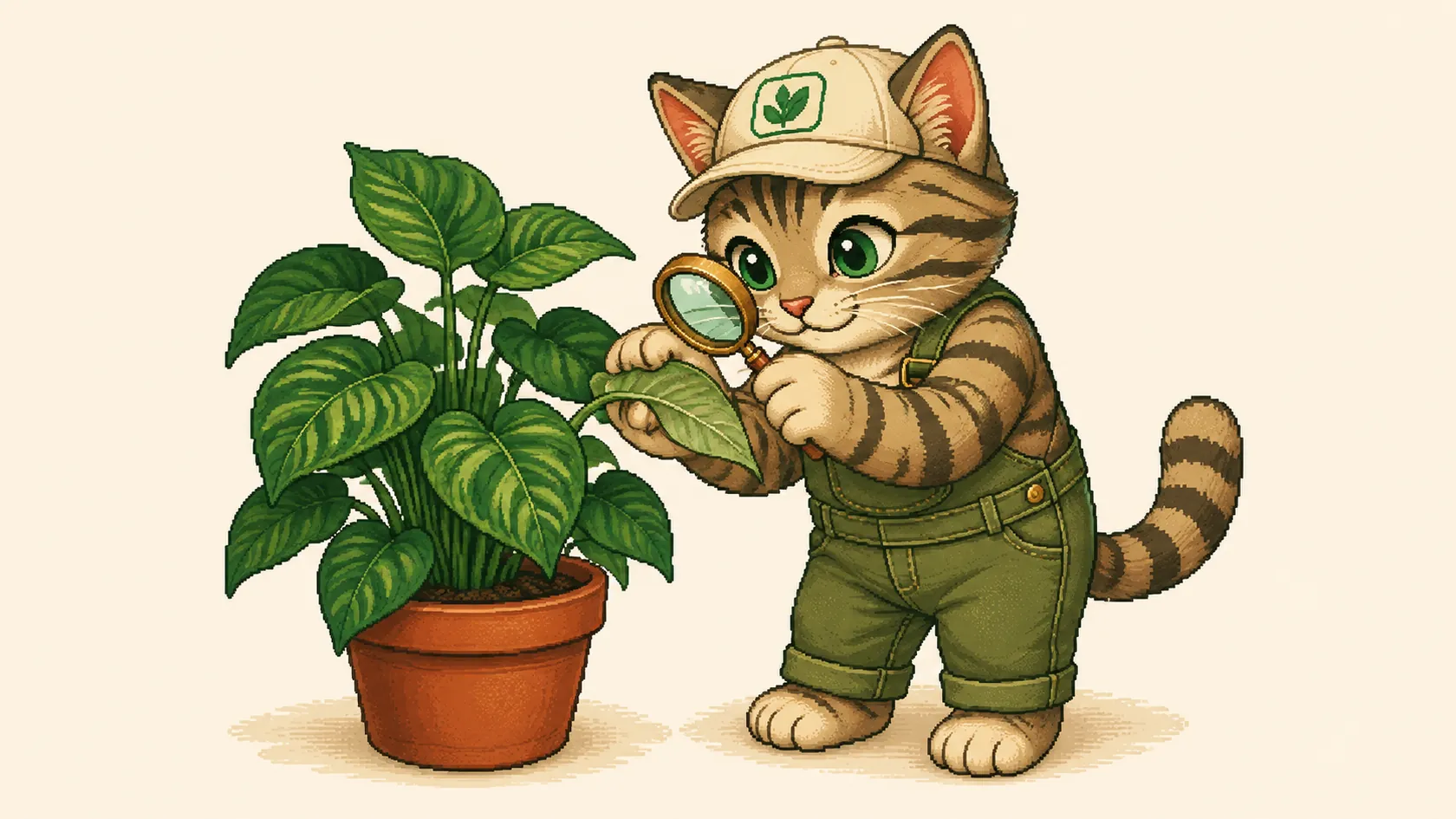
Hold the leaf up so light comes through it and look at the underside. Spider mites sit there as tiny oval dots, yellowish, greenish or reddish depending on the species and the season, and they move very slowly.
The eggs are round, clear and even smaller, and they sit along the veins and in the webbing. Empty white skins from molting stay behind next to them and can be mistaken for dust.
The common red variety is one color phase rather than a separate pest, and the treatment is the same either way.
At full zoom on a phone camera the legs and the oval body become clear. That is usually enough to settle the identification without a lens.
Look at
Most likely cause
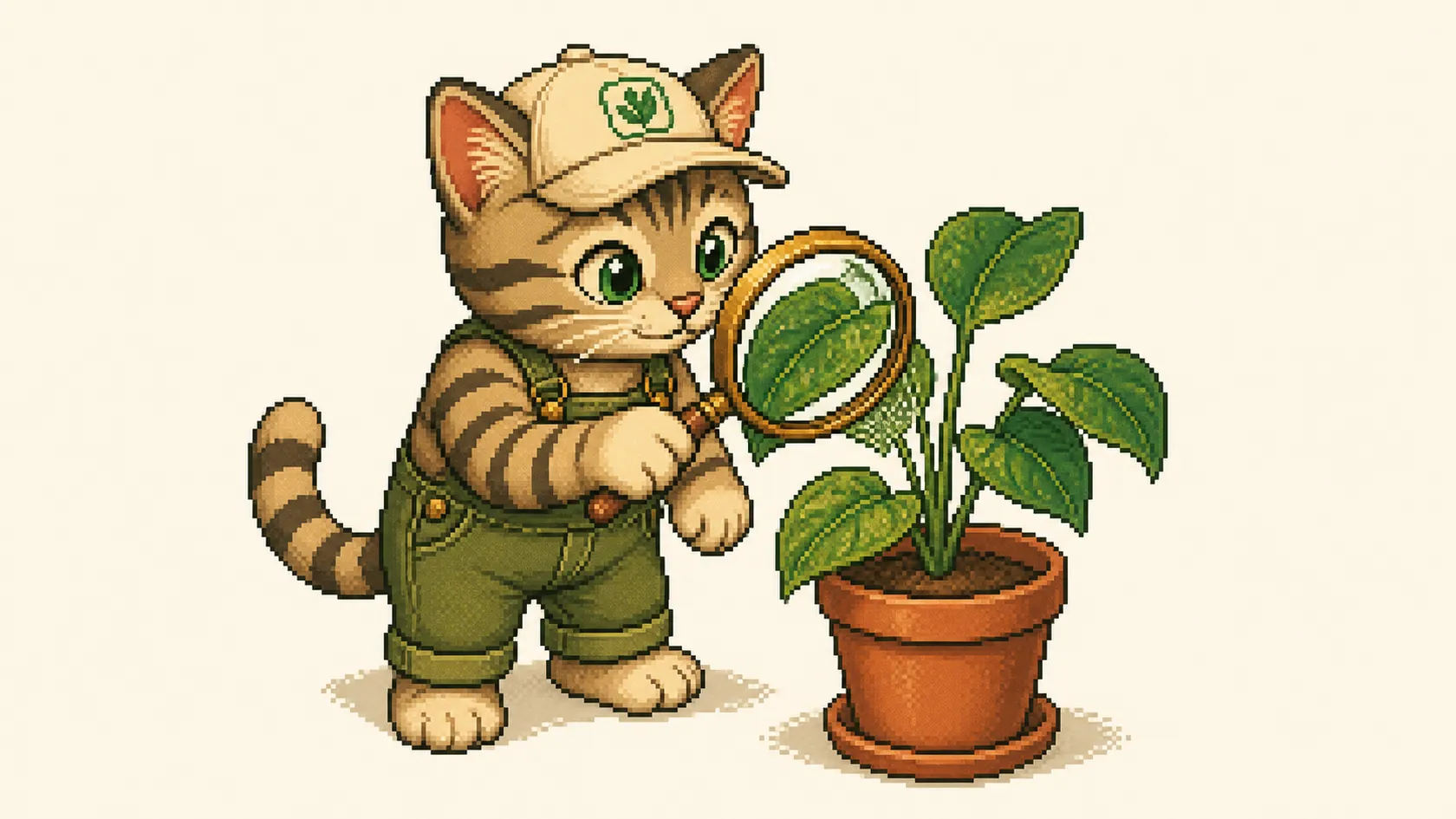
The mites feed from underneath and empty single cells. Each emptied cell shows from above as a pale dot, so the first thing you see is a fine, even speckling on the top of the leaf.
As feeding continues the dots run together. The leaf loses its gloss, goes dull, and takes on a silvery gray or bronze cast over larger areas.
The damage is dry. A speckled leaf feels papery rather than tacky, and the pale marks do not wipe off.
On a plant with dusty leaves this early stage is easy to miss. Wipe large leaves down now and then and the speckling shows up much sooner.
Webbing is the confirmation, and it comes later than the speckling. Fine threads run in the leaf axils, between the leaf stalk and the stem, and across the shoot tips.
In a heavy infestation the threads span whole shoot tips and carry a fine dust of mites and skins. At that stage the plant needs treating on the same day.
The webbing is not a spider’s work. A spider’s web is larger, structured and sits between objects, while mite webbing lies close to the plant and follows the leaf.
A light mist of water makes it visible. The droplets hang in the threads and show up a net in places that looked clean a minute earlier.
The paper test settles most cases. Hold a sheet of white paper under a suspect shoot and tap the leaf twice. Anything that lands and then crawls across the paper is a mite, and dust stays where it fell.
Give it half a minute. The mites move slowly, and at first glance a fresh sheet of paper can look like it has nothing on it.
The mist test is the second one and works on the webbing rather than the animals. Spray the plant finely and look at the leaf axils against the light.
A light infestation costs a healthy plant little. The speckled leaves stay marked and the plant carries on growing.
As the population builds, whole leaves go gray, dry at the edges and drop. New leaves come in small, and thin-leaved species can lose most of their foliage in a few weeks.
The damaged tissue does not recover. Leaves that were speckled stay speckled until they fall, so you judge the result of a treatment on the new growth rather than on the old leaves.
Mites travel from plant to plant across leaves that touch and drift short distances on their threads. Any plant standing next to an infested one is worth checking.
Thrips leave larger silvery patches, often in streaks along the veins, with minute black dots of frass on them. The dots wipe off and there is no webbing.
Aphids and other sap suckers leave the leaf sticky. A shiny, tacky film on the leaves below the feeding point is honeydew, which spider mites do not produce.
Mealybugs sit as white cottony fluffs in the leaf axils and do not move. Scale insects sit as small firm brown bumps along the stem and lift off with a fingernail.
Plain dust and hard water marks are the other common mix-up. Both wipe off with a damp cloth, while mite speckling stays in the leaf.
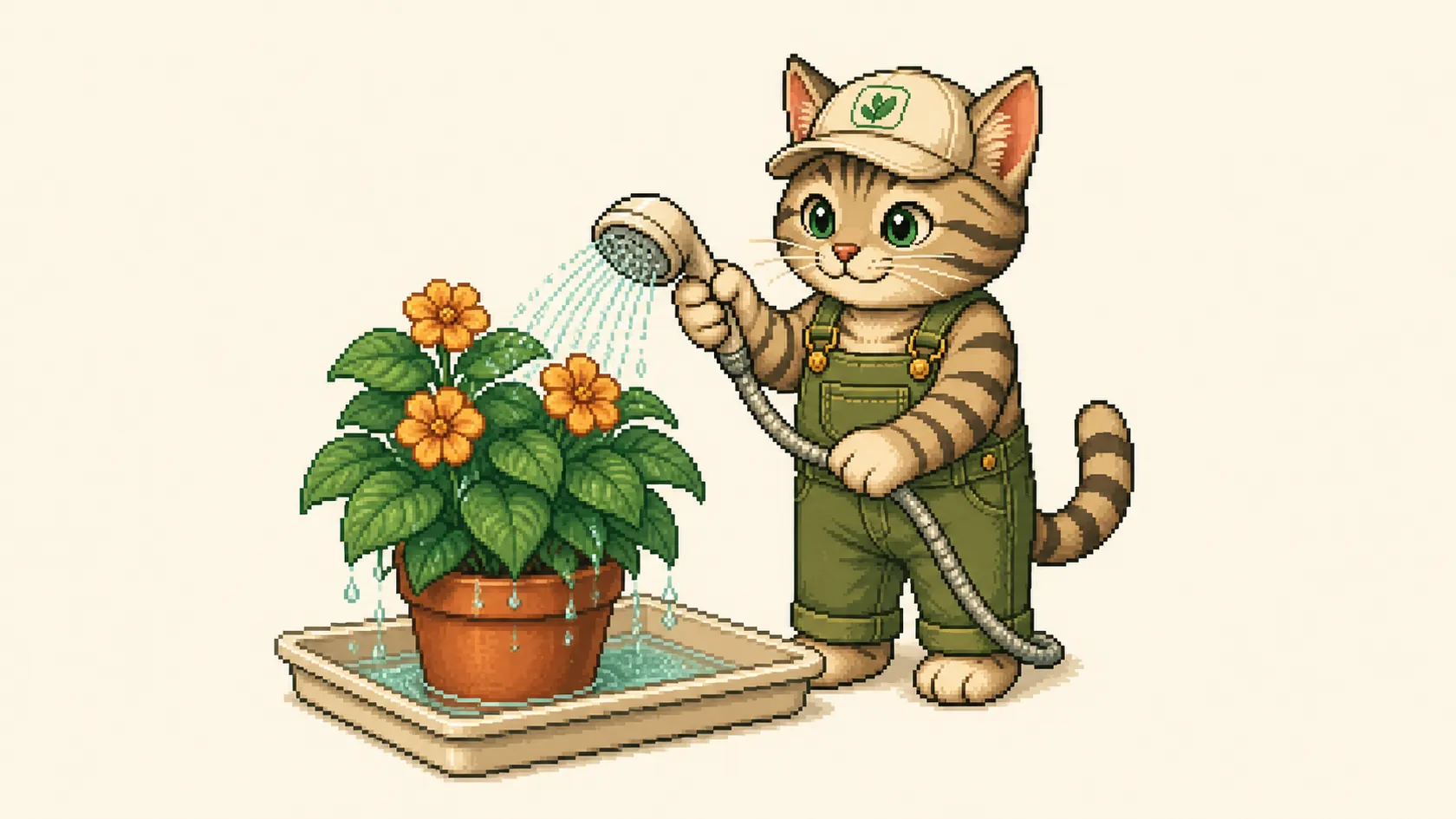
Carry the plant away from the others before anything else, and rinse it with lukewarm water aimed upward at the leaf undersides. Tilt the pot so the water does not sit in the root ball.
Cut out leaves that are already gray if the plant keeps enough healthy foliage. They carry a large part of the colony and will not recover.
Then look at the same places every two or three days. One pass never reaches the eggs, so the follow-up checks are what decide whether the mites are gone.
On the leaf underside they are tiny oval dots, yellowish, greenish or reddish, moving slowly. From above you see the damage first: a fine pale speckling that runs together into dull silvery gray areas.
They empty single cells from underneath, which leaves the leaf speckled and eventually gray and dry. On a heavy infestation leaves drop, new leaves come in small, and thin-leaved plants can lose most of their foliage.
Barely. They are around half a millimeter across, so most people see the speckling and the webbing rather than the mites. A phone photo at full zoom or a tap over white paper makes them visible.
Fine threads in the leaf axils and over the shoot tips are spider mite webbing. It lies close to the plant and follows the leaf, while a spider’s web is larger and spans the space between objects.
Spider mite damage is a fine, even speckling with webbing and no residue. Thrips leave larger silvery patches with minute black dots of frass that wipe off, and they leave no webbing.
No. They live on the leaves, mostly on the undersides, and they also sit in cracks around the rim of the pot. Small dark insects rising from the soil when you water are fungus gnats instead.
Last reviewed: 2026-09-07