

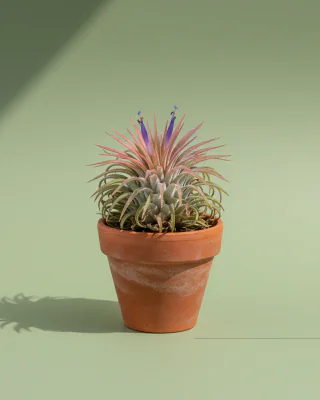
At a glance
- Light
- Bright light, some sun
- Typical interval
- Every 6 to 8 days (summer)
Every 8 to 12 days (winter) - Climate
- 18–28 °C
- Humidity
- 50–70 %
- Pet safety
- Not confirmed pet-safe
- Scientific name
- Tillandsia ionantha


When and how much water
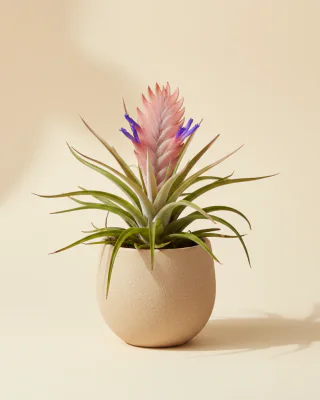
Air plant grows without soil and takes up water through its leaves. Soak it in room-temperature water for 20 to 30 minutes, typically every 6 to 8 days in summer and every 8 to 12 days in winter. Then shake off the water and let it dry upside down, somewhere with moving air, so no water sits between the leaves.
Light and placement
Air plant needs bright light and a little gentle direct sun, such as morning sun. Strong midday sun can scorch the leaves. Place it close to an east- or west-facing window.
Feeding
Feed air plant every 45 days while it’s actively growing. Use a bromeliad or air plant fertilizer at a quarter of the strength on the label, mixed into the soaking water.
When growth pauses, skip the fertilizer and let it rest.
Temperature & humidity
Air plant is comfortable between 18 and 28 °C. Below 10 °C the leaves start taking damage, so keep it clear of cold drafts and unheated rooms.
It does best at 50–70% humidity. Misting every 2 days helps in dry rooms.
Common problems
Yellowing, drooping, and dry edges often point to watering or drainage. Compare the signs before changing the routine.
Find what’s wrong
Not confirmed pet-safe
Pet-safety information in the JungleBook uses ASPCA reference data where available. It is reference information, not veterinary advice.
Common questions
How often should I water an Air plant?
Air plant grows without soil and takes up water through its leaves. Soak it in room-temperature water for 20 to 30 minutes, typically every 6 to 8 days in summer and every 8 to 12 days in winter. Then shake off the water and let it dry upside down, somewhere with moving air, so no water sits between the leaves.
How much light does an Air plant need?
Air plant needs bright light and a little gentle direct sun, such as morning sun. Strong midday sun can scorch the leaves. Place it close to an east- or west-facing window.
Is Air plant safe for cats and dogs?
Air plant is not listed in the ASPCA’s toxic and non-toxic plant database, so we cannot confirm it is safe for cats and dogs. Keep it out of reach of pets, and call your vet if your pet chews it.
Why are my Air plant’s leaves turning yellow or drooping?
Soft, dark leaves at the base usually mean water stayed between the leaves after soaking. Shake it out well and let it dry upside down. Curled or crisp leaf tips usually mean it is thirsty, so soak it a little more often.
Sources
- This guide follows established plant-care guidance and official ASPCA pet-safety references. How we verify our plant data →
Last reviewed: 2026-09-21