



How to propagate air plant
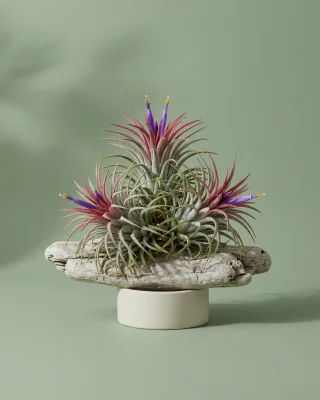
Tillandsia ionantha
Air plant (Tillandsia ionantha) makes pups that form a clump. Separate a pup when it is large enough to handle, and keep it out of soil.
 Not sure it’s this plant?Check yours with a photo, free
Pet safety unknown
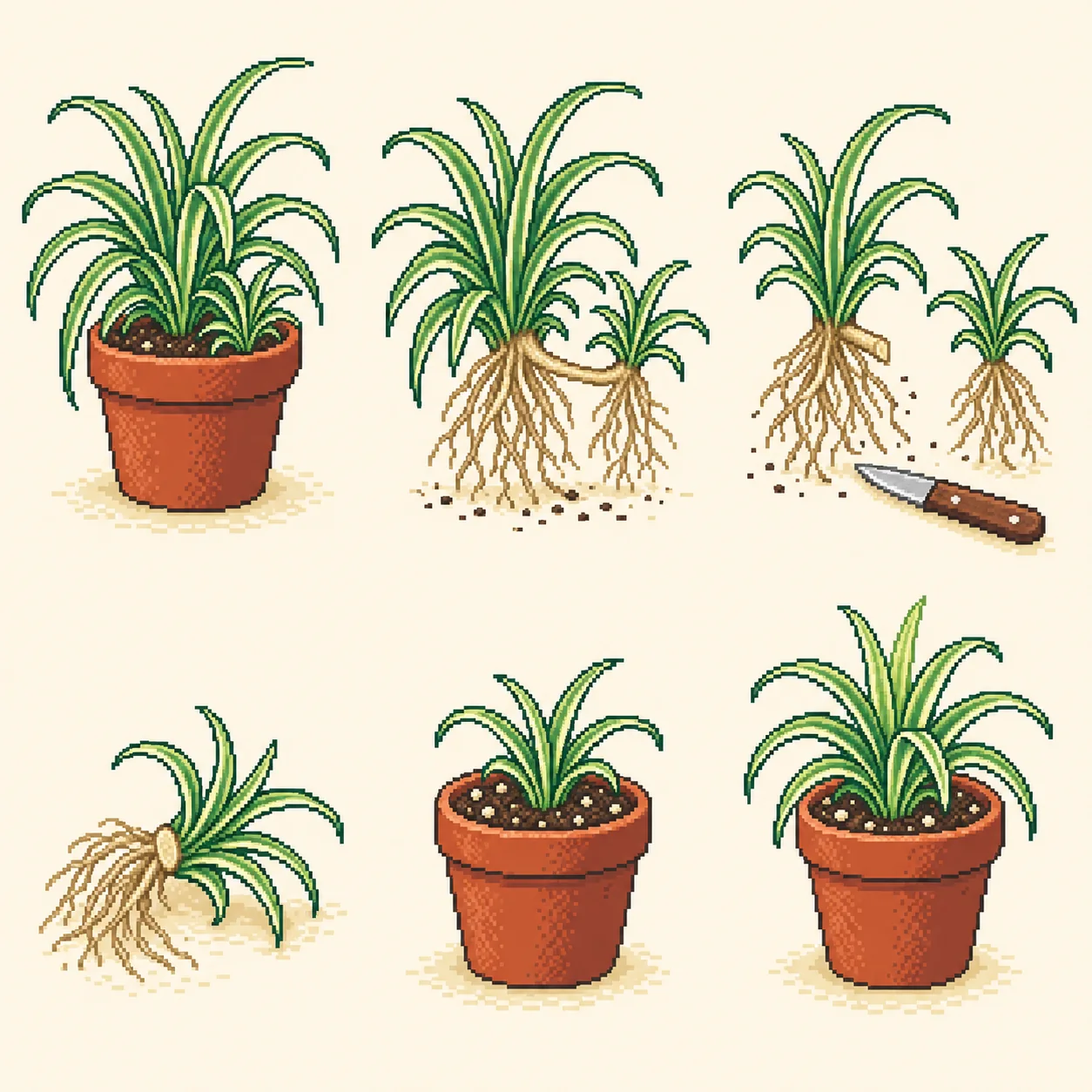
How to propagate by offsets / pups
Tillandsia ionantha is an epiphyte that produces pups. You can leave them as a clump or remove a pup and mount it without planting it in soil.
- 01
Wait until a pup is large enough to handle. The RHS air-plant guide uses about one-third of the parent’s size as a practical separation point.
- 02
Work at the base and separate the pup gently without tearing the rosette.
- 03
Mount it on wood, ceramic, or glass, or leave it with the parent. Do not plant it in soil.
- 04
Give bright indirect light and good airflow.
- 05
Water thoroughly, then shake off excess water from the leaves.
- 06
Let it dry between waterings and keep water from collecting in the crown.
- 07
Treat the pup as an adult air plant and watch for a stable rosette.
All air plant guides
Related plants
Common questions
What is the best way to propagate Tillandsia ionantha?
Let pups form a clump, then separate a pup once it is large enough to handle. You can also leave the clump together and let it grow on.
Can Tillandsia ionantha grow in soil?
No. NC State describes this species as an epiphyte or lithophyte that should not be planted in soil. Mount it or place it in a holder instead.
How long does Tillandsia ionantha take to root?
Treat the separated pup as an adult and watch for a stable rosette while keeping it watered and able to dry.
Sources: NC State Extension’s Tillandsia ionantha profile supports its epiphytic or lithophytic habit, pups, no-soil culture, and thorough watering with excess water removed. The RHS air-plant guide supports separation size, airflow, and drying between waterings.
7 steps · No soil rooting. Watch for a stable rosette · Last reviewed: