



Both cases can be saved as long as the root ball still holds firm, pale roots. The wrong move usually costs the plant.
Check first, then act
Push a finger an inch or two into the soil, up to the second knuckle in a large pot. Dry at that depth means the plant is short of water. Wet at that depth means thirst is not the problem.
Lift the pot. A dried out root ball is strikingly light, a waterlogged one surprisingly heavy. If the soil has pulled away from the rim and water shoots straight out of the bottom, you are holding a dried out root ball.
Smell the soil. A musty, sour smell out of the pot belongs to rotting roots and does not happen on a dry plant.
Look at how the leaves hang. In drought they are limp and thin and often dry and brittle at the edges. In wet soil they feel soft, turn yellow and drop while the soil stays wet.
- Soil dry or wet an inch or two down
- Pot strikingly light or strikingly heavy
- A musty smell out of the mix
- Leaf edges dry and brittle, or leaves soft and yellow
- Root ball pulled away from the rim
If the root ball turns out to be dry instead
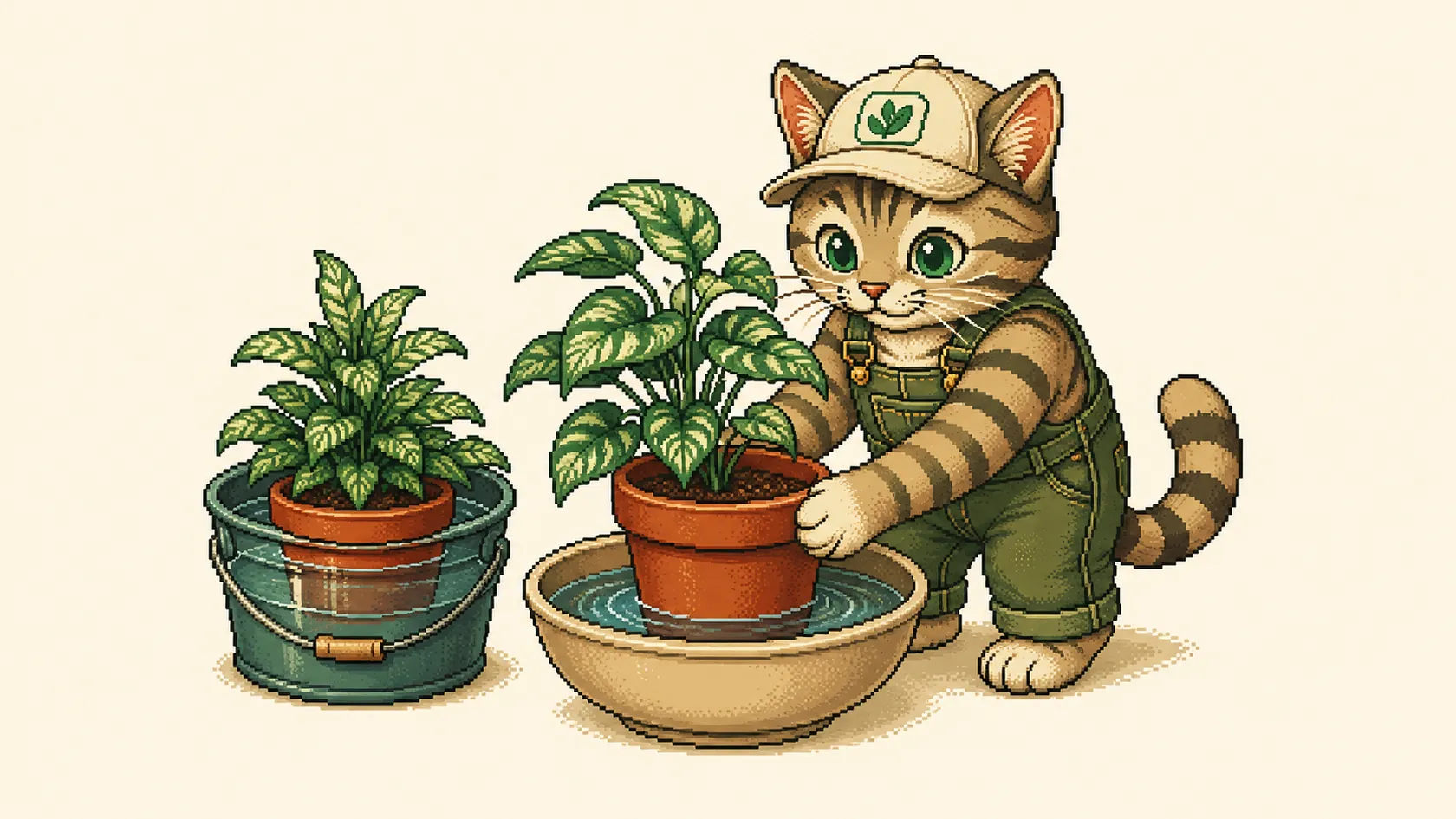
A root ball that has dried through takes almost no water from above. The soil repels it and it runs down the side. So do not simply top it up, soak the pot instead.
Stand it in a bucket of room temperature water until the level reaches just under the rim. Lift it out once no more air bubbles rise. Then let it drain completely and empty the saucer.
Keep the plant out of direct sun for a few days. It has few working roots at the moment, and full sun asks for more of exactly those.
Dried, papery leaves do not come back. Leave them on for a few days anyway and only cut once you can see which shoots have sap in them again. No fertilizer at this point.
Overwatered: open the pot before the roots rot
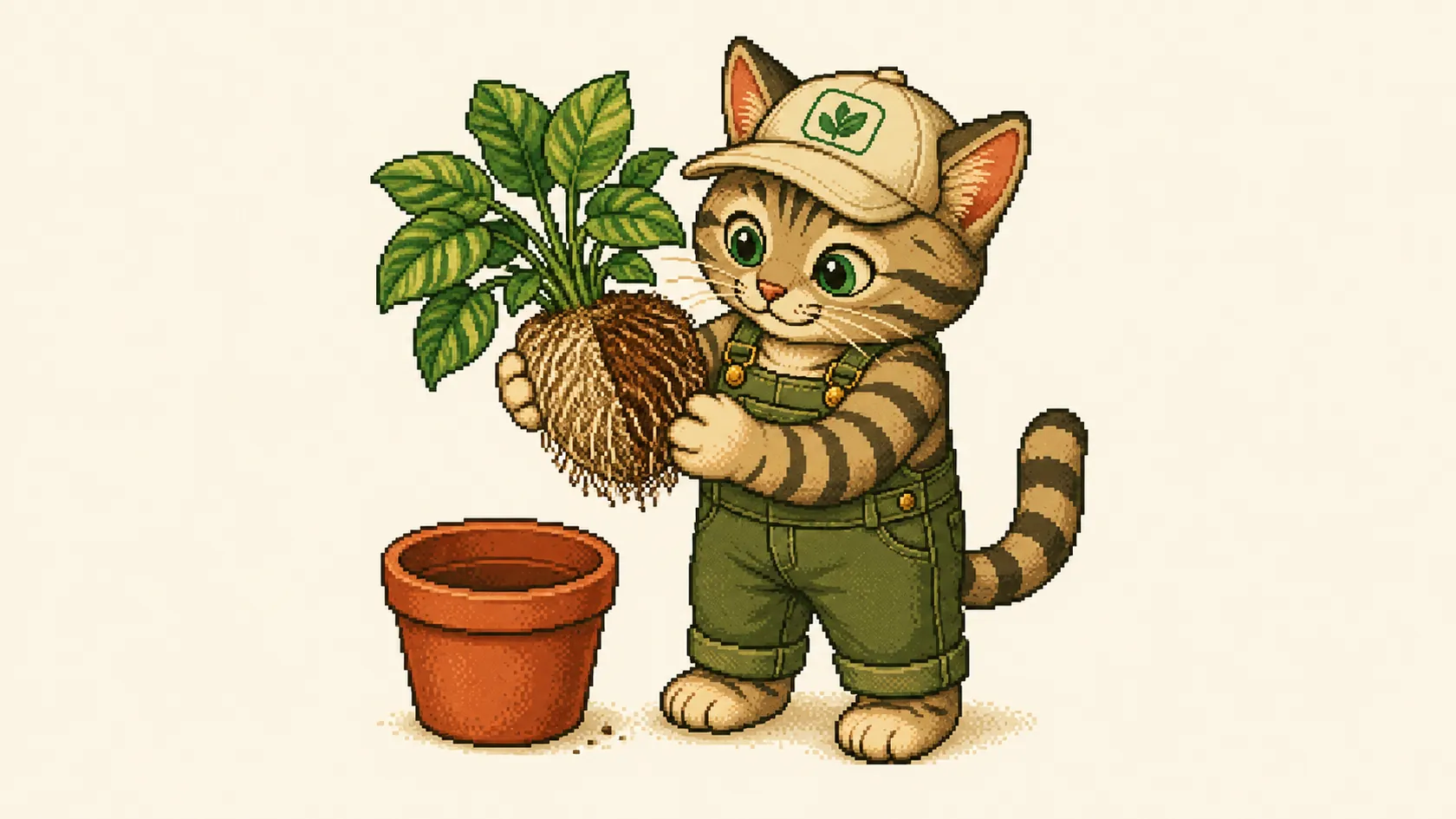
Take the plant out of the pot and look at the root ball. Healthy roots are firm and pale to cream colored. Rotted roots are brown to black and soft, and they strip between your fingers, the outer skin sliding off and leaving a thread behind.
Cut every soft root out with clean scissors and shake the wet soil off. What is firm stays. If more than half the roots are gone, take a matching amount of leaf mass off the top, so what is left can still supply the plant.
The sour smell and a soft, dark patch at the base of the stem tell you how far it has gone. A stem base that is still firm is the difference between a plant you repot and one you take a cutting from.
Repotting and watering afterward
Set the plant into fresh, only slightly damp mix and into a pot with a drainage hole that is no bigger than it needs to be. A pot that is much too large holds a lot of soil with no roots in it, and that stays wet for weeks.
Water sparingly from then on. Wait until the top inch or two is dry and tip the saucer out 15 to 20 minutes after watering. If the plant sits in a cachepot, lift the nursery pot out to water it and put it back once it has drained.
No fertilizer goes on while no new roots are working. Feed reaches the plant through the roots, and those are the part that is damaged.
When neither too much nor too little water fits
A dark spot shows itself differently. The plant grows long thin shoots with wide gaps between the leaves toward the window, and the new leaves stay smaller than the old ones. A brighter place helps here, not water.
Cold drafts and a spot right above a radiator wear plants down as well. On a cold windowsill in winter the soil can stay wet while the roots are inactive, and then the plant looks overwatered when it is really cold.
Go through the undersides of the leaves and the leaf axils before you carry on. Spider mites, mealybugs and thrips weaken a plant over weeks, and their signs are easy to miss while you are only looking at the soil.
A white crusty rim on the pot and brown leaf tips on wet soil point to salts from fertilizer and hard water. Flush the root ball through several times and let the water drain away each time.
Cut back, then leave it alone
Cut dead shoots back into healthy, firm tissue. A shoot that is still green inside stays, even if nothing is hanging on it at the top.
Clear fallen leaves off the soil. They keep the surface damp and are the starting point for mold and fungus gnats.
After that, nothing changes for a few weeks. No moving around, no fertilizer, no bigger pot. A plant that is rebuilding roots takes exactly one change at a time.
If the damage is so far along that almost no firm roots are left, a cutting is often the safer route. Cut a healthy shoot below a leaf node and root it in water or in a light mix.
How to tell it is coming back
The first sign shows at the pot rather than at the leaf. Once the root ball dries down evenly again, roots are working. As long as the pot weighs the same for two weeks, they are not.
After that the existing leaves firm up again, and only later comes a new shoot. On a dried out plant that often takes days. After root rot it takes weeks.
Write down when you watered and how the pot felt while this is going on. The interval that settles out is the interval that fits this plant in this spot.
Related plants
Keep reading
Common questions
Can you save an overwatered plant?
Yes, as long as firm, pale roots are left. Take the plant out of the pot, cut every soft brown root away and set it in fresh, only slightly damp mix. Water sparingly afterward and empty the saucer every time.
How do I know whether my plant had too much or too little water?
Feel the soil before you read the leaf. Dry an inch or two down and a light pot point to a shortage. Wet soil, soft yellow leaves and a musty smell point to too much water.
How long does an overwatered plant take to recover?
After a root trim, several weeks pass before new roots are working, and a new leaf comes later still. A plant that was only dried out often picks itself up within a day.
Should I repot an overwatered plant right away?
Repot if the soil stays wet for days, the pot has no working drainage hole or roots are already soft. If the roots are firm and the pot drains, letting it dry down is enough and spares the plant a second shock.
Should I fertilize a struggling plant?
No. Fertilizer works through the roots, and those are the damaged part. The salts add to the stress. Wait until the plant grows again and start with a weak dose.
When is a plant no longer worth saving?
When the root ball is soft and dark throughout and the base of the stem has gone mushy. Check the upper shoots then. If one is firm and green, a cutting gives you a better chance than the old root ball.
Last reviewed: 2026-09-07