

Yellow leaves

Why are my Flaming Katy's leaves turning yellow?Kalanchoe blossfeldiana

Yellowing is the most common distress signal a Flaming Katy sends, and it almost always traces back to watering. On this plant it tends to show up as yellowing leaves and mushy stem base — here's how to read which cause is yours.

Most likely cause

Overwatering & rot at the base. Stop watering completely. Let the soil has dried out completely before you even think about the next one, and check the pot actually drains — if the base is soft or smells sour, unpot it, cut away any mushy tissue, and repot in fresh, fast-draining mix.

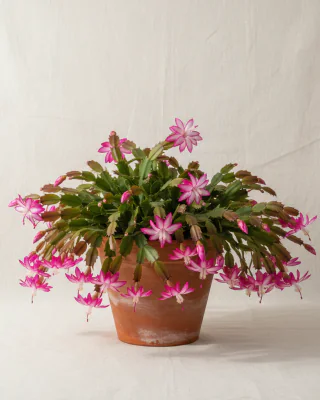
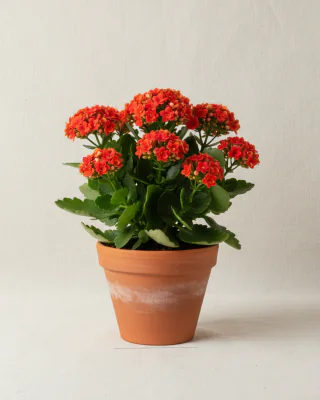
Flaming Katy (Kalanchoe blossfeldiana) — a healthy specimen photographed indoors
Light
Bright / direct light
Watering (summer)
every 14 to 21 days
Watering (winter)
every 30 to 45 days, sometimes less
Pet safety
Toxic to cats and dogs
Not sure this is it? Snap a photo — the Plant Doctor answers in seconds.Get the app →

What's causing it

Overwatering & rot at the base

How to tell: The soil stays wet for days, and the rot starts low — a soft, discoloured patch at the base or crown rather than one particular old leaf, often paired with yellowing leaves. This is the single most common cause on a Flaming Katy.
The fix: Stop watering completely. Let the soil has dried out completely before you even think about the next one, and check the pot actually drains — if the base is soft or smells sour, unpot it, cut away any mushy tissue, and repot in fresh, fast-draining mix.

Too little light

How to tell: The yellowing comes with pale, stretched new growth leaning toward the nearest window — Flaming Katy is bright / direct light and won't hold its colour much dimmer than 10,000 - 50,000 lux.
The fix: Move it to a brighter spot within its bright / direct light range, but keep it out of harsh midday sun, which scorches.

Thirst (underwatering)

How to tell: The soil is bone dry, and the yellowing arrives alongside wrinkled leaves rather than soft, mushy growth.
The fix: Water thoroughly — every 14 to 21 days in summer is the usual pace for a Flaming Katy — then settle into feeling the soil before every watering rather than watering on a fixed day.

Hungry — but rarely the real culprit

How to tell: Flaming Katy grows slowly and needs very little feeding, so a uniform pale-yellow fade after many months without any is possible, but check watering and light first — those are far more common on this plant.
The fix: Feed a cactus/succulent-formula fertiliser diluted to half strength, once or twice in the growing season only — overfeeding a slow grower like this does more harm than skipping it.

Simple old age

How to tell: An older, outer leaf near the base slowly yellows on its own while the centre keeps producing healthy new growth — normal turnover on a Flaming Katy, not a symptom.
The fix: Nothing is wrong — snip the spent leaf off cleanly at its base and carry on.

Not sure which one it is?

Share photos of your Flaming Katy and a few care details. Botanicaly's Pro Plant Doctor builds a step-by-step rescue plan; try it with the 7-day free trial.

App Store Google Play
Get the app →

Prevention

Let it dry out fully between waterings, never let it sit in a saucer of water, and keep it in bright light — root rot, not thirst, is the real risk on this plant.

Common questions

Should I cut off the yellow leaves on my Flaming Katy?

Once a leaf has gone fully yellow it won't turn green again, so it's fine to snip it at the base — it lets the plant put energy into healthy growth. Don't strip lots at once, though; if many are yellowing, fix the cause first.

Why does my Flaming Katy keep getting yellow leaves even though I barely water it?

A Flaming Katy that rots doesn't need much water to suffer — one soggy spell without full drying between waterings is enough to start it. Check the pot actually drains and that it isn't sitting in a saucer of water; that's usually the real cause, not the frequency.

More for your Flaming Katy

Hand-checked against Botanicaly's verified plant catalog and ASPCA records by the Botanicaly team, led by founder Ludvig Nyström. How we verify our plant data → · Last reviewed: 2026-07-21