What you see
Leaves went limp overnight, dark water soaked patches appeared within a day or two, and the damage sits on the side that faced the cold.



Damage shows within days of the cold, on the side that faced the draft or the glass.
Tropical foliage plants take it worst, because their leaves are thin and they never evolved to meet a cold night. What matters now is which tissue is actually dead and which is only shocked.
Before doing anything, work out where the cold came from. If the source is still there, the next night does the same thing again.
Leaves go limp first and often feel thinner than usual, as though the tissue had collapsed. Within a day or two, patches turn dark and water soaked, then dry to brown or black as the cells break down.
The pattern is what identifies it. Damage sits on one side of the plant, on the outer leaves, or on whichever leaves were closest to the window or the door. The sheltered side stays sound.
Flower buds drop without opening, and some plants shed whole leaves within a week while the stems stay firm and green.
Cold damage does not spread from plant to plant. If new marks keep appearing days later on plants standing well away from the source, you are looking at something else.
Look at
Most likely cause
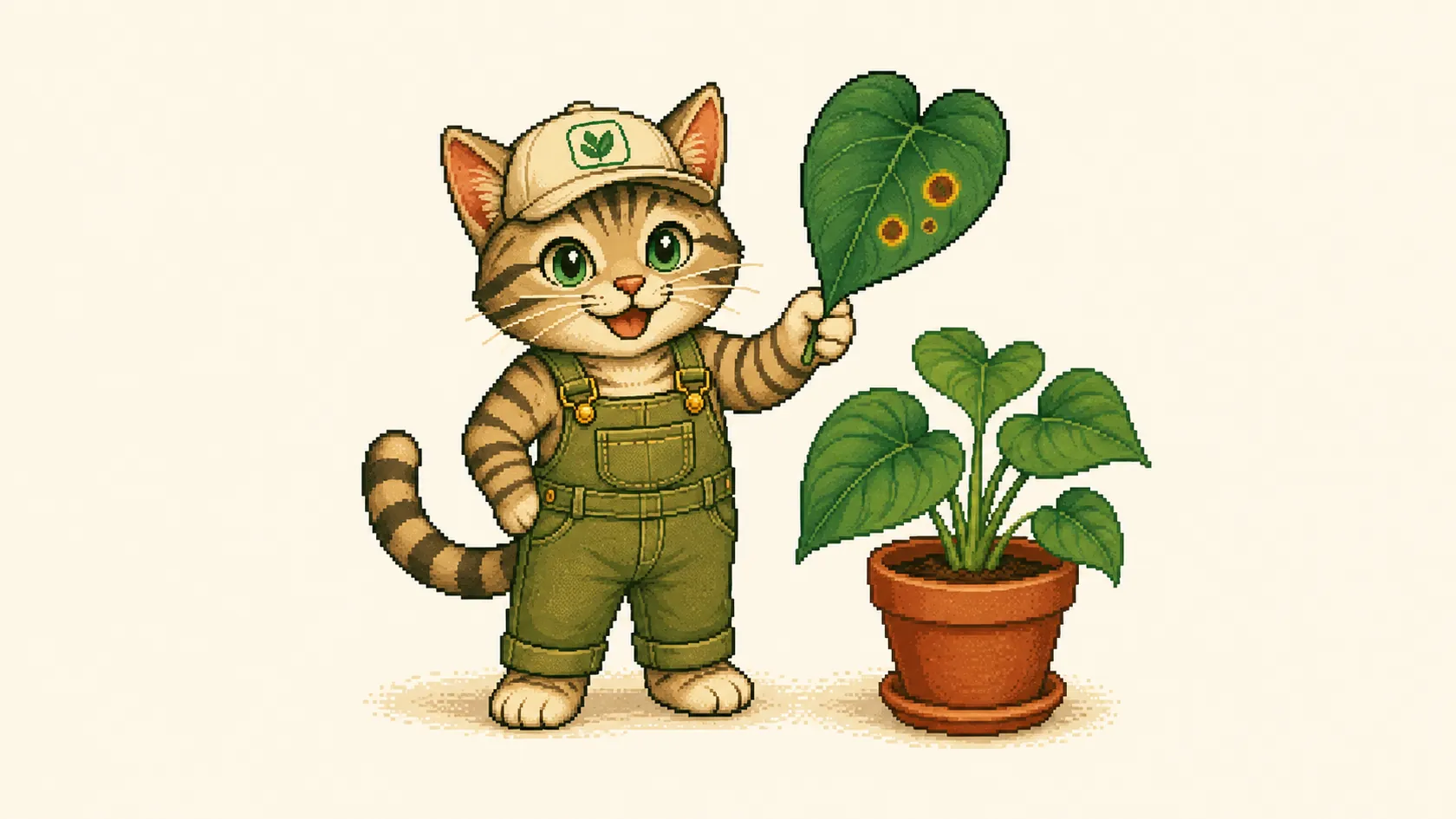
This is the common one indoors. An entrance door that opens through the day, a window left tilted open on a cold night, or a gap under a balcony door sends a cold stream across a plant that is otherwise standing in a warm room.
Air moving over the leaves does more harm than still cold air at the same reading. That is why one plant on a windowsill can be marked while another two feet away on the same sill is untouched.
Hold the back of your hand where the plant stands, at leaf height, on a cold evening. Moving cold air is easy to feel and hard to spot any other way.
Move the plant, or close the gap. A curtain drawn between the plant and the glass at night takes most of it out.
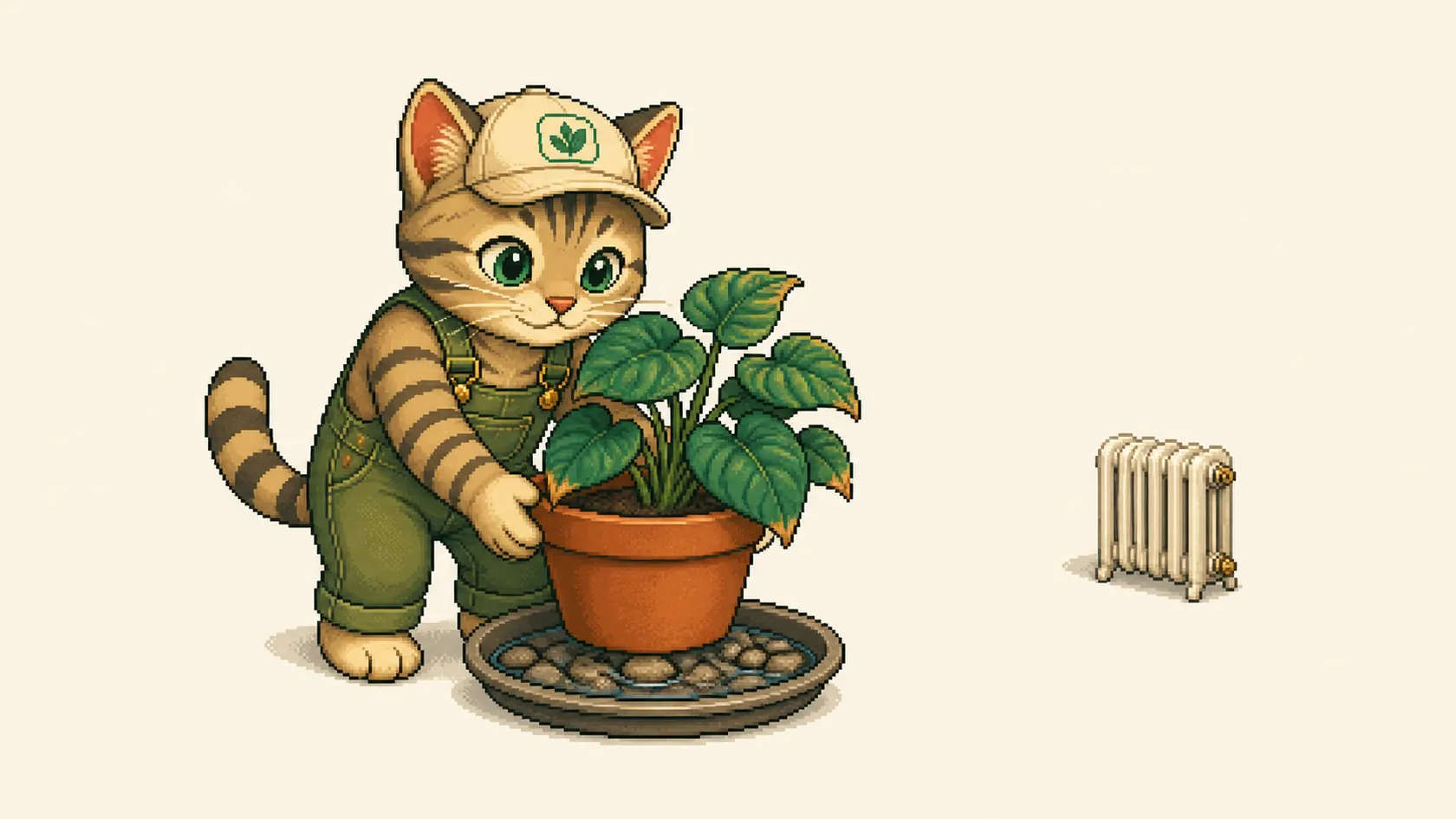
Glass gets much colder than the room behind it. A leaf resting against the pane loses heat directly into it all night, so the mark follows the shape of the contact rather than the shape of the leaf.
Look for a patch that matches where the leaf was pressed, often a band across the blade or a dark edge along one side. Leaves half an inch off the glass usually come through fine.
Pull the pot back a hand’s width from the window, or turn it so the foliage no longer leans on the pane. Large leaved plants near a window in winter need this checked every few weeks, because they keep growing toward the light.
A plant bought on a cold day can be damaged before it reaches the room, in the walk to the car or in an unheated trunk. The signs appear two or three days later, once the collapsed cells have darkened, and by then the purchase looks like the problem rather than the journey.
Deliveries left standing outside or in a cold hallway do the same thing.
Wrap a plant in paper for the walk out of the shop in cold weather, and take it out of the sleeve as soon as you are home.
A plant in this state needs its usual spot and no extra intervention. Repotting and feeding a cold shocked plant adds a second problem on top of the first.
An unheated bedroom, a hallway, a conservatory or an office over a weekend can sit far below what a tropical plant wants without ever getting near freezing. The damage then arrives slowly instead of overnight, as stalled growth, yellowing lower leaves and soil that stays wet for weeks.
The plant is using very little water at those temperatures. Watering on the summer rhythm in a cold room is how cold conditions turn into root rot, and the symptoms that follow look nothing like the original cause.
Move the plant to a warmer room, or accept the slow spell and water far less until growth restarts.
Species vary widely in what they tolerate, and the plant’s own care guide carries its range. A snake plant and a calathea in the same cold hallway will not report the same result.
Move the plant out of the cold and leave it alone. A warm, bright spot with no draft is the whole treatment, and it needs a few days to show what survived.
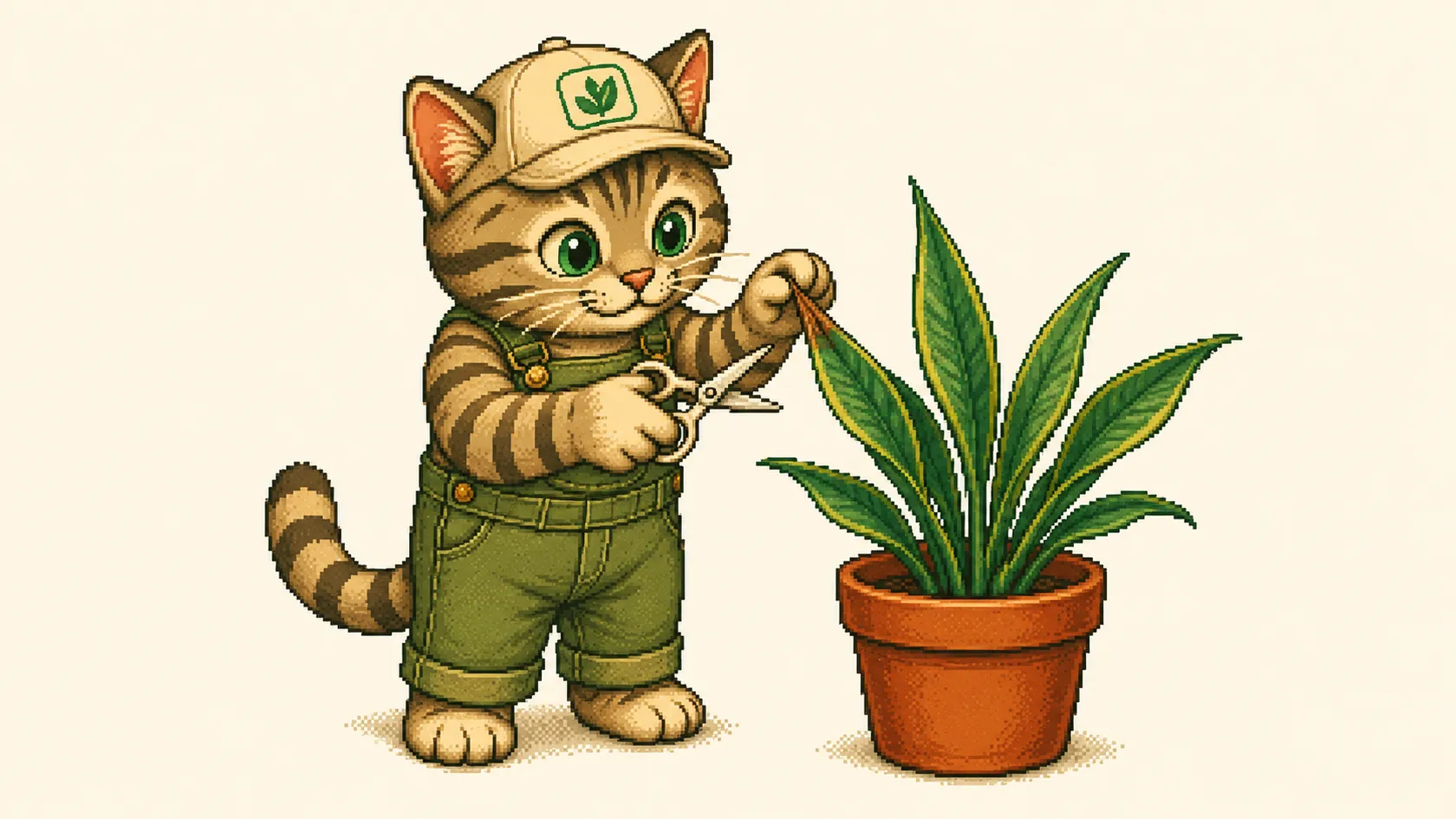
Do not cut anything yet. Tissue that looks finished on day one can firm up again, and stems that still have live tissue inside will push new growth from a node lower down. Take off only leaves that have gone soft and slimy, because those rot against the stem.
Water less than usual. A plant that has lost leaves takes up less water, and wet soil around cold damaged roots is the second injury.
Hold off on fertilizer until new leaves are opening. Feeding damaged roots adds salt to a plant that cannot use it.
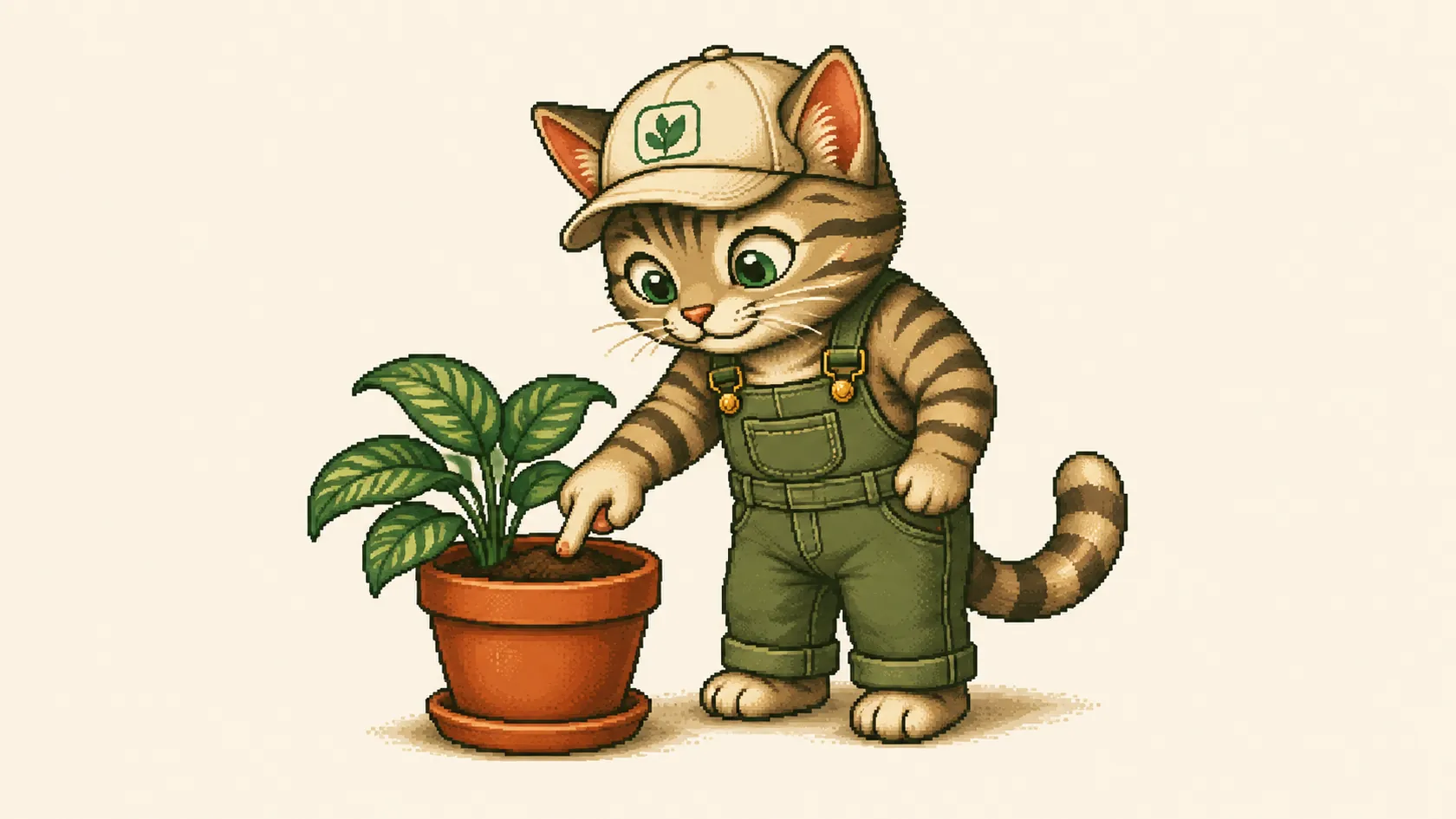
Marked leaves stay marked. That tissue is dead and will not green up again, so judge recovery by the new growth rather than by the old leaves.
Stems are the part worth waiting on. Scratch a stem lightly with a fingernail. Green under the surface means it is alive and worth keeping, brown and dry all the way through means you can cut back to the next live point.
Give it several weeks in the growing season, longer in winter. A plant that has lost all its leaves but keeps firm green stems often comes back from the base.
If nothing has moved after a couple of months and the stems have gone soft, the cold reached the roots and the plant is not coming back.
Leaves go limp within hours, dark water soaked patches appear over a day or two and then dry brown or black, and buds drop without opening. The damage sits on the side of the plant that faced the cold and does not spread further afterward.
Often, if the stems are still firm and green under the surface. The marked leaves stay marked, so recovery shows as new growth. Give it a warm, draft free spot, water less than usual, and wait several weeks before deciding.
Wait a few days first, because tissue that looks lost can firm up again. Remove leaves that have gone soft and slimy straight away, since those rot against the stem, and leave the rest until it is clear what is dead.
It depends on the species, and the plant’s own care guide carries its range. As a working rule, a tropical foliage plant is unhappy in a room that feels cold to you in indoor clothes, and moving air makes the same temperature harder on it.
Frost damage is the extreme version, where water freezes inside the tissue and the cells burst. Indoors the usual case is chilling rather than freezing, which produces the same limp, darkening leaves more slowly and is more often survivable.
Less than usual. A plant with fewer leaves in a cool room uses very little water, and wet soil around chilled roots leads to rot. Feel the mix an inch or two down and water only when it is dry there.
Last reviewed: 2026-09-07