What you see
The pot feels light, the soil is dry two or three inches down, and the leaves are soft. The surface may have pulled away from the rim of the pot.



Lift the pot and feel the soil. Light and dry is thirst, heavy and wet is the roots.
So the answer is in the pot rather than in the leaves. Two checks, both of which take a minute, separate most cases.
Lift the pot and feel its weight, then push a finger two to three inches into the soil. Light and dry points one way. Heavy and dark points the other.
The second check is time. Leaves that lift again a few hours after watering were thirsty. Leaves that stay down after watering, or hang worse, mean the roots are not taking water up.
Match what you find to one of these before changing anything, because watering a plant that is already too wet is the move that turns a bad week into a lost plant.
Look at
Most likely cause
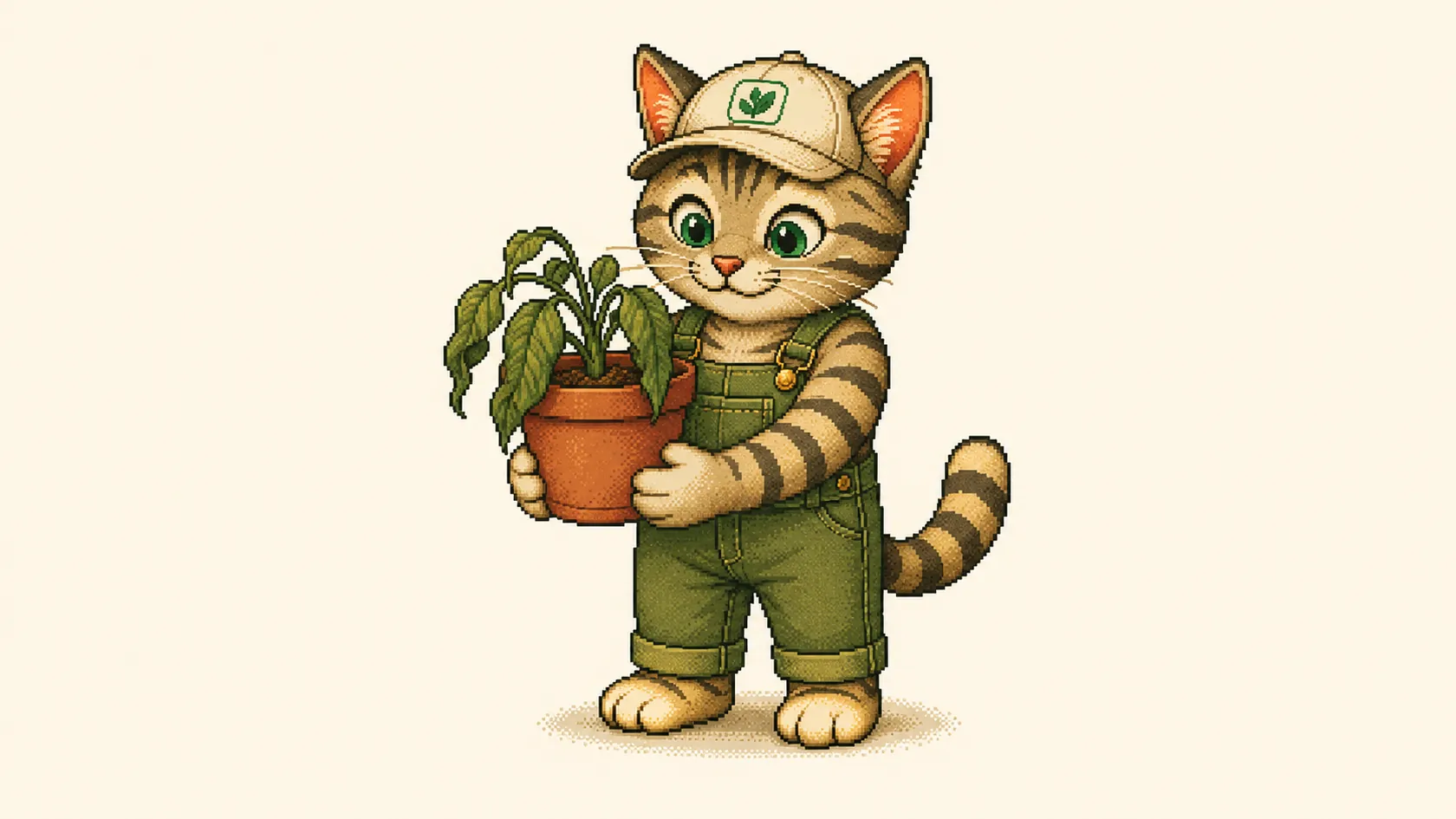
The common case. The root ball has run out of water, the leaves go soft, and the newest growth droops first because it has the thinnest tissue.
Water thoroughly until it runs out of the bottom, then empty the saucer. Most plants stand back up within a few hours.
A ball that dried out completely stops taking water in at all. If the water runs down the side and out within seconds, stand the whole pot in a bowl of water for 20 to 30 minutes so it soaks from below, then let it drain and pour the rest away.
One deep drought leaves a mark. Some leaf tips brown afterward and stay brown even though the plant itself recovers.
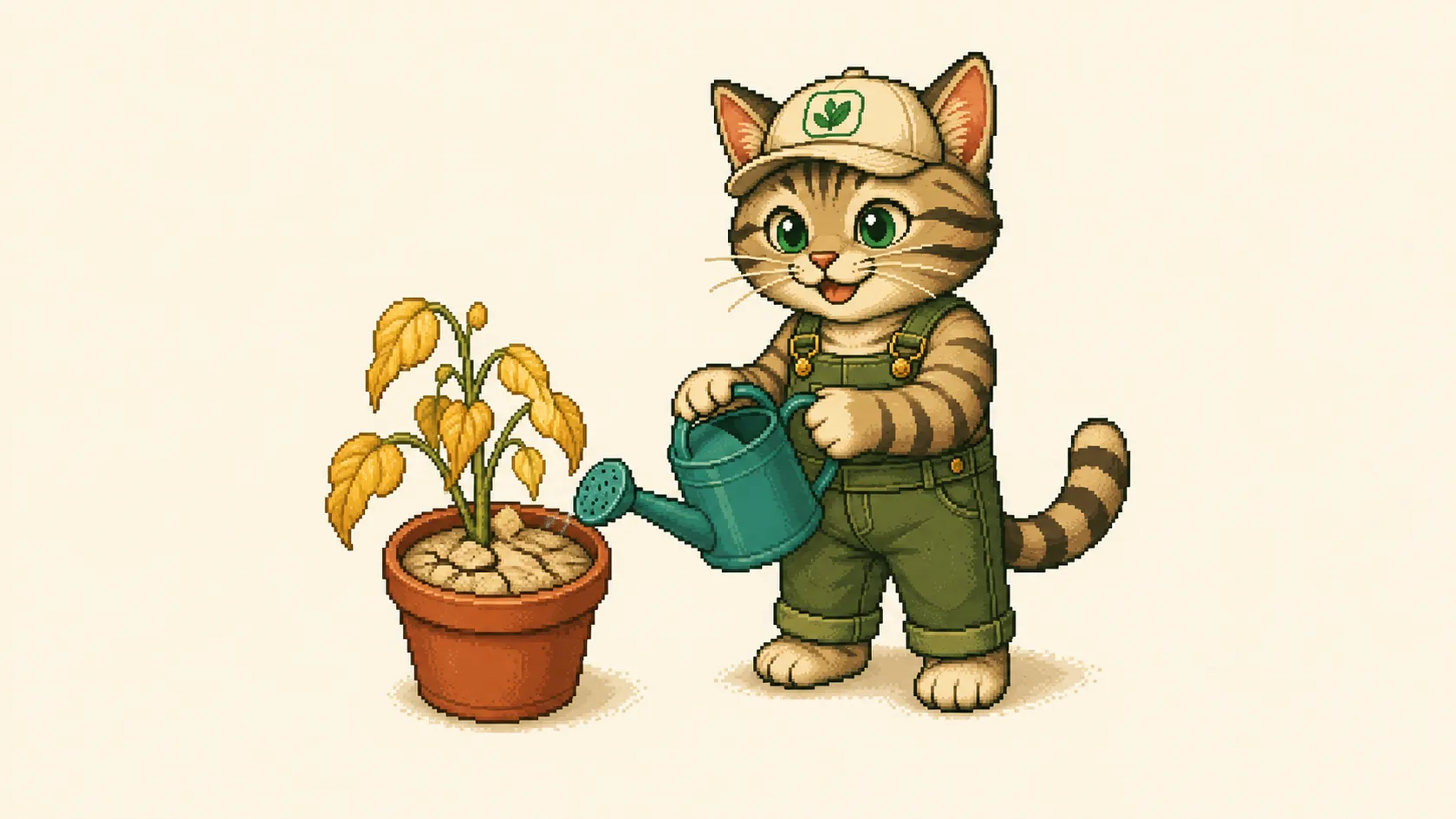
A plant wilting over wet soil is the case people misread most, because the instinct is to water again.
Roots standing in water get no air and begin to die. Dead roots take up nothing, so the plant wilts in a full pot. Lower leaves yellowing and a sour smell from the soil usually come with it.
Slide the plant out and look. Firm pale roots are fine. Brown soft roots that slide out of their skin between your fingers are rotten, and they come off with a clean blade.
Then let the ball dry down before watering again, check that the drainage hole is clear, and stop leaving water in the saucer or the outer pot. A pot that is much too large keeps the whole thing going on its own.
A plant in direct sun on a warm day can lose water faster than the roots deliver it even with damp soil. It hangs in the afternoon and stands up again by morning.
That pattern on its own is not damage, though it usually means the spot is warmer than the plant needs. Move it back from the glass or hang a sheer curtain and the afternoon dip mostly stops.
A radiator under the windowsill does the same thing, and adds dry air that shows up later as brown leaf edges.
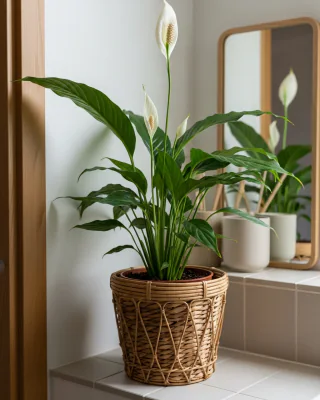
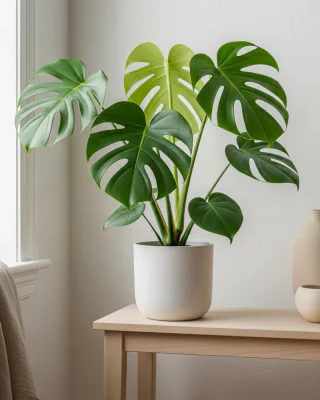
Large thin leaves show it first. A monstera or a peace lily dips in a spot where a snake plant beside it looks unchanged.
Drooping in the days after a repot is usual. Fine root tips broke during the move and the roots that remain cannot supply the whole plant yet.
Keep the plant out of direct sun for a week or two, water when the top inch or two feels dry, and leave fertilizer alone. Recovery shows as a new leaf rather than as a date.
A plant carried home in cold weather can wilt within a day or two, and leaves may darken and drop. Give it a stable warm spot away from a cold pane and wait.
A stem that has gone soft, brown or hollow at soil level carries no water upward, whatever the roots are doing. Press it with a fingernail. Where firm green tissue starts above the damage, that part can be taken as a cutting if the base is lost.
Heavy feeding by spider mites or thrips can wilt a plant, though the leaf damage usually shows first as fine speckling or a silvery sheen. Check the undersides in good light.
A feed that was too strong pulls water back out of the roots and wilts a plant within a day. Flush the pot through with plain water and leave fertilizer alone for several weeks.
Fungus gnat larvae chew fine roots and can wilt a seedling in a small pot. On an established plant they are a sign that the top layer stays wet rather than the reason for the wilt.
When the soil is somewhere in between, wait rather than water. A dry ball is easy to put right and a waterlogged one is not.
Change one thing and give it a week. Note the date and the state of the soil, or a week later you are comparing against memory.
A plant that wilts once and recovers needs nothing further. A plant that wilts every few days in the same place is telling you about the pot, the light or the roots rather than about that particular day.
Because wet soil and dead roots produce the same droop as thirst. Lift the pot. If it is heavy days after watering, look at the roots for brown, soft tissue and let the ball dry down instead of adding more water.
Usually, while the roots are still firm. A thirsty plant is often upright within hours of a thorough watering. A plant wilting from rotten roots recovers only after the damaged roots come off and the soil dries between waterings.
A few hours for most, up to a day for large or thick-leaved plants. No change at all after 24 hours points at the roots rather than at the water.
It is losing water faster than the roots deliver it during the warmest, brightest hours. Move it back from the glass or filter the light, and keep it off a windowsill above a radiator.
Only after checking the soil. Dry two or three inches down means water thoroughly. Dark and heavy means the water is already there and more of it makes things worse.
Yes. Broken root tips take up less water for two to four weeks. Keep the plant out of direct sun, water when the top inch or two dries, and wait for a new leaf before judging it.
Last reviewed: 2026-09-12