What you see
The plant went soft within a day or two of the repot and the leaves lift again overnight. The root ball was teased apart, cut back or rinsed clean during the move.



Drooping after a repot is common. What matters is whether the leaves lift again between waterings.
Most of it passes on its own. The useful question is whether the plant is recovering, or whether something about the new pot is keeping it from recovering.
In the first days after a repot, soft leaves that lift again within a few hours of watering are the normal picture. New growth pauses because the plant is putting what it has into roots.
Two to four weeks is the usual span before a plant looks settled again. A large woody plant takes longer than a rooted cutting in a small pot.
The sign that the roots are working again is a new leaf or a new shoot. Until one appears, judge by whether the older leaves stay firm between waterings rather than by how the plant looked yesterday.
Look at
Most likely cause
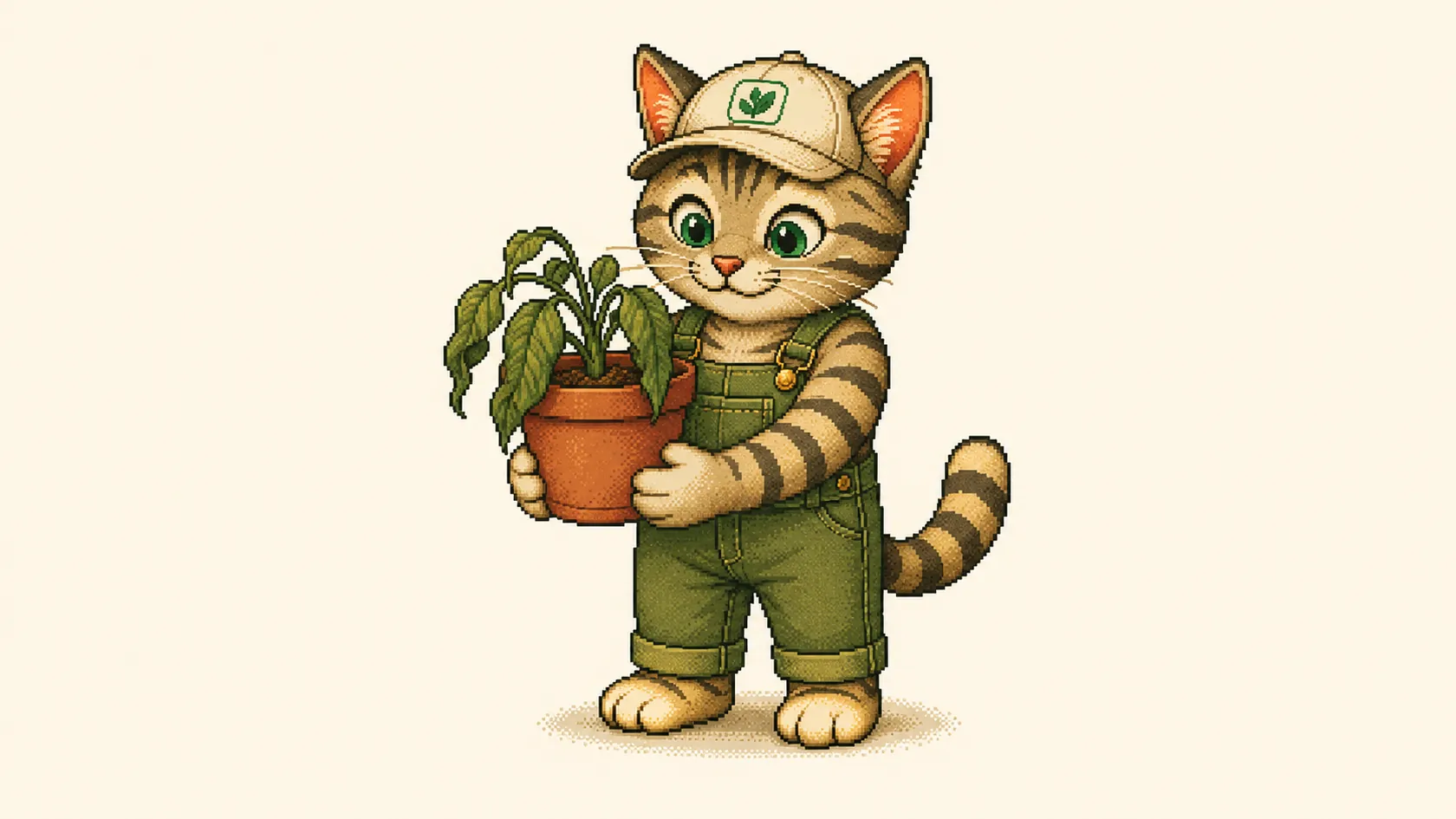
Fine root tips do most of the water uptake and they break easily. Pulling a plant out by its stem, teasing a tight root ball apart, or rinsing the soil off all remove a share of them.
The plant then carries full leaf area on reduced root capacity. Leaves go soft in the warmest part of the day and firm up again overnight.
Nothing here needs fixing beyond time. Keep the plant out of direct sun for a week or two so it loses less water, and water when the top inch or two feels dry rather than on a rhythm.
On a large plant whose roots were cut back hard, taking a few of the oldest leaves off lowers what the roots have to supply. On a small plant it costs more than it gives.
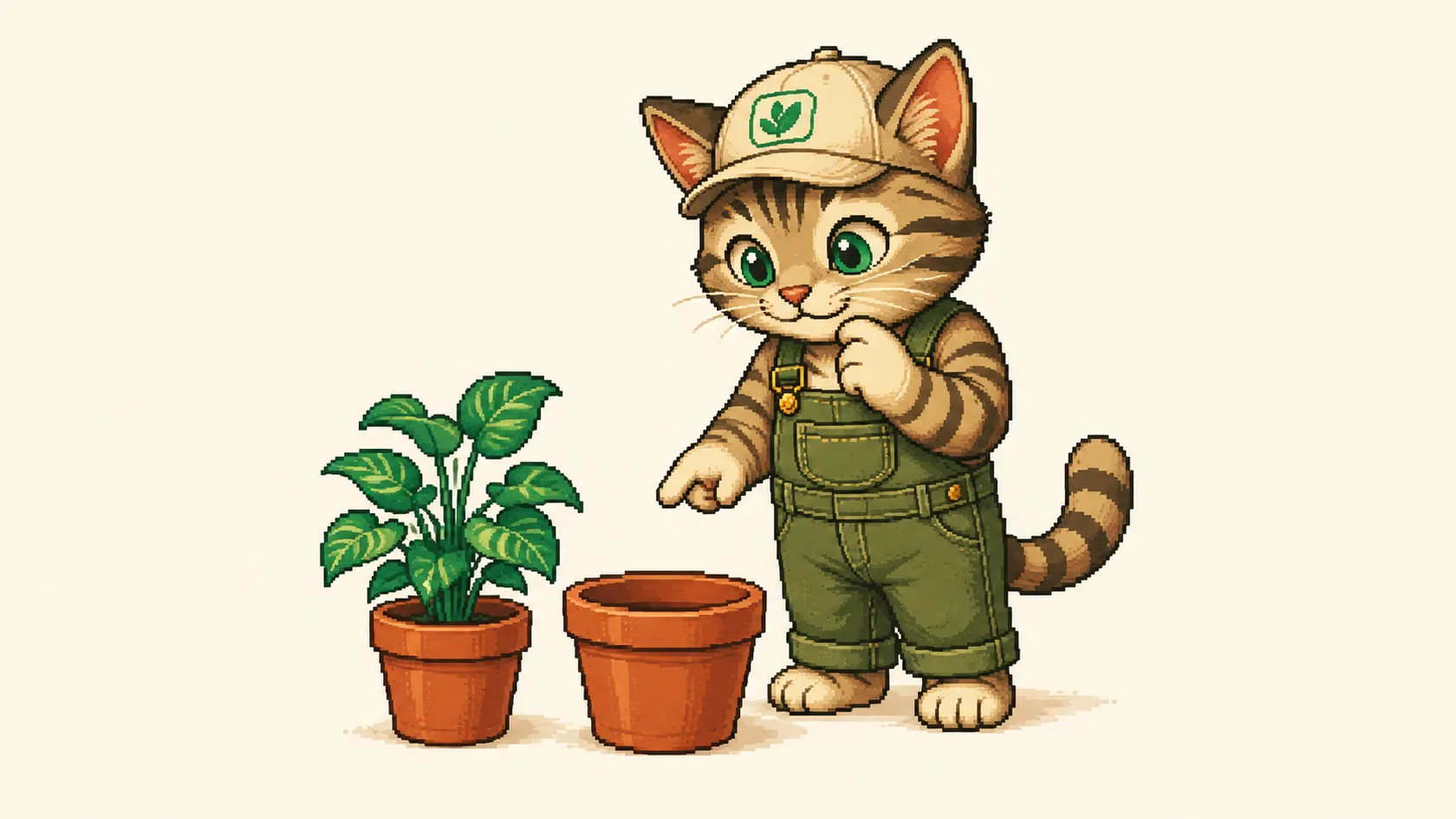
In a pot several sizes up, most of the mix has no roots in it. That part stays wet long after the root ball itself has dried, and damaged roots sitting in wet mix rot instead of regrowing.
The tell is a plant that droops while the soil is still dark. Lift the pot. If it feels heavy days after watering, water is not leaving fast enough.
Going back to a pot that surrounds the old root ball with a narrow ring of fresh mix solves it properly. If you would rather not disturb the plant again, stop watering until the mix has dried down through the whole pot and check that the drainage hole is clear.
Water standing in the saucer or in a closed outer pot keeps the same thing going out of sight. Pour it off ten minutes after watering.
A root ball left on the table dries fast, and a peat-based ball that has gone fully dry repels water afterward. You water, it runs down the gap at the side of the pot, and the roots stay dry.
The plant then looks like an underwatered one. Leaves hang, the pot feels light, and the surface pulls away from the rim.
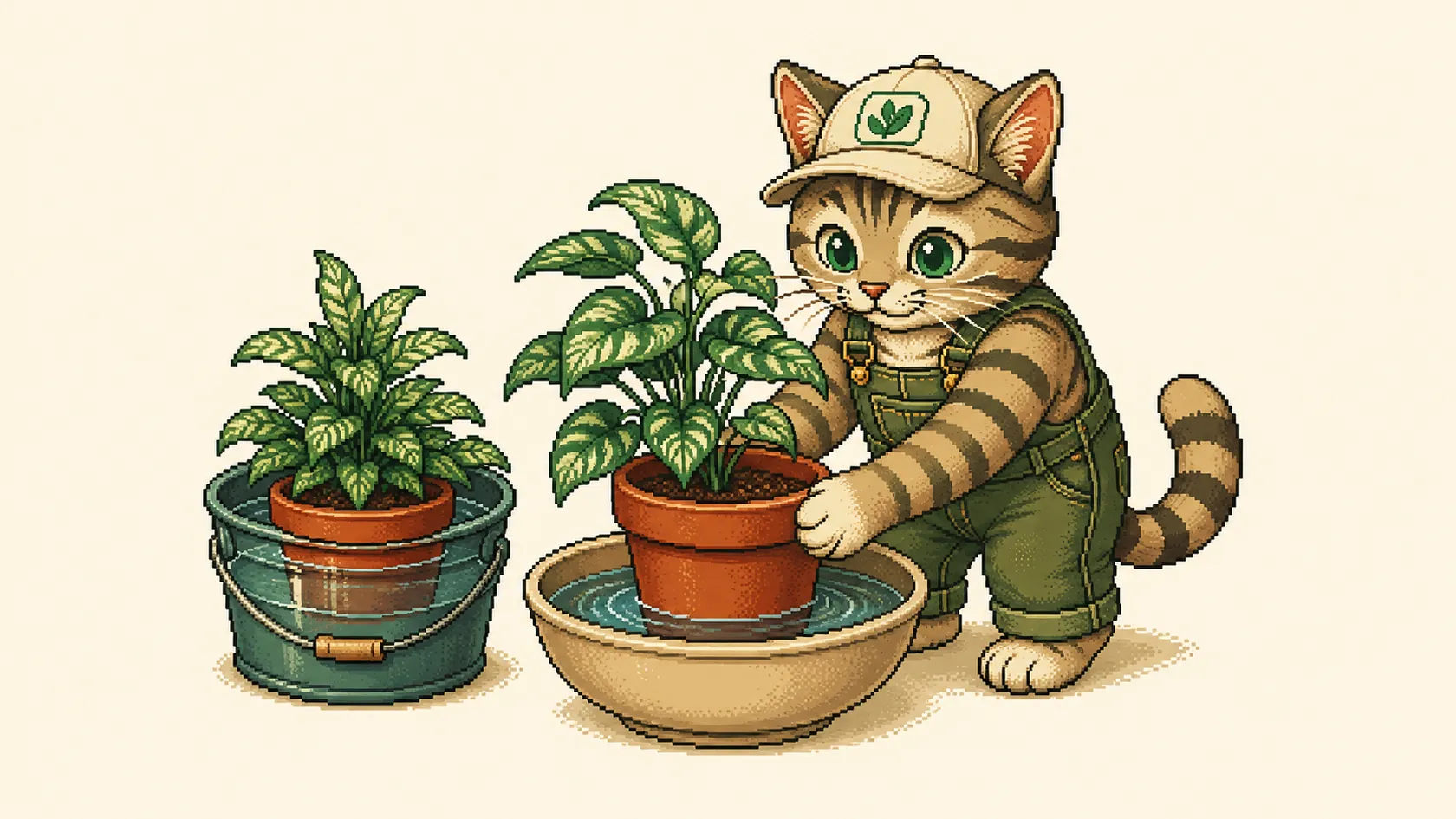
Stand the whole pot in a bowl of water for 20 to 30 minutes so the mix takes water up from below. Let it drain and pour the rest away, then water from the top until it runs out of the bottom.
Working quickly is what prevents it. Have the new pot and the mix ready before the plant comes out of the old one.
A repot is one change. A new window, a colder room, or a move from a warm greenhouse into a living room are others, and each one on its own makes leaves drop.
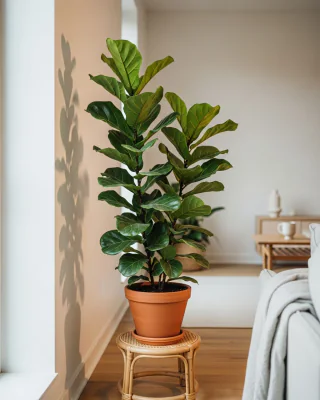
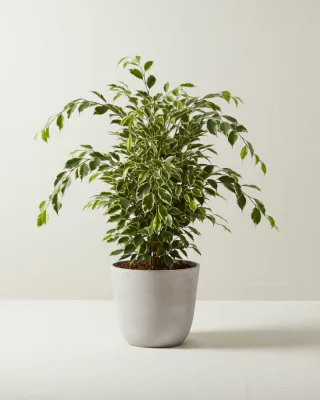
Plants bought in fall or winter often lose leaves in the weeks after coming home for that reason rather than because of the pot. Weeping fig and fiddle-leaf fig react to a move more visibly than most.
Put a freshly repotted plant back where it was standing before. When a move cannot be avoided, leave a couple of weeks between the two changes so you can tell which one the plant is answering.
Water when the top inch or two feels dry and let enough through that some comes out of the bottom. Empty the saucer afterward.
Leave fertilizer alone for the first weeks. Fresh mix carries a supply, and damaged root tips take up little of what you add.
Skip the pruning, the leaf shine and the new shelf. One change at a time is what makes the next few weeks readable.
Bright light without direct midday sun is the easiest position while the roots rebuild.
Shock eases. A plant that looks worse in week three than in week one has something else going on, and the roots answer it. Firm and pale means the answer is above the soil. Brown, soft or hollow means water stayed in the pot.
Soil that smells sour, a stem gone soft at the base, or leaves yellowing while the mix stays dark all point at rot rather than at the move.
Small flies over the pot in the weeks after a repot are fungus gnats in fresh mix. They tell you the top layer is staying wet, not that the plant is failing.
Usually two to four weeks. A small plant in a small pot settles faster than a large woody one. The end of it is visible as a new leaf or shoot rather than as a date on the calendar.
Water it thoroughly once after potting, then go by the soil. Fresh mix holds more water than the old rooted ball did, so the gap between waterings usually gets longer rather than shorter.
Leave them while they lift again between waterings, because they are still feeding the plant. On a large plant whose roots were cut back hard, removing a few of the oldest leaves lowers the load on what is left.
No. Fresh mix already carries nutrients and damaged roots take up little. Wait until new growth appears, then start again at the dose on the label.
Most do, as long as the roots were healthy at the time of the move and the new pot lets water out. A plant that keeps declining after three weeks usually has a root problem instead.
It can, on the oldest leaves, and they drop. Yellowing that starts low and spreads while the mix stays dark and heavy points at the pot rather than at the move.
Last reviewed: 2026-09-07