



Start with the root ball
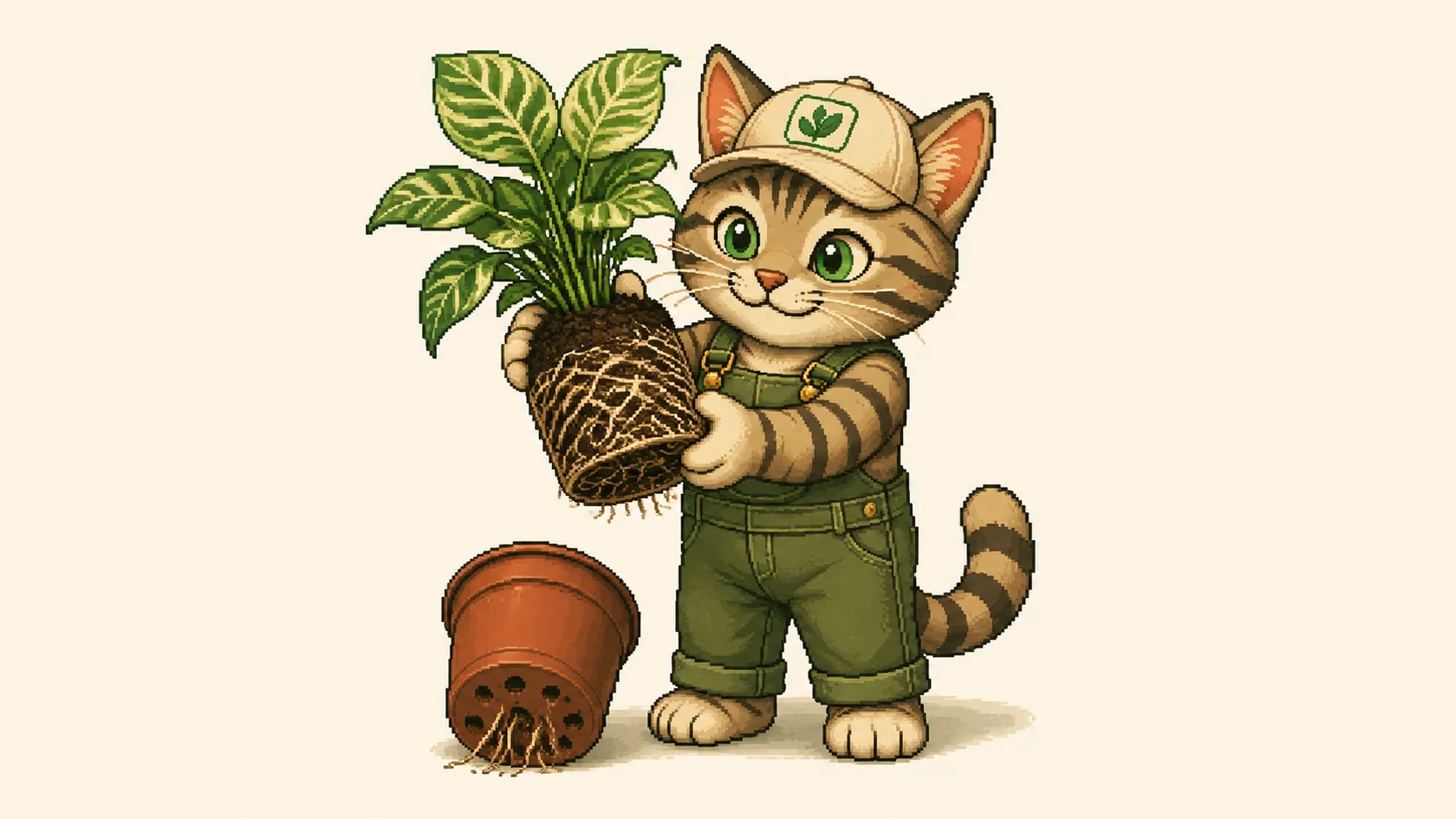
Slide the plant out and look at it. A dense web of roots that holds the shape of the pot means the plant has run out of room. Loose soil with a few roots running through it means it goes back into the same container.
The signs below let you judge without unpotting, and any one of them is enough to check properly.
Spring and early summer are the easiest time to move a plant up, because new roots grow into the fresh mix quickly then. In winter, repot only when something forces it, such as soil that stays wet or roots that have gone soft.
- Roots coming out of the drainage holes or circling on the surface.
- Water running straight through with the mix taking up little of it.
- A pot that feels light again two days after watering.
- A plant that tips over in its own pot.
One size up, and what that means
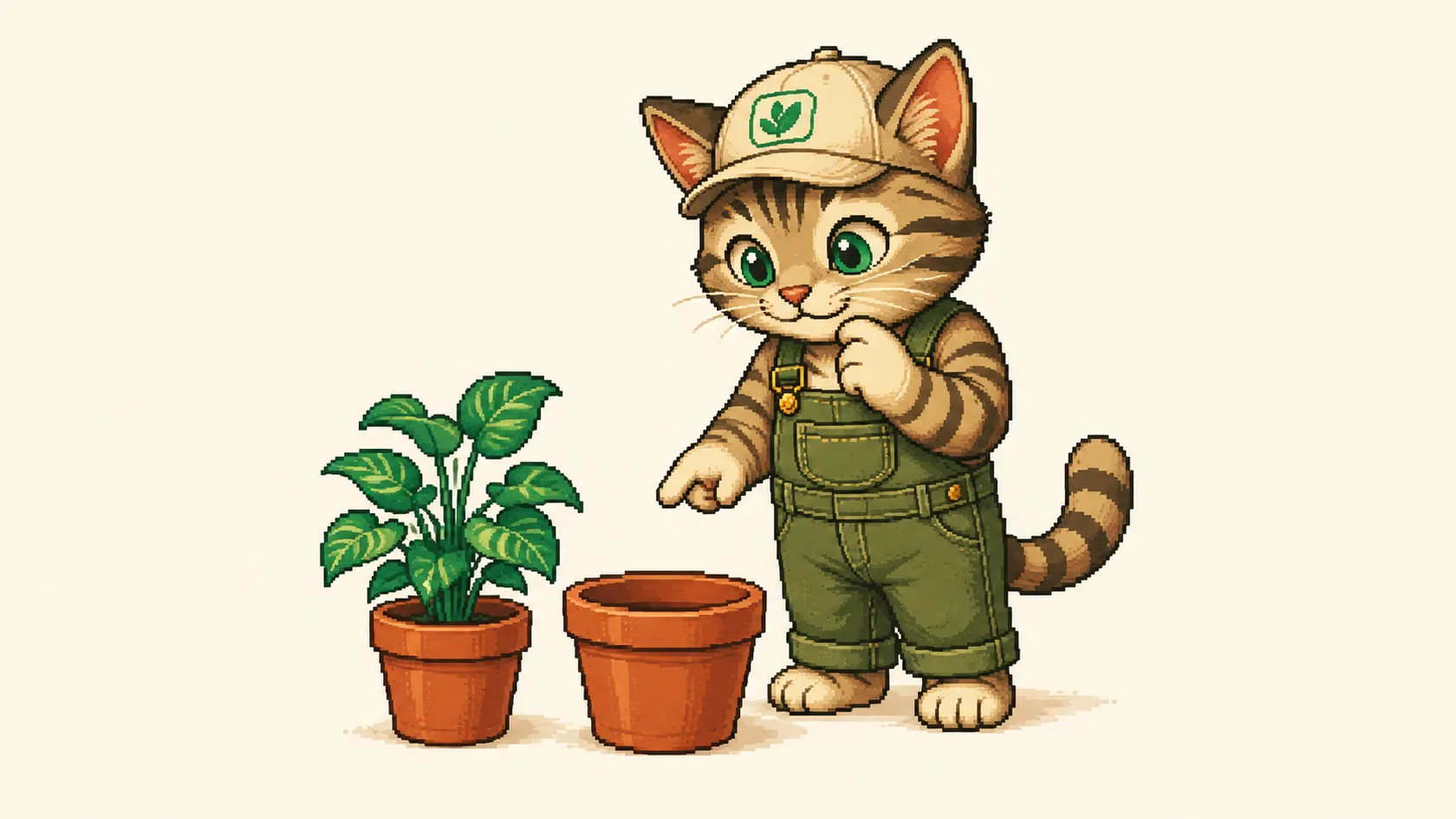
The next pot goes about an inch wider across for a small plant and roughly two inches for a large one. The fresh mix then forms a narrow ring around the existing ball.
Depth follows width. A pot much deeper than it is wide holds a wet zone at the bottom that most houseplant roots never reach.
Skipping a size to save work later gains nothing. A plant does not grow faster in a larger pot, because the pot is not what limits it.
There is one deliberate exception. A plant you want to keep at its current size stays in a snug pot with regular feeding, and simply needs water more often.
Why an oversized pot causes trouble
In a pot far too large, most of the mix has no roots in it. Water goes in, the roots take what they can reach, and the rest of the pot stays wet for days or weeks.
Roots sitting in mix that never dries are where rot starts, and by the time leaves yellow the damage is already below the surface.
That wet top layer also suits fungus gnats, which lay their eggs in soil that stays wet.
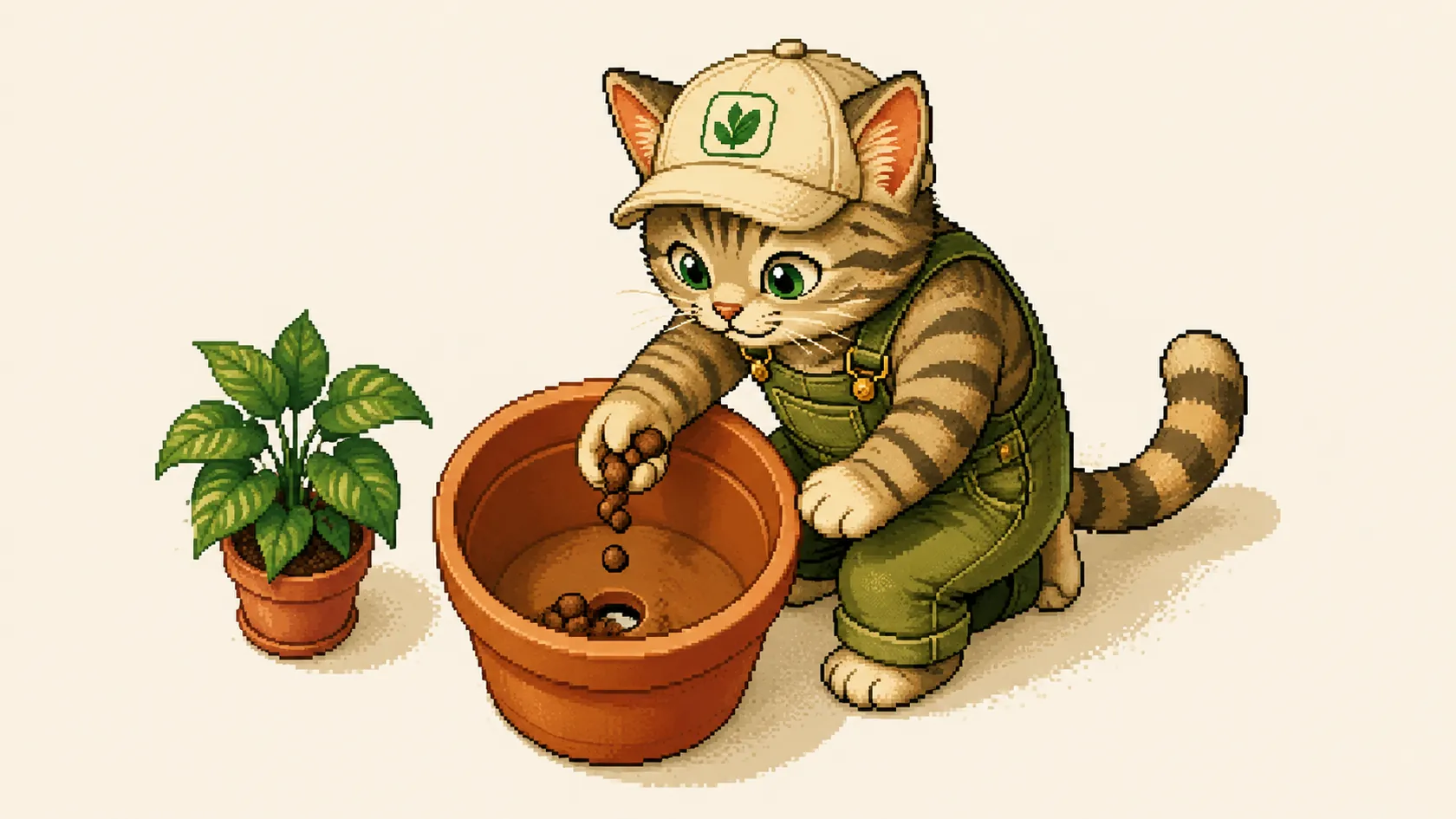
A plant already sitting in a pot several sizes too big does not have to be repotted the same day. Water less and more slowly, check that the hole in the base is clear, and pour off anything standing in the saucer. If the mix is still dark and heavy after a week, move it into a smaller pot.
Material and shape change the watering
Terracotta breathes through its wall and dries the ball from the sides as well as the top. Plastic and glazed ceramic hold that water in for longer.
The same plant in the same size pot needs water at different intervals in the two materials. After a switch, check the soil by feel for a few weeks instead of keeping the old rhythm.
A wide shallow pot dries faster than a tall narrow one of the same volume, which suits succulents and cacti.
Whatever the material, the pot needs a hole. A container without one has no drainage, and a layer of pebbles in the bottom does not create any.
Grow pot and outer pot
Most plants arrive in a plastic grow pot with holes, standing inside a decorative outer pot. Size the grow pot to the roots and the outer pot to the grow pot.
An outer pot about an inch wider than the grow pot and roughly the same height works best, so the grow pot sits level with the rim rather than sunk out of sight.
Pour the outer pot out about ten minutes after watering. Water collects there where you cannot see it and keeps the bottom of the ball wet.
With a tall outer pot you cannot look into, stand the grow pot on an upturned saucer or a layer of clay pebbles so it sits above whatever arrives at the bottom.
Pots for particular plants
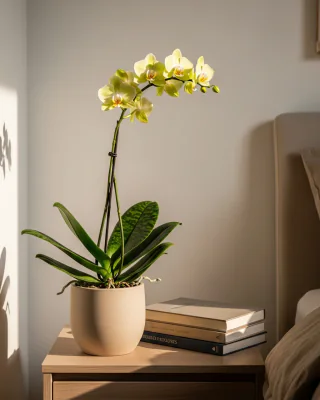
A moth orchid goes into a pot that sits close around its roots, filled with coarse bark rather than soil. A clear pot lets you see the roots, and silvery roots are the sign to water.
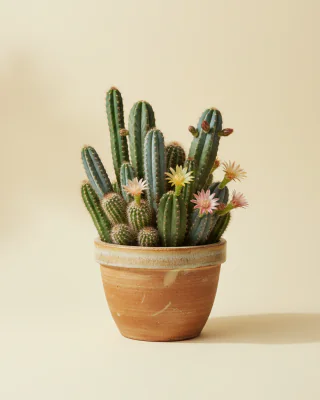
Cacti and succulents stay in snug pots with a mineral mix, so the whole pot dries quickly after each watering.
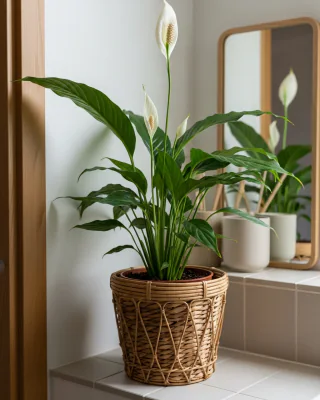
Peace lily, spider plant and other fast growers fill a pot within a season and take a size up more often than most.
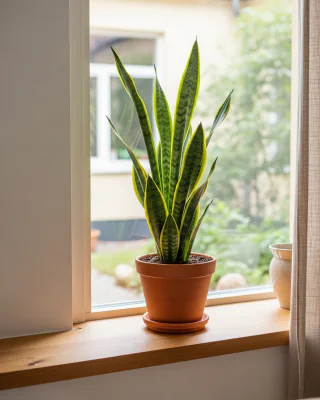
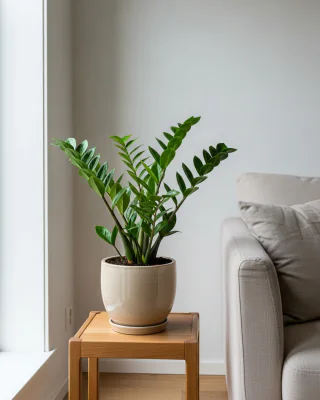
Snake plant and ZZ plant push against the wall of a plastic pot before they look crowded from above. A pot bulging at the side is the sign to move them.
After the move
The new pot changes the watering rhythm before anything else. Fresh mix holds more water than the old rooted ball did, so the gap between waterings usually gets longer.
Check by feel two to three inches down for the first weeks rather than keeping the schedule you had before.
Leave fertilizer alone until new growth starts, since fresh mix comes with a supply of its own.
Related plants
Keep reading
Common questions
How do I know what size pot my plant needs?
Look at the roots. If they come out of the drainage holes, circle the inside of the pot, or hold the shape of the ball when you slide the plant out, go one size up. Otherwise the plant stays where it is.
How much bigger should a new pot be?
About an inch wider across for a small pot and around two inches for a large one. The fresh mix should make a narrow ring around the existing root ball rather than a wide bed of empty soil.
Can a pot be too big for a plant?
Yes, and it is the more common mistake. Mix with no roots in it stays wet long after the root ball has dried, and that is where root rot and fungus gnats start.
Do plants grow bigger in bigger pots?
Not on their own. A plant grows as fast as its light, water and nutrients allow. An oversized pot mostly changes how long the soil stays wet.
Does a plant pot need a drainage hole?
The grow pot does. A closed decorative pot is fine as a shell around a grow pot that has one. Pebbles in the bottom of a closed pot do not replace the hole.
What size pot does a moth orchid need?
One that sits close around the roots, filled with coarse bark. A clear pot makes the roots visible, and roots that have turned silvery are the sign to water.
Last reviewed: 2026-09-12