


Amaryllis pests and spots: what to check
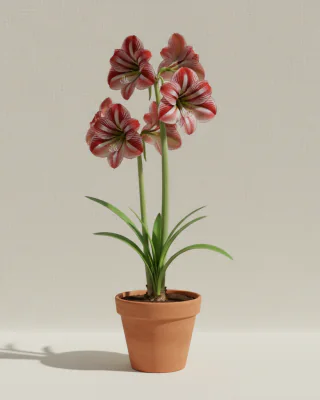
Hippeastrum hybrids
Quick answer
Check Hippeastrum hybrid leaves, bulbs, and roots when amaryllis shows spots, wilt, chewing, or insects. Start by noting whether the bulb is growing, flowering, entering rest, or has recently been outdoors.
 Not sure it’s this plant?Check yours with a photo, free
Toxic to pets
Look for pests or spreading spots
Record red or brown leaf spots, distorted or wilted foliage, chewed leaves, visible insects, or a soft or damaged bulb on a Hippeastrum hybrid. Compare these signs with normal leaf decline during rest.
Check whether the bulb is actively growing, flowering, or entering rest. Inspect leaf pattern and underside, bulb firmness, roots, how wet or dry the mix is, recent outdoor exposure, and any slugs, snails, or bulb-associated insects.
What the signs may mean
Check for Hippeastrum red spot, bulb pests such as bulb scale mite or narcissus bulb fly, wet-root or bulb decline, and slug or snail feeding after outdoor exposure. Leaf change during rest is a separate possibility.
Keep a wet or soft bulb out of further saturation, separate an obviously affected pot, and inspect for insects or chewing before selecting control. Treat slug damage on a plant that has been outdoors separately from problems on an indoor forced bulb.
What to check again
After one matched watering, isolation, or exposure change, monitor new leaves and the bulb for continuing spots, chewing, distortion, or softening. Ongoing spread calls for renewed identification, not repeated watering changes. Recovery time varies.
What visible signs cannot tell you
This page covers Hippeastrum species, cultivars, and common indoor amaryllis material, not one named hybrid. Spots alone cannot confirm red spot, a bulb pest, or outdoor mollusk damage, and this advice does not apply to Amaryllis belladonna.
All amaryllis guides
Keep reading
Related plants
Last reviewed: