


Amaryllis varieties and care differences
Hippeastrum hybrids

Quick answer
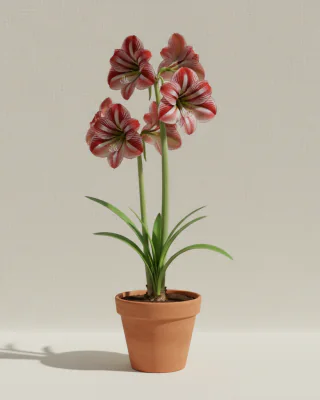
Indoor amaryllis are a Hippeastrum hybrid group, not one species. Named bulbs can differ in flower color, size, stalk strength and whether flowers appear before or with foliage. ‘Minerva’ is one named example.
 Not sure it’s this plant?Check yours with a photo, free
Toxic to pets
Amaryllis varieties and care differences
- 01
Plant names and labels
Hippeastrum is the accepted genus, and this page covers the cultivated hybrid group sold as indoor amaryllis. It is not one species and is distinct from Amaryllis belladonna.
Indoor amaryllis include numerous Hippeastrum hybrids and named groups. The Galaxy Group and its cultivar ‘Minerva’ are one example.
- 02
How the varieties differ
Named hybrids can differ in flower color, flower size, flower-stalk sturdiness, plant size and whether flowers appear before or with foliage. ‘Minerva’ is one Galaxy Group example, not a default for all amaryllis.
- 03
Care differences
Cultivar and region can change the schedule. Repot every two to three years in general, or every three to five years for ‘Minerva’. Feed anywhere from weekly or every two weeks to monthly, depending on the cultivar and growing conditions.
- 04
Limits of plant labels
Check the bulb or cultivar label before choosing a flowering, dormancy, feeding or potting routine. Amaryllis are hybrids, and the named examples here are not a complete retail catalog.
All amaryllis guides
Sources3 references
- Royal Botanic Gardens, Kew: Plants of the World OnlineAccepted genus record and accepted species list
- Royal Horticultural SocietyQuick facts · cultivation notes · aftercare · propagation · problems · How to Grow · growing conditions · houseplant placement
- University of Minnesota ExtensionAmaryllis houseplant care and fertilizing guidance
Last reviewed: