



Where a cutting makes roots
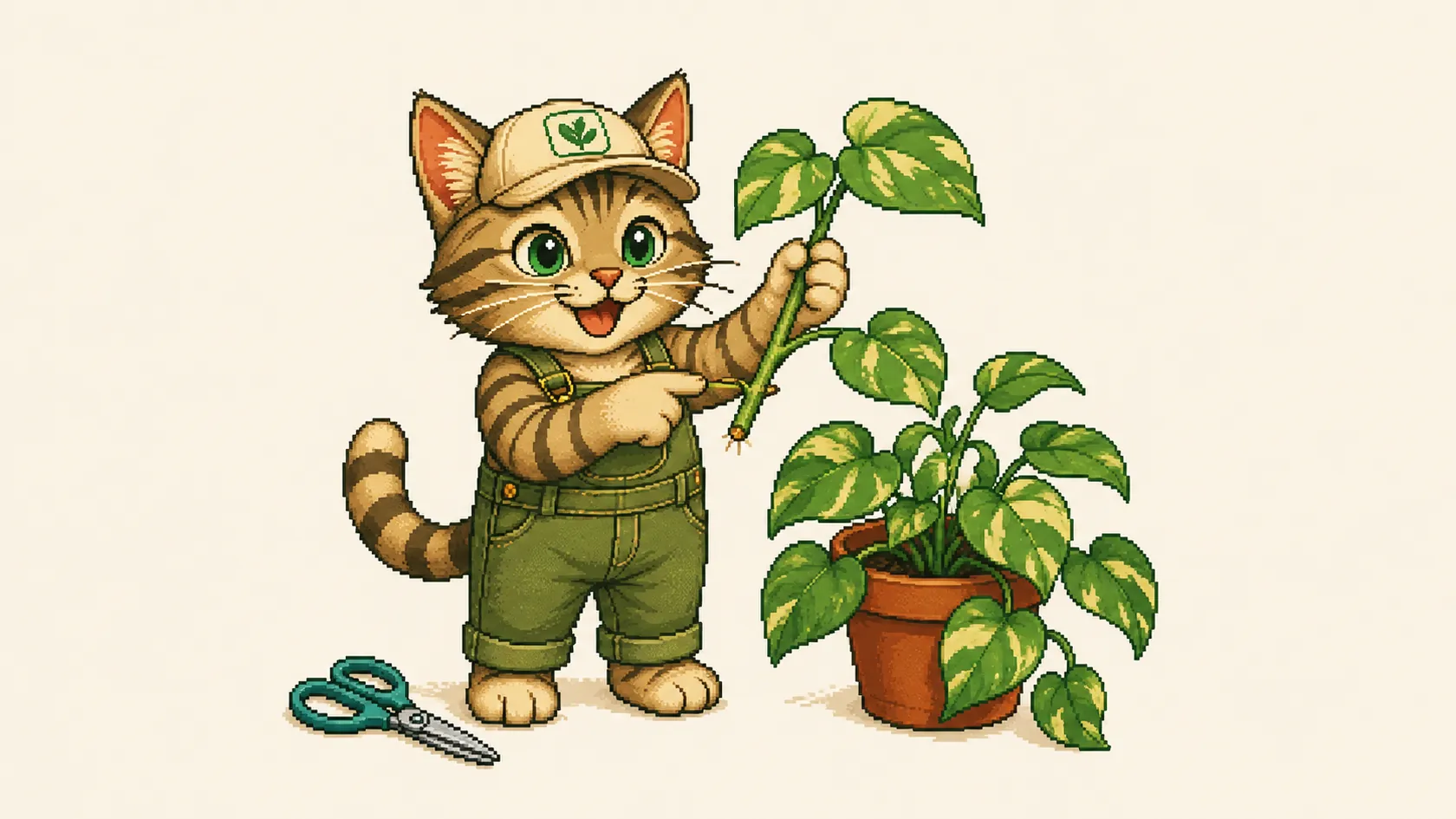
On trailing and upright houseplants the new roots form at the node. That is the slightly thickened point on the stem where a leaf, a side shoot or an aerial root starts.
Cut about half an inch below a node with a clean, sharp blade. A piece without a node often keeps its leaves green for months and still never roots. That is the most common reason for a water glass in which nothing happens.
Strip the lowest leaves off so no leaf rots in the water or in the mix. One or two leaves at the top are enough.
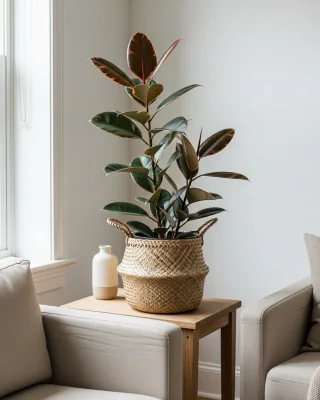
Rubber plant, euphorbias and poinsettia leak milky sap at the cut. Dab it with paper towel until nothing more comes, then wash your hands and the blade.
Separating offsets and pups
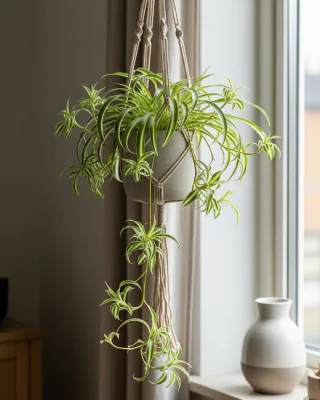
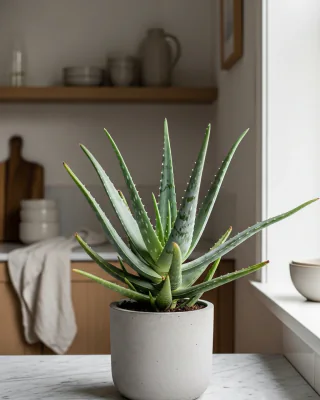
Spider plant, aloe vera and many succulents do the work themselves. They form finished small plants on runners or straight at the base.
Wait until a pup has reached about a third of the size of the mother plant and shows root starts of its own. On a spider plant those are the white swellings on the underside of the plantlet.
Separate it with a clean blade or twist it off carefully and pot it straight into normal houseplant mix. A pup with roots of its own does not need the detour through a water glass.
With aloe vera and other succulents, leave the cut surface in the air for a day before potting. Without that pause, the base rots in wet soil.
It has worked when a new leaf comes out of the middle after two to four weeks. The most common mistake is separating too early, because a pup without roots lives on water from the mother plant.
Rooting stem cuttings in water
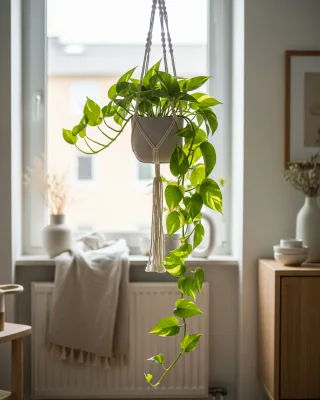
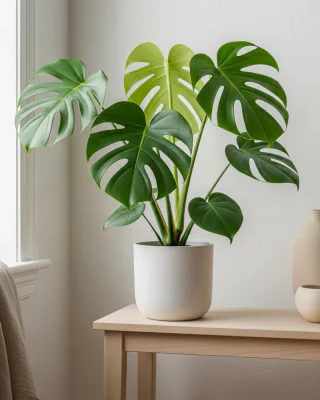
Golden pothos, monstera, philodendron and inch plant root reliably in a glass, and you get to watch.
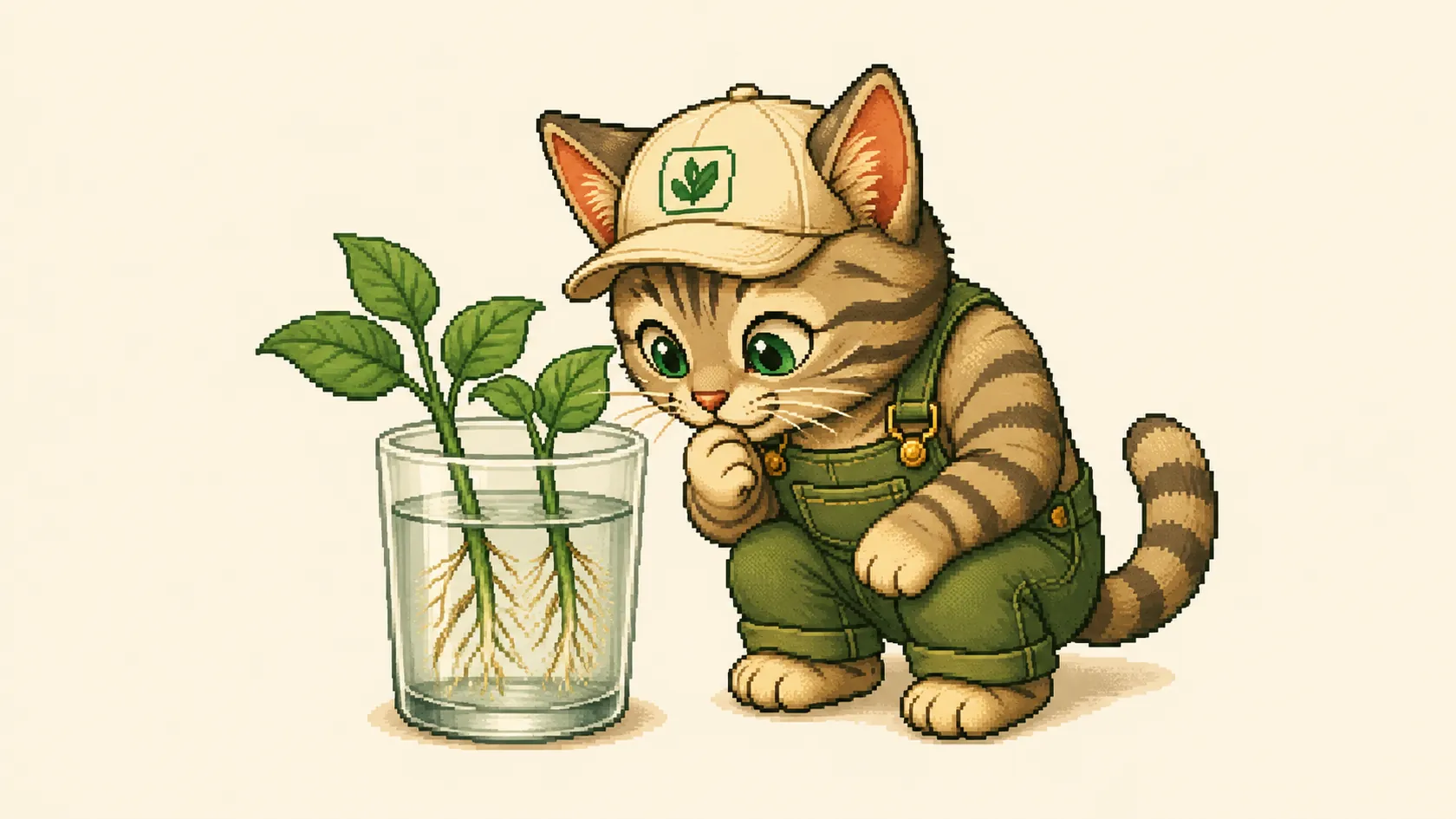
Take a stem piece with one or two leaves and at least one node. Stand it in the glass so the node is under water and the leaves stay above it.
Change the water about every three days. Standing water goes cloudy, and cloudy water is where the rot starts.
Keep the glass bright, out of direct midday sun. Warm rooms speed root formation up noticeably.
It has worked when white roots grow out of the node after one to three weeks. Pot it up once they are a couple of inches long. Water roots that have grown much longer struggle in soil and partly die off in the move.
The most common failure is a soft brown stem under water. That cutting does not recover.
Stem cuttings straight into mix
The same cutting also takes directly in a pot, and its roots never have to switch over to soil later.
Use a loose mix that holds water and lets air through, such as seed compost with perlite or plain coco coir. Push the node in and press it lightly.
The mix must not dry out during this time. A clear bag or a propagator lid over the top keeps the air around the leaves saturated and cuts water loss while the cutting has no roots. Air it briefly once a day.
It has worked when the cutting resists a gentle pull and pushes a new leaf shortly after. Since you cannot see the roots, that tug is the evidence.
The most common failure is water standing in the mix under a closed lid. The cutting then loses the cut end at the bottom before anything happens at the top.
Leaf cuttings
On some species a whole new plant grows from a single leaf, among them African violet, snake plant, baby rubber plant, echeveria and rex begonia.
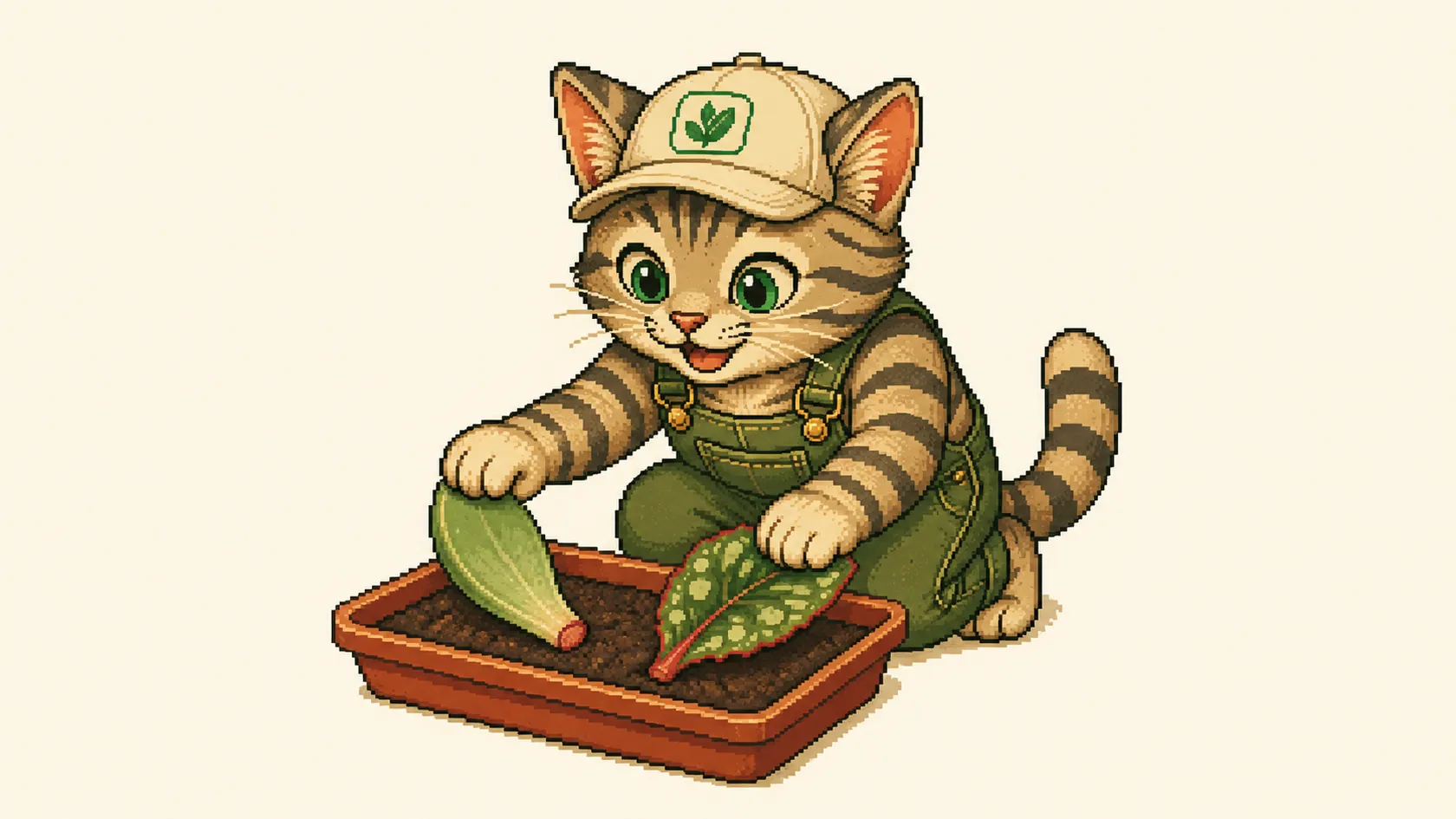
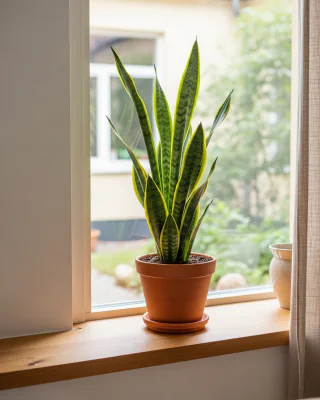
With African violet and baby rubber plant you push the leaf stalk into the mix at an angle. With snake plant you cut a leaf across into several pieces and set them in the way they grew. A piece put in upside down does not root.
With echeveria and other thick leaved plants, twist a whole leaf cleanly off the stem so no piece stays behind, and leave it out to dry for a few days before it goes onto dry mix.
It has worked when a small rosette or a shoot appears at the cut or the base. That takes longer than with stem cuttings and often runs over months.
A rooted leaf on its own is not yet a result. Roots without a new shoot sometimes sit there a long time. On variegated snake plants there is also the point that shoots from leaf pieces usually come back plain green and the yellow edge is lost.
Division when you repot
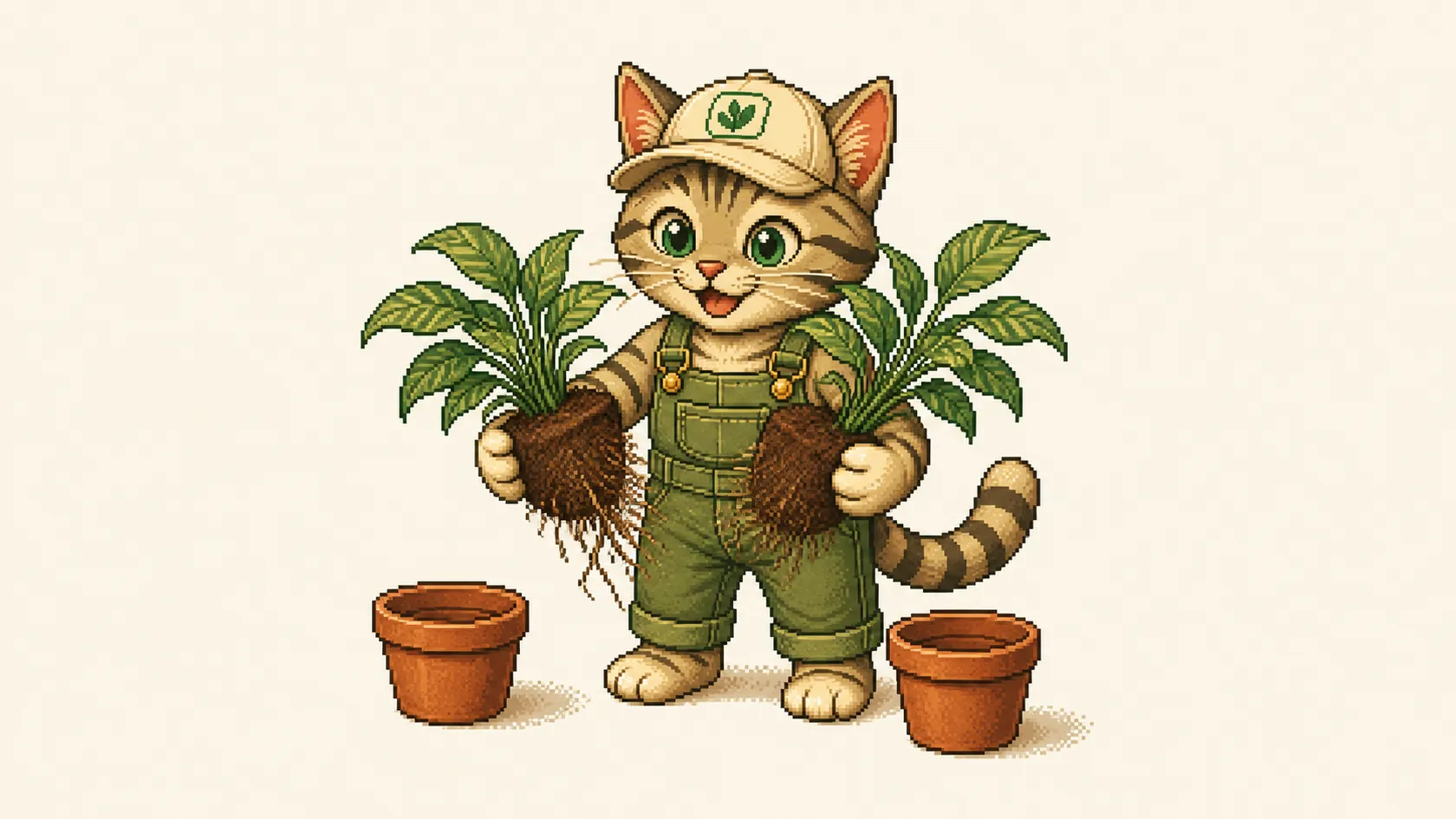
Plants that come out of the soil with several shoots get divided when you repot. That goes for peace lily, spider plant, calathea, lace fern and ZZ plant.
Take the plant out of the pot and shake off enough soil to see where the clumps of shoots hang together. Pull them apart with your hands. Only what will not separate that way gets cut through with a clean blade.
Every piece needs roots of its own and at least two or three shoots. Smaller pieces do take, but they need a long time before they look like a plant again.
Pot each piece into a container that matches its root ball and water it through once.
It has worked when new growth comes from the middle after a few weeks. Drooping leaves right after dividing are normal as long as they pick themselves up again.
Growing from seed
Raising plants from seed takes the longest. In exchange you get individual plants rather than copies of the mother plant.
Scatter the seed on low nutrient seed compost and cover it about as deep as the seed is thick. Light germinators stay uncovered, and the seed packet says whether a species is one.
Keep the mix evenly wet without water standing in it, and put the tray somewhere warm and bright.
It has worked when the first seed leaves appear. Take the cover off then, or the seedlings grow long and thin toward the light.
Palms, cacti and many woody houseplants germinate unevenly and spread over weeks. An empty tray after ten days means nothing with those.
Related plants
Keep reading
Common questions
How do you propagate a spider plant from offsets?
Leave the plantlet on the runner until it has strong root starts of its own, then separate it straight into soil. You can also let it root while it is still attached, by standing a small pot of soil next to the plant and setting the plantlet into it.
How do you propagate aloe vera?
Through the pups that appear at the base. Take the mother plant out of the pot, separate a pup that has roots of its own and let the cut surface dry for a day. It then goes into a mineral mix and gets its first water only after a few days.
How do you propagate a dragon tree?
Cut the top off with a few leaves and root it in water or in mix. The remaining trunk shoots again below the cut. The bare sections of trunk in between can also be rooted in pieces, as long as you set them the right way up.
Can you propagate orchids at home?
With a moth orchid only through a keiki, the small plant that occasionally forms on an old flower stem. Separate it once it has leaves of its own and two or three roots a couple of inches long. Orchids from seed are raised in sterile lab conditions, which is not something you can do at home.
How long does it take a cutting to root?
On soft stems such as golden pothos or inch plant usually one to three weeks, on woody stems and leaf cuttings considerably longer. Warmth and light speed it up, cool rooms in winter slow it right down.
When is the best time to propagate houseplants?
During active growth from spring to late summer, because the plant builds new roots fastest then. It works in winter too, but it takes longer and fails more often, because the cutting sits there without roots for a long time.
Last reviewed: 2026-09-12