What you see
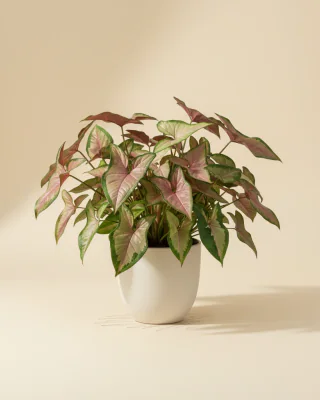
Firm roots coming out of the stem at the leaf nodes of a climbing plant, more of them as the plant gets older.



Aerial roots belong to climbing plants. Guide them into a pot or a damp pole, or cut them.
That leaves you one question. Let the root attach to a support, guide it into the pot, or cut it off. All three are defensible, depending on where the root is heading.
Most likely cause
Climbing aroids such as monstera, philodendron and pothos grow up tree trunks where they come from. The roots that emerge from the stem hold the plant onto the trunk and take up water and nutrients from the bark and whatever collects on it.
Indoors an aerial root does the same job as soon as it reaches something damp and solid. If it finds nothing, it turns woody and stands there as a stiff brown strand.
A shoot usually makes one or more of them at every leaf node. The bigger and older the plant, the more of them there are and the thicker they get.
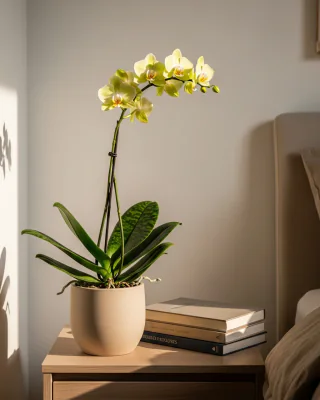
Orchids are a different case. There the thick gray roots outside the pot are the actual root system rather than an extra.
Look at
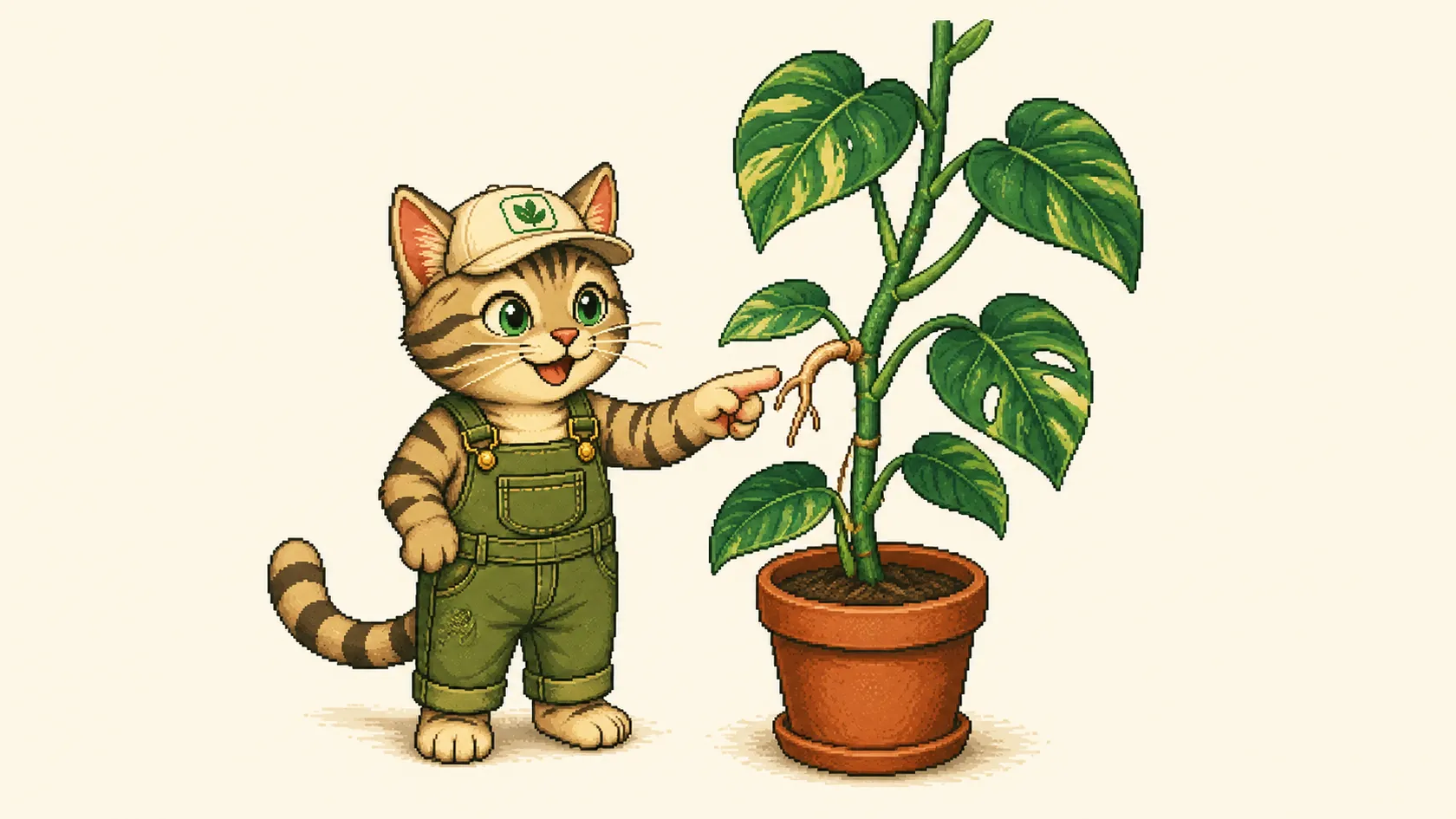
You can cut an aerial root off without endangering the plant. It does not die from it, and it does not usually make a new one in the same place.
The cut is not free either. Every aerial root growing into soil or moss feeds the plant, and on a large plant with heavy leaves it also holds the shoot against its support.
So cut only what genuinely gets in the way: roots crossing the room, roots hooking into furniture, or roots that have dried out completely. Use a clean, sharp blade and make the cut close to the stem without injuring the stem itself.
Do not take them all at once. A plant carrying a lot of leaves loses part of its supply in one go that way.
The simplest answer is to lead the root down into the soil of its own pot. Bend it gently before it turns woody and push the tip into the soil. A young aerial root is flexible, an old one snaps.
A moss pole or coir pole gives climbing species the hold the roots are built for. Keep the pole damp and the roots grow into it, and the plant stands firm without being tied.
Until the roots take hold, fix the shoots loosely with soft tape. Do not pull it tight, because the shoot thickens as it grows.
A monstera whose aerial roots sit in a damp support makes larger leaves with more splits than the same plant without one. That is the real reason to use the roots rather than cut them away.
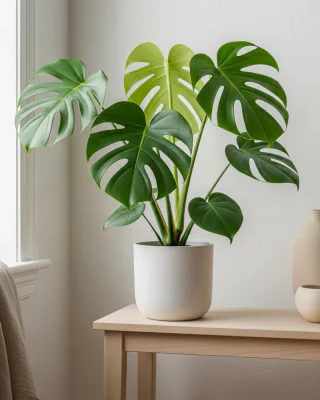
On a monstera they stand out most, because they get thick and reach far. An older plant can put out roots that cover half the way to the floor.
Lead them back into the pot or into a damp support while they are still soft. Roots that have gone woody and stiff either stay as they are or come off, because they no longer bend.
Do not stand the aerial roots in a glass of water as a permanent arrangement. They form water roots there that die back when the plant is later potted into soil, and the stem stays wet at the waterline.
Misting the aerial roots does little. They need moisture where they grow into it, so in the support or in the soil.
On a moth orchid the roots outside the pot are part of the normal picture. They are wrapped in an absorbent layer that looks silvery when dry and turns green when watered.
Do not cut these roots off. They are working and take up a large share of the supply, and their color tells you at the same time when the plant wants water again.
Do not force them into the pot when you repot either. What grows outside stays outside, otherwise it breaks.
Remove only what is hollow, brown and flat when you press it. A firm root stays on the plant, whatever it looks like.
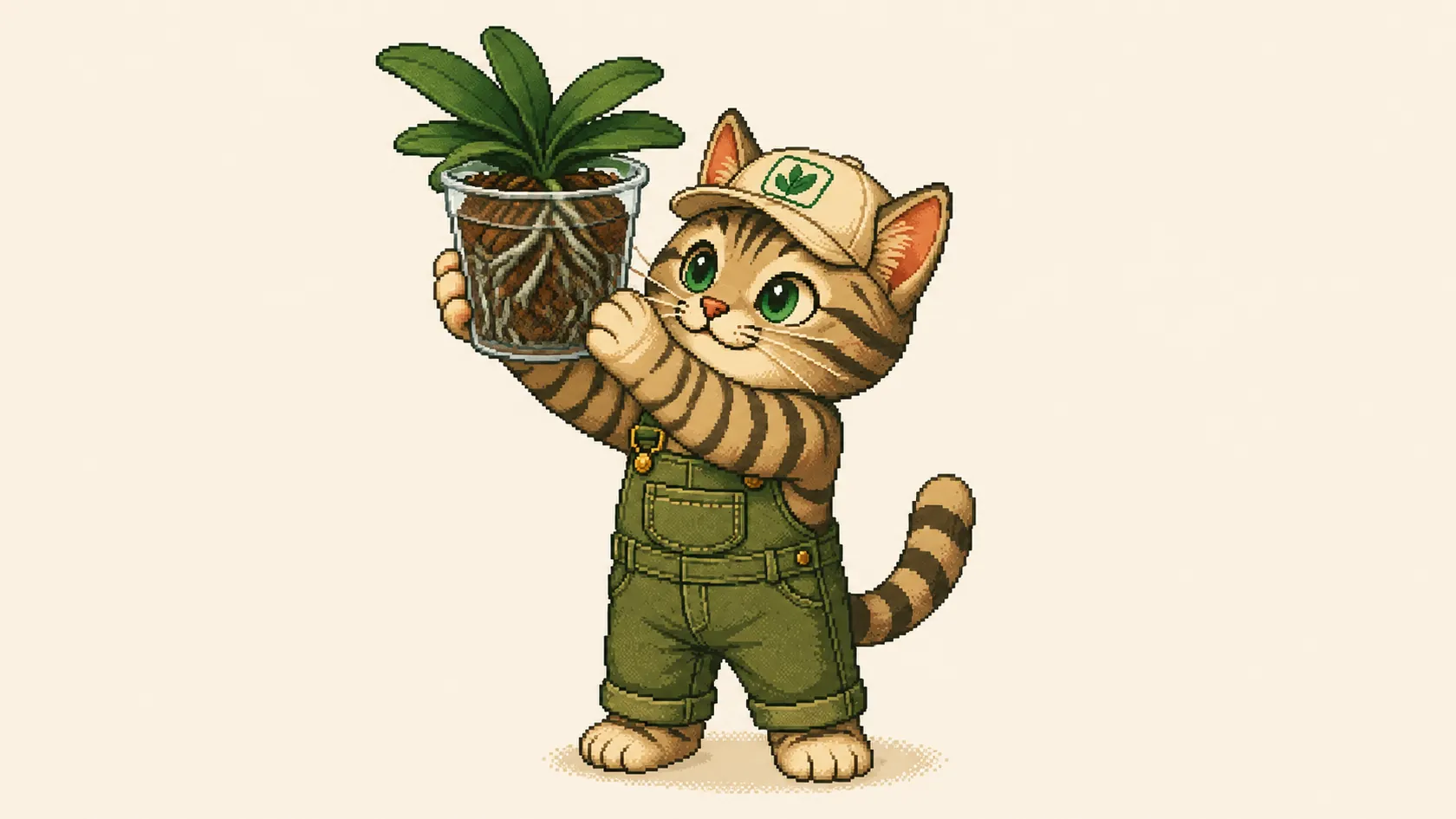
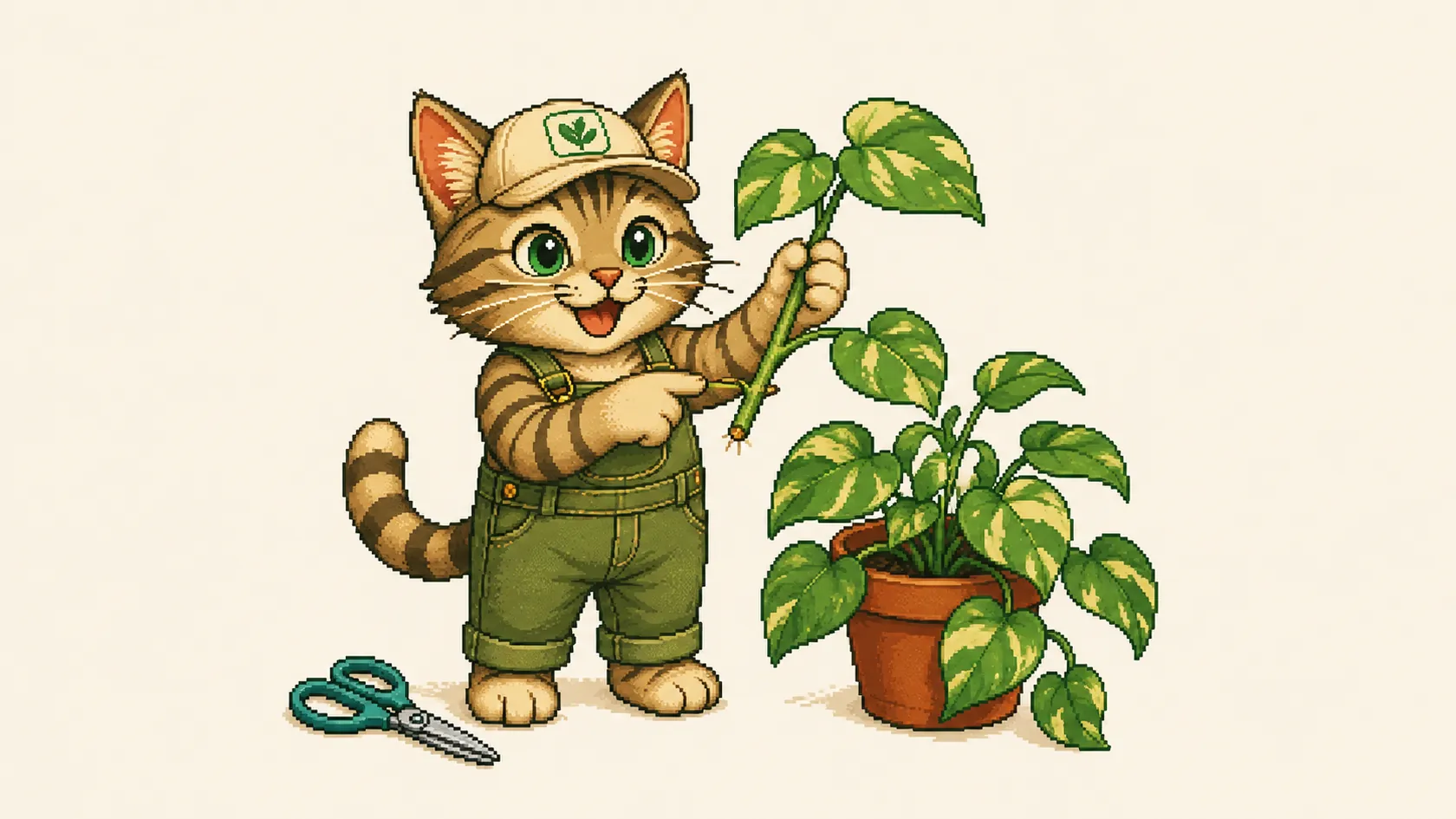
A cutting with an aerial root roots faster than one without. Cut the shoot so that a piece of stem is left below the leaf node that carries the root.
Put the cutting in water or straight into loose soil. In soil it forms the roots the plant will need later from the start, and the move is skipped.
A thick aerial root that has already gone woody does not put out new growth. For a cutting, take a shoot with a young, pale root tip.
Without a leaf node there is no new plant. An aerial root on its own, with no piece of stem and no bud, does not take.
A dried-out, hollow aerial root is usually just old and no reason for concern. Cut it off at the stem if it is in the way.
If many young tips dry out at the same time, the air in the room is very dry or the plant is short of water overall. Look at the root ball in that case instead of misting the roots.
Soft, dark aerial roots at the base of the stem are a different matter. They stand in wet soil or in water left in the cachepot, and they point to rot starting in the stem.
Check the whole root ball then. Soft roots low in the pot and soil that smells sour confirm it and call for fresh, open mix and careful watering.
Yes, the plant takes no lasting harm from it. Cut with a clean, sharp blade close to the stem and do not take them all at once. Every root sitting in soil or moss is feeding the plant.
Lead them down into the pot or into a damp moss pole while they still bend. There they grow in and supply the plant. Woody roots no longer bend and either stay put or come off.
Not as a permanent arrangement. In water the plant makes roots built for water, and those die back when it is potted into soil, while the stem stays wet at the waterline. For a cutting, a glass of water is fine.
Because it climbs and has got bigger. Climbing species make roots at every leaf node, and the number goes up with age. A moss pole gives them something to hold on to.
Yes, on a moth orchid they are part of the plant. Silvery means dry, green means recently watered. Remove only what is hollow, brown and flat under a finger.
Barely, because the moisture evaporates again straight away. An aerial root needs something damp to grow into, so a damp support or the soil in the pot. If many young tips are drying, check the root ball first.
Last reviewed: 2026-09-07