



Dead, damaged, and infested growth comes off whenever you find it. Everything you cut for shape belongs in the growing season.
When to prune
Shaping cuts belong in the months when the plant is actively growing, from spring through late summer. The cut closes quickly then and new growth appears within weeks.
In winter many houseplants sit still because there is little light. A hard cutback in that stretch leaves the plant with open cuts and nothing to show for them.
Dead stems, spent flower stalks, and leaves carrying pests come off whatever the season. They cost the plant energy or pass a problem along.
Do not prune right before or right after repotting. Each one is an intervention and the plant takes them better one at a time, so leave a few weeks in between.
Where the cut goes
Cut a few millimeters above a leaf node, the point where a leaf or a leaf stalk sits on the stem. A longer stub above the node dries back and can rot.
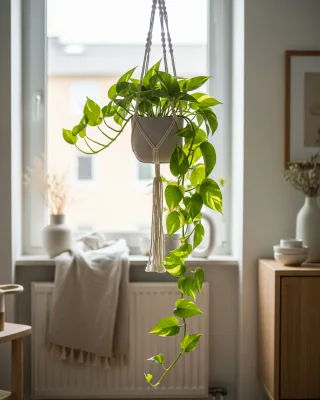
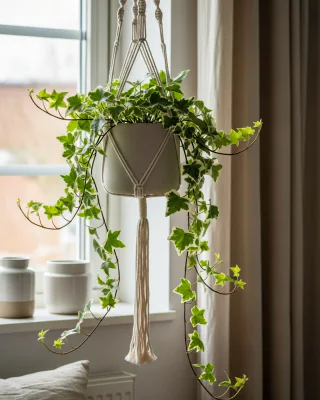
On trailing plants such as pothos, heartleaf philodendron, and English ivy, the plant breaks from the one or two nodes below your cut. Cut several stems at different heights and it fills in across the whole plant instead of thickening in one place.
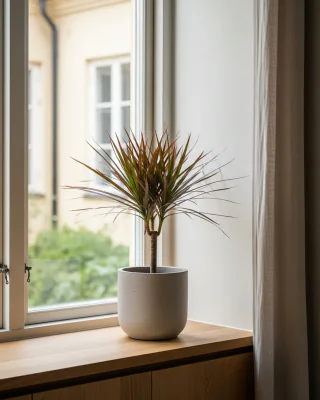
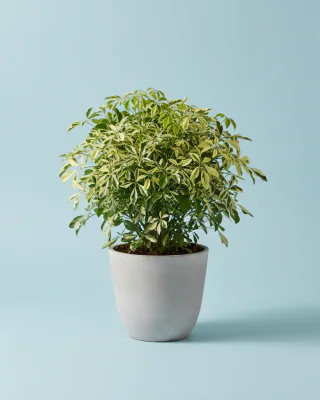
On upright plants with a woody stem, such as a rubber plant, dragon tree, or dwarf umbrella tree, cut the main stem back to the height you want. Two or three shoots usually appear below the cut and the crown gets wider.
Ferns and palms get no shaping cut. On a fern, take old fronds off at the base. On a palm, remove leaves that have gone fully brown at the stalk and leave the center alone, because the single growing point sits there.
A snake plant leaf that has been shortened never grows a new tip. It stays cut for good, so take a damaged leaf out at the very bottom instead.
- Cut above a leaf node and leave no stub
- Take old fern fronds off at the base
- On palms remove only fully brown leaves at the stalk
- Pull damaged snake plant leaves out at the bottom
- Cut spent flower stalks back to where they start
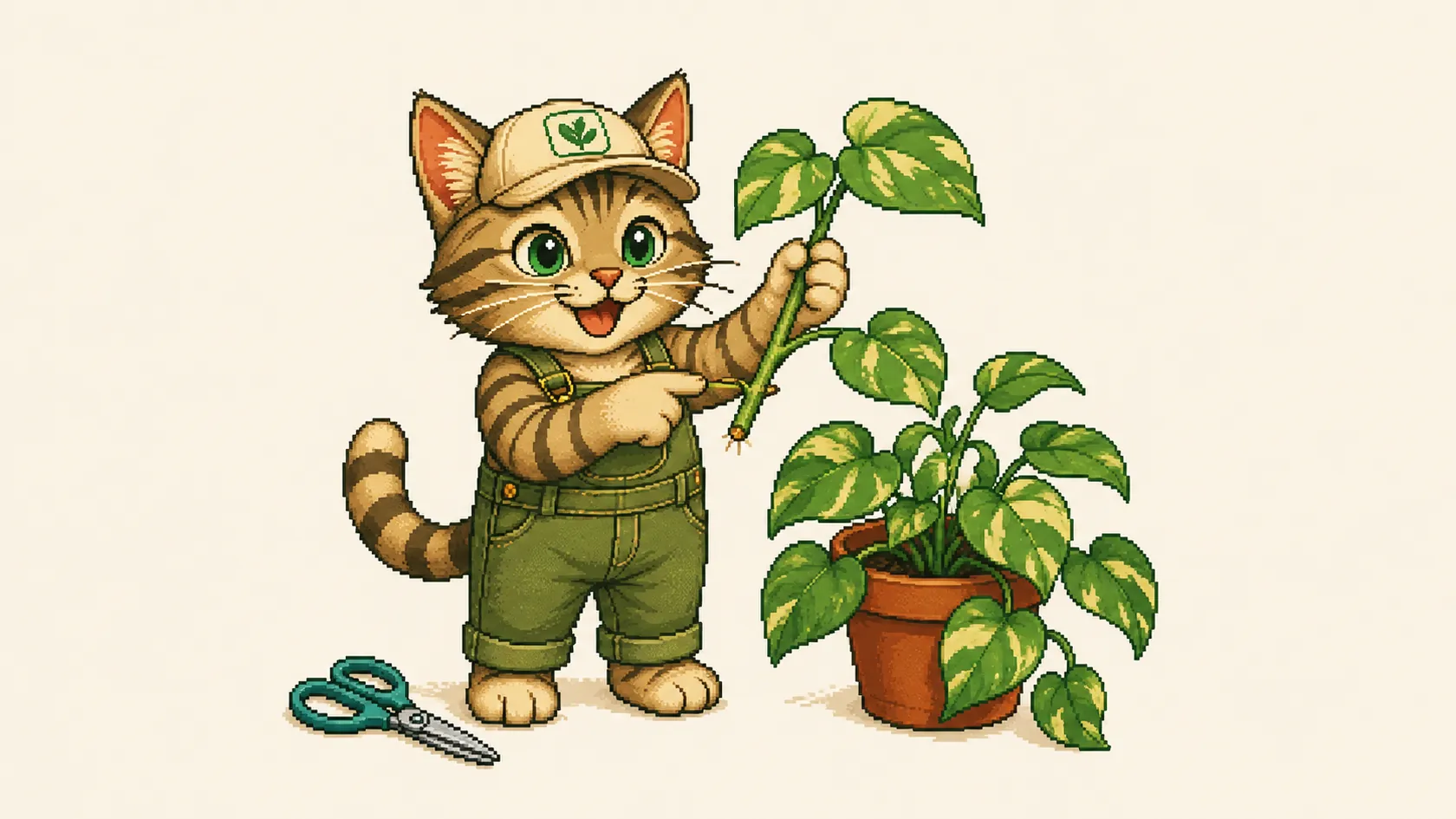
Tools and a few things to do first
Use sharp scissors, pruners, or a sharp knife. A blunt blade crushes the stem, and a crushed spot dries back instead of healing over.
Wipe the blade between two plants. That keeps fungal spores and insects from riding from one pot into the next.
Rubber plants, fiddle-leaf figs, crown of thorns, and other euphorbias release a milky sap when cut. Wear gloves, keep the sap away from your eyes, and wash your hands afterward. Blot the cut with a paper towel until it stops dripping.
Put newspaper or a cloth under the plant before you start. Milky sap stains light floors and furniture.
The most common cases
A plant with long bare stems and leaves spaced far apart has been growing in too little light. Cut the stems well back and move it brighter at the same time. Cutting alone gives you the same picture again in a few months.
Trim brown tips along the natural shape of the leaf and leave a narrow dry margin standing. A cut into green tissue makes a fresh brown edge. The reason for the tips stays untouched by trimming, and it is usually dry air, salts in the mix, or uneven watering.
A single yellow leaf at the bottom of a plant is normal and can come off. When several turn yellow at once, look at your watering before you reach for the scissors.
Spent flower stalks come off where they start. A moth orchid is the exception. While the flower stalk is still green it can set new buds, so cut it back only once it browns from the tip down.
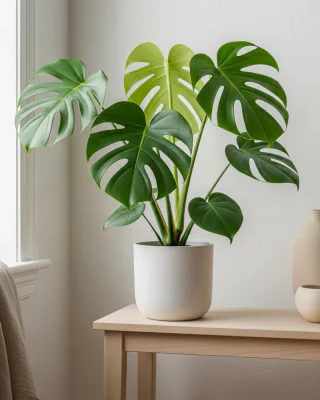
Aerial roots on a monstera or philodendron do not have to go. You can guide them into the mix or onto a moss pole, and only shorten single ones when they are in the way.
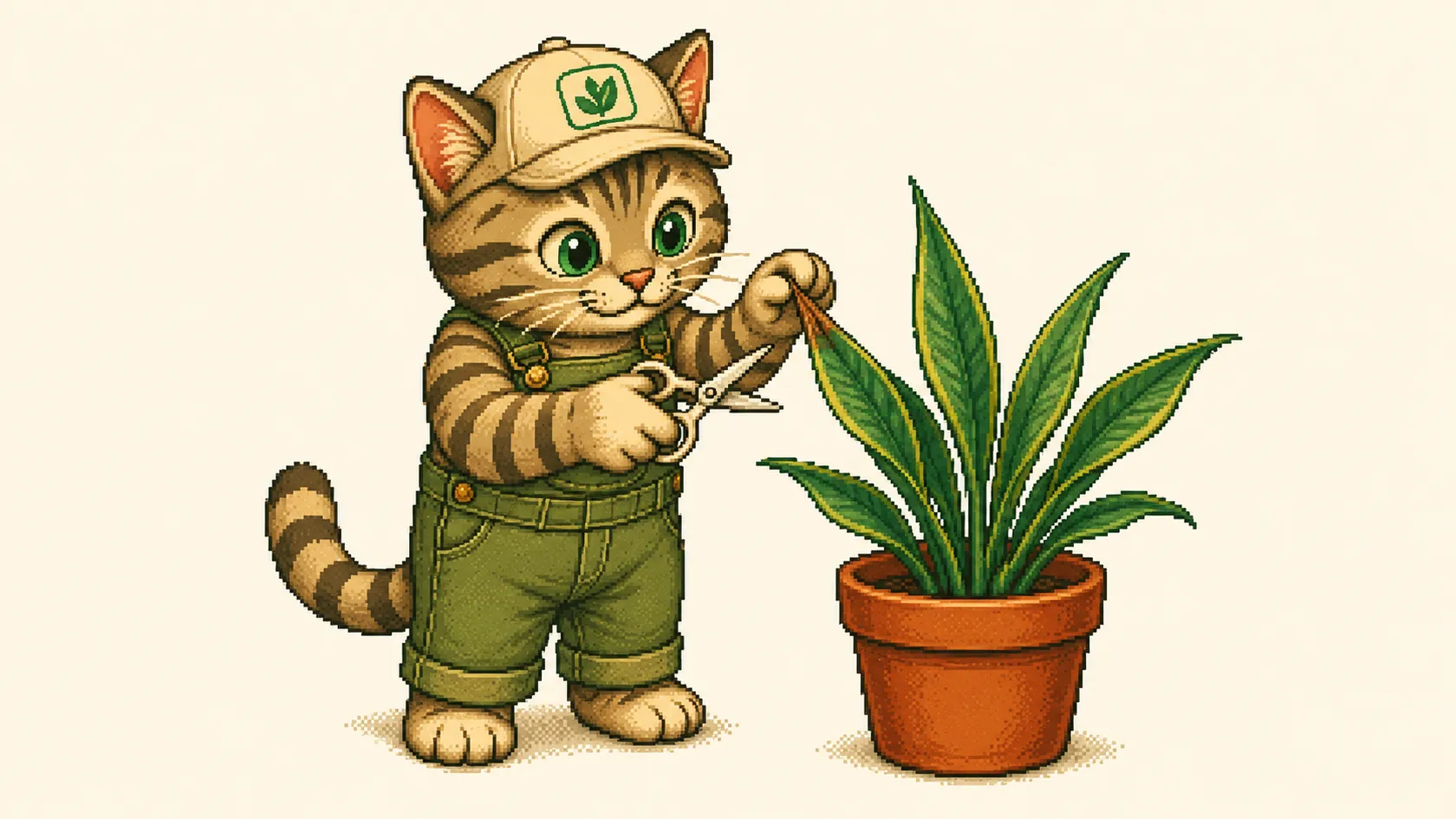
How much you can take at once
On a healthy plant in active growth, a third is a sensible ceiling for one pass. If you want more off, do it in two passes a few weeks apart.
One exception is a plant that has gone completely bare on top and still has firm green stems low down. A hard cutback to a few nodes is often the shorter route, because nothing more is coming from the old growth.
On a weakened plant, take only dead material. The shaping cut waits until it is growing again.
After the cut, keep everything the same. Same spot, same watering method, no fertilizer to help it along. The plant is carrying less leaf area and uses less water for a while.
What to do with the cuttings
Stem pieces from pothos, philodendron, inch plant, and spider plant root in a glass of water. At least one leaf node has to sit under the water and the leaves stay above it.
Change the water every few days. Once the roots are about an inch long, move the cutting into a light mix and keep it evenly damp for the first weeks.
Tip cuttings from a rubber plant or dragon tree root as well, but they want more warmth and more time. Let the cut surface dry first, until no more milky sap comes out.
Put several rooted cuttings into one pot. A plant made of three stems looks full from the first day, where a single stem takes a season.
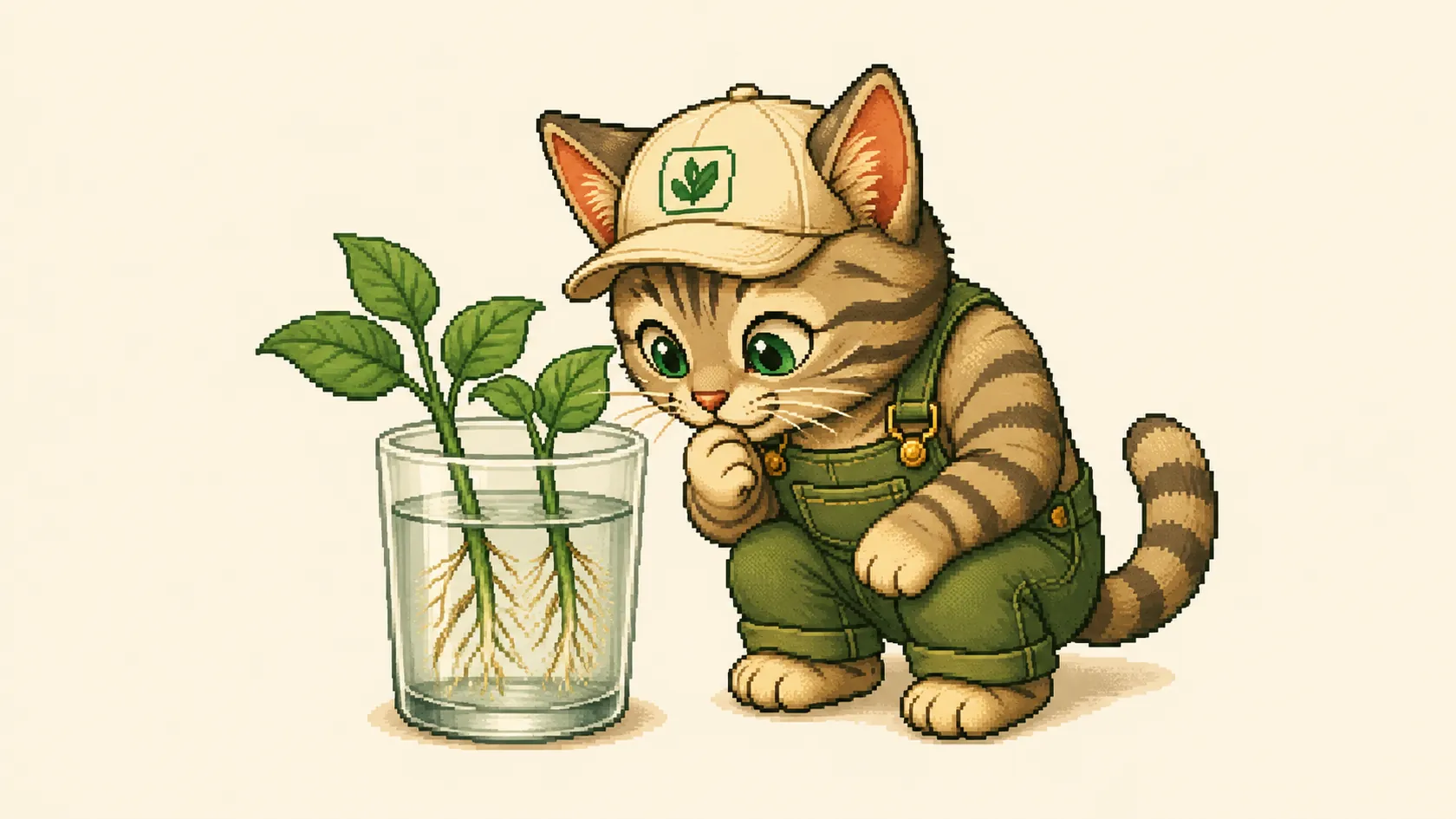
Related plants
Keep reading
Common questions
When should you prune houseplants?
Shaping cuts belong in the growing season from spring through late summer, because the plant breaks again quickly then. Dead, damaged, and infested growth comes off all year round, as soon as you see it.
How do you prune a houseplant correctly?
With clean, sharp scissors, a few millimeters above a leaf node. The dormant bud that produces the new shoot sits there. Leave no long stub above the node, because it dries back and can rot.
Can you cut the brown tips off leaves?
Yes. Follow the natural shape of the leaf and leave a narrow dry margin. Cutting into green tissue makes a new brown edge. Trimming does not touch the cause, which is usually dry air, salts in the mix, or uneven watering.
Does pruning make a houseplant bushier?
It does when you cut above a leaf node, because the plant then breaks from the one or two nodes below, often with several shoots. Cut different stems at different heights and it fills out evenly instead of in one spot.
Which houseplants should you not prune?
Palms and snake plants do not grow back from a cut. On a palm take off only fully brown leaves and leave the center untouched, and on a snake plant pull a damaged leaf out at the base. Ferns get their old fronds cut at the base rather than trimmed.
Can I use the pieces I cut off?
Stem pieces with at least one leaf node root in a glass of water, with the node under the surface. Once the roots are about an inch long they go into a light mix. Several rooted cuttings in one pot make a full plant right away.
Last reviewed: 2026-09-07