



How to tell your plant wants support
Look at the stem. If it leans away sideways, hangs over the rim of the pot, or already lies along the shelf, the plant has reached the point where it would have moved onto a tree trunk in the wild.
The second hint is the aerial roots. Firm brown stubs on the stem just below the leaf joints are climbing organs looking for a surface. They are not a sign of a care mistake and they do not get cut off.
The third hint is the leaves themselves. On a monstera they stay small and unsplit without support, and once the plant climbs, the new leaves come out larger with deeper cuts.
Put the support in early. Pushing a pole into a pot that is densely rooted means driving it straight through roots.
Moss pole, coir pole, stake, or trellis
A moss pole is a core wrapped in sphagnum moss. Kept damp, it is the only support aerial roots really grow into, which gives the plant extra water and nutrients through those roots.
A coir pole is cheaper and keeps its shape better, but it holds less water and dries through faster. Aerial roots hook onto the fiber and rarely grow inside it.
A plain wooden or bamboo stake holds the stem upright and does nothing more. For smaller plants and for species without aerial roots, that is enough.
A trellis or a small grid in the pot spreads the stems sideways instead of upward. It suits species with thin stems and makes the plant wide rather than columnar.
You can build a moss pole from a plastic tube, damp sphagnum moss, and thin twine or a coarse net around it. Make it longer than you think you need, so enough of it sits in the pot and the plant still has room above.
Setting the pole into the pot
The cleanest time is while you repot. Stand the pole in the empty pot, set the plant in front of it, and fill mix in all around. The pole ends up firm and you hit no roots.
In a pot that is already planted, push the pole in close to the rim behind the plant and feel your way down slowly. If you meet clear resistance, pull it out and try another spot.
The pole has to reach the bottom of the pot and must not turn in place. A large plant on a wobbly support tips over later and takes the pot with it.
With a heavy crown, a terracotta pot helps more than a plastic one, because it puts weight low down.
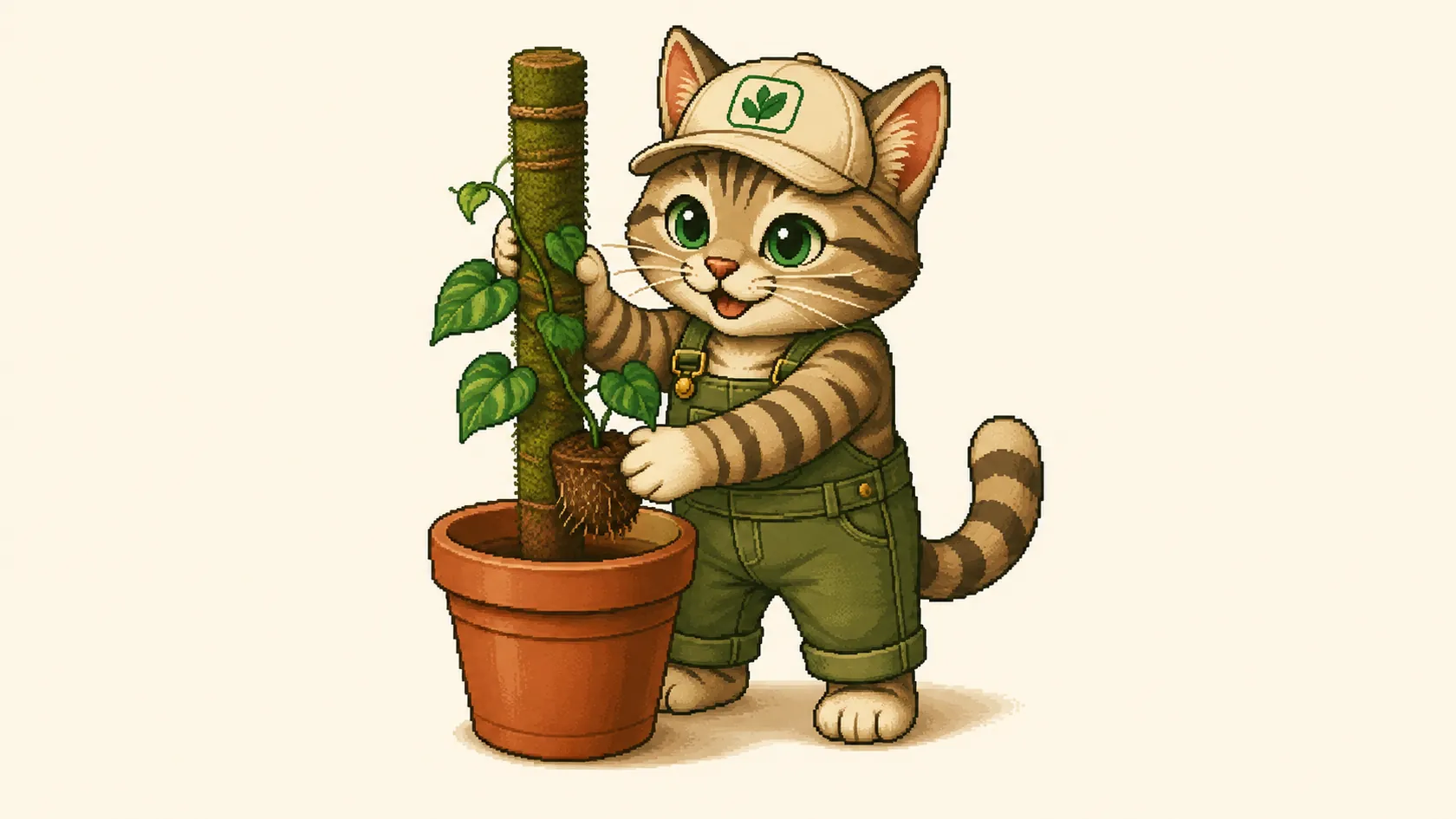
Tying stems on without crushing them
Tie the stem so that its aerial roots face the pole. Turn the stem with your whole hand for that, never by a single leaf stalk.
Use soft material that gives, such as plant clips, soft tie tape, or cotton twine. The loop should sit loosely around the stem rather than pinching it, because the stem thickens over the season.
Fix it in several places just below the leaf joints and not right at a joint. That is where a stem snaps most easily.
Go over the ties every few months and loosen any that are marking the stem. Bare wire cuts in and belongs in the garden box.
- Turn the stem with your whole hand, never by a leaf stalk
- Point the aerial roots toward the pole
- Tie loosely, just below a leaf joint
- Loosen the ties every few months
Keeping the moss damp
A dry moss pole is just a stick. Water it along with the plant from the top, or spray it until the moss goes dark.
A more convenient version uses a tube with holes as the core, which you fill with water from the top. The water then seeps into the moss along the whole length.
Keep the pole damp without making it dripping wet. Moss that stays soaked right above the soil encourages mold on the surface.
Once the aerial roots have grown in, the plant hangs on that pole like a second pot. From then on, do not let it dry out for weeks at a time.
When the plant reaches the top
You can extend the pole by setting a second one beside or above the first and fixing the two together firmly. That is the only solution that keeps the size the plant has already made.
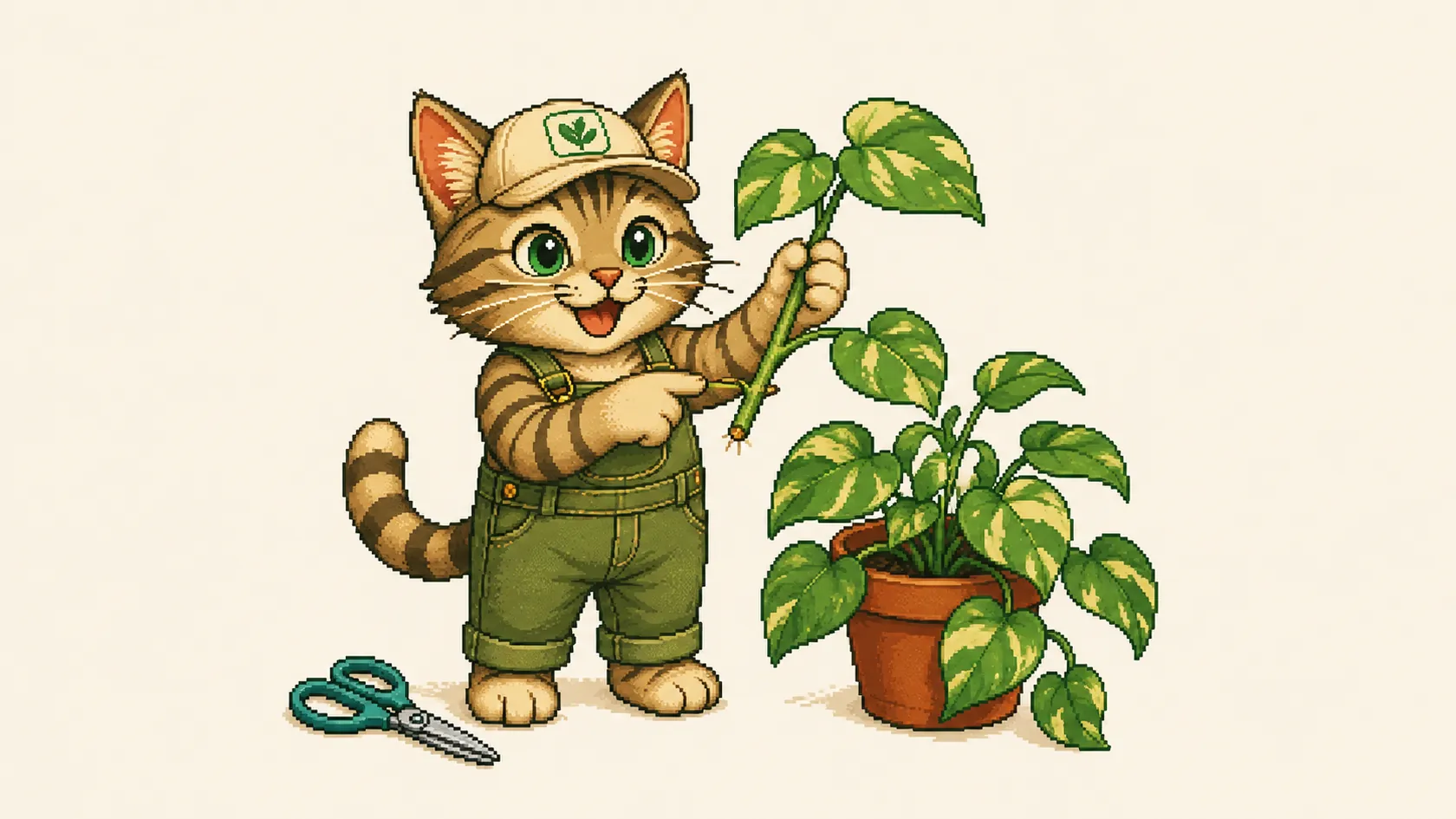
The alternative is to cut the stem above a leaf joint. The plant branches below the cut, and the top piece with an aerial root on it becomes a cutting.
If the moss has broken down after a few years and roots sit firmly inside it, wrap fresh moss around the outside instead of tearing the grown-in roots away.
A stem that has once climbed a pole does not go back to hanging. Decide before you tie it on whether you want the plant to climb or to trail.
Related plants
Keep reading
Common questions
Why does a monstera need a moss pole?
A monstera climbs tree trunks in the wild and makes its large split leaves once it grows upright. Without support the stem leans away and the new leaves stay small. A damp moss pole also gives the aerial roots a surface to grow into.
Do you have to keep a moss pole damp?
Yes, otherwise the aerial roots never grow into it and it holds the plant up mechanically and nothing more. Water it along with the plant or spray it until the moss darkens. Soaking wet is not the goal, because that encourages mold on the soil surface.
How do you attach a plant to a moss pole?
With plant clips, soft tie tape, or cotton twine in a loose loop just below a leaf joint. Turn the stem first so the aerial roots face the pole. Check the ties every few months, because the stem gets thicker.
Can you make your own moss pole?
Yes. A plastic tube, damp sphagnum moss wrapped around it, and thin twine or a coarse net over the top are enough. Make the pole longer than you currently need so that enough of it stands in the pot.
What support suits houseplants without aerial roots?
A plain wooden or bamboo stake, or a trellis in the pot. Both hold the stems upright, which is all a plant without climbing organs needs. A moss pole adds nothing for those species.
What do you do when the plant reaches the top of the pole?
Either add a second pole and fix the two together, or cut the stem above a leaf joint. After a cut the plant branches below it, and the top piece with an aerial root roots as a cutting.
Last reviewed: 2026-09-07