



The spot first, then the plant
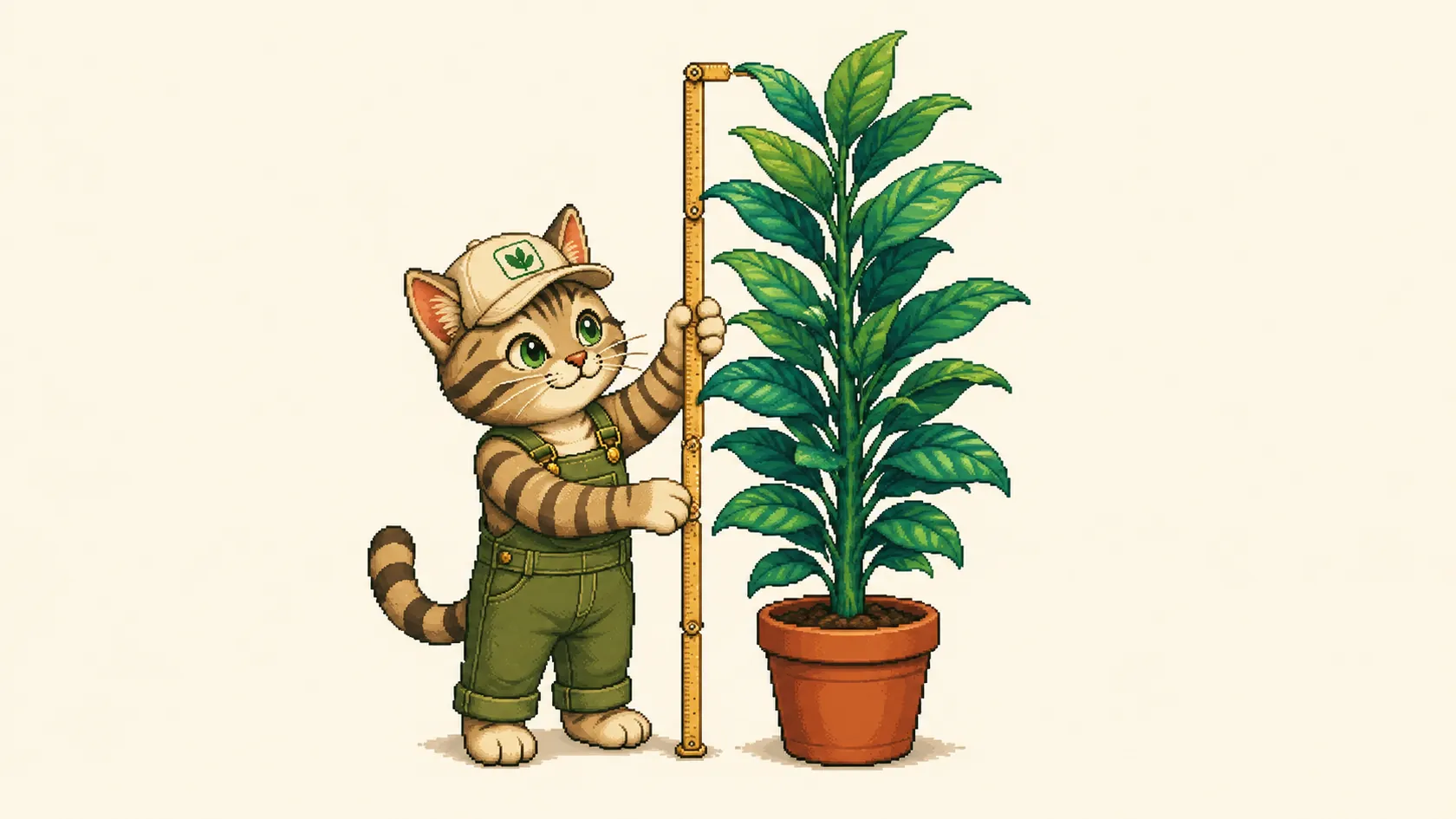
Measure the height at the planned spot and subtract a foot. A plant that hits the ceiling loses exactly the top that made it look big.
Then check the light. On a bright midday, hold your hand at the spot and see whether it casts a shadow on the floor. A clear shadow with an outline means light-hungry species can stand there. A soft, barely visible shadow means you need a plant for darker corners.
Last, look at what else happens in that place. Above a radiator the root ball dries out fast in winter, and beside a patio door that gets opened often the plant sits in cold drafts. Large ficus species answer that by dropping leaves.
A watered planter is heavy. Set large plants on a rolling stand, so you can move them for watering and cleaning without tipping the root ball.
Large plants for bright rooms
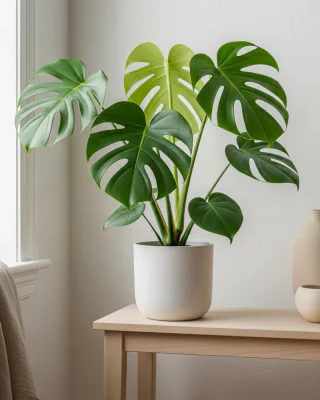
Monstera spreads sideways fast and, with support, upward as well. Its leaves only split properly with enough light, and in half dark they stay small and closed.
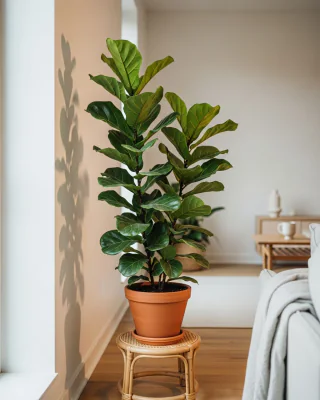
Fiddle-leaf fig grows tall and narrow, which suits a place with little floor space free. It takes a move badly, so pick its final spot right away.
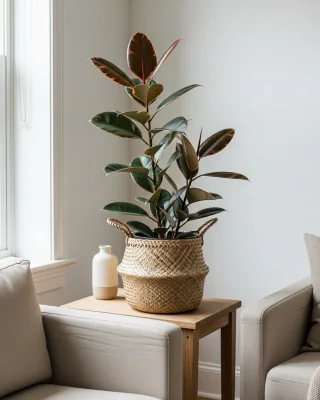
Rubber plant puts on noticeable growth every year at a bright window and takes more dryness than most large species. Wipe its broad leaves, because dust shows on them immediately.
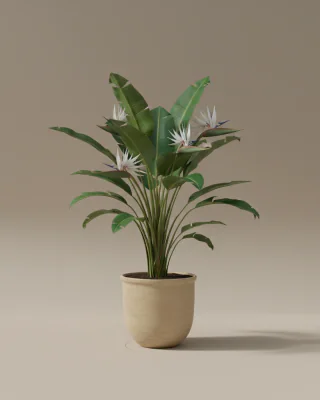
Giant white bird of paradise builds paddle-shaped leaves on an upright stem and needs plenty of light and headroom. In a low-ceilinged room it runs out of space quickly.
Spineless yucca and ponytail palm store water in the trunk. Both like a sunny spot and get by on little watering, which makes them the most straightforward large plants there are.
Large plants for darker corners
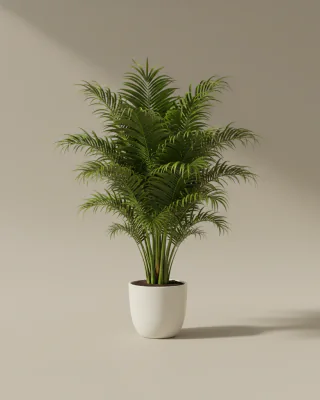
Kentia palm is the most reliable large plant for rooms without direct sun. It grows slowly and stays good-looking for years, as long as it does not stand too wet.
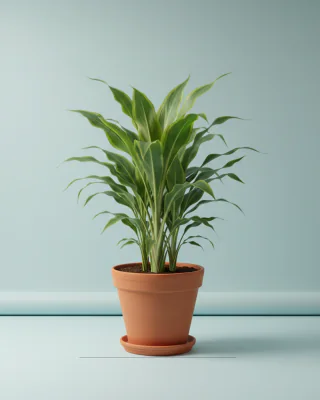
Corn plant develops a bare trunk with a crown of leaves on top over time, gaining height without taking much floor space. It answers salts and fluoride in tap water with brown leaf tips, so filtered water or water left standing suits it better.
Cast-iron plant earns its name. It holds on in dark hallways and stairwells where most other species give up.
Tree philodendron spreads deeply cut leaves over a yard or more. It takes space sideways rather than upward and needs a clear corner.
Dwarf umbrella tree grows bushy and can be kept in shape by pruning. Standing too dark, its shoots stretch and the leaves move far apart.
Watering, pot and soil
A large pot dries slowly, and the surface tells you nothing about what is going on further down. Push a wooden stick down to just above the bottom of the pot and see whether damp soil clings to it. If it comes out clean, the root ball is dry through.
Then water until it runs out the bottom, and take the rest out of the saucer after twenty minutes. On a planter you cannot lift, soak the leftover water up with a sponge.
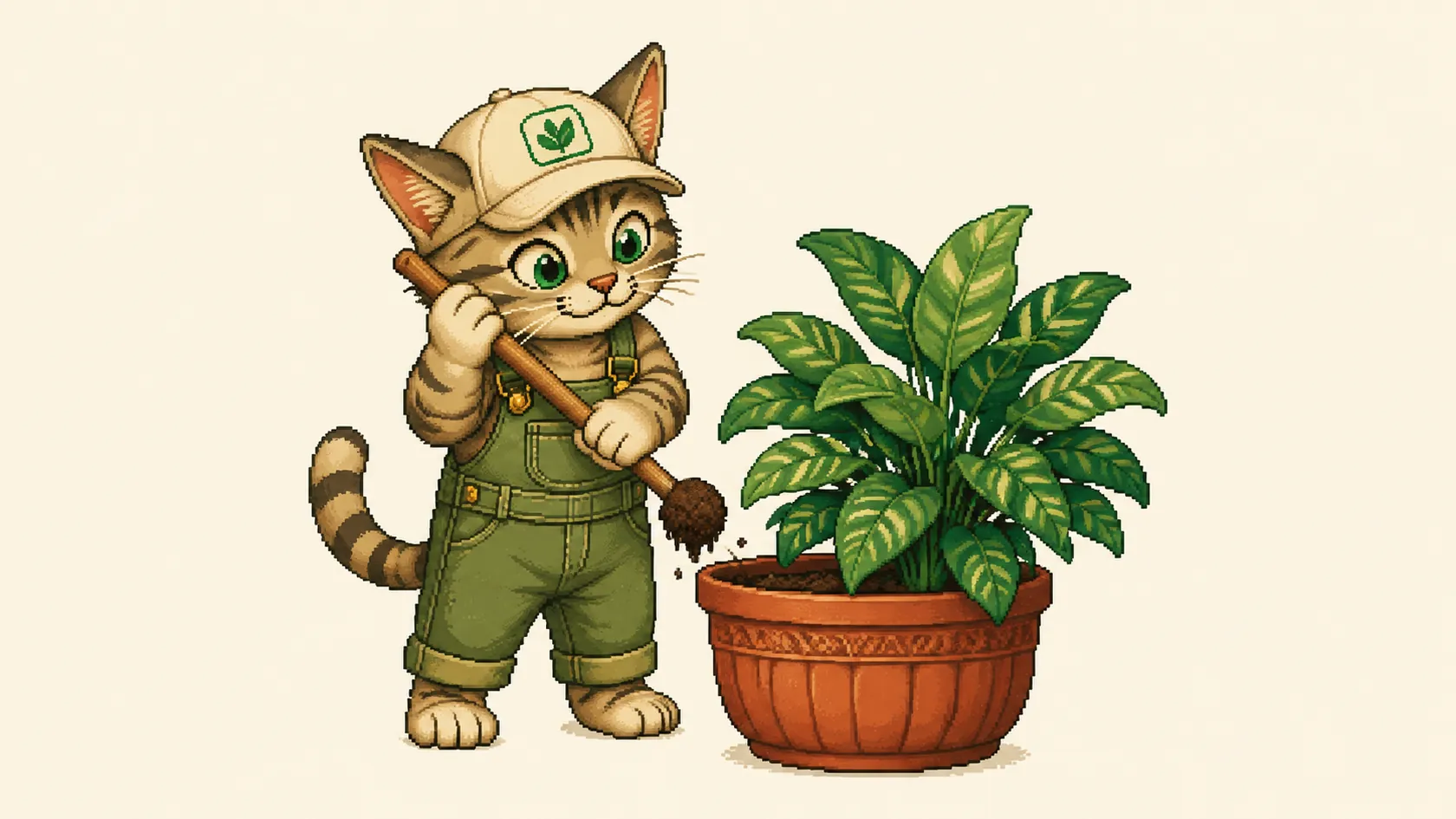
When you repot a large plant, go up only a couple of inches. A lot of soil with no roots in it stays wet a long time after watering, and that kills more large houseplants than dryness does.
Past a certain planter size, repotting stops being practical. Take off the top two inches of soil each spring instead and fill in fresh.
- Wooden stick down to just above the bottom, then read it
- Water until it runs out, empty the saucer after twenty minutes
- When repotting, go up only a couple of inches
- On very large planters, replace the top layer of soil each year
Keeping it straight and full
Turn the pot a quarter turn every few weeks. Otherwise the plant grows toward the window on one side and leans out of the corner over time.
Dust on large leaves takes away light. Wipe them with a damp cloth and support the leaf with your other hand so the stalk does not break.
Climbing species such as Monstera and blushing philodendron only make large leaves on a support. A moss pole or a trellis in the pot holds the shoots upright and gives the aerial roots something to grip.
If the plant goes bare at the bottom, cut it back in spring above a leaf node. It breaks new growth below that and fills in again.
Buying big or growing big
A plant that arrives full size comes from a greenhouse with far more light than your home. Expect a few dropped leaves in the first weeks. Change nothing else in that time and do not repot it right away.
Growing one yourself takes years, and in return the plant is used to your light from the start. Golden pothos, Monstera and dwarf umbrella tree get there fastest.
Go over every large plant you buy before you set it down, especially the leaf undersides and the leaf axils. An infestation you miss in a six-foot crown is hard work to treat later.

Related plants
Keep reading
Common questions
What is the easiest large indoor plant?
The ones that store water in the trunk or grow slowly need the least attention, such as ponytail palm, spineless yucca and Kentia palm. They forgive irregular watering. Fiddle-leaf fig and weeping fig ask for more, because they answer moves and drafts with leaf drop.
What large plant works in a dark corner?
Kentia palm, cast-iron plant and tree philodendron hold up best in corners without direct sun. None of them grows with no daylight at all. If your hand casts no visible shadow there at midday, the corner is too dark for a large plant.
How big should the pot be for a large houseplant?
Only a couple of inches wider than the old one. The root ball should be able to fill the new pot within a season. A much larger pot holds a lot of wet soil with no roots in it, and the roots get no air there.
How often should I water large indoor plants?
Less often than the dry surface suggests. Decide with a wooden stick deep in the root ball rather than by a fixed day. In winter the gap gets noticeably longer for most large species.
Which large indoor plant grows fast?
Monstera, golden pothos and dwarf umbrella tree put on visible size in a season in a bright spot. Growth rate depends more on light than on species. The same plant grows much faster at the window than ten feet into the room.
Why is my large plant dropping leaves after I bought it?
Usually it is the switch from greenhouse light to room light. Leave the plant where you put it, water by checking the root ball and do not repot in the first weeks. If leaf drop keeps up for weeks, check drafts, radiators and standing water in the saucer.
Last reviewed: 2026-09-07