



How to propagate spineless yucca
Yucca elephantipes
Spineless yucca produces basal suckers that root readily. Start with a sucker, preserve any roots, and use a sharply draining mix.
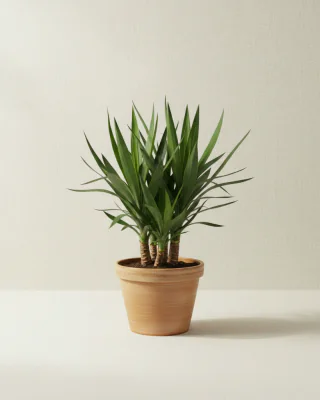
 Not sure it’s this plant?Check yours with a photo, free
Toxic to pets
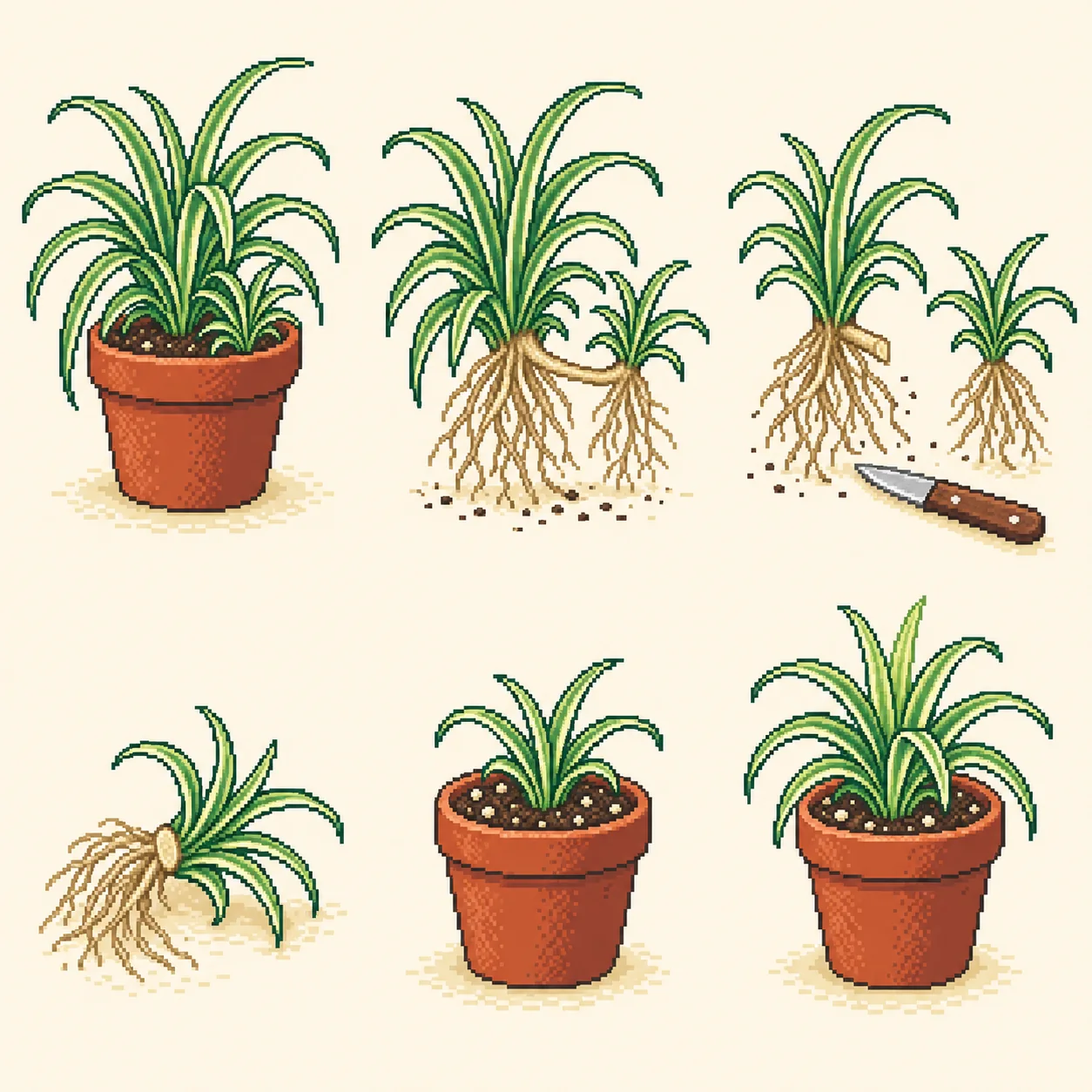
How to propagate by offsets / pups
Spineless yucca can be propagated from seed, stem cuttings, or basal suckers. This offset guide starts with a sucker because UF/IFAS says basal suckers root readily.
- 01
Choose a healthy basal sucker and expose its connection to the trunk or root system.
- 02
Check for roots before separating. Keep any roots attached to the sucker.
- 03
Cut the sucker away cleanly with a clean sharp tool, keeping the parent and sucker intact.
- 04
Pot it in a small container with a very free-draining mix. This species is sensitive to wet soil.
- 05
Water only enough to settle the mix, then let excess drain fully. Avoid keeping the pot wet.
- 06
Give bright light and change conditions gradually while the sucker settles.
- 07
Keep the mix from staying wet and watch for root growth and stable new leaves as the sucker establishes.
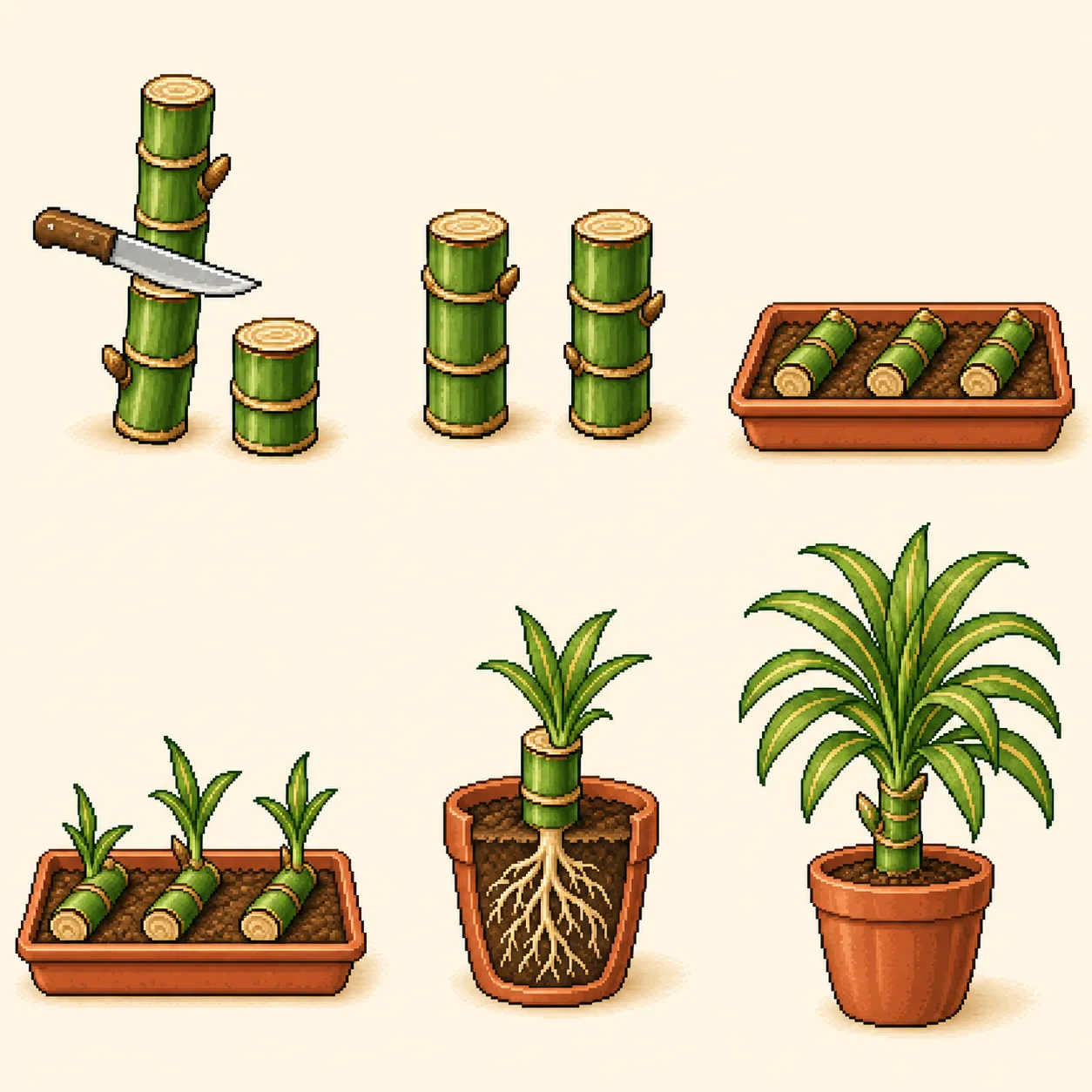
Stem cuttings
Stem cuttings are an alternative to basal suckers for spineless yucca. In spring, root a healthy 20–25 cm (8–10 in) tip cutting in coarse, sandy rooting mix with good drainage.
- 01
In spring, choose a healthy upper stem and take a cutting 20–25 cm (8–10 in) long, measured from the tip.
- 02
Place the cutting in coarse, sandy rooting mix in a pot with drainage holes.
- 03
Keep the pot in semi-shade in a propagator with bottom heat of at least 18 °C (64 °F).
- 04
Keep the rooting medium from staying waterlogged while the cutting establishes.
- 05
Look for the cutting to fill out or show new growth before treating it as established.
All spineless yucca guides
Related plants
Common questions
What is the best way to propagate spineless yucca?
A basal sucker is a practical option because UF/IFAS says suckers root readily. Keep any roots attached and use a very free-draining mix.
Do spineless yucca suckers already have roots?
Not always. Expose the attachment and keep roots when they are present. The source supports basal suckers, but it does not justify promising a complete root system on every sucker.
How long does a spineless yucca sucker take to establish?
Keep the mix from staying wet and watch for root growth and stable new leaves as the sucker establishes.
Sources: UF/IFAS guidance for Yucca gigantea supports basal suckers and superior drainage. NC State Extension’s Yucca gigantea profile supports the accepted species identity, sucker propagation, and the risk of overwatering. The RHS yucca growing guide supports spring stem cuttings of 20–25 cm (8–10 in) in coarse sandy rooting mix with semi-shade and bottom heat.
7 steps · Follow root growth and new leaves · Last reviewed: