What you see
A dusty white coating that wipes off and leaves green leaf underneath. It starts as round patches on the upper side and spreads to the youngest shoots.



Rub one spot. Powder wipes off, mineral marks scrape off, speckling stays in the leaf.
One test separates most of them. Wipe a marked area with a fingertip and see what comes off, then turn the leaf over.
Powder that comes off on your finger and leaves green leaf behind is powdery mildew. Hard flecks that need a fingernail are mineral deposits from water. Fluff that smears is an insect. Speckling that does not shift at all is damage inside the leaf tissue.
Then turn the leaf over and look at the underside in good light. Most of the causes that keep spreading are visible there first.
Old damage stays on a leaf after the cause is gone, so the signal worth following is whether new leaves come out marked as well.
Look at
Most likely cause
A dusty white coating, first in small round patches on the upper side of a leaf, then spreading until whole leaves look floured. It grows on the surface, which is why it wipes off and comes straight back.
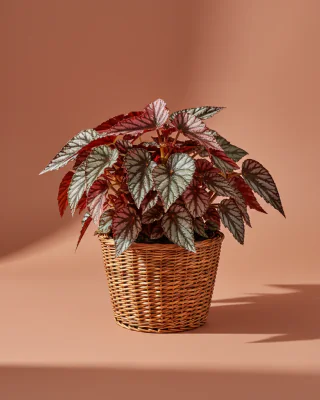
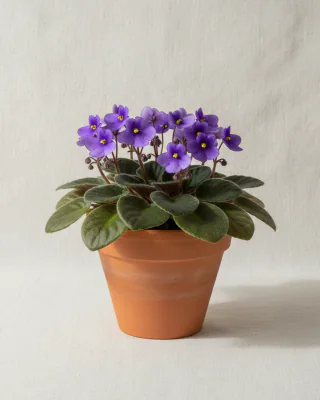
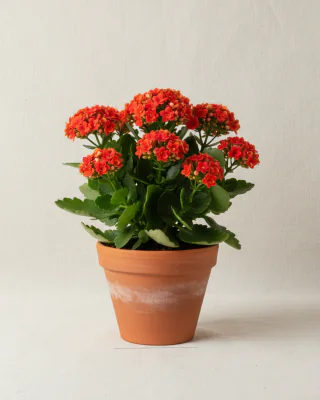
It takes hold where the air stands still and stays humid around the plant, and it moves to the youngest shoots first. Begonia, African violet, kalanchoe and poinsettia get it indoors more often than most.
Take the worst leaves off and put them in the trash rather than shaking them out over the shelf. Give the plant space so air can move around it, water the soil instead of the leaves, and stop misting while it settles.
Where it keeps returning, a fungicide labeled for ornamental houseplants does the treating part. Follow the label, cover the undersides, and repeat as often as it says. Baking soda mixtures get suggested a lot, and they can scorch soft leaves without removing what is already there.
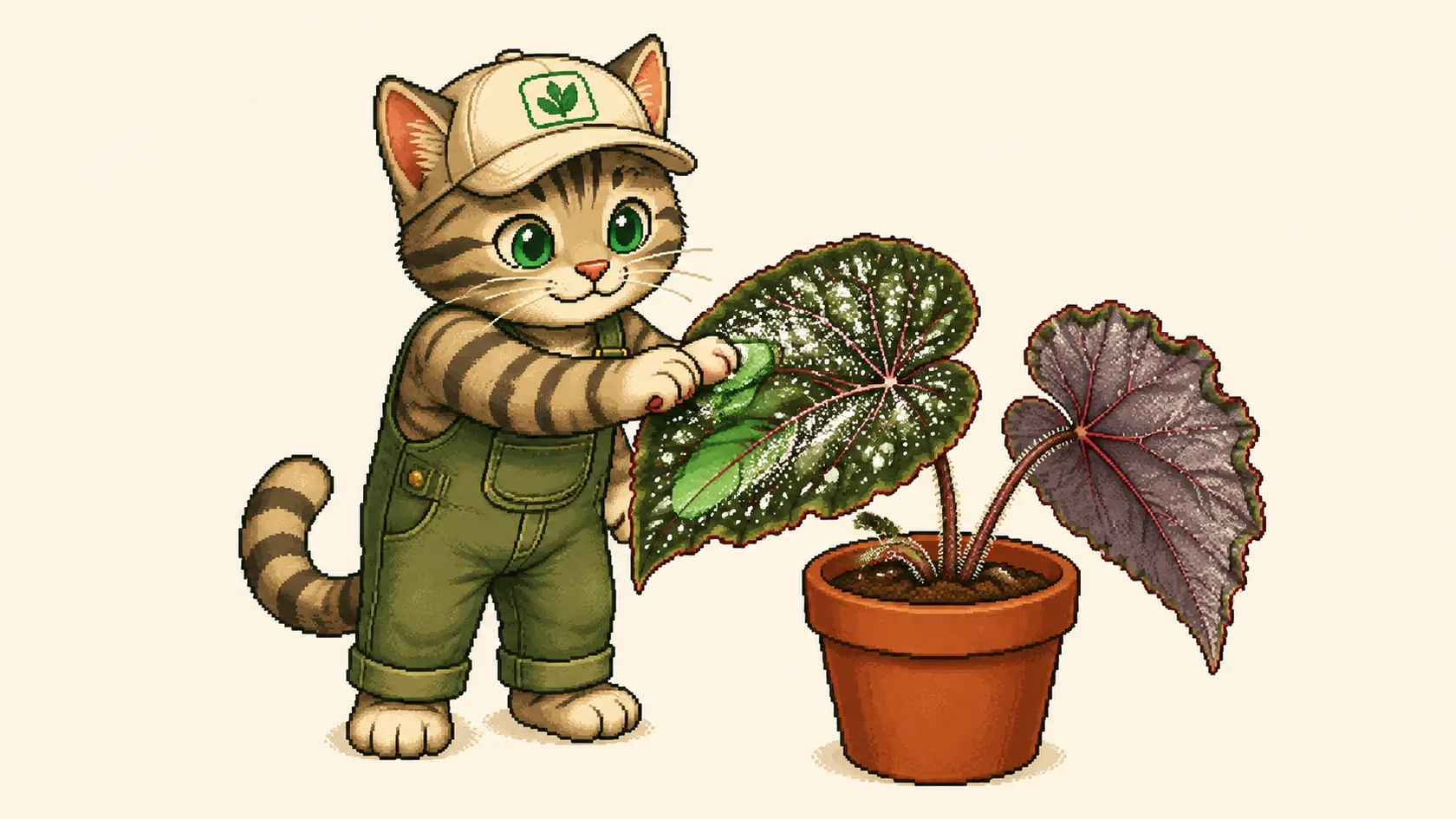
Fine pale speckling across a leaf, as if it had been dusted with tiny dots, is feeding damage. Each dot is one emptied cell, so the pattern is even and nothing comes off on your finger.
The mites themselves sit on the underside. Hold the leaf up to a window and look for moving specks, then check the leaf axils and shoot tips for fine webbing. Webbing means they have been there a while.
Dry warm air over a radiator suits them, which is why they turn up indoors in winter.
Stand the plant away from the ones around it and shower it with the spray aimed up at the undersides. After that, treat the undersides with a soap solution sold for plants every few days for at least three weeks, since eggs keep hatching after the first round. Check the same leaves each time, because that is where the result shows.

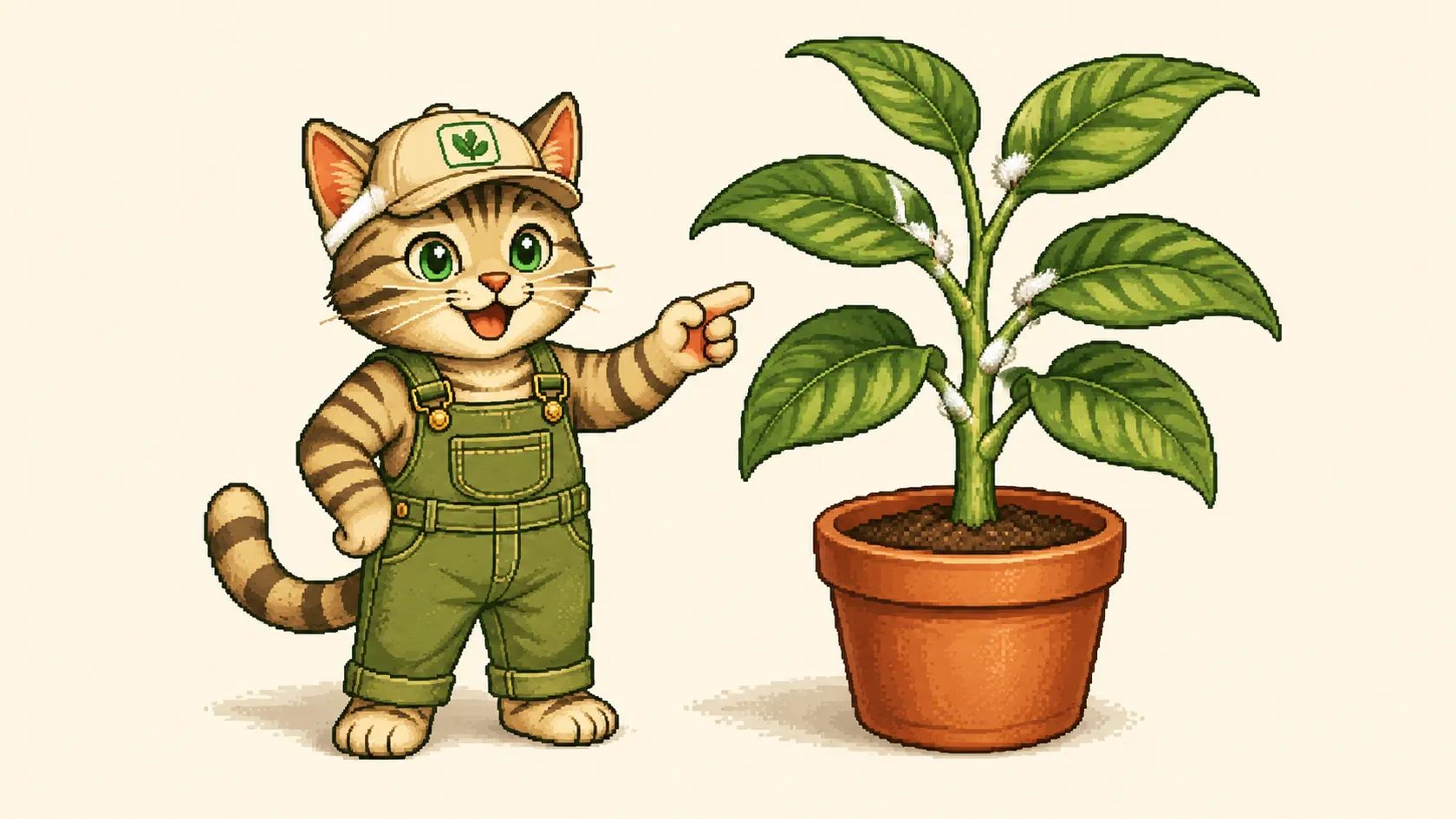
Small white cottony pads in the leaf axils, on the stems and along the midrib on the underside. They look like lint until you touch one and it smears.
A sticky film on the leaves below them, sometimes with a black growth on top of that film, comes from the same insects.
Dab each pad off with a cotton swab, then treat the whole plant with a soap solution sold for plants, undersides included. New pads keep appearing as eggs hatch, so look at the same axils every three to four days for several weeks.
Keep the plant away from the others while you work on it, because mealybugs walk across leaves that touch.
Hard chalky marks on the upper side, often in the shape of dried droplets, are lime and salts left behind after water evaporated. Misting with tap water and splashing while watering both leave them.
The same deposit shows as a white crust on the soil surface and around the rim of a terracotta pot.
They do the leaf no harm. Wipe them off with a damp cloth and water the soil instead of the foliage. Collected rainwater leaves less behind.
A crust on the soil is worth scraping off along with the top layer of mix. Salts building up in the pot show later as brown leaf tips rather than as white marks.

Bleached dry patches on the side of the plant facing the glass are sunburn. The tissue is dead, so it stays pale and slightly papery.
It shows up mostly after a plant has been moved into brighter light, and in early spring when the sun reaches further into the room than it did all winter. Move the plant back from the window or hang a sheer curtain.
Pale rings and blotches on soft, hairy leaves such as African violet come from cold water sitting on the leaf in the light. Water those from below and keep the foliage dry.
Some plants are patterned white. Silver on a satin pothos, flecks on a spotted begonia and the bands on a watermelon peperomia are natural variegation, and every new leaf carries the same pattern.
The difference is easy to see once you look for it. Variegation is even, repeats on new growth and sits inside the leaf. A problem is uneven, appears on leaves that used to be plain and keeps changing.
Fine hairs on some leaves catch the light and read as a pale film from above. Look at the leaf from the side before treating anything.
Rub one. Powder that comes off is powdery mildew, hard flecks are mineral deposits from water, cottony fluff is mealybugs, and fine speckling that stays put is spider mite damage or sunburn.
Yes. Their feeding leaves fine, even pale speckling that does not wipe off, worst on older leaves. Look at the undersides in good light for moving specks and fine webbing before treating anything.
Remove the worst leaves, give the plant space and air movement, and water the soil rather than the foliage. Where it returns, a fungicide labeled for ornamental plants treats it. Wiping alone does not stop it coming back.
The powder wipes off and mineral marks come off with a damp cloth. Speckling and bleached patches are dead tissue and stay. Whether the cause is gone shows on the next new leaf.
Powdery mildew and the insects spread, particularly between plants whose leaves touch. Sunburn and mineral marks do not. Stand an affected plant on its own until you know which one you have.
Take off leaves that are mostly covered in mildew or heavily infested, and bin them rather than composting them indoors. A leaf with a few marks and firm green tissue keeps working and stays on the plant.
Last reviewed: 2026-09-07