What you see
Pale dry patches on the leaves facing the window, appearing within days of the plant being moved to a brighter spot.



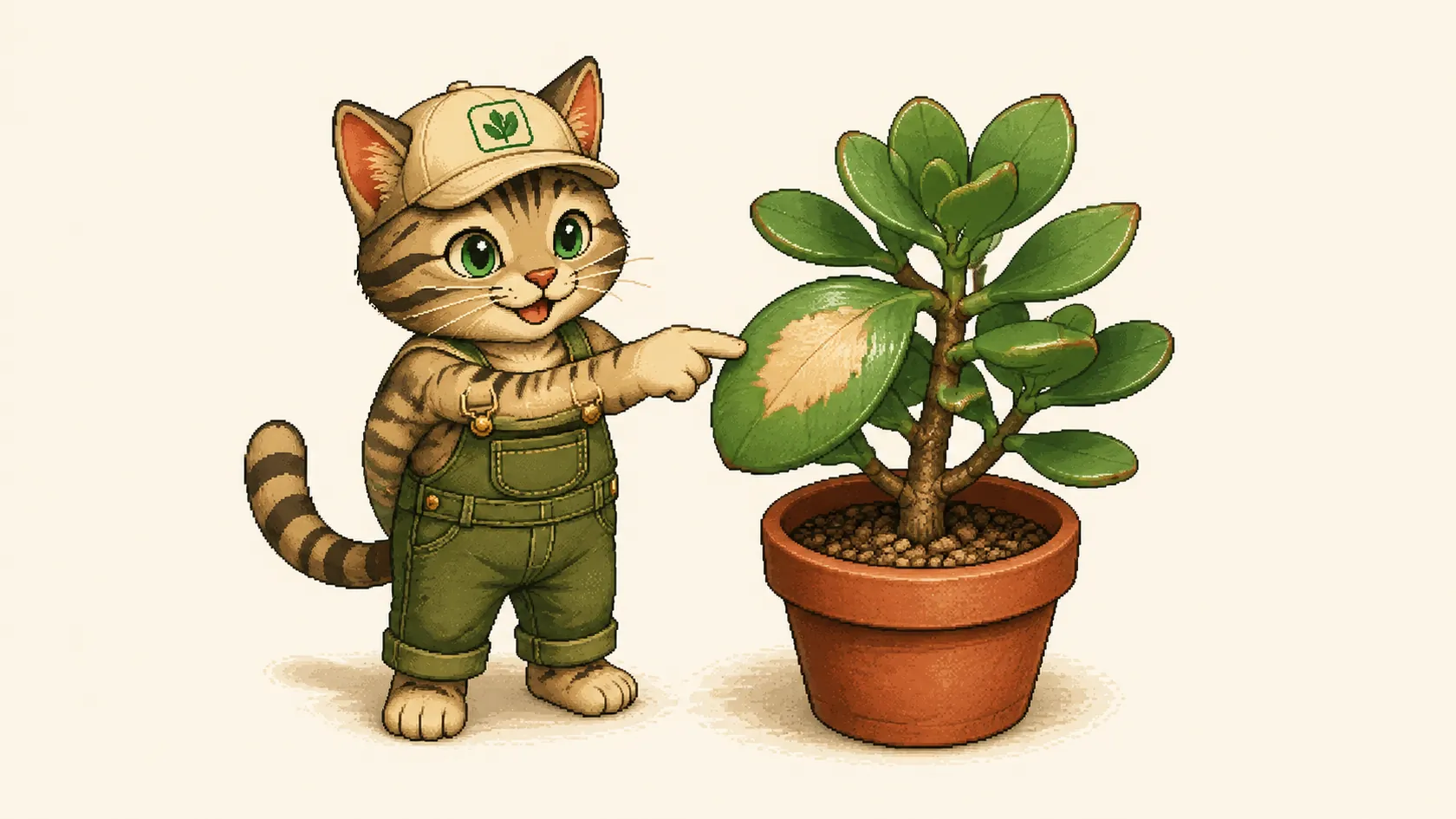
Pale dry patches on the side facing the glass are sunburn. The damage stops as soon as the plant moves.
It reads clearly on the plant. The damage sits on the surfaces aimed at the window or the sky, it appears within a day or two of a change, and the leaves in the shade behind them are untouched.
Burned tissue does not heal. What you are deciding is where the plant stands from now on, and whether the change happens gradually enough for the next leaves to cope.
The patches are pale. They start as a washed out yellow or a bleached white, dry out to tan or brown, and often end up thin and papery with a sharp edge between damaged and healthy tissue.
They sit in the middle of the leaf as often as at the edge, wherever the sun actually landed. On a plant at a window the whole damaged set faces the glass, which is the most reliable part of the reading.
The tissue is dry rather than soft. Pressing it gives a crisp, brittle feel, and there is no dark ring, no yellow halo and no wet or greasy look to it.
It also does not spread. A burned patch is the same size in a week, while a fungal or bacterial spot grows and multiplies.
Some plants respond by reddening or bronzing across the whole leaf instead of spotting. Succulents in particular go red, purple or gray before any tissue actually dies, which is a warning rather than damage.
Look at
Most likely cause
This is the common cause, and it happens to plants that could have handled the spot if they had arrived at it slowly. A leaf grown in medium light has fewer of the pigments and structures that protect against strong light, and it cannot build them overnight.
The move that does it is usually small. A shelf swapped for a windowsill, a plant brought forward when the furniture changed, a shop plant grown under shade cloth taken straight home to a south window.
Damage shows within one to three days. That short lag is what ties it to a change you can actually remember.
Move the plant back out of the direct beam and it stops there. Then reintroduce the brighter spot over two to three weeks, adding an hour or two of direct sun at a time, and let new leaves grow into the conditions rather than forcing old ones to adapt.
A plant can sit happily at a south or west window through the winter and burn in May without moving an inch. The sun climbs higher and gets stronger, and the same shelf becomes a different place.
Glass makes it harsher. It cuts the air movement that would cool the leaf while letting the heat through, so the leaf surface at a closed window runs hotter than it would outdoors in the same sun.
A sheer curtain solves most of it. So does moving the plant a couple of feet back into the room, or to one side so the midday beam misses it.
Water droplets on a leaf in full sun are worth avoiding on hairy and thin foliage, though they are not the usual cause. Water in the morning and aim at the mix rather than over the top of the plant.
Outdoor light is far stronger than anything indoors, even on an overcast day. A houseplant put out on a balcony for the summer burns within hours in full sun.
Take it out in stages. Start in full shade for several days, then an hour of morning sun, and build up from there over two or three weeks. Morning sun is gentler than afternoon sun for the same length of exposure.
Wind adds to it. Outdoors, moving air dries the leaf faster than the roots can resupply, and the resulting scorch looks similar and often arrives at the same time.
Reverse the process in fall. Bring the plant back in gradually as well, since the jump from bright outdoor light to a dim room causes leaf drop rather than burn.
A grow light burns in exactly the same way as the sun, and usually because the fixture sits too close after the plant has grown up toward it.
The pattern gives it away. The damage is on the top surfaces directly under the fixture, worst on the tallest growth, and the lower leaves are clean.
Raise the fixture or lower the plant, using the distance the light is specified for. Then check it again as the plant grows, because a plant that gains a few inches over a month has closed the gap by that much.
Heat matters as well as light. Hold your hand at leaf height for half a minute, and if it is uncomfortably warm the leaf is running warmer than it should.
Underwatering browns the tips and margins first and affects the whole plant rather than one side. The mix is dry and the plant often wilts, while a sunburned plant in damp mix stands normally.
Fertilizer salt damage also browns the margins, usually with a white crust on the surface of the mix and on the pot rim, and it appears after feeding rather than after a move.
Leaf spot diseases make dark spots with yellow halos or wet-looking edges, and they spread to new leaves over weeks. Burn stays exactly where it started.
Spider mite damage is fine pale speckling spread across the leaf with webbing at the leaf junctions, rather than one solid patch. Turn a leaf over and look at the underside before deciding.
Cold damage from a leaf pressed against winter glass makes translucent, water-soaked patches that darken. Those feel soft, not crisp, and the season points the other way.
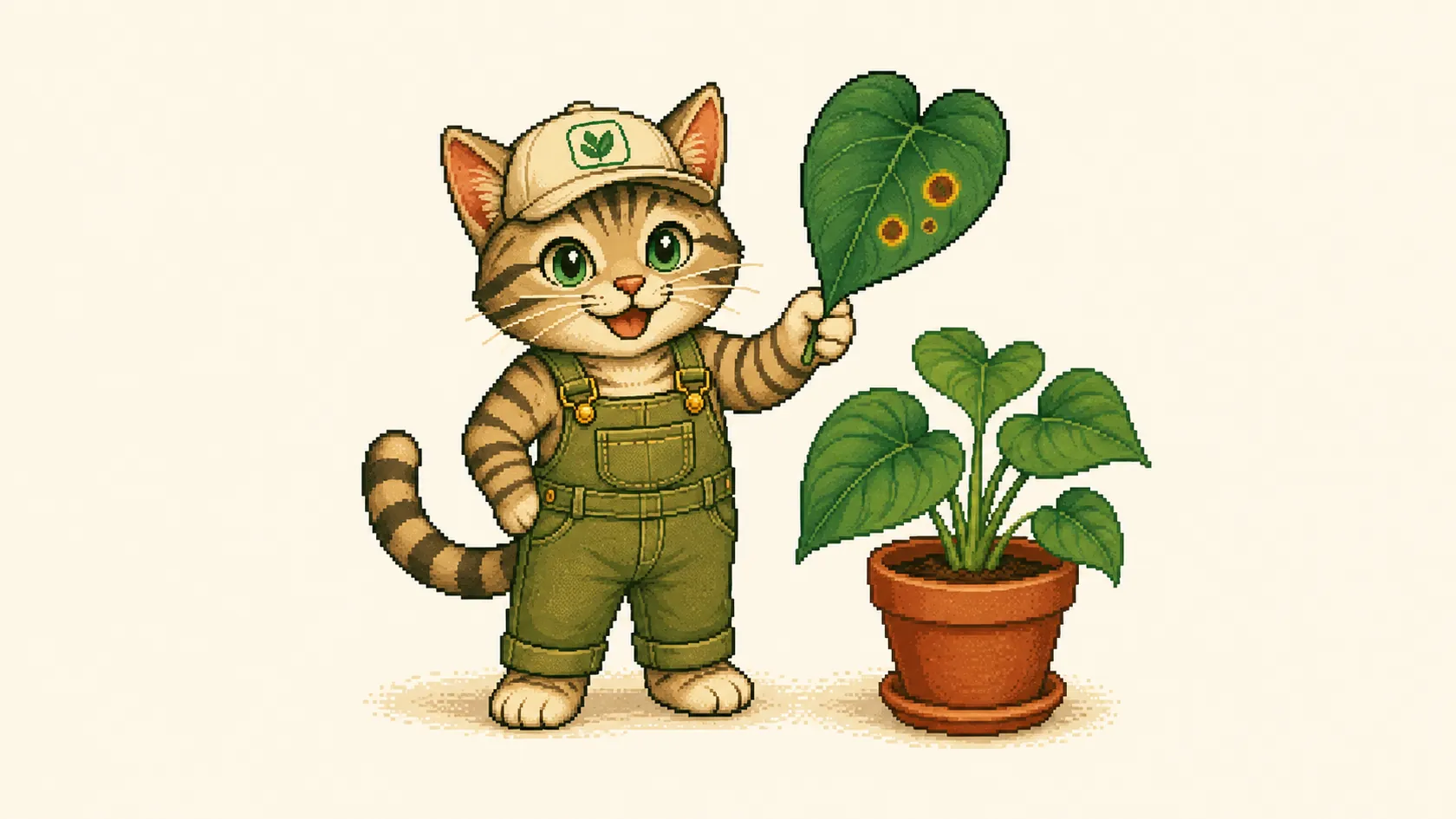
Leave a leaf that is mostly green. Damaged tissue does not recover, and the rest of that leaf still feeds the plant.
Remove leaves that are mostly dead, cutting the stalk close to the stem with clean scissors. On a partly damaged leaf you can trim the brown area back to just inside the healthy tissue, following the shape of the leaf.
Keep the plant in even light and water normally. Do not feed a stressed plant more, since the salts add to the load and there is no faster growth to be had.
Judge the outcome by new growth. Leaves that emerge in the plant’s new position tell you whether the light is right, and old damage stays visible for as long as those leaves live.
Pale bleached or yellow patches that dry to tan or brown, with a crisp texture and a sharp edge, on the surfaces facing the light. Shaded leaves behind them stay clean and the patches do not spread.
The plant recovers, the burned tissue does not. Once it is out of the harsh light it stops losing more leaf, and the recovery shows up in the new leaves rather than in the damaged ones.
Remove leaves that are mostly dead, and leave anything still largely green because it keeps feeding the plant. On a partly burned leaf, trim just inside the healthy tissue following the shape of the leaf.
Sunburn is dry, pale, crisp and confined to the lit side. Overwatered leaves yellow and go soft across the whole plant, the mix stays wet for days, and the pot stays heavy between waterings.
Two to three weeks of adding an hour or two of direct sun at a time is enough for most houseplants. The real change happens in the leaves that grow afterward, since existing leaves adapt only a little.
Yes, and often worse than outdoors. Glass lets the heat through while cutting the air movement that would cool the leaf, so a south or west window in summer can burn a plant that was fine there all winter.
Last reviewed: 2026-09-07